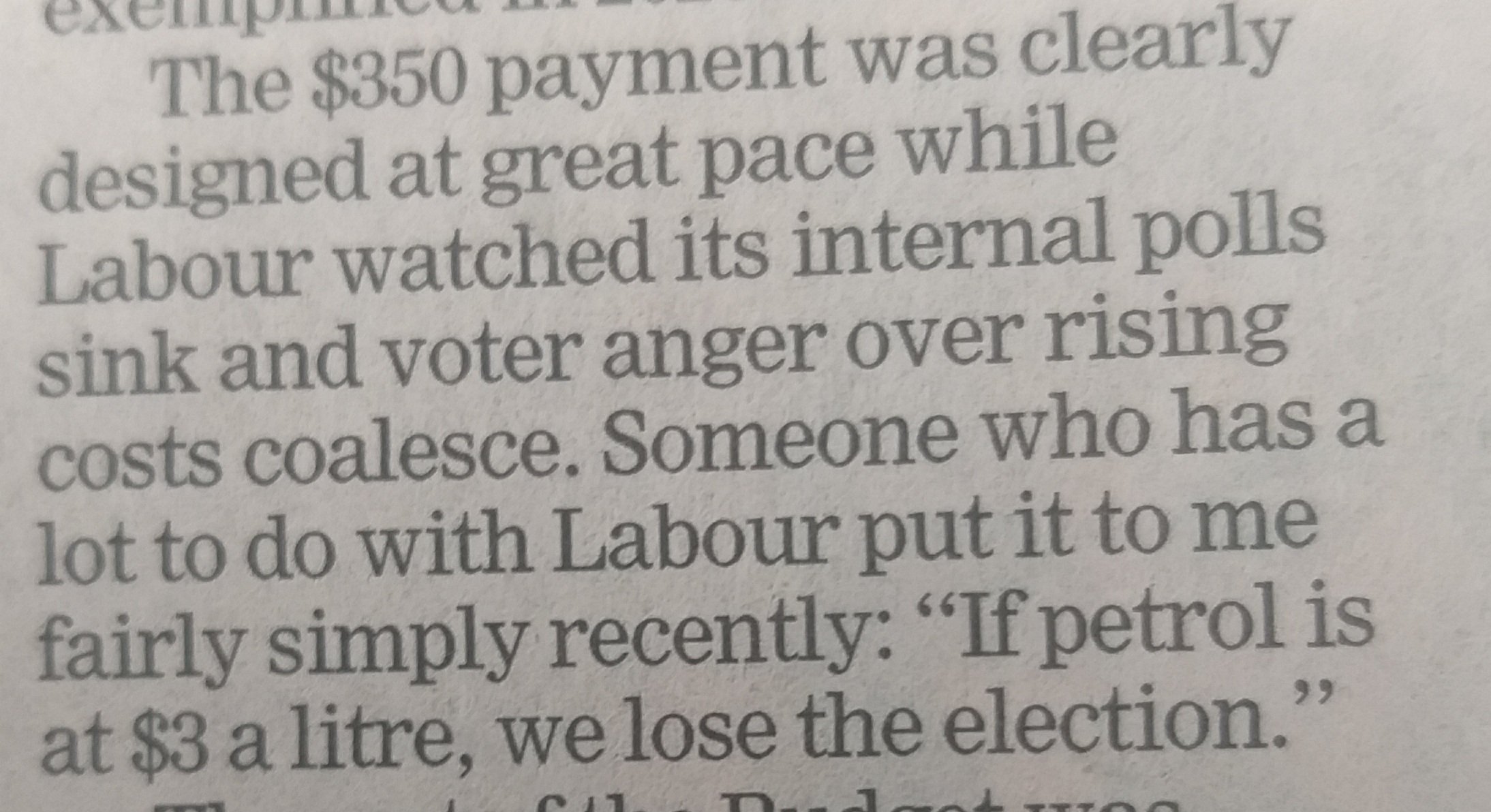
.@nzlabour polling leaks, finally
21 May 2022 Leave a comment
in energy economics, politics - New Zealand Tags: 2023 New Zealand election
Holding a border poll in Northern Ireland: when does it need to happen and what questions need to be answered?
21 May 2022 Leave a comment

 The prospect of a poll in Northern Ireland about Irish unification, provided for by the Good Friday Agreement and often termed a ‘border poll’, is now widely discussed. But the provisions and wider implications of the law and the Agreement are little explored. The Constitution Unit is considering a project to examine this, and Alan Whysall here gives an overview of the key questions.
Support for a united Ireland appears to be rising. There is little to suggest a majority for unity now, but in the context of Brexit provoking serious strains it might arise. This blog is mainly about process. But the real world risks are high. An early poll, particularly if it takes place in a political atmosphere that is strained following a hard Brexit, could seriously destabilise both parts of Ireland, and put at risk the political gains of recent decades.
Current outlook on border polls
Northern…
View original post 2,341 more words
Post-election negotiations in Northern Ireland must set the Belfast Agreement on a firmer footing and re-establish constructive politics
21 May 2022 Leave a comment

Alan Whysall, Honorary Senior Research Associate of the Constitution Unit, looks at the Northern Ireland Assembly elections held last week. He suggests that the foundations of the Belfast/Good Friday Agreement continue to weaken, and there is no sign of the government offering any response that might strengthen them; its proposals on the Northern Ireland Protocol risk making matters worse. Alan’s discussion paper on Northern Ireland’s political future: challenges after the Assembly elections was published last Friday, and is summarised in this blog, and discussed in this podcast.
The election results, though well forecast by polling, were reported in dramatic terms by media outside Northern Ireland, with coverage focusing on Sinn Féin displacing the Democratic Unionist Party (DUP) as the largest party.
They reflect the increasing polarisation of Northern Ireland politics, fuelled by unionist concerns over the Northern Ireland Protocol. So Traditional Unionist Voice, to the right…
View original post 2,095 more words
Trade, Jobs, and Wages
21 May 2022 Leave a comment

I’m a knee-jerk supporter of free trade, which simply means I don’t think politicians and bureaucrats should be able to interfere with my freedom to buy good and services from people who happen to live in other nations.
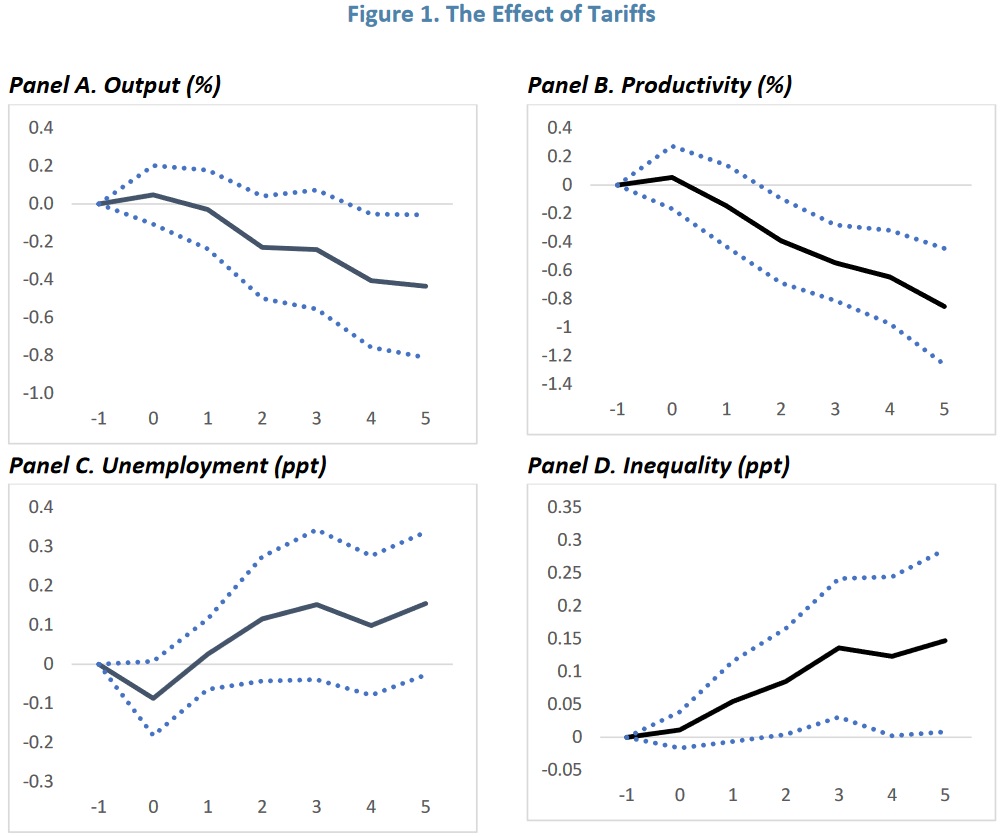 But my support for free trade is not just based on ideology. I also cite data on how trade taxes and other restrictions make nations poorer.
Simply stated, trade barriers (like other forms of government intervention) make an economy less efficient.
And the negative effects go beyond overall economic output. Researchers also find job losses, lower productivity, and increased inequality.
Today, let’s look at some new research on this topic. The IMF earlier this year released a new working paper authored by Kim Beaton, Valerie Cerra, and Metodij Hadzi-Vaskov.
Here are the main results.
…firms in countries and industries experiencing greater competition from imports reduce employment slightly. …Even so, the…
View original post 378 more words
The Battle of San River – Winston Churchill Gets Fired I THE GREAT WAR Week 43
21 May 2022 Leave a comment
in defence economics, war and peace Tags: World War I
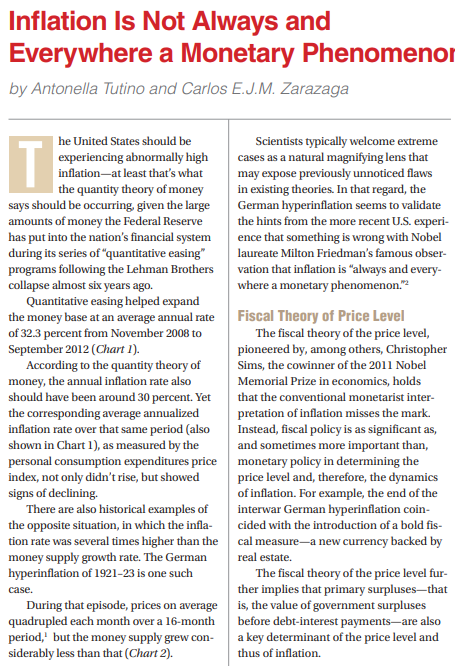
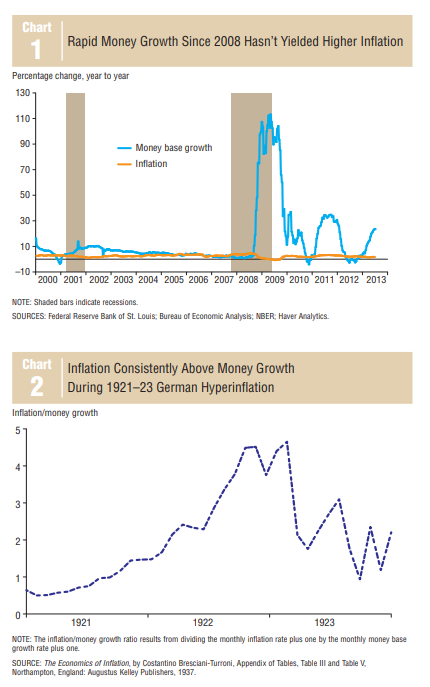
Fiscal policy is as significant as, and sometimes more important than, monetary policy in determining the price level and, therefore, the dynamics of inflation
20 May 2022 Leave a comment
in economic history, fiscal policy, history of economic thought, macroeconomics, Milton Friedman, monetarism
Cavalier policy and disconcerting projections
20 May 2022 Leave a comment

From a macroeconomic point of view, that title for this post really sums things up nicely.
Take policy first. The government has brought down a Budget that projects an operating deficit (excluding gains and losses) of 1.7 per cent of GDP for the 2022/23 year that starts a few weeks from now. Perhaps that deficit might not sound much to the typical voter but operating deficits always need to be considered against the backdrop of the economy.
Over the last couple of years we had huge economic disruptions on account of Covid, lockdowns etc, and fiscal deficits were a sensible part of handling those disruptions (eg paying people to stay at home and reduce the societal spread of the virus). Whatever the merits of some individual items of spending over that period, hardly anyone is going to quibble with the fact of deficits.
But where are we now (or, more…
View original post 1,904 more words
David Niven on How The Queen Mary Accidentally Sank The HMS Curacoa In WWII | The Dick Cavett Show
20 May 2022 Leave a comment
in defence economics, laws of war, movies, television, TV shows, war and peace Tags: World War II
War of the Cliques – Warlord Era 1922-1928
20 May 2022 Leave a comment
in defence economics, development economics, economic history, growth disasters, laws of war, war and peace Tags: China
Create a Black Market the Easy Way!
20 May 2022 Leave a comment
in applied price theory, applied welfare economics, comparative institutional analysis, economic history, economics of natural disasters, economics of regulation Tags: offsetting behaviour, price controls, The fatal conceit, unintended consequences
Free Public Transport: Why Now of All Times?
19 May 2022 Leave a comment

This is the second in a series of four posts about the poor state of political transit advocacy in the United States, following a post about the Green Line Extension in metro Boston, to be followed by the topics of operating aid and an Urban Institute report by Yonah Freemark.
There’s a push in various left-wing places to make public transportation free. It comes from various strands of governance, advocacy, and public transport, most of which are peripheral but all together add up to something. The US has been making some pushes recently: Boston made three buses fare-free as a pilot program, and California is proposing a three-month stimulus including free transit for that period and a subsidy for car owners. Germany is likewise subsidizing transport by both car and public transit. It’s economically the wrong choice for today’s economy of low unemployment, elevated inflation, and war, and it’s…
View original post 726 more words
How to Waste Money on Public Transportation
19 May 2022 Leave a comment
This is the fourth in a series of five (not four) posts about the poor state of political transit advocacy in the United States, following posts about the Green Line Extension in metro Boston, free public transport proposals, and federal aid to operations, to be followed by a post about how to do better instead.
I think very highly of Yonah Freemark. His academic and popular work on public transport and urbanism ranges from good to excellent, and a lot of my early thinking (and early writing!) on regional rail and high-speed rail owes a debt to him.
But I think he’s wrong in his proposal for a Green New Deal for transportation. This is a proposal by the Climate and Community Project (not the Urban Institute as I said in previous posts – sorry) to decarbonize transport in the United States, through fleet electrification and…
View original post 1,317 more words
Just the usual double standards and hypocrisy
19 May 2022 Leave a comment

It would not be politics otherwise.

So are calls to arms when a government decision doesn’t go your way. Next thing you know you’ll have people accusing you of causing an insurrection.🥺

Given how deep she is in the shit as Mayor of Chicago you’d think she’d be focusing relentlessly on that, starting with her reelection, but like most of these grifters she’s probably aiming at some future “activist” position. Certainly fixing the city she’s done so much to wreck is not even on the list.
Or how about having the new Presidential Press Secretary turn out to be a purveyor of dangerous disinformation that could destroy American democracy by tricking people into losing faith in elections.

Then there are the grifters like Bill Kristol and Jennifer Rubin (the “conservative” voice at the WaPo). After crying for years that his movement away from the GOP was all because of Bad…
View original post 165 more words
The Queen’s speech, the Johnson government, and the constitution – lessons from the 2021-22 session
19 May 2022 Leave a comment

As a new session of parliament commences, Lisa James discusses what constitutional lessons can be learned from its predecessor. She argues thatthe government’s legislation and its approach to parliamentary scrutiny in the 2021-22 session suggest that a disregard for checks and balances, a tendency to evade parliamentary scrutiny, and a willingness to bend constitutional norms are fundamental traits of the Johnson premiership.
A new parliamentary session began last week, with a Queen’s speech that laid out a highly ambitious volume of new bills. Many of these are likely to prove controversial – including planned constitutional measures.
To assess how the government might proceed, and how this might play out in parliament, it is useful to look back at the 2021-22 session. This was the first of Boris Johnson’s premiership not wholly dominated by Brexit or the COVID-19 pandemic – offering insight into both the government’s constitutional agenda, and…
View original post 1,515 more words


Recent Comments