
Rep. Ayanna Pressley (D., Mass.) joined fellow Democrats last week in calling for the passage of the Housing Emergencies Lifeline Program…
“Evictions are an Act of Policy Violence”: Pressley and Democrats Introduce Eviction Reform Legislation
Celebrating humanity's flourishing through the spread of capitalism and the rule of law
15 Apr 2026 Leave a comment
in economics of regulation, income redistribution, politics - USA, Public Choice, rentseeking, urban economics Tags: regressive left, rent control
Rep. Ayanna Pressley (D., Mass.) joined fellow Democrats last week in calling for the passage of the Housing Emergencies Lifeline Program…
“Evictions are an Act of Policy Violence”: Pressley and Democrats Introduce Eviction Reform Legislation
11 Apr 2026 Leave a comment
in income redistribution, Music, politics - New Zealand, Public Choice
The Spinoff becomes an unlikely fiscal conservative: Tourism minister Louise Upston was excited when she announced that Robbie Williams will play two shows in Auckland and Christchurch later this year. “It’s fantastic to welcome a showstopper act like Robbie, giving fans the chance to see him entertaining us,” she said in a press release. The…
A good corporate welfare expose
10 Apr 2026 Leave a comment
in applied price theory, defence economics, economic history, economics of bureaucracy, energy economics, financial economics, history of economic thought, labour economics, macroeconomics, monetary economics, politics - New Zealand, Public Choice, unemployment, war and peace Tags: 1973 oil crisis, monetary policy, oil shocks

I didn’t have too much problem with either the Reserve Bank Governor’s speech a couple of weeks ago on a framework for how monetary policy might deal with the oil shock, or with this week’s OCR review release from the Monetary Policy Committee. It was really all very orthodox stuff, much as any of the […]
Oil and monetary policy
06 Apr 2026 1 Comment
in applied price theory, econometerics, economics of regulation, income redistribution, labour economics, labour supply, politics - USA, Public Choice, unemployment
Two recent joint-papers Did California’s Fast Food Minimum Wage Reduce Employment? by Clemens, Edwards and Meer and The Effects of California’s $20 Fast Food Minimum Wage on Prices by Clemens, Edwards, Meer and Nguyen give what I think is a plausible and consistent account of California’s $20 fast food minimum wage. California’s $20 fast food…
The CA Minimum Wage Increase: Summing Up
28 Mar 2026 Leave a comment
in applied price theory, economics of bureaucracy, economics of education, human capital, labour economics, libertarianism, Murray Rothbard, Public Choice Tags: signaling
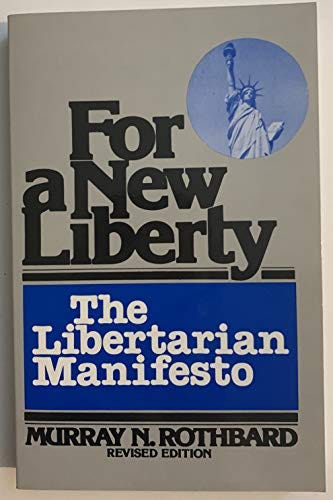
SummaryIn this chapter, Rothbard makes the case for the abolition of public schooling. While he somewhat surprisingly views Friedman’s voucher system as “a great improvement over the present system in permitting a wider range of parental choice and enabling the abolition of the public school system,” Rothbard will settle for nothing less than the separation…
Bet On It Book Club: For a New Liberty, Chapter 7
25 Mar 2026 Leave a comment
in applied price theory, Austrian economics, development economics, economic history, economics of bureaucracy, economics of regulation, growth disasters, Public Choice Tags: Argentina

Part I of this series reviewed the horrible economic conditions that plagued Argentina when Javier Milei took office. Part II looked at Milei’s spending restraint and some of the subsequent improvements in fiscal outcomes. For today’s column, let’s focus on what Milei has achieved in areas other than fiscal policy, and it will be based […]
Javier Milei Week, Part III: Good Economic Policies, Good Economic Results
20 Mar 2026 1 Comment
in constitutional political economy, economic history, Public Choice Tags: British constitutional law, British history, British politics

The retirement of Lord Salisbury in 1902 marked the end of the last premiership undertaken from the House of Lords, but in the nineteenth century, more prime ministers led governments from the Lords than the Commons. In this article, Dr Kathryn Rix, of our House of Commons, 1832-1945 project, explores the history and significance of…
Prime Ministers in the House of Lords
18 Mar 2026 Leave a comment
in constitutional political economy, economic history, politics - New Zealand, Public Choice
Professor Anaru Eketone claims the Māori electorates were a cynical device to suppress Māori political influence.(paywalled) The historical record suggests the opposite: the Māori seats were created to bring Māori into the parliamentary system and guarantee representation, rather than exclude them. By 1867, when the Māori Representation Act 1867(1) passed, Europeans outnumbered Māori roughly four to one. […]
The Māori Seats – History, Not Myth
17 Mar 2026 Leave a comment
in economics of bureaucracy, politics - New Zealand, Public Choice, public economics
The Taxpayer’s Union has done a report listing 103 ways local government can save money. Some of the more significant ones which I support are: The post 103 ways for local government to save money first appeared on Kiwiblog.
103 ways for local government to save money
14 Mar 2026 Leave a comment
in applied price theory, comparative institutional analysis, economics of bureaucracy, entrepreneurship, industrial organisation, managerial economics, market efficiency, organisational economics, Public Choice

My First Theorem of Government is the simple observation that insiders are the biggest beneficiaries of government. I was motivated to release that theorem because bad news for taxpayers is good news for bureaucrats, consultants, contractors, lobbyists, and politicians. A classic example is the Department of Education in Washington, which has squandered more than $2.6 […]
Cost Overruns Are Bad for Taxpayers, Good for Insiders
13 Mar 2026 Leave a comment
in applied price theory, entrepreneurship, human capital, income redistribution, labour economics, labour supply, politics - USA, Public Choice, public economics Tags: taxation and entrepreneurship, taxation and investment, taxation and labour supply

I frequently make the point that America’s tax system is more progressive than European tax systems. But not because the United States imposes higher tax rates on upper-income households. Instead, the big difference is that lower-income and middle-class households in the United States face much lower tax burdens than their European counterparts. In those columns, […]
Fleecing Rich Taxpayers: Europe vs. the United States
12 Mar 2026 Leave a comment
in applied price theory, economic growth, entrepreneurship, financial economics, fiscal policy, human capital, income redistribution, labour economics, labour supply, liberalism, macroeconomics, Marxist economics, politics - USA, Public Choice, rentseeking Tags: taxation and entrepreneurship, taxation and investment, taxation and labour supply

Below is my column on Fox.com on the new push by Democrats to impose a wealth tax nationally. While the…
Eat the Rich: Sanders and Khanna Introduce Federal Billionaires Tax
10 Mar 2026 Leave a comment
in Alfred Marshall, comparative institutional analysis, economics of bureaucracy, economics of natural disasters, economics of regulation, health economics, politics - New Zealand, Public Choice Tags: economics of pandemics
The Royal Commission has released their second and final report. Some key aspects: Simeon Brown points out: The post Covid-19 Royal Commission report released first appeared on Kiwiblog.
Covid-19 Royal Commission report released
08 Mar 2026 Leave a comment
in applied price theory, economics of bureaucracy, economics of regulation, entrepreneurship, labour economics, law and economics, managerial economics, organisational economics, personnel economics, property rights, Public Choice, theory of the firm, unemployment Tags: creative destruction, employment law, European Union, Germany
In our textbook, Modern Principles, Tyler and I write: Imagine how difficult it would be to get a date if every date required marriage? In the same way, it’s more difficult to find a job when every job requires a long-term commitment from the employer. In two new excellent pieces, Brian Albrecht and Pieter Garicano…
The Hidden Cost of Hard-to-Fire Labor Laws: Why European Firms Don’t Take Risks
07 Mar 2026 Leave a comment
in applied price theory, economic growth, economic history, entrepreneurship, fiscal policy, income redistribution, liberalism, macroeconomics, Marxist economics, politics - USA, Public Choice, public economics Tags: taxation and entrepreneurship, taxation and investment, taxation and labour supply

Is it time to pack our belongings and head to Argentina, where Javier Milei is dramatically improving economic policy and cultural attitudes? I’m joking, but also not joking. The reason I’m not joking is that there’s a very depressing scenario for America’s near-term economic outlook. It involves these six potential developments. Thanks in part to […]
The Nightmare Scenario Leading to a Wealth Tax
Celebrating humanity's flourishing through the spread of capitalism and the rule of law
Celebrating humanity's flourishing through the spread of capitalism and the rule of law
Celebrating humanity's flourishing through the spread of capitalism and the rule of law
Celebrating humanity's flourishing through the spread of capitalism and the rule of law
Celebrating humanity's flourishing through the spread of capitalism and the rule of law
Celebrating humanity's flourishing through the spread of capitalism and the rule of law
Celebrating humanity's flourishing through the spread of capitalism and the rule of law
A History of the Alt-Right
Econ Prof at George Mason University, Economic Historian, Québécois
Celebrating humanity's flourishing through the spread of capitalism and the rule of law
Scholarly commentary on law, economics, and more
Beatrice Cherrier's blog
Celebrating humanity's flourishing through the spread of capitalism and the rule of law
Celebrating humanity's flourishing through the spread of capitalism and the rule of law
Celebrating humanity's flourishing through the spread of capitalism and the rule of law
Why Evolution is True is a blog written by Jerry Coyne, centered on evolution and biology but also dealing with diverse topics like politics, culture, and cats.
Celebrating humanity's flourishing through the spread of capitalism and the rule of law
A rural perspective with a blue tint by Ele Ludemann
DPF's Kiwiblog - Fomenting Happy Mischief since 2003
Celebrating humanity's flourishing through the spread of capitalism and the rule of law
The world's most viewed site on global warming and climate change
Tim Harding's writings on rationality, informal logic and skepticism
A window into Doc Freiberger's library
Let's examine hard decisions!
Commentary on monetary policy in the spirit of R. G. Hawtrey
Thoughts on public policy and the media
Celebrating humanity's flourishing through the spread of capitalism and the rule of law
Politics and the economy
A blog (primarily) on Canadian and Commonwealth political history and institutions
Reading between the lines, and underneath the hype.
Economics, and such stuff as dreams are made on
"The British constitution has always been puzzling, and always will be." --Queen Elizabeth II
Celebrating humanity's flourishing through the spread of capitalism and the rule of law
Celebrating humanity's flourishing through the spread of capitalism and the rule of law
WORLD WAR II, MUSIC, HISTORY, HOLOCAUST
Undisciplined scholar, recovering academic
Celebrating humanity's flourishing through the spread of capitalism and the rule of law
Res ipsa loquitur - The thing itself speaks
In Hume’s spirit, I will attempt to serve as an ambassador from my world of economics, and help in “finding topics of conversation fit for the entertainment of rational creatures.”
Researching the House of Commons, 1832-1868
Articles and research from the History of Parliament Trust
Reflections on books and art
Posts on the History of Law, Crime, and Justice
Celebrating humanity's flourishing through the spread of capitalism and the rule of law
Exploring the Monarchs of Europe
Cutting edge science you can dice with


Recent Comments