Jeff Bezos tweeted: Yes, the United States has the most progressive tax system in the world. The top 1% pay 40% of taxes, the bottom 50% pay 3% of taxes. We can make it even more progressive by zeroing out taxes on the bottom half. It’s a small amount of the total tax revenue but…
Liberal Economists Score an Own Goal Against Bezos
Liberal Economists Score an Own Goal Against Bezos
25 May 2026 Leave a comment
in applied price theory, fiscal policy, James Buchanan, labour economics, labour supply, macroeconomics, Public Choice, public economics
Scotland 2026: A normal election for its MMP design
24 May 2026 Leave a comment
in constitutional political economy, Public Choice Tags: Scotland

The electoral system used for the Scottish Parliament is more restrictive than the Westminster parliamentary electoral system, and recognizing this characteristic is key to understanding the result of this election.
Scotland 2026: A normal election for its MMP design
The (Amusingly) Destructive Economics of Wealth Taxation
24 May 2026 Leave a comment
in applied price theory, economic growth, entrepreneurship, fiscal policy, human capital, income redistribution, labour economics, labour supply, macroeconomics, poverty and inequality, Public Choice, public economics Tags: taxation and entrepreneurship, taxation and investment, taxation and labour supply
I’ve shared several columns (here, here, here, here, and here) reviewing scholarly research on the harmful economic impact of wealth taxation. From now on, however, I think I’ll simply share this clever video from the folks at Reason. The video uses humor to make very important points about how a wealth tax would diminish incentives […]
The (Amusingly) Destructive Economics of Wealth Taxation
Bet On It Book Club: For a New Liberty, Chapter 13
24 May 2026 Leave a comment
in applied price theory, Austrian economics, comparative institutional analysis, economics of regulation, environmental economics, environmentalism, history of economic thought, law and economics, Murray Rothbard, property rights, Public Choice

SummaryThis chapter, on “Conservation, Ecology, and Growth,” is an early statement of free-market environmentalism. It begins by ridiculing leftists’ decades of contradictory complaints about capitalism: “Stagnation; deficient growth; overaffluence; overpoverty; the intellectual fashions changed like ladies’ hemlines,” and quoting one of Schumpeter’s best lines:Capitalism stands its trial before judges who have the sentence of death…
Bet On It Book Club: For a New Liberty, Chapter 13
Iceland’s Superb Private Retirement System
17 May 2026 Leave a comment
in fiscal policy, labour economics, macroeconomics, Public Choice, public economics Tags: Iceland

Over the years, I’ve written about the successful private retirement systems in jurisdictions such as Australia, Chile, Switzerland, Hong Kong, Netherlands, the Faroe Islands, Denmark, Israel, and Sweden. Today’s column will add to the collection because we’re going to look at Iceland’s remarkable system of personal retirement accounts. We’ll start with two charts. Here’s a […]
Iceland’s Superb Private Retirement System
Three Months In: EPA’s Endangerment Finding Repeal Has Quietly Become a Legal Fight, not a Scientific One
12 May 2026 Leave a comment
in economics of bureaucracy, economics of climate change, economics of regulation, energy economics, environmental economics, environmentalism, global warming, law and economics, politics - USA, Public Choice
For all the talk of finally relitigating the underlying climate science, the EPA’s final rule does almost none of that. It does not argue that greenhouse gases fail to qualify as pollutants. It does not litigate model sensitivities, the surface temperature record, attribution methodology, or any of the empirical questions that WUWT contributors and others…
Three Months In: EPA’s Endangerment Finding Repeal Has Quietly Become a Legal Fight, not a Scientific One
Net Zero Parties Annihilated By Trump Aligned Candidates in British and Australian Elections
11 May 2026 Leave a comment
in economics of climate change, energy economics, environmental economics, environmentalism, global warming, politics - Australia, Public Choice Tags: British politics, net zero
Turns out the public has higher priorities than ensuring their great grandkids enjoy 0.01ºC lower temperatures in 100 years. The post Net Zero Parties Annihilated By Trump Aligned Candidates in British and Australian Elections appeared first on Watts Up With That?.
Net Zero Parties Annihilated By Trump Aligned Candidates in British and Australian Elections
The UK elections – how bad will Labour do
03 May 2026 Leave a comment
in politics, Public Choice Tags: British politics
On 7 May, there will be elections in Scotland, Wales and much of England. Up will be: The latest poll projections have Labour losing around 1,700 of their 2,200 councillors with the gains being Reform +1,450, Greens +900, Lib Dems +330. Losing 80% of your seats is terrible. In the Welsh Senedd, Labour have 30…
The UK elections – how bad will Labour do
Economics is Counter-Emotional, Not Counter-Intuitive
30 Apr 2026 Leave a comment
in applied price theory, comparative institutional analysis, constitutional political economy, economics of education, economics of information, history of economic thought, Public Choice
A few months ago, a high school econ student asked me to zoom with his class. I’m working against a tight deadline for Blockade, so I was inclined to decline. But the student’s list of questions was so ambitious that I decided to make the time. See for yourself:Here is the plan:- 5 minutes -WELCOME…
Economics is Counter-Emotional, Not Counter-Intuitive
How Reform Happens
30 Apr 2026 Leave a comment
in applied price theory, comparative institutional analysis, constitutional political economy, development economics, econometerics, economic history, economics of bureaucracy, growth disasters, growth miracles, history of economic thought, Public Choice
What determines whether and how regulations are reformed? We use a newly constructed data set of 3,590 successful and failed regulatory reforms in 189 countries, between 2005 and 2022, to address this question. We document that regulations have become more business friendly in some regulatory domains but not others. We also show that regulations are…
How Reform Happens
The Washington Post vs Elizabeth Warren
25 Apr 2026 Leave a comment
in applied price theory, economics of media and culture, fiscal policy, human capital, income redistribution, labour economics, labour supply, macroeconomics, politics - USA, Public Choice, public economics Tags: taxation and entrepreneurship, taxation and investment, taxation and labour supply
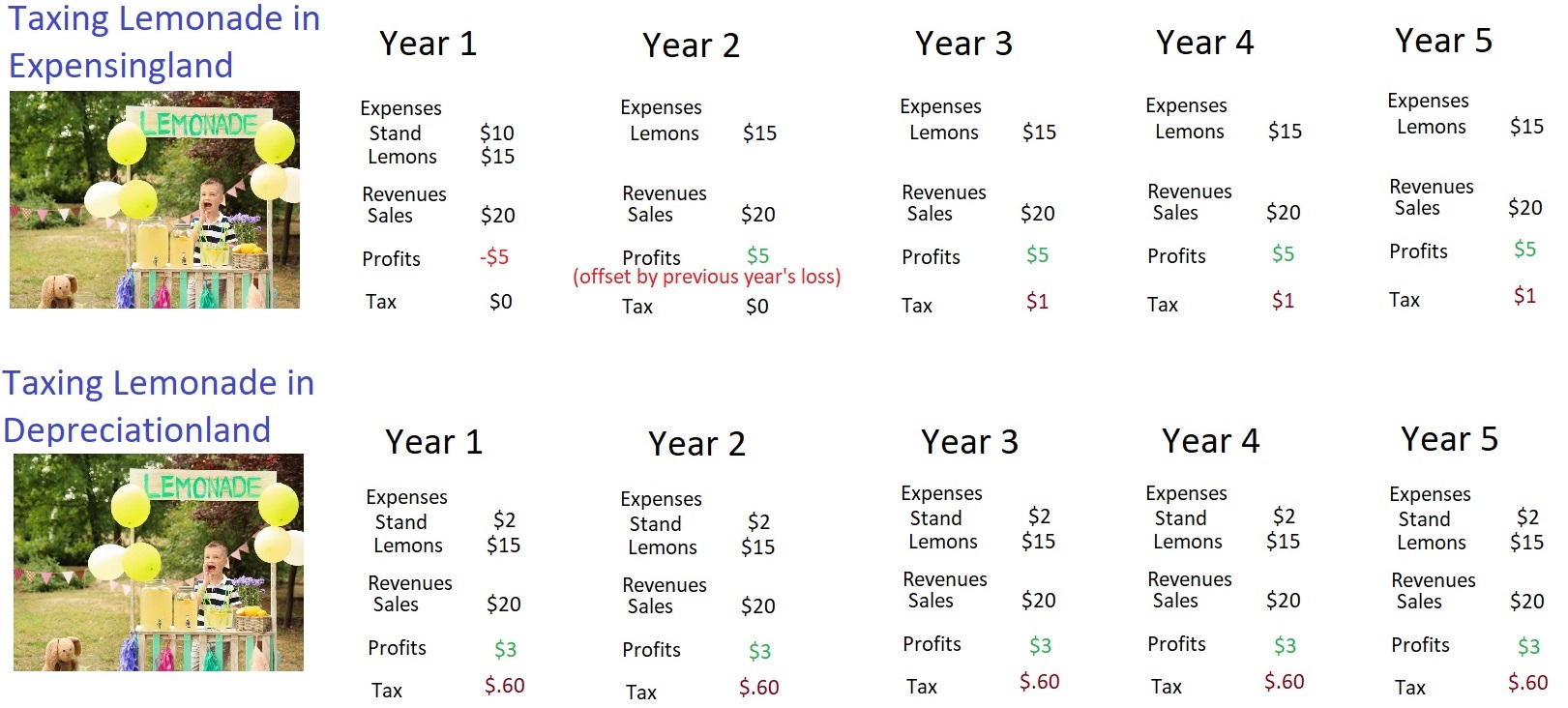
People sometimes will get excited about big-picture tax fights – whether politicians should raise taxes, whether they should add a VAT, or whether they should scrap the IRS for a flat tax. On the other had, there are a handful of tax issues that induce drowsiness but are nonetheless very important for purposes of tax […]
The Washington Post vs Elizabeth Warren
Cape Town estimate of the day
24 Apr 2026 Leave a comment
in applied price theory, development economics, growth disasters, Public Choice, urban economics Tags: South Africa
From young professionals to the working poor, many Cape Town residents complain that out-of-control housing prices have forced them to live far from the jobs, affluent schools and healthy supermarkets available in the city center. They blame deep-pocketed tourists for occupying housing in prime locations and developers for pricing them out. Some 70 percent of…
Cape Town estimate of the day
The Laffer Curve and Limits to Class Warfare Tax Policy, Part II
19 Apr 2026 Leave a comment
in applied price theory, econometerics, entrepreneurship, fiscal policy, human capital, income redistribution, labour economics, labour supply, macroeconomics, poverty and inequality, Public Choice, public economics Tags: taxation and entrepreneurship, taxation and investment, taxation and labour supply
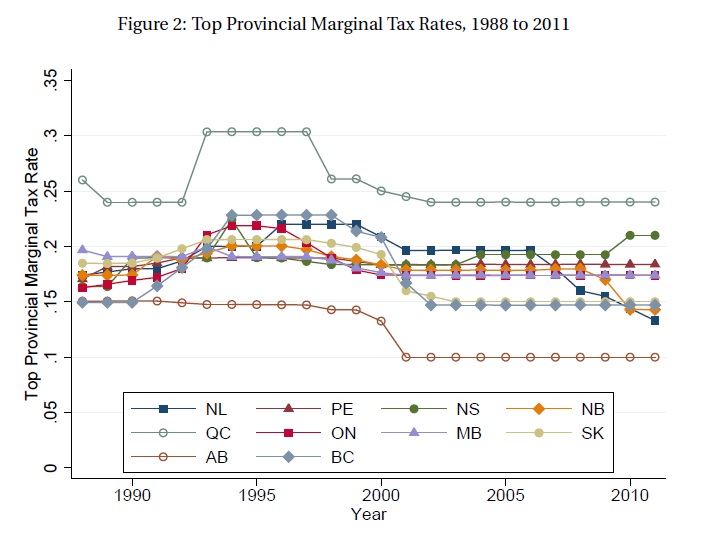
In Part I of this series back in 2014, we looked at some academic research from Canada showing that the revenue-maximizing tax rate on the richest taxpayers was 27.5 percent. A key insight from that research is that high-income taxpayers have considerable control over the timing, level, and composition of their income (just like in […]
The Laffer Curve and Limits to Class Warfare Tax Policy, Part II
The President(s) Fought the Law and the Law Won
18 Apr 2026 Leave a comment
in applied price theory, economic history, history of economic thought, income redistribution, industrial organisation, international economics, labour economics, labour supply, politics - USA, poverty and inequality, Public Choice, rentseeking, survivor principle Tags: creative destruction, free trade, tarrifs
In our textbook, Modern Principles, Tyler and I emphasize that Congress and the President are subject to a higher law, the law of supply and demand. In an excellent column, Jason Furman gives a clear example of how difficult it is to fight the law of inelastic demand: …Today a given number of autoworkers can…
The President(s) Fought the Law and the Law Won
La Marxista: Mamdani Pledges to Open First City-Run Store with Projected $30 Million Initial Cost
15 Apr 2026 Leave a comment
in economics of bureaucracy, economics of regulation, history of economic thought, industrial organisation, law and economics, Marxist economics, politics - USA, property rights, Public Choice, survivor principle, urban economics Tags: New York City, state ownership

Mayor Zohran Mamdani used his “First 100 Days” speech this week to announce that he has kept his promise to…
La Marxista: Mamdani Pledges to Open First City-Run Store with Projected $30 Million Initial Cost


Recent Comments