South Korea and Industrial Policy
23 Oct 2016 Leave a comment
in applied price theory, development economics, economic history, economics of bureaucracy, entrepreneurship, growth miracles, industrial organisation, Public Choice, rentseeking, survivor principle Tags: industry policy. South Korea, picking winners

How expensive are charter schools?
09 Sep 2016 Leave a comment
in economics of bureaucracy, economics of education, industrial organisation, Public Choice, rentseeking, survivor principle Tags: charter schools, expressive voting, New Zealand Greens, New Zealand Labour Party, rational rationality, teachers unions


The Road To Serfdom on YouTube
12 Aug 2016 Leave a comment
in comparative institutional analysis, constitutional political economy, economics of bureaucracy, F.A. Hayek, Public Choice, rentseeking
Just how anti-science are the Australian @Greens?
08 Aug 2016 Leave a comment
in applied price theory, applied welfare economics, comparative institutional analysis, constitutional political economy, development economics, economic history, economics of media and culture, economics of regulation, energy economics, environmental economics, global warming, growth disasters, growth miracles, health economics, politics - Australia, politics - New Zealand, Public Choice, rentseeking, technological progress Tags: Anti-Science left, anti-vaccination movement, atomic energy, Australian Greens, climate alarmism, coal, fluoridation, global warming, GMOs, New Zealand Greens, nuclear power, The Great Enrichment, The Great Escape, The Great Fact, vaccinations, vaccines
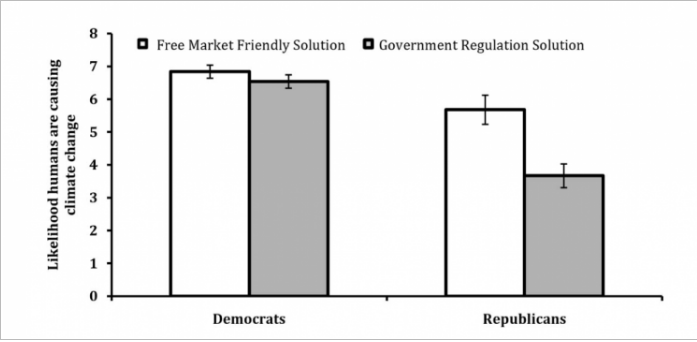
Source: Denying Problems When We Don’t Like the Solutions | Duke Today
I am not sure that the Australian Greens earn brownie points for referring to the scientific consensus on global warming as follows
Current global climate change is primarily caused by human activities contributing to increased concentrations of greenhouse gases in the atmosphere, and is already contributing to disruption of human societies through sea level rise, extreme weather events, desertification, harm to health, wellbeing and other effects. This is the overwhelming consensus of the international scientific community.
The Greens then give their opponents a free kick regarding their views on coal:and their commitment to science-based risk policy:
No new coal-fired power stations or coal mines, and no expansions to any existing power stations or mines, plus the development of programs to assist coal-dependent communities to make the transition to other more sustainable sources of economic prosperity.
There is no attempt to refer to science to justify this blanket prohibition against a specific energy source.
The views of the Australian Greens is no more science based on atomic energy:
- The world should be free of nuclear weapons and the nuclear fuel chain.
- There is a strong link between the mining and export of uranium and nuclear weapons proliferation.
- The use of nuclear weapons, nuclear accidents or attacks on reactors pose unacceptable risk of catastrophic consequences.
- Future generations must not be burdened with dangerous levels of radioactive waste.
- Nuclear power is not a safe, clean, timely, economic or practical solution to reducing global greenhouse gas emissions.
If there is any basis in science with this blanket opposition, I am sure the Australian Greens might have mentioned it.
Do the Australian Greens refer to the scientific consensus on GMOs in their policy platform as a helpful reminder or is there just have an ever rising demand for more evidence
- Genetically modified organisms (GMOs), their products, and the chemicals used to manage them may pose significant risks to natural and agricultural ecosystems.
- GMOs have not been proven safe to human health.
- Scientific evidence produced independently from the developers and proponents of the GMO must be undertaken and form the basis for assessing and licensing of GMOs. GMO assessments must be broad, independent and scientifically robust.
- The precautionary principle must be applied to the production and use of GMOs.
Unlike the New Zealand Greens, at least they do not simply reject the possibility of GMOs, the Australian Greens prefer the tactic of never being satisfied by the evidence.
The only thing I can find on the position of the Greens on fluoridation and vaccines is from a Victorian upper house MP who is half sensible on these issues. On fluoridation she says on behalf of the Greens
The Greens policy is quite clear on this. We do not have a policy for or against fluoride. Our policy supports the right of communities to determine the introduction of fluoride into local water supplies.
Not expressing the opinion on the wisdom of not putting fluoride in local water supply hardly shows a strong commitment to science-based public health policy.
On vaccines, this Victorian upper house green MP is not too bad at all:
I want to begin by stating that the Greens join health and scientific experts in absolutely supporting vaccination as a safe, proven and critical preventative health measure. The elimination of horrific diseases such as polio in Australia is testament to the incredible effectiveness and importance of vaccines…
There is also a group of people who might be called ‘hesitators’. They are not strongly opposed to vaccination, but they have heard that there might be some risks and they are thus unsure about them. These people do not perceive a strong risk of their child contracting any of the horrible diseases that immunisation prevents, so they think that on balance it might be reasonable not to vaccinate or to delay vaccination until their child is older or they simply have not yet made a decision either way. Hesitating parents may not realise that in some areas the local vaccination rate is getting well below safe levels and thus the risk of an outbreak is increasing.
This is far better than her New Zealand counterparts who do not seem to have an opinion on this vital public health issue. Indeed, the New South Wales Greens moved in the state parliament to tighten up a bill on exemptions from vaccinations.
Changes to the NSW Public Health Act in 2013 prohibited unvaccinated children from attending childcare unless their parents held “a personal, philosophical, religious or medical belief involving a conviction that vaccination under the National Immunisation Program should not take place” and they had discussed the matter with their GP”. The NSW Greens moved an amendment to remove personal, philosophical and religious beliefs as a grounds for exemption. This is one of the few times I can say something nice about a green MP.
Many on the right have their doubts about climate change science, much of which is actually delivered driven by solution aversion.They do not like the costs of the solution so they attack the rationale for it for tactical reasons. Cass Sunstein explains:
It is often said that people who don’t want to solve the problem of climate change reject the underlying science, and hence don’t think there’s any problem to solve. But consider a different possibility: Because they reject the proposed solution, they dismiss the science. If this is right, our whole picture of the politics of climate change is off.
The Left picks and chooses which scientific consensus as it accepts. The overwhelming consensus among researchers is biotech crops are safe for humans and the environment. This is a conclusion that is rejected by the very environmentalist organisations that loudly insist on the policy relevance of the scientific consensus on global warming.
What is worse is this rejection of science is not based on solution aversion; that the costs are high. It is a plain rejection of science on principle by the green left rather than for tactical reasons such as by the right on global warming.
What is more worrying is all the science that is rejected by the left will make us more prosperous. Only when the solutions make is poorer does the green left support them such as with global warming and carbon taxes.
In many ways what divides the left and right onn science is a question of values: the value placed on progress, on the Great Enrichment, on the Great Fact and on the Great Escape.
The Greens are no more than a reincarnation of the 19th century British Tory Radicals with their aristocratic sensibilities that combined strong support for centralised power with a paternalistic concern for the plight of the poor:
- 19th century Tory radicals opposed the middle classes and the aesthetic ugliness they associated with an industrial economy; and
- Like the 19th century Tory Radicals, today’s green gentry see the untamed middle classes as the true enemy.
Many Greens think they are expressing an entirely new and progressive philosophy as they mouthed the same prejudices as Trollope’s 19th century Tory squires; attacking any further expansion of industry and commerce as impossibly vulgar, because it was
ecologically unfair to their pheasants and wild ducks.
Neither the failure of the environmental apocalypse to arrive nor the steady improvement in environmental conditions because of capitalism has dampened the ardour of those well-off enough to be eager to make hair-shirts for others to wear.
True to its 1960s origins, environmentalism is a mix of bureaucrats and hippies: a global, little-brother government that keeps the lower classes in line and a back-to-the-earth localism imposed on others but presenting no real threat to the inner city green elites’ comfortable middle class lives.
Just how anti-science are the @NZGreens?
01 Aug 2016 2 Comments
in economics of regulation, environmental economics, global warming, health economics, politics - New Zealand, Public Choice, rentseeking Tags: Anti-Science left, anti-vaccination movement, climate alarmism, fluoridation, global warming, GMOs, New Zealand Greens, vaccinations, vaccines
One out of four for accepting the consensus position in the sciences of climate change, GMOs, vaccines and fluoridation. A rather disappointing scoreboard for the New Zealand Greens.
Let us start with the good: the position on climate science from the Greens policy platform:
We must act according to credible science on climate change, which demands urgent action to reduce greenhouse gas emissions as soon as possible, and sustained action to safely remove excess greenhouse gas from the atmosphere.
Let us move on to the bad which is GMOs, quoting from their platform
The Green Party believes that Genetic engineering should occur within a contained laboratory setting only. Our food and our environment must be kept GE Free. To this end, the Green Party will:
Ban the commercial release and field trials of GE organisms.
Prohibit field-testing or production of GE foods within New Zealand.
Work towards a ban on GE food imports.
Require safety testing for any imported GE food or commodity that is allowed to enter the New Zealand food supply.
Allow gene technology in secure containment to continue to be used subject to assessment by the Environmental Risk Management Agency.
Now let us move on to the ugly which is vaccinations, again quoting from their platform, which is not to mention it at all. Greens health spokesman Kevin Hague said
Our official position is influenced by the fact that we do not have a firm policy on it as we don’t have consensus from our members. However there are some key points on which we all do agree;
- Immunisation is an individual medical choice, and should never be mandatory. Nor should it be promoted in a way that makes people feel pressured into being immunised, or immunising their children.
- Parents should have access to impartial information which provides them with information about the risks and benefits of immunisation, so that all individuals (and parents in the case of children) can make an informed decision about immunisation.
- Parents should not be penalised for not immunising their children, nor should there be incentive payments or rewards or access to other goods and services, or any linking of immunisation to benefit entitlement.
- Some parents will choose to have their child immunised against some diseases, but not others. No parents should be forced to make a decision between their child having all immunisations or having none.
That strike two so now let us move on to the decidedly ugly which is fluoridation
The presumption that parents know the best interests of their children requires very strong evidence before it is overturned. Of course, you do not have too tolerate their unvaccinated children coming to school to infect your children. It is another thing for the Green Party of New Zealand to see both sides of the fluoridation argument:
C. Fluoridation of Community Water Supplies
The issue of fluoridating community water supplies requires a difficult balance between the public health effects and the rights of individuals to opt out altogether or avoid excessive intake. The Party membership has indicated that when considering fluoridation proposals, the Green Party caucus shall:
- Have particular regard to the public health benefits of fluoridated community water supplies.
- Have particular regard to the potential public health risks of excessive fluoride consumption via community water supplies.
- Have regard for the ability of individuals to opt out.
The Green Party will:
- Support the use of ‘opt-out’ options by local authorities for residents living in areas with fluoridated public water supplies, where shown to be feasible.
- Commission an independent study on the impacts of fluoridation to public health.
- Support education initiatives to advise caregivers of the potential for babies to develop dental fluorosis when mixing formula with fluoridated water
One out of four is not good enough considering how prissy this Greens are about scientific consensus on climate change.
Sir Humphrey and Jim Hacker discuss art subsidies
30 Jul 2016 Leave a comment
in economics, rentseeking, television Tags: art subsidies
Yes Prime Minister on a minister of manufacturing @jamespeshaw @julieannegenter
21 Jul 2016 Leave a comment
in comparative institutional analysis, economics, economics of bureaucracy, economics of media and culture, industrial organisation, international economics, politics - New Zealand, Public Choice, rentseeking, survivor principle, television Tags: corporate welfare, industry policy, New Zealand Greens, picking losers, picking winners, Yes Prime Minister
Tullock vindicated by how the Romanian revolution succeeded
16 Jul 2016 Leave a comment
in applied price theory, comparative institutional analysis, constitutional political economy, defence economics, economics of bureaucracy, Gordon Tullock, Public Choice, rentseeking Tags: economics of revolutions, fall of communism, military coups, people power, Romania
The obituaries today for Victor Stanculescu, the Romanian army chief at the time of the 1989 revolution, vindicated Gordon Tullock’s view that popular revolutions are in fact military coups.
Tullock argues that any dictator can survive popular revolts as long as he has
- a secret police that is moderately competent and willing to torture and kill; and
- offers large rewards for informing on members his own entourage plotting to overthrow him.
Ordinary citizens obey dictators because if they don’t, they are highly unlikely to make any difference in any revolt and could get killed during the uprising even if it succeeds. Worse awaits them if the revolt fails.
Most dictators do not anoint a formal successor while they are in office. Tullock argued that as soon as a likely successor emerges, loyal retainers start to form alliances with that person and may see private advantage in bringing his anointed day forward.
More than a few autocrats were murdered in their sleep. To his very last day, Stalin locked his bedroom door because he did not trust the bodyguards who had been with him since the 1920s.
The role of street protests in the Arab Spring was to throw in the possibility of mutinies and desertions in the army and police. Previous alliances are thrown into doubt especially as the autocrat is old and sick, but had for many years grooming his 39 year-old son to inherit power.
Turning back to the Romanian revolution, Victor Stanculescu was the recently appointed army chief and initially stuck by the regime. He ordered the troops to open fire on protesters and at least 1000 died from in the shootings in the street.
In common with the Arab Spring, a large street protest did led him to reconsider his position:
Sniffing Mr. Ceausescu’s defeat, General Stanculescu quickly returned to Bucharest, where he faked a broken leg to avoid further counterrevolutionary deployment. Promoted to defense minister after the incumbent minister killed himself, he helped Mr. Ceausescu and his wife, Elena, flee by helicopter from the roof of party headquarters.
But fearing that the copter had been spotted by radar and would be shot down, the pilot hastily landed. Mr. Ceausescu hijacked a passing car, but he and his wife were soon surrounded and arrested.
After the couple were captured, General Stanculescu organized their trial by a military court and recruited the firing squad (before the verdict, by some accounts) that executed them on Christmas Day. He then joined the new government.
But for this late switch by the army chief, the popular revolt would never have succeeded. The army was needed to put down the still loyal security police. The army chief’s top priority was to execute Ceausescu as quickly as possible so that he was not a rallying point for a counter coup.
Ceausescu found out that his game was up when who he thought was his still loyal army chief arrived at his hideout with military judges to try and execute him.
About 10 years later, the Romanian government turned against the man who made the revolution and put him in prison for the many deaths in the street when he was on the side of the regime putting down the revolt.
Not so good an idea. A little bit of forgiveness carries a lot of weight encouraging late switching within the ruling elite and army that makes the difference to bringing down the old regime.
The Economist Crony Capitalism Index
08 Jul 2016 Leave a comment
in applied price theory, applied welfare economics, comparative institutional analysis, constitutional political economy, development economics, economics of bureaucracy, entrepreneurship, financial economics, growth disasters, growth miracles, industrial organisation, politics - USA, Public Choice, rentseeking, survivor principle Tags: crony capitalism, superstar wages, superstars, top 1%

…
Nitpicking @stevenljoyce reply 2 @TaxpayersUnion on corporate welfare @JordNZ
05 Jul 2016 Leave a comment
in applied price theory, applied welfare economics, comparative institutional analysis, economics of bureaucracy, industrial organisation, politics - New Zealand, Public Choice, rentseeking, survivor principle Tags: creative destruction, endogenous growth theory, industry policy, innovation, picking losers, picking winners, public goods, R&D, water economics
The best the Minister for Economic Development, Steven Joyce, could do in response to my recent report on corporate welfare was nit-picking. Joyce said my definition of corporate welfare was flawed and that spending on R&D will grow the economy. He said
“To brand things like tourism promotion and building cycle-ways as corporate welfare is, I think, creative but not accurate at all.”
Joyce also said my report was
just somebody picking out a whole bunch of government programmes that in many cases don’t involve payments to firms at all…
Those that do involve payments to firms are specifically designed to encourage the development for example of the business R&D industry. Politicians don’t choose them.
Payments in kind are business subsidies. R&D is so important to the economy that the last thing you want is its direction to be biased by funding from government. Bureaucrats have a conservative bias and do not fund oddballs and long shots. The oddballs and hippies in the picture below could only afford the photo because they won a radio competition in Arizona.
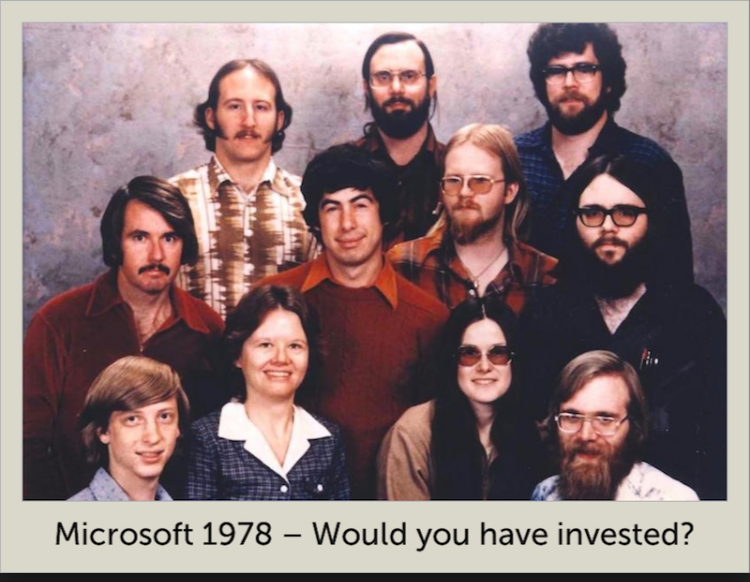
The R&D expenditure that was criticised in my report was commercialisation, not basic research, which was specifically praised. Which research to commercialise is for entrepreneurs.
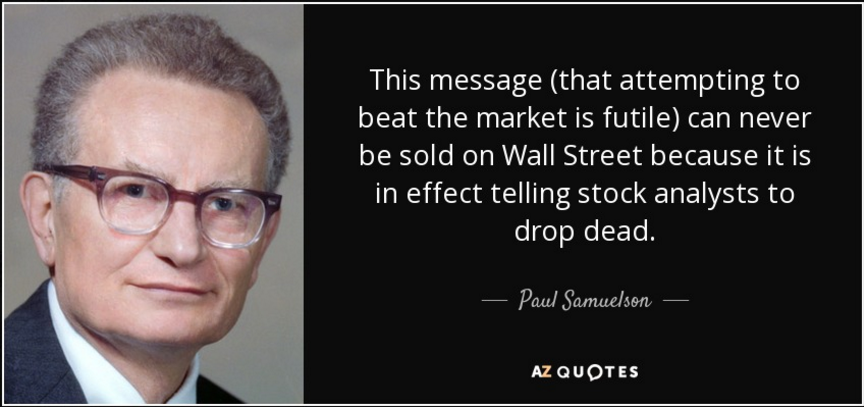
There is no reason whatsoever to think bureaucrats administering R&D subsidy budgets set by politicians are any better than private entrepreneurs at picking the next big thing.
Page 33 of "An Illustrated Guide to Income" more economic #dataviz at: bit.ly/10M7lqR http://t.co/FcmaqZWB32—
Catherine Mulbrandon (@VisualEcon) May 09, 2013
If bureaucrats were any good at picking winners, were any good at beating the market, they would go work for a hedge fund on an astronomically better salary package. The salary package of one top hedge fund manager exceeds the entire payroll budget of most New Zealand government departments including those administering R&D subsidies and other hand-outs.

Government expenditure in vital areas such as innovation should be justified on the basis of cost-benefit ratios and a rationale for why bureaucrats have superior access to information about the entrepreneurial prospects of unproven technologies and product prototypes.
Subsidies should not be defended because of their popularity and sexiness as Mr Joyce did for the film industry, tourism promotion and ultra-fast broadband
If they told New Zealanders that in their view tourism promotion should be cancelled, the film industry should close down, that their shouldn’t be any ultra-fast broadband…I don’t think people would be that enamoured with it.
On irrigation funding, Mr. Joyce cited a report by NZIER that found irrigation contributes $2.2 billion to the economy. Irrigation is a private good which can funded by pricing it properly including the recovery of capital costs. There is no case for a subsidy.

Public goods have spillovers, private goods such as water and irrigation do not. Users can fund the irrigation themselves buying as little or as much water as they are willing to pay out for out their own pockets. The NZIER report noted that it was not about the case for public funding:
… we are not able to quantify the environmental or social impacts if irrigation had never occurred. We also do not attempt to investigate the relative merits of public versus private sector funding of the schemes.

#Corporatewelfare since 2008 @JordNZ @MatthewHootonNZ @GrantRobertson1 @stevenljoyce
02 Jul 2016 Leave a comment
in applied price theory, economics of bureaucracy, entrepreneurship, industrial organisation, politics - New Zealand, Public Choice, rentseeking, survivor principle Tags: corporate welfare, industry policy, picking losers, picking winners, The pretense to knowledge
My latest corporate welfare report is out at the Taxpayers Union website. The company tax could be 6 percentage points lower but for this generosity of politicians picking winners.

Source: New Zealand Budget Papers, various years.
It is not as bad as you think under the last Labour government budget. $700 million of those hand-outs to business was seed capital for agricultural research institute. That institute to be run out of the investment income on that $700 million one-off injection which the incoming National Party-led government cancelled.
Another $675 million in that last Labour budget was to KiwiRail and OnTrack. Other than that, the Labour Party ran a pretty tight ship on business subsidies. There are no particular record of picking winners. Labour did buy a real loser in KiwiRail. You heard it here first.
.@GreenpeaceNZ picks & chooses its scientific consensus #GMOs #globalwarming
02 Jul 2016 Leave a comment
in development economics, environmental economics, global warming, health economics, politics - New Zealand, Public Choice, rentseeking Tags: activists, agricultural economics, antimarket bias, climate alarmism, do gooders, expressive voting, GMOs, green rent seeking, Greenpeace, Twitter left
For a generation, a campaign by the green movement against the growing of genetically modified crops has held sway across Europe. These foodstuffs are a threat to health, the environment and the small independent farmer, NGOs have argued.
As result, virtually no GM crops have been grown on Europe’s farms for the past 25 years. Yet hard evidence to support what is, in all but name, a ban on these vilified forms of plant life is thin on the ground. In fact, most scientific reports have indicated that they are generally safe, both to humans and the environment.
This point was endorsed last week when a 20-strong committee of experts from the US National Academies of Science announced the results of its trawl of three decades of scientific studies for “persuasive evidence of adverse health effects directly attributable to consumption of foods derived from genetically engineered crops”. It found none.
Instead the group uncovered evidence that GM crops have the potential to bestow considerable health benefits. An example is provided by golden rice, a genetically modified rice that contains beta carotene, a source of vitamin A. Its use could save the lives of hundreds of thousands of children who suffer from vitamin A deficiency in the third world, say scientists.
Source: The Observer view on the GM crops debate | Opinion | The Guardian
Scientists and governments around the world overwhelmingly agree that climate change is real, is largely human-induced and needs urgent action to prevent.
There is, in fact, a broad and overwhelming scientific consensus that climate change is occurring, is caused in large part by human activities (such as burning fossil fuels), and if left un-checked will likely have disastrous consequences.
Furthermore, there is solid scientific evidence that we should act now on climate change – and this is reflected in the statements by these definitive scientific authorities.
Why the polarisation of Congress? The Great Restraint? Sound-bite politics?
01 Jul 2016 Leave a comment
in constitutional political economy, economics of media and culture, income redistribution, politics - USA, Public Choice, rentseeking Tags: competition for political influence, congressional polarisation, growth of government, interest groups, political polarisation, size of government, soundbites, special interests
My two cents on the sharp rise of partisanship and congressional polarisation is they are driven by the great restraint in the growth of government spending in the 1980s.
From 1950 to 1980 the size of government doubled but then stopped dead in the 1980s. This great restraint on the growth of government happened everywhere. It was not just Thatcher’s Britain or Reagan’s America. It was everywhere, France and Germany, and even Scandinavia.
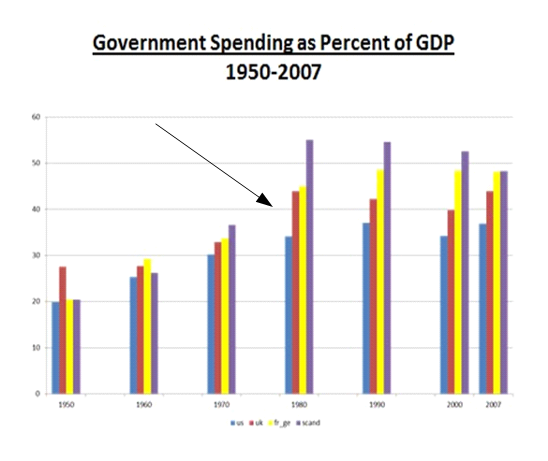
Source: Sam Peltzman, The Socialist Revival? (2012).
Peltzman’s data which I have charted has government spending in the USA, Britain, France and Scandinavia doubling between 1950 and 1980, and then nothing much happened between 1980 and 2007 – the size of government was pretty flat as a share of GDP for 27 years.
Governments everywhere hit a brick wall in terms of their ability to raise further tax revenues. Political parties of the Left and Right recognised this new reality.
Government spending grew in many countries in the m-d-20th century because of demographic shifts, more efficient taxes, more efficient spending, a shift in the political power from those taxed to those subsidised, shifts in political power among taxed groups, and shifts in political power among subsidised groups Importantly for explaining later political polarisation, that growth of government was concentrated in four programs – defence, health, education and income security
The median voter in all countries was alive to the power of incentives and to not killing the goose that laid the golden egg which underwrote the initial growth in the size of government. The rising deadweight losses of taxes, transfers and regulation limit inefficient policies and the sustainability of redistribution.
After 1980, the taxed, regulated and subsidised groups had an increased incentive to converge on new lower cost modes of redistribution to protect what they had. More efficient taxes, more efficient spending, more efficient regulation and a more efficient state sector reduced the burden of taxes on the taxed groups. Reforms ensued after 1980 led by parties on the Left and Right, with some members of existing political groupings benefiting from joining new coalitions.
A lot more is at stake when the main political battleground is dividing a relatively fixed revenue pie post-1980 than a growing pie Between 1950 and 1980. Fiscally conservative voters will elect parties strongly committed to no new taxes. Their opponents will look for equally ideologically committed parties. Peltzman makes the very interesting point that:
There is no new program in the political horizon that seems capable of attaining anything like the size of any of these four. For the time being the future government rest on the extent of existing mega programs.
Health and income security account for 55% of total government spending in the OECD. It is in these two programs where the future of the growth of government lie.
The pressure for that growth in government will come from the elderly. Governments will have to choose between high taxes on the young to fund the current generosity of social insurance, healthcare and old-age pensions or find other options. Peltzman explains this political tension for programs benefiting the elderly in his essay The Socialist Revival:
Deficit financing of future growth in these programs becomes increasingly problematic. So we now have the seeds of political conflict rather than consensus.
These very large programs confer substantial benefits on some. These beneficiaries resist any change in the status quo. But the benefits have to be financed at substantial cost to today’s workers. Many of them will not benefit on balance from these programs over their lifetimes. It is by no means clear whether the number of winners exceeds the number of losers today.
Policies that were once unthinkable now can be discussed and even implemented here and there. These include increased retirement ages, less generous public health care programs, more reliance on private saving for retirement and so forth.
Given that intergenerational and other struggles over who is taxed and who faces benefit cuts, middle-of-the-road politicians lose their appeal to the electorate.
Another reason for greater political polarisation is the rising cost of time. Sound-bites news programs and current affairs are now a couple of seconds long when they used to be 15 seconds long maybe 30 years ago.
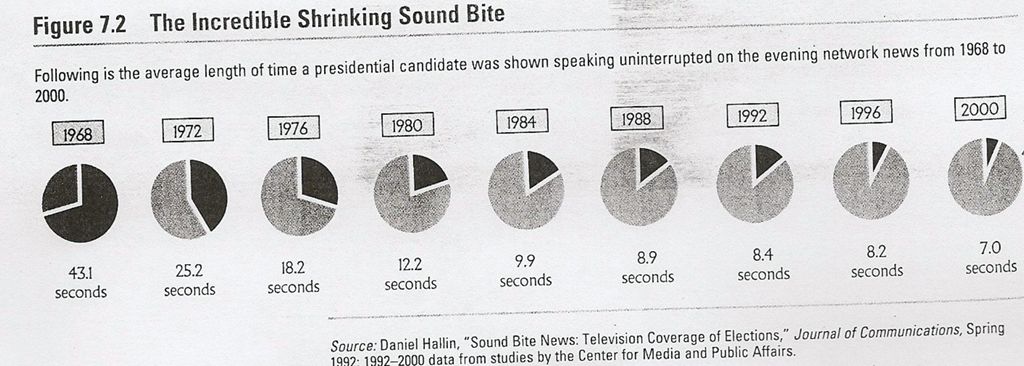
People have less time to pay attention to politics so they want to work out quickly from short sound-bites whether the politicians they are contemplating supporting are made of the right stuff. For voters in a hurry, conviction politicians are more appealing be they of the left or of the right. Voters want someone who will hold fast against new taxes or for new taxes as the case may be. Much is at stake as Sam Peltzman explained in his 2012 essay The Socialist Revival:
The steady growth of the old age population share is on the verge of a substantial acceleration… This means that government health care and public pension spending growth will also have to accelerate merely to keep the promises implicit in present programs.
The political economy will have to choose between higher taxes on the young to keep these promises, an accelerated shrinkage of the rest of the budget or less generous public health and pension programs. It is not clear yet which way the decision will go.
What is clear is that for the first time since the invention of the welfare state the magnitude and generosity of its signature programs is at political risk.
In this stand-off between those who might have to pay more in taxes and those who might receive less in old age pensions, welfare benefits and services including healthcare, neither side wants a politician naturally inclined to blink and compromise. They will elect politicians who hang tough for their side of the argument and their share of the budget.


Recent Comments