The distributional impact of alternative energy incentives http://t.co/8qNo4cPJ1r pic.twitter.com/KJnju7SkTA
— NBER (@nberpubs) September 5, 2015
The distributional impact of alternative energy incentives
23 Feb 2016 Leave a comment
in energy economics, environmental economics, fiscal policy, politics - USA, public economics, rentseeking
And people vote for @BernieSanders because he is honest
21 Feb 2016 Leave a comment
in fiscal policy, income redistribution, macroeconomics, politics - USA, Public Choice, public economics, rentseeking Tags: 2016 presidential election, cranks, quackery, rational ignorance, rational irrationality
@ChrisHipkins @jacindaardern New Zealand graduate premium @dbseymour
17 Feb 2016 3 Comments
in applied price theory, economics of education, human capital, income redistribution, politics - New Zealand, poverty and inequality, rentseeking
How conceited students are to complain about a $20,000 student loan when they got $1/2 million coming down the pipe. 
Source: A Degree is a smart investment | Universities New Zealand – Te Pōkai Tara.
Self-appointed social justice warriors in the New Zealand Labour Party and New Zealand Greens pander to this middle class greed. They should be ashamed of themselves.
26% of eligible students do not take out a student loan so they would really get a leg up from the abolition of tuition fees.
The median repayment time for those who left study in 2011 and remained in New Zealand was 5.8 years.
% billionaires who made their money through political connections or resource industries
13 Feb 2016 Leave a comment
in economics of bureaucracy, economics of regulation, energy economics, entrepreneurship, industrial organisation, poverty and inequality, privatisation, rentseeking, resource economics
The 1826 Billionaires in the Forbes 2015 list are classified as rich through political connections if they made their money through past political positions, close relatives or friends in government, or questionable licenses, privatisations or resource extraction industries.

All privatizations were included in the politically-connected/resource-related category despite my data source acknowledging the possibility that the new owners may have transformed the company. Resource billionaires were all deemed to be lucky or cronies by my data source rather than diligent as some most certainly were. This is something of a slur by my data source given the industriousness of some resource billionaires some of whom were even geologists.
Political cronyism is a path to billionaire wealth mainly in the developing countries. Less than 10% of Chinese billionaires made their money through political connections, which is surprising.
Regulating Monopolies: A History of Electricity Regulation
09 Feb 2016 Leave a comment
in applied price theory, economic history, economics of bureaucracy, economics of religion, industrial organisation, law and economics, Public Choice, rentseeking, survivor principle Tags: competition law, electricity industry, natural monopolies, network industries
Here’s where Republicans and Democrats differ on the role of government
08 Feb 2016 Leave a comment
in defence economics, economics of bureaucracy, economics of education, economics of information, economics of media and culture, economics of regulation, energy economics, entrepreneurship, environmental economics, income redistribution, politics - USA, Public Choice, rentseeking Tags: 2016 presidential election Republican Party, Democratic Party, votor demographics
A bizarre Finnish amateur racing car practice for redistributing winning
06 Feb 2016 Leave a comment
in economics of media and culture, fiscal policy, income redistribution, labour economics, labour supply, law and economics, poverty and inequality, property rights, public economics, rentseeking Tags: basic income, car racing, Finland, guaranteed minimum income, negative income tax
Agricultural subsidies as a % of gross farm receipts in USA, Canada, Japan, Australia and New Zealand since 1986
02 Feb 2016 1 Comment
in economic history, politics - Australia, politics - New Zealand, politics - USA, Public Choice, rentseeking Tags: agricultural subsidies, Australia, Canada, cultural economics, Japan
Source: Agricultural policy – Agricultural support – OECD Data.
Agricultural support is defined as the annual monetary value of gross transfers to agriculture from consumers and taxpayers arising from government policies that support agriculture, regardless of their objectives and economic impacts.
#climatechange & #globalwarming job trends @GreenpeaceNZ @NZGreens
02 Feb 2016 Leave a comment
in environmental economics, global warming, rentseeking
A lot of jobs depend upon action to fight climate change and global warming. Perhaps they should be little bit easier about accusing others of being on the payroll to criticise or advocate for a particular position in those debates.
There has been a recession in the climate change and global warming industry in the last few years. Then there was a bit of a rebound after the Paris climate talks and subsequent agreement to promise to do something but whatever that was is up to you and your domestic political constituencies.

Source: climate change Job Trends | Indeed.com.

Source: climate change Job Trends | Indeed.com.

Source: Global warming Job Trends | Indeed.com.

@GreenpeaceUSA I must photoshop this #TPPANoWay 4 climate treaties
02 Feb 2016 Leave a comment
in environmental economics, global warming, international economic law, international economics, rentseeking

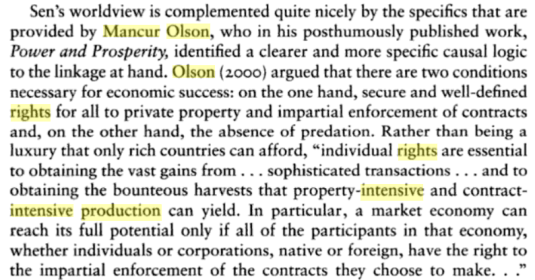
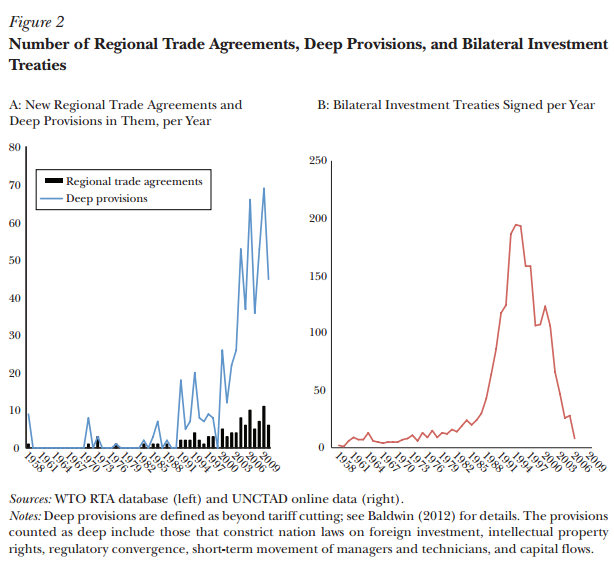
#TPPANoWay @janlogie @oxfamnz trade agreements and consolidating democracy
02 Feb 2016 Leave a comment
in constitutional political economy, development economics, economics of regulation, growth miracles, international economics, politics - New Zealand, Public Choice, rentseeking
The key reason why China joined the World Trade Organisation and other trade agreements is to bring some semblance of law to an authoritarian country. 
Source: AEAweb: AEJ: Macro (6,2) p. 29 – Free Trade Agreements and the Consolidation of Democracy via Max Roser.
Both the elites and ordinary people are prospering tremendously from the rise of capitalism in China, Vietnam and other places. A move away from this liberalisation to a more authoritarian setting would cost too many people too much money.
In the course of these economic liberalisations, China and Vietnam, for example, changed from totalitarian dictatorships to tin-pot dictatorships. As long as you keep out of politics in these countries, there is a fair degree of freedom and much more freedom compared to the days of communism.
Percentage employed in agriculture in the world's major economies over the last 50 years. https://t.co/UbaDnaE8Lr—
Robert Wilson (@CountCarbon) January 08, 2016
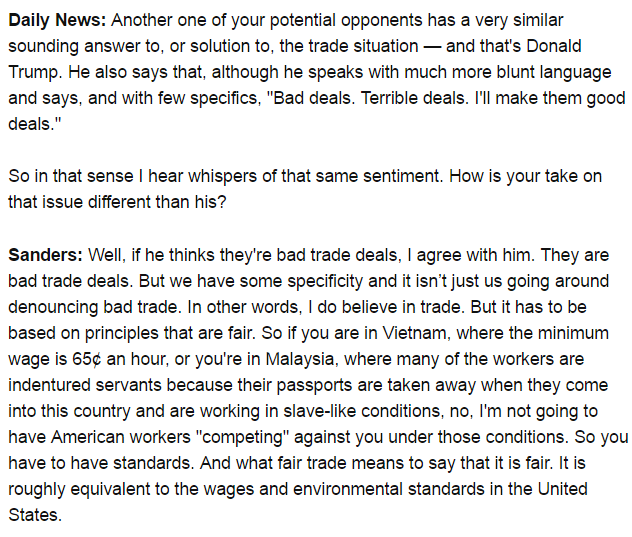
@BernieSanders proud of @AndrewLittleMP @grantrobertson1 @bryce_edwards
31 Jan 2016 1 Comment
in applied price theory, economics of education, income redistribution, politics - New Zealand, public economics, rentseeking
On the decline of socialism in the Americas
21 Jan 2016 Leave a comment
in applied price theory, development economics, economics of bureaucracy, growth disasters, Marxist economics, Public Choice, rentseeking Tags: 2016 presidential election, Argentina, Brazil, Venezuela
Why taxi drivers are suddenly getting nicer?
07 Jan 2016 1 Comment
in applied price theory, economics of regulation, rentseeking, transport economics Tags: creative destruction, taxi regulation, Uber
Where I live, taxis suddenly starting texting to say they are five minutes away or outside.
Source: Why taxi drivers are suddenly getting nicer – The Washington Post
Recent Comments