perceptions of the UN's impact from the development community http://t.co/k8XYisxGaK—
Laurence Chandy (@laurencechandy) October 07, 2014
Capitalism and freedom is noticeably missing from this survey of UN effectiveness
09 Apr 2015 Leave a comment
in comparative institutional analysis, constitutional political economy, development economics, growth disasters, growth miracles, Public Choice, rentseeking Tags: capitalism and freedom, overseas development assistance, UN
People forget California is pretty much a desert, yet it is a major producer of fruit and vegetables
08 Apr 2015 Leave a comment
in applied price theory, Public Choice, rentseeking Tags: California, drought, water pricing
Why California's drought is a disaster for your favorite fruits and vegetables bit.ly/1c11TGf #WorldWaterDay http://t.co/1GoecvI1WH—
Mother Jones (@MotherJones) March 22, 2015

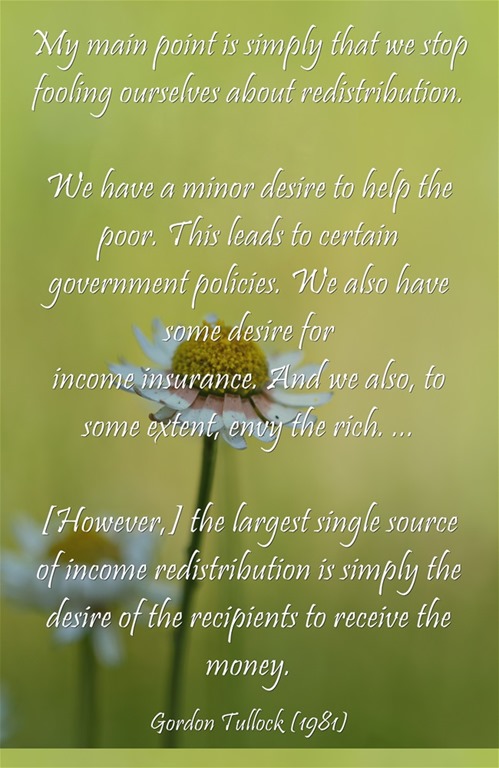
Gordon Tullock explains his theory of popular revolutions and palace coups
01 Apr 2015 Leave a comment
in economics of bureaucracy, Gordon Tullock, income redistribution, Public Choice, rentseeking Tags: Arab Spring, autocracy, military coups, palace coups, popular revolutions
[I]n most revolutions, the people who overthrow the existing government were high officials in that government before the revolution.
If they were deeply depressed by the nature of the previous government’s policies, it seems unlikely that they could have given enough cooperation in those policies to have risen to high rank. People who hold high, but not supreme, rank in a despotism are less likely to be unhappy with the policy of that despotism than are people who are outside the government.
Thus, if we believed in the public good motivation of revolutions, we would anticipate that these high officials would be less likely than outsiders to attempt to overthrow the government.
From the private benefit theory of revolutions, however, the contrary deduction would be drawn. The largest profits from revolution are apt to come to those people who are (a) most likely to end up at the head of the government, and (b) most likely to be successful in overthrow of the existing government. They have the highest present discounted gain from the revolution and lowest present discounted cost.
Thus, from the private goods theory of revolution, we would anticipate senior officials who have a particularly good chance of success in overthrowing the government and a fair certainty of being at high rank in the new government, if they are successful, to be the most common type of revolutionaries.

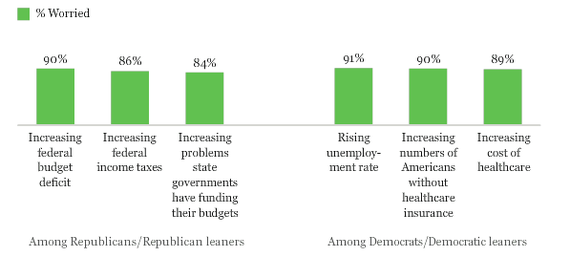
Partisan Politics and the Inequality Gap — Atlantic Mobile
01 Apr 2015 Leave a comment
in applied price theory, applied welfare economics, income redistribution, Public Choice, rentseeking Tags: top 1%
No one says this about economists
27 Mar 2015 Leave a comment
in applied price theory, applied welfare economics, Austrian economics, comparative institutional analysis, constitutional political economy, F.A. Hayek, liberalism, Public Choice, rentseeking Tags: evidence-based policy, offsetting behaviour, science and public policy, The fatal conceit, The pretence to knowledge, unintended consequences
Scientists dream about what could be.
Economists remind you of price tags and unintended consequences
The international success of Big Wind
24 Mar 2015 Leave a comment
in environmental economics, global warming, rentseeking Tags: Big Wind, climate alarmism, global warning, green rent seeking, renewable resources, wind power
On burden of proof
20 Mar 2015 Leave a comment
in environmental economics, environmentalism, global warming, liberalism, rentseeking Tags: climate alarmism, conjecture and refutation, green rent seeking, philosophy of science, precautionary principle
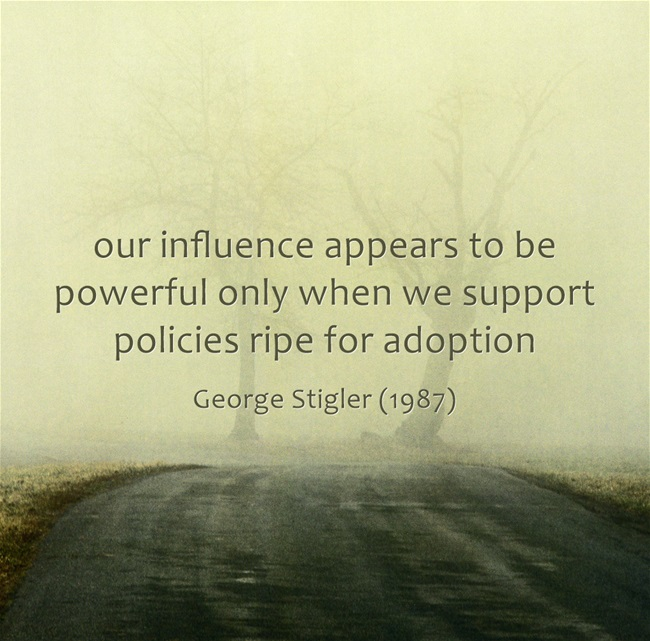
George Stigler on the extensive influence of economists on public policy
20 Mar 2015 Leave a comment
in George Stigler, history of economic thought, Public Choice, rentseeking Tags: evidence-based policy, expressive politics, expressive voting, intellectuals, politics of reform, rational ignorance, rational irrationality
.
China’s richest lawmakers make America’s look straight up poor
14 Mar 2015 Leave a comment
in income redistribution, politics - USA, Public Choice, rentseeking Tags: China
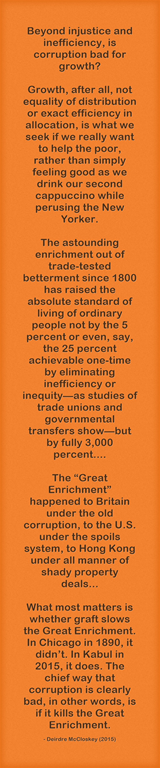
Deirdre McCloskey on corruption and economic development
13 Mar 2015 Leave a comment
in applied price theory, applied welfare economics, comparative institutional analysis, development economics, economic history, economics of crime, growth disasters, growth miracles, law and economics, Public Choice, rentseeking Tags: corruption, Deirdre McCloskey, The Industrial Revolution
Richard Lindzen on back when periods of warming were climate optima
12 Mar 2015 1 Comment
in economic history, economics of bureaucracy, environmental economics, global warming, Public Choice, rentseeking Tags: Anti-Science left, climate alarmism, green rent seeking, Richard Lindzen


Chiselling on the Closer Economic Relations agreement between New Zealand and Australia
10 Mar 2015 Leave a comment
in economics of media and culture, economics of regulation, politics - Australia, politics - New Zealand, rentseeking Tags: barriers to entry, closer economic relations, creative destruction, export pricing, free trade, Hollywood economics, price discrimination, protectionism, rent seeking
Back in the day, New Zealand television programming was sold cheaply into the Australian market. Many cultural and other products are exported into foreign markets and sold for whatever they can get above the price of shipping or digital transmission. What else explains all that rubbish on cable TV?
Under the Closer Economic Relations agreement that creates a single market between Australia and New Zealand, New Zealand made television programming content must be treated the same way as Australian content so it was included in their 50% local content rules for commercial television back from whenever I remember this story from. There was a Federal Court of Australia case that ruled that New Zealand television programming was Australian content programming for the purposes of the relevant media regulations because of Closer Economic Relations.

From the late 1990s, with revival of the New Zealand film and television industry, New Zealand content was starting to flood the Australian market, especially in the off-season in the summer when stations were looking for cheap content to fill a low ratings period.

Naturally, this Kiwi invasion did not please the rent seeking Australian television programme production industry and many a mendicant actor, writer and producer
Where there is a will, where there is a way: minimum quality standards are introduced into the Australian content rules defined by price – a price that happen to be above what the television stations used to pay for New Zealand made programming.
 Utopia, you are standing in it!
Recent Comments