This is the most important graph in the world. An entire industry depends on denying it. pic.twitter.com/qh1eO0sjei
— Daniel Hannan (@DanielJHannan) February 26, 2015
Should young women pay the same car insurance premiums as young men?
28 Feb 2015 Leave a comment
in applied welfare economics, economics of regulation, rentseeking, transport economics Tags: gender neutral insurance premiums, offsetting behaviour, sex discrimination
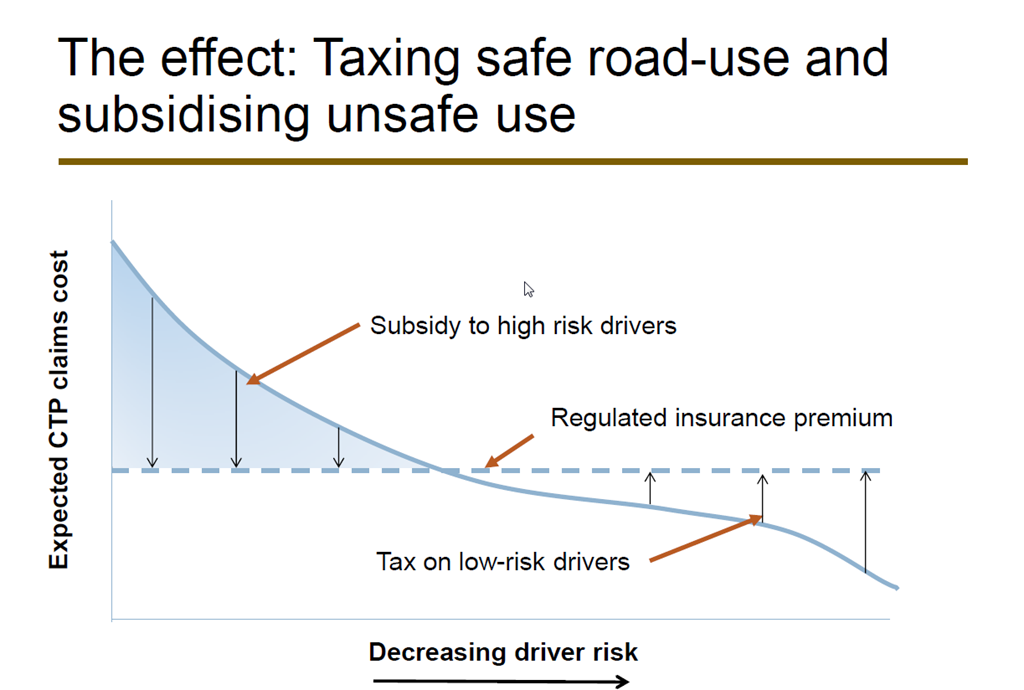
Thrill-seeking young men are prone to drive too fast, late at night, and cause horrific fatalities. Young males are 10 times more likely to be killed or injured than a driver aged over 35.

Young women’s car insurance premiums increased by 50% after insurers adjust their prices to comply with new European "gender neutral" rules on premiums.
.
/cdn0.vox-cdn.com/uploads/chorus_asset/file/693784/interest_groups.0.jpg)
Why does the Left in New Zealand support old age pensions for millionaires?
26 Feb 2015 Leave a comment
in applied welfare economics, income redistribution, politics - New Zealand, Public Choice, rentseeking Tags: Left-wing hypocrisy, New Zealand superannuation, old age pensions

Michael Littlewood from the Retirement Policy and Research Centre has a commentary on redesigning NZ Superannuation. He says (and I agree) that we should not just look at one issue in isolation or just the cost.
He highlights eight key design features that should be agreed on. They are:
- Universal or means-tested (I favour means-tested if the administrative costs of doing so are not prohibitive)
- Age of entitlement (I favour increasing it and tying it to life expectancy)
- Residency test – how long should someone live here to quality. The current threshold is ten years and I think it should be higher. It used to be 25 years.
- The level. Currently is 43% of the net average wage for a single person. Set at 66% of the after-tax national average wage for a couple.
- How to revalue? Is indexed to both CPI and the average wage.
- How to pay for it? Pay as you go and partially pre-funded. Should it be both? What should the mix be?
- Payments to single people? Why does a married couple get less than two singles living together?
- Overseas pensions? The rules for deducting overseas pensions are inconsistent
via Redesigning NZ Super | Kiwiblog.
I was walking back to the office with a mate who I will call the ecological socialist after a meeting with the government department responsible for income support to old age people in New Zealand.
We were both shaky our heads in utter disbelief. We couldn’t understand their idea of defending an old age pension that is free of any means test been paid to millionaires on the grounds of egalitarianism.

By coincidence, we are both Australians where the old age pension is means tested. We couldn’t understand in any way, shape or form the notion of paying old age pensions to rich people when that money could be used to increase the old age pension for those who we lived in ordinary circumstances all their lives and couldn’t save for their retirement.
I prefer to link MPs pay rises to reductions in the trans-Tasman per capita income gap
26 Feb 2015 Leave a comment
in economic growth, macroeconomics, Public Choice, rentseeking Tags: incentive pay, lost decades, MPs pay, Trans-Tasman income gap

Yet another way to beat the share market
24 Feb 2015 Leave a comment
in economics of bureaucracy, financial economics, Public Choice, rentseeking Tags: political connections, share price event studies
Over the ten trading days following the announcement of Timothy Geithner as Treasury Secretary, financial firms with a connection to Geithner experienced a cumulative abnormal return of about 12% relative to other financial sector firms. This reversed when his nomination ran into trouble due to unexpected tax issues.
That is what Daron Acemoglu, Simon Johnson, Amir Kermani, James Kwak, and Todd Mitton found recently.
Geithner had important social connections from his time as president of the Federal Reserve Bank of New York. He knew some people in finance very well – including those at large and small firms – but some others he did not know at all. This spike in share prices for connections to Tim Geithner was somewhat special as the authors explain:
when Henry (Hank) Paulson became Treasury Secretary in May 2006 – there is no evidence of a positive impact on the stock price of connected firms.
The argument put forward explaining the value of these connections had nothing to do with any suggestions of impropriety whatsoever. What happened was the value of connections spiked in a crisis such as the global financial crisis in 2008:
it was entirely reasonable for market participants to suppose that immediate action with limited oversight would have to be taken, and that officials would rely on a small network of established confidantes for advice and assistance. In fact, this is exactly what happened while Mr Geithner was at Treasury.
When the going gets tough, the tough only have time to ring friends and associates for advice and new staff.
Déjà vu all over again: Sovereign Funds, a History of Bad Timing Version
20 Feb 2015 Leave a comment
in economics of bureaucracy, fisheries economics, rentseeking Tags: New Zealand superannuation fund, sovereign wealth funds, state owned enterprises
Josh Lerner analysed about 2,600 sovereign fund investments over the last 25 years, to find that:
these funds are “trend chasers” rather than good market timers — they are likely to invest at home when domestic equity prices are higher, and invest abroad when foreign prices are higher. This tendency to shun assets when their prices are low has taken its toll on the returns at these funds…
sovereign fund investments made in a fund’s home country tend to do worse than foreign investments, at least in the short term. Industry price-to-earnings ratios of domestic investments tend to drop in the first year, while international investments have a positive change in the first year. Moreover, when politicians are involved in sovereign funds’ decision-making, more money is funnelled to poorly performing domestic deals

Creative destruction versus the Guardian: A £2-a-month levy on broadband could save our newspapers
20 Feb 2015 Leave a comment
in economics of media and culture, entrepreneurship, rentseeking, survivor principle Tags: legacy media, The Guardian

A small levy on UK broadband providers – no more than £2 a month on each subscriber’s bill – could be distributed to news providers in proportion to their UK online readership. This would solve the financial problems of quality newspapers, whose readers are not disappearing, but simply migrating online.
via A £2-a-month levy on broadband could save our newspapers | Media | The Guardian.
Did The Guardian just come out in support of a poll tax? Most people have broadband, so it’s the same practical effect?
The smart, green economy, not – electric cars version
20 Feb 2015 Leave a comment
in energy economics, environmental economics, global warming, rentseeking Tags: Big Green, Bjørn Lomborg, electric cars, green rent seeking


Who gains from global warming alarmism?
18 Feb 2015 2 Comments
in environmental economics, global warming, Public Choice, rentseeking Tags: activists, climate alarmism, global warming, green rent seeking
It’s not easy to be green: the cost of fossil fuels divestments to the New Zealand superannuation fund
17 Feb 2015 Leave a comment
in economics of bureaucracy, energy economics, environmental economics, environmentalism, financial economics, global warming, Public Choice, rentseeking Tags: efficient market hypothesis, fossil fuel disinvestment, Global disinvestment day, Green Party of New Zealand, index linked investing, privatisation, state ownership
The Green Party of New Zealand wants the New Zealand superannuation fund to sell its $676 million in fossil fuel investments. For those not in the know, this government investment fund is worth about $25 billion and is funded by present taxes to pay for the universal old age pension in New Zealand. Its current investment strategy seems to rely heavily on index linked funds that minimise management and trading costs.
The Government uses the Fund to save now in order to help pay for the future cost of providing universal superannuation.
In this way the Fund helps smooth the cost of superannuation between today’s taxpayers and future generations.
In common with the endowment funds of the American universities, that $676 million is about 2% of the total New Zealand superannuation portfolio of about NZ$25 billion.

Any portfolio manager risks considerable fees if she must monitor the entire portfolio because 2% is of dubious moral stature.

The main cost of divestiture is compliance costs to prevent fossil fuel investments drifting back into the portfolio through the routine day to day investments of other companies within their portfolios as these other firms expand into new businesses or diversified. The entire portfolio must be monitored for this risk.

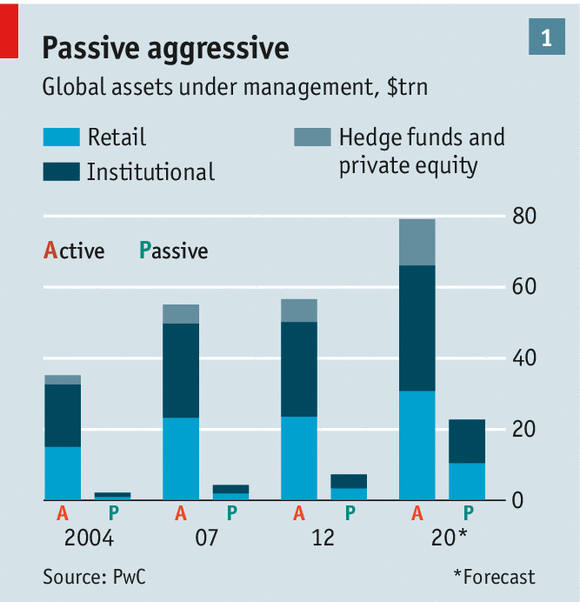
American universities found that fossil fuels divestment rules out indexed linked funds as a class, along with their low management and trading fees. Ethical investors must move to actively managed investment funds which are perhaps a third more expensive in management fees.

If a move to a fossil fuel free portfolio rules out passive indexed linked funds, that is a major risk to future returns of the New Zealand superannuation fund. Would this fossil fuels disinvestment including selling the recently acquired Z petrol station network by the New Zealand superannuation fund?
Z Energy now owns and manages these businesses, which include:
- a 15.4 per cent stake in Refining NZ who runs New Zealand’s only oil refinery.
- a 25 per cent stake in Loyalty New Zealand who run Fly Buys
- over 200 service stations
- about 90 truck stops
- pipelines, terminals and bulk storage
As usual, in the course of argument for disinvestment by the government investment fund, the Green Party makes an excellent argument for the privatisation not only of state owned enterprises but of the New Zealand superannuation fund.
Rather than have one victory at a time, the Greens want the NZ superannuation fund to use the funds from the disinvestment to reinvest in pet projects of politicians. The green party co-leader said:
Money released from divestment can be reinvested in the rapidly growing renewable energy and energy efficiency sectors, helping to hasten the transition of our economy to a low-carbon future.
This makes government investment funds the playthings of politicians so they can never match the returns of a genuinely privately owned investment fund.
Deciding science by voting – updated
13 Feb 2015 1 Comment
in economics of religion, environmental economics, global warming, Public Choice, rentseeking Tags: appeal to authority, climate alarmism, conjecture and refutation, global cooling, global warming, JS Mill, logical fallacies, marketing, persuasion
 One of the troubling aspects of climate alarmism is its repeated appeals to authority. Rather odd for a bunch left-wingers trying to overthrow the status quo and the established order.
The most obvious manifestation of this tactics to go on about how there is a consensus of scientists, the science is settled or the debate is over.

These repeated and unimaginative appeals to authority are either to champion the existing scientific views about global warming or to suggest that previous scientific predictions of global cooling in the 1960s and 1970s were only a minority view.

Again, an appeal to authority is an odd communication strategy for the climate alarmists. Their movement is made up more of young people because of the overweening conceit of youth. Many of their recruits are young people.The debate over the causes of global warming and its likelihood must be repeated over and over again, if only to introduce and socialise their new recruits to the arguments and counterarguments.
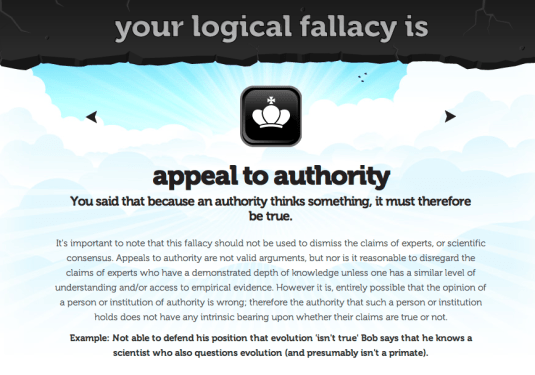
One of the reasons I changed my mind on the economics and politics of climate science is these repeated appeals to authority and general bully boy tactics made me suspicious of the underlying merits of the arguments canvassed.

The only profession I know of which actually does take a vote on what is the truth in a scientific sense is psychiatrists. Their American annual conference has a vote on what to put out their professional diagnostic manual. This science by voting never went well with various psychiatric disorders voted in and out of their professional diagnostic manual on the basis of politics, cultural bias and the medicalisation of human distress.

John Stuart Mill emphasise the value of even completely false arguments in keeping us on our toes. His scenarios involves both parties of opinion, majority and minority, having a portion of the truth but not the whole of it. He regards this as the most common of the three scenarios, and his argument here is very simple. To enlarge its grasp of the truth the majority must encourage the minority to express its partially truthful view.
J.S. Mill pointed out that critics who are totally wrong still add value because they keep you on your toes and sharpened both your argument and the communication of your message.
If the righteous majority silences or ignores its opponents, it will never have to defend its belief and over time will forget the arguments for it. As well as losing its grasp of the arguments for its belief, J.S. Mill adds that the majority will in due course even lose a sense of the real meaning and substance of its belief. What earlier may have been a vital belief will be reduced in time to a series of phrases retained by rote. The belief will be held as a dead dogma rather than as a living truth.
Three scenarios – the majority is wrong, partly wrong, or totally right – exhaust for Mill the possible permutations on the distribution of truth, and he holds that in each case the search for truth is best served by allowing free discussion.
Mill thinks history repeatedly demonstrates this process at work where silencing falsehood led to dogmas rather than living truth. He offered Christianity as an illustrative example. By suppressing opposition to it over the centuries Christians ironically weakened rather than strengthened Christian belief. Mill thinks this explains the decline of Christianity in the modern world. Christians forgot why they were Christians and in the Reformation could not successfully rebut who came up with valid criticisms of their existing profession of faith.
Going on about how climate science is settled and the debate is over is bad tactics for the climate alarmists. Attempts to close the debate this way provokes suspicion among those who expect some attempt to persuade them rather than to instruct them from on high. Presumptuousness is never a good persuasion tactic nor is dismissiveness.
A salesman trying to sell a product would never use any of the persuasion tactics or selling tactics of the climate alarmists. They would quickly go out of business if they did.


Recent Comments