Desperately seeking a neoliberal conspiracy to slash taxes to the bone in Australia and New Zealand

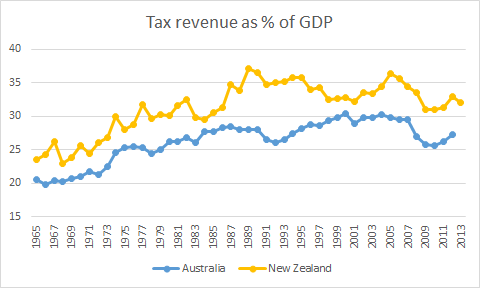
If our friends on the Left are to be believed, governments fell under the spell of a flying visit by Milton Friedman and his local neoliberal cronies and slashed taxes to the bone from about the mid-1980s in Australia and New Zealand.

image

Source: Revenue Statistics – Comparative tables.

In Australia’s case, the only time tax revenue as a percentage of GDP fell prior to the election of a Labour government in 2007 was during a deep recession in 1991. This was a recession bought on by irresponsible monetary policy by Paul Keating– the Keating recession.

As for New Zealand, the tax take increase quite considerably under tax reforms of the Labour Government  of the 1980s. Roger Douglas, far from being a neoliberal plant, seemed to be a double secret agent of a tax maximising Leviathan. Little wonder the New Zealand economy was sluggish in the late 1980s because of this large increases in the tax take.

Tax reform leads to higher taxes – the evidence on the GST

image

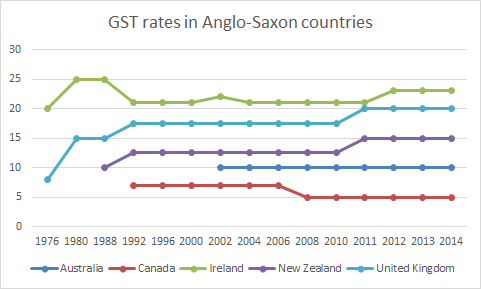
The GST increased from 10 to 15% in New Zealand; more than doubled in the UK; but GST rates were stable or went up and down in the remaining Anglo-Saxon countries.

image

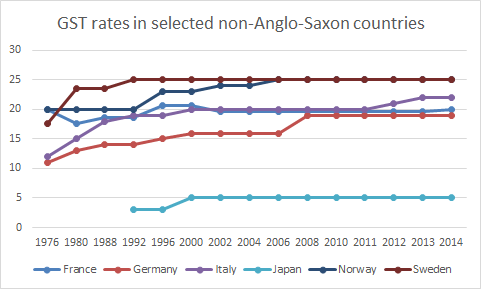
As for a selection of other non-Anglo-Saxon countries , Brennan  and Buchanan were right. Tax reforms such as a broad-based consumption tax leads to higher taxes through time.

The GST (goods and services tax) in Europe is known as the value added tax (VAT).

Source: OECD Tax Database – OECD.

New Zealand and Australian private health insurance rates compared

Seems like imposing a tax on those did not have a private cover induced high income people to take out private cover stop

Via http://www.healthfunds.org.nz/pdf/dec2013%20Quarterly%20statistical%20summary.pdf

Via INFOGRAPHIC: A snapshot of private health insurance in Australia.

Putin’s popularity ratings of late

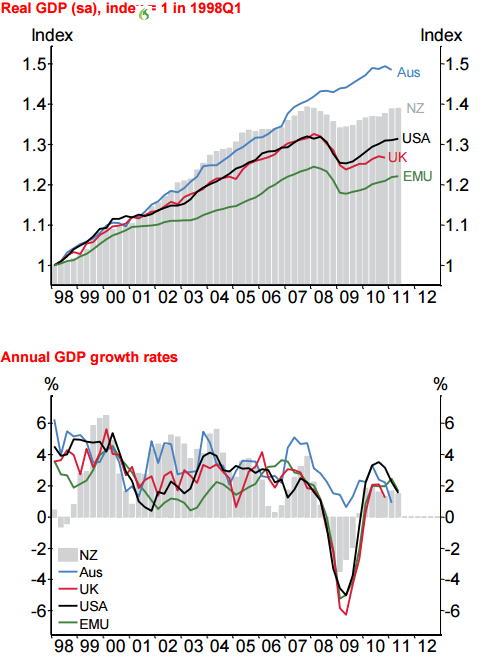
Recent New Zealand economic growth compared

Via Reserve Bank of New Zealand

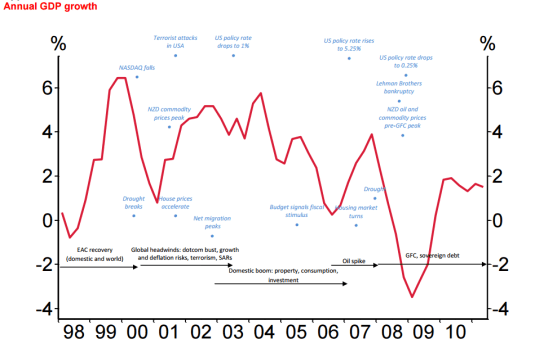
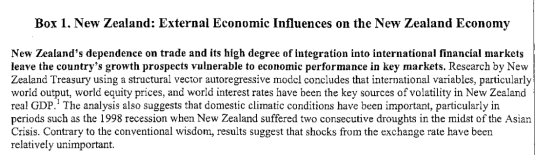
The impact of drought on the 1998 mild New Zealand recession

Reserve Bank of New Zealand has these conclusions about the contribution of drought to the business cycle in the late 1990s in New Zealand and in particular the mild 1998 recession:

a back-of-the-envelope estimate of the impact of the drought-induced fall in supply would suggest a contribution from the agricultural sector to production GDP for the March quarter of 1998 of around -0.4 percentage points out of the total 1 per cent fall in production GDP. In the June quarter of 1998, the contribution from these sectors was close to zero.

Figure 27:

0096149_files/business-cycle-developments-since-1996-for-submission-to-monetary-policy-review-final-version-placed-on-web-27.jpg


In 1998, agricultural and hunting industry contributed per cent of real GDP. . That included the production of livestock, wool, dairy, horticulture, and crops, as well as the provision of agricultural contracting services and hunting. In the same year, the primary food manufacturing industry contributed 3 per cent of GDP. This category covers the processing of meat and dairy products for export and local markets.

A tale of two parents

https://www.facebook.com/AEIonline/photos/pb.44951363957.-2207520000.1427601542./10152802565713958/?type=3&src=https%3A%2F%2Ffbcdn-sphotos-h-a.akamaihd.net%2Fhphotos-ak-xap1%2Fv%2Ft1.0-9%2F1233384_10152802565713958_2404241805278738697_n.jpg%3Foh%3Df31ae7bab92c59c8d042e6ee5f4a780b%26oe%3D55A0B785%26__gda__%3D1433835964_1fbe9a275145246f6fd8ac18b0e3177a&size=600%2C952&fbid=10152802565713958

Whitlam’s curse – How higher education drives inequality among the bottom 99%

Gough Whitlam abolished tuition fees at Australian universities in 1972. The idea was to reduce inequality. He entrenched it instead, and gave a flying start to those of already above-average talents.

David Autor in a recent paper has illustrated how the gap between the highly educated and the less educated is growing at a far faster rate than the gap between the top 1% in the bottom 99% in the USA. David Autor argues that

a single minded focus on the top 1% can be counterproductive given that the changes to the other 99% have been more economically significant.


  1. since the early 1980s, the earnings gap between workers with a high school degree and those with a college education has become four times greater than the shift in income during the same period to the very top from the 99%.
  2. Between 1979 and 2012, the gap in median annual earnings between households of high-school educated workers and households with college-educated ones expanded from $30,298 to $58,249, or by roughly $28,000.
  3. If the incomes of the bottom 99% are grown at the same pace as the top 1% their incomes would have increased by $7000 per household.

Autor argues that the growth of skill differentials among the other 99% is more consequential than the rise of the 1% for the welfare of most citizens.

via How Education Drives Inequality Among the 99% – Real Time Economics – WSJ.

To punish the discussion of public affairs through libel judgments is to shut off discussion of the very kind most needed

black libel

Image

Marijuana arrests by Presidential administration

Image

Did poverty increase after the 1996 US Federal welfare reforms?

Poverty-fig3a

via The Top 3 Things You Need to Know About the 2013 Poverty and Income Data | Center for American Progress.

House of Commons party membership since 1886

Image

Blaming droughts on Rogernomics? Droughts and the New Zealand real business cycle

While feuding on another blog about the ups and downs of the New Zealand economy since the 1970s, I pointed out that a long economic boom followed the Ruth Richardson “Mother of all Budgets” in 1991:

My interlocutor quickly replied to blame Rogernomics, in particular, inflation targeting and its administration by Don Brash for a severe recession in New Zealand in 1998:
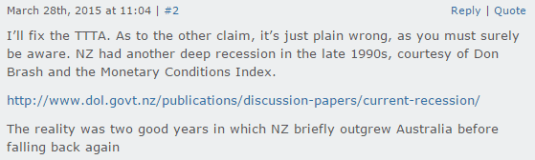
The mild recession in New Zealand in 1998 was a result of the combination of two severe droughts and the effects of the Asian financial crisis.
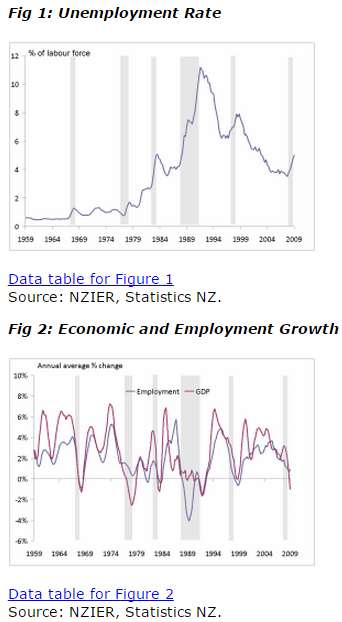
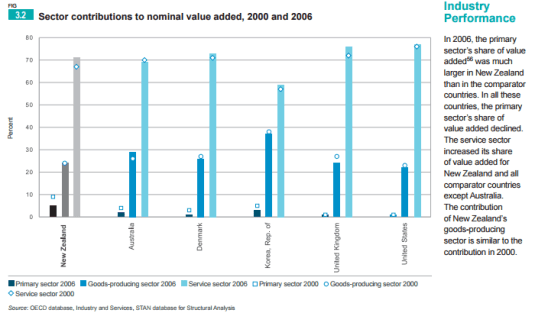
Drought is a major factor in the New Zealand business cycle because of the large size of the farming sector. Indeed, the ups and downs of a monopoly dairy exporter that accounts for 7% of GDP, Fonterra, are so central that a single dirty pipe at a milk factory that put the quality of its milk exports in question lead the Treasury to revise its economic forecasts for that year.
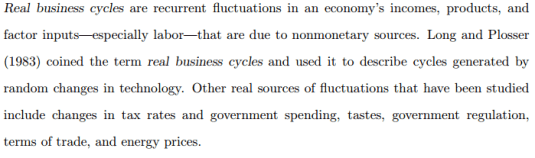
There is growing evidence that a substantial part of business cycle volatility can be explained by real business cycle theory (RBC). RBC claims that a good majority of economic volatility is caused by changes on the supply side: tax and regulatory changes, bad weather in farm economies, spikes in oil prices and technology shocks. Real business cycle models have enjoyed success in replicating most of the observed characteristics of, for example, U.S. aggregate economic activity.
Over the last 15 years, a number of papers at the Treasury and Reserve Bank of New Zealand have explored the role of droughts in the New Zealand business cycle, such as the drought in 1997.
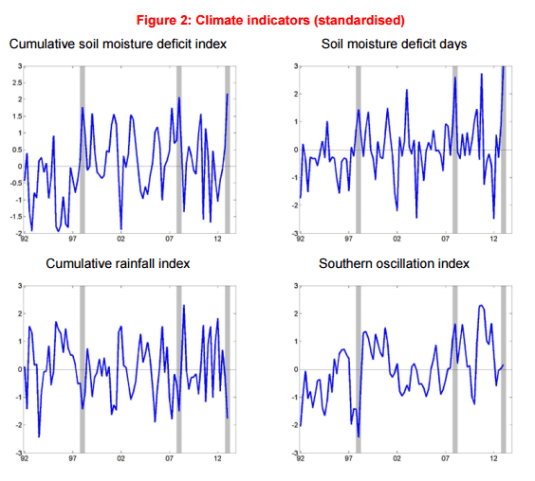
The 1998 recession was preceded by a severe drought that may have knocked a half percentage point off GDP or more. As the Treasury explained in 2008:

Given the importance of the primary sector in New Zealand, climatic conditions have always been a significant driver of GDP volatility in New Zealand. There is strong evidence that the 1998 drought triggered or precipitated the onset of the last recession in the late-90s.

In 2008, the dry conditions in New Zealand led the Treasury to revise its forecasts as follows:

current dry conditions are likely to trim GDP growth by around 0.5% for the 2008 calendar year.  

In 2013, the Reserve Bank made similar pessimistic forecasts about the implications of drought for economic prospects. New Zealand was suffering its worst drought in decades:

It was simply mistaken to blame the 1998 recession in New Zealand as the spawn of Rogernomics. There was a drought, a big one, big enough drought to shake the New Zealand business cycle in a country with a large farming sector.

Police Officer Runs into Burning House to Rescue Child

ht: http://video.lauraingraham.com/Officer-Runs-into-Burning-House-to-Rescue-Child-28770377?utm_content=bufferfde2f&utm_medium=social&utm_source=facebook.com&utm_campaign=buffer

Poverty and family structure in America

ednext_XV_2_mclanahan_fig04-small

via Was Moynihan Right? What happens to the children of unmarried mothers : Education Next.

Previous Older Entries Next Newer Entries

The War on Prices

Celebrating humanity's flourishing through the spread of capitalism and the rule of law

The Bleeding Heart Libertarian

Celebrating humanity's flourishing through the spread of capitalism and the rule of law

More Stories from the Stories I Publish!

Celebrating humanity's flourishing through the spread of capitalism and the rule of law

In My Tribe

Celebrating humanity's flourishing through the spread of capitalism and the rule of law

Coordination Problem

Celebrating humanity's flourishing through the spread of capitalism and the rule of law

Libertarian Land

Celebrating humanity's flourishing through the spread of capitalism and the rule of law

Arin’s Substack

Celebrating humanity's flourishing through the spread of capitalism and the rule of law

David Andolfatto

Celebrating humanity's flourishing through the spread of capitalism and the rule of law

Monetary Non-Neutrality

Celebrating humanity's flourishing through the spread of capitalism and the rule of law

Reason Magazine

Celebrating humanity's flourishing through the spread of capitalism and the rule of law

Coyote Blog

Celebrating humanity's flourishing through the spread of capitalism and the rule of law

Thoughts from the North

Celebrating humanity's flourishing through the spread of capitalism and the rule of law

Fardels Bear

A History of the Alt-Right

Vincent Geloso

Econ Prof at George Mason University, Economic Historian, Québécois

Bassett, Brash & Hide

Celebrating humanity's flourishing through the spread of capitalism and the rule of law

Truth on the Market

Scholarly commentary on law, economics, and more

The Undercover Historian

Beatrice Cherrier's blog

Matua Kahurangi

Celebrating humanity's flourishing through the spread of capitalism and the rule of law

Temple of Sociology

Celebrating humanity's flourishing through the spread of capitalism and the rule of law

Velvet Glove, Iron Fist

Celebrating humanity's flourishing through the spread of capitalism and the rule of law

Why Evolution Is True

Why Evolution is True is a blog written by Jerry Coyne, centered on evolution and biology but also dealing with diverse topics like politics, culture, and cats.

NoTricksZone

Celebrating humanity's flourishing through the spread of capitalism and the rule of law

Homepaddock

A rural perspective with a blue tint by Ele Ludemann

Kiwiblog

DPF's Kiwiblog - Fomenting Happy Mischief since 2003

The Dangerous Economist

Celebrating humanity's flourishing through the spread of capitalism and the rule of law

Watts Up With That?

The world's most viewed site on global warming and climate change

The Logical Place

Tim Harding's writings on rationality, informal logic and skepticism

Doc's Books

A window into Doc Freiberger's library

The Risk-Monger

Let's examine hard decisions!

Uneasy Money

Commentary on monetary policy in the spirit of R. G. Hawtrey

Barrie Saunders

Thoughts on public policy and the media

Liberty Scott

Celebrating humanity's flourishing through the spread of capitalism and the rule of law

Point of Order

Politics and the economy

James Bowden's Blog

A blog (primarily) on Canadian and Commonwealth political history and institutions

Science Matters

Reading between the lines, and underneath the hype.

Peter Winsley

Economics, and such stuff as dreams are made on

A Venerable Puzzle

"The British constitution has always been puzzling, and always will be." --Queen Elizabeth II

The Antiplanner

Celebrating humanity's flourishing through the spread of capitalism and the rule of law

Bet On It

Celebrating humanity's flourishing through the spread of capitalism and the rule of law

History of Sorts

WORLD WAR II, MUSIC, HISTORY, HOLOCAUST

Roger Pielke Jr.

Undisciplined scholar, recovering academic

Offsetting Behaviour

Celebrating humanity's flourishing through the spread of capitalism and the rule of law

JONATHAN TURLEY

Res ipsa loquitur - The thing itself speaks

Conversable Economist

In Hume’s spirit, I will attempt to serve as an ambassador from my world of economics, and help in “finding topics of conversation fit for the entertainment of rational creatures.”

The Victorian Commons

Researching the House of Commons, 1832-1868

Books & Boots

Reflections on books and art