

via Net tax in NZ | Kiwiblog and Average Tax Rates | Kiwiblog.
Celebrating humanity's flourishing through the spread of capitalism and the rule of law
17 Nov 2014 Leave a comment
16 Nov 2014 Leave a comment
in liberalism, politics - New Zealand Tags: 2014 New Zealand general election, green party, Leftover Left
A rather good analysis of the abysmal failure of the green party in the 2014 New Zealand election to increase its party vote despite the disastrous result of its main rival for left-wing votes.
Two-thirds of New Zealand gave their party vote to non-left-wing parties.
16 Nov 2014 Leave a comment
in income redistribution, liberalism, politics - New Zealand, Public Choice, public economics Tags: tax burdens, tax incidence
16 Nov 2014 2 Comments
in politics - USA, public economics, Rawls and Nozick Tags: 47%, tax incidence, who pays taxes
16 Nov 2014 Leave a comment
in applied welfare economics, entrepreneurship, human capital, labour economics, labour supply, liberalism, Marxist economics, occupational choice, politics - USA, poverty and inequality, public economics, Rawls and Nozick, technological progress Tags: Piketty, poverty and inequality
15 Nov 2014 Leave a comment
in Euro crisis, global financial crisis (GFC), great depression, great recession, macroeconomics, politics Tags: euro crisis, Euroland, Greece

14 Nov 2014 Leave a comment
in election campaigns, energy economics, environmental economics, environmentalism, politics - Australia
14 Nov 2014 Leave a comment
in environmental economics, global warming, politics - USA Tags: climate alarmism, expressive voting, global warming
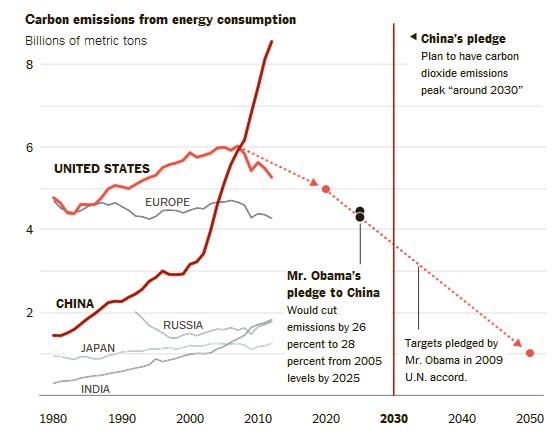
HT: Catallaxyfiles
14 Nov 2014 Leave a comment
in politics, Public Choice Tags: British general election

The election is six way because the Scottish Nationalists are expected to sweep the Labour seats in Scotland, which will give them 40 seats or more at the expense of Labour. The Tories have one seat in Scotland.
The Greens are now polling enough to split enough votes away from Labour to allow the Tories or Liberal Democrats to win Labour seats. Many Liberal Democratic seats appear to be going back to the Tories now.
UK is pressing at the heels of the Conservative party in England. How that will work to the advantage of Labour coming through the middle in England is unknown.
Ed Miliband has managed to be more unpopular than Michael Foot.

14 Nov 2014 Leave a comment
in constitutional political economy, political change, politics - Australia, politics - New Zealand, politics - USA, Public Choice Tags: george stigler, Leftover Left, Milton Friedman, neoliberal conspiracies, public choice, Twitter left, Tyler Cowen

Tyler Cowen has drawn attention to a 2011 paper on policy learning in the 1970s and 80s by Francisco J. Buera, Alexander Monge-Narajo, and Giorgio E. Primiceri was published in Econometrica in 2011. Their paper found that:
1. Policymakers have priors about how good the market economy is, and they revise those views — and thus revise policy — as they observe their own growth results and those of their neighbors.
2. A simple learning model predicts about 97% of the policy choices observed in the data. The model accounts for more than 77% of the observed policy switches over a three-year time window.
3. Evolving beliefs — and not just the fixed demographic characteristics of countries — are critical for understanding policy decisions.
4. It was probably the growth collapse of the late 1970s for interventionist countries which led to a greater reliance on markets.
5. Adjustment toward better-performing policies is often quite slow. In part this is because policymakers attribute the superior performance of other countries to heterogeneity rather than policy per se.
This record of politicians learning from failure and success at home and abroad is a vindication of George Stigler’s views of the relative unimportance of economists in influencing public policy.
There was no neoliberal conspiracy that captured the hearts and minds of politicians through mass hypnosis in the 1970s and 1980s as both the Left over Left and the Twitter Left like to suggest
The policies of Friedman had to wait, as George Stigler predicted, for a market to develop among interest groups and the voting public. Once that market developed, Milton Friedman, FA Hayek and others looked like leaders of an opinion.
A few years earlier, Friedman and Hayek were just angry men in the wilderness.
The reason for this sudden change in their public profile and purported influence on the shape the course of public policy in th 1970s and 1980s onwards was political parties were yet to conclude that the existing policy regime had failed irretrievably, and that the successes of neighbours on economic reform might be worth imitating locally.
Once politicians, the voting public and interest groups concluded that new solutions are needed, just as Stigler predicted, the ideas for reform been around for a long time came to the front.
via http://marginalrevolution.com/marginalrevolution/2014/11/learning-the-wealth-of-nations.html
14 Nov 2014 Leave a comment
in comparative institutional analysis, liberalism, Marxist economics, politics, politics - Australia, politics - New Zealand, politics - USA, technological progress Tags: Leftover Left, Twitter left
13 Nov 2014 Leave a comment
in politics - USA, war and peace Tags: American foreign policy, non-interventionist foreign policy
13 Nov 2014 Leave a comment
in politics - USA, Public Choice Tags: Jonathan Gruber, Machiavelli, Obamacare, public choice, Yes Minister, Yes Prime Minister


Celebrating humanity's flourishing through the spread of capitalism and the rule of law
Celebrating humanity's flourishing through the spread of capitalism and the rule of law
Celebrating humanity's flourishing through the spread of capitalism and the rule of law
Celebrating humanity's flourishing through the spread of capitalism and the rule of law
Celebrating humanity's flourishing through the spread of capitalism and the rule of law
Celebrating humanity's flourishing through the spread of capitalism and the rule of law
Celebrating humanity's flourishing through the spread of capitalism and the rule of law
A History of the Alt-Right
Econ Prof at George Mason University, Economic Historian, Québécois
Celebrating humanity's flourishing through the spread of capitalism and the rule of law
Scholarly commentary on law, economics, and more
Beatrice Cherrier's blog
Celebrating humanity's flourishing through the spread of capitalism and the rule of law
Celebrating humanity's flourishing through the spread of capitalism and the rule of law
Celebrating humanity's flourishing through the spread of capitalism and the rule of law
Why Evolution is True is a blog written by Jerry Coyne, centered on evolution and biology but also dealing with diverse topics like politics, culture, and cats.
Celebrating humanity's flourishing through the spread of capitalism and the rule of law
A rural perspective with a blue tint by Ele Ludemann
DPF's Kiwiblog - Fomenting Happy Mischief since 2003
Celebrating humanity's flourishing through the spread of capitalism and the rule of law
The world's most viewed site on global warming and climate change
Tim Harding's writings on rationality, informal logic and skepticism
A window into Doc Freiberger's library
Let's examine hard decisions!
Commentary on monetary policy in the spirit of R. G. Hawtrey
Thoughts on public policy and the media
Celebrating humanity's flourishing through the spread of capitalism and the rule of law
Politics and the economy
A blog (primarily) on Canadian and Commonwealth political history and institutions
Reading between the lines, and underneath the hype.
Economics, and such stuff as dreams are made on
"The British constitution has always been puzzling, and always will be." --Queen Elizabeth II
Celebrating humanity's flourishing through the spread of capitalism and the rule of law
Celebrating humanity's flourishing through the spread of capitalism and the rule of law
WORLD WAR II, MUSIC, HISTORY, HOLOCAUST
Undisciplined scholar, recovering academic
Celebrating humanity's flourishing through the spread of capitalism and the rule of law
Res ipsa loquitur - The thing itself speaks
In Hume’s spirit, I will attempt to serve as an ambassador from my world of economics, and help in “finding topics of conversation fit for the entertainment of rational creatures.”
Researching the House of Commons, 1832-1868
Articles and research from the History of Parliament Trust
Reflections on books and art
Posts on the History of Law, Crime, and Justice
Celebrating humanity's flourishing through the spread of capitalism and the rule of law
Exploring the Monarchs of Europe
Cutting edge science you can dice with





Recent Comments