

Israel and the West Bank
09 Aug 2014 Leave a comment
in International law, politics Tags: Israel, West Bank
 |
 |
| Israeli settlements cover about 2% of the West Bank and are linked by Israeli-controlled roads. There are also large tracts of Israeli-controlled land designated as military areas or nature reserves. | Military checkpoints allow Israel to monitor and control travel in much of the West Bank. |
HT: BBC

What is a useful idiot?
06 Aug 2014 Leave a comment
in environmentalism, liberalism, political change, politics, war and peace Tags: bootleggers and baptists, environmentalists, Leftover Left, New Left, Old Left, political manipulation, propaganda, useful idiots
Useful idiot is a term for people perceived as propagandists, initially Lenin, for a cause whose goals they are not fully aware of, and who are used cynically by the leaders of the cause.

Many confused and misguided sympathisers will unwittingly support a malignant cause which they naïvely believe to be a force for good.
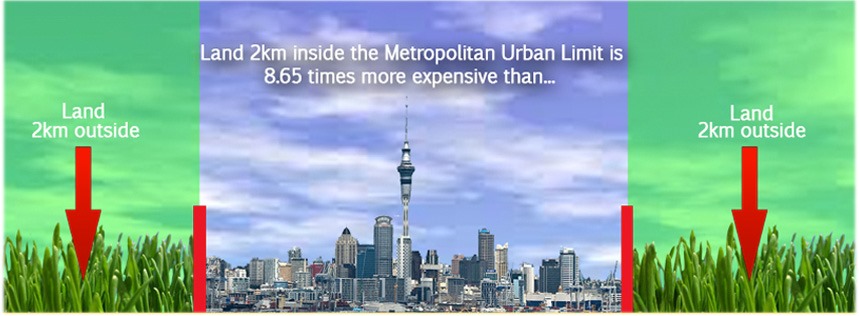
Housing affordability is all about local government restrictions on the supply of land
04 Aug 2014 Leave a comment
As evidence mounts, it’s getting harder to defend Edward Snowden – The Washington Post
04 Aug 2014 Leave a comment
in politics - USA, war and peace Tags: Edward Snowden, spying, treason
The evidence is mounting that Edward Snowden and his journalist allies have helped al Qaeda improve their security against NSA surveillance.
In May, Recorded Future, a predictive analytics firm, published a persuasive timeline showing that Snowden’s revelations about NSA’s capabilities were followed quickly by a burst of new, robust encryption tools from al-Qaeda and its affiliates:
via As evidence mounts, it’s getting harder to defend Edward Snowden – The Washington Post.
Christchurch Earthquake | Libertarianz TV
04 Aug 2014 Leave a comment
in economics of natural disasters, economics of regulation, liberalism, libertarianism, politics - New Zealand, urban economics Tags: Christchurch earthquake, economics of natural disasters
Devastating effect of government bureaucracy following the earthquakes of 2010 and 2011. As told by two business owners, an economist and an engineer. Concludes with the Libertarianz policy to make Christchurch a free enterprise zone.
The contribution of fox hunting to the development of English Constitutional Law
04 Aug 2014 Leave a comment

Stephen Williamson on Marginal Taxation
03 Aug 2014 Leave a comment
in applied welfare economics, fiscal policy, income redistribution, politics - New Zealand, politics - USA, Public Choice Tags: envy, Stephen Williamson, taxation and entrepreneurship, taxation and human capital, taxation and investment, taxation and labour supply, top 1%

He says a lot. I’ll try to address piece by piece.
Next, some people have shown interest in this paper by Diamond and Saez. A key result that seemed to get these people excited is the calculation of a top optimal marginal tax rate (including all taxes) of 73%, relative to the current rate of 42.5%. There are two key assumptions that Diamond and Saez make to come up with the 73% optimal rate. First, we should not care about the welfare (at the margin) of the rich people. This argument is based solely on the notion that marginal utility of income is low for the top income-earners. Second, Diamond and Saez use a “behavioral elasticity” of tax revenue with respect to the tax rate of 0.25. To see how this matters, if you use their formula and an elasticity of one, you get an optimal top tax rate…
View original post 1,215 more words

Michael Pusey, John Stone and the role of papist conspiracies in economic rationalism in Canberra
02 Aug 2014 Leave a comment
in economics, politics - Australia Tags: dangerous ideas, economic rationalism, John Stone, Michael Pusey

Michael Pusey looked into the background of senior executives at the Treasury in his book on Economic Rationalism in Canberra published in the early 1990s
He found that many of these senior executive service members attended private schools.
Many of these senior executives were Catholic school boys as was the Prime Minister of the day, his state premier and the majority of the high court too.
Pusey did not pursue this papist conspiracy – a private school boy conspiracy is far more politically correct for sociologists.
Pusey argued that economics is a set of dangerous ideas that should be exposed to otherwise impressionable students only at the graduate level and when studying politics, philosophy, and economic degree (PPE).
Pusey was speechless when retired Treasury Secretary John Stone asked at a conference where he (Stone) went wrong. Stone studied physics as an undergraduate, and was not exposed to the dangerous ideas that are economics until his PPE at Oxford. Stone followed the exact path that Pusey suggested to replace specialist economics degrees.
Teen employment and the minimum wage: sixty years of U.S. experience
02 Aug 2014 Leave a comment
in labour economics, minimum wage, politics - New Zealand, politics - USA Tags: minimum wage

In every episode, except 1996 (which is the smallest hike relative to average wages), there was a distinct decline in the trend of teen employment in the few months before the initial hike until a few months after the follow-up hike. This led Kevin Erdmann to ask:
Is there any other issue where the data conforms so strongly to basic economic intuition, and yet is widely written off as a coincidence?


Recent Comments