What if the Prime Minister insists we help them?

The main cast of Yes (Prime) Minister

Sir Humphrey Appleby: Then we follow the four-stage strategy.

Bernard Woolley: What’s that?

Sir Richard Wharton: Standard Foreign Office response in a time of crisis.

Sir Richard Wharton: In stage one we say nothing is going to happen.

Sir Humphrey Appleby: Stage two, we say something may be about to happen, but we should do nothing about it.

Sir Richard Wharton: In stage three, we say that maybe we should do something about it, but there’s nothing we *can* do.

Sir Humphrey Appleby: Stage four, we say maybe there was something we could have done, but it’s too late now.

The Greens want to ban… | Kiwiblog

I cannot stand political correctness. It serves no purpose other than to restrict freedom of speech. Yes, some language can offend someone, but we all have the right to offend. It doesn’t mean we should, but we can. 
Without the freedom to offend, we do not have the freedom of expression. When we restrict the use of language, we risk entering the George Orwell 1984 dystopia - “ungood”, “goodest”, “plusgood”, “doubleplusgood” - that’s where we’re heading every time someone starts sobbing like a child because they were offended. 
You taking offence doesn’t make you special. You don’t get some new right when you’re offended. No one’s going to run over and kiss your feet. You will be offended by many people, many times, throughout the rest of your life and you pointing and screaming to tell them not to use “those words” or “that language” is just so unbelievably childish. 
Of course people can take things too far, but we can take anything too far. We can take violence too far by starting meaningless wars, we can take rights movements too far by not stopping at equality and desiring dominance. What words people use, really is the last of your concerns. 

  1. Ban fizzy drinks from schools
  2. Ban fuel inefficient vehicles
  3. Ban all gaming machines in pubs
  4. Ban the GCSB
  5. Ban violent TV programmes until after 10 pm
  6. Ban feeding of antibiotics to animals that are not sick
  7. Ban companies that do not comply with a Code of Corporate Responsibility
  8. Ban ACC from investing in enterprises that provide products or services that significantly increase rates of injury or illness or otherwise have significant adverse social or environmental effects
  9. Ban commercial Genetic Engineering trials
  10. Ban field testing on production of GE food
  11. Ban import of GE food
  12. Ban Urban Sprawl
  13. Ban non citizens/residents from owning land
  14. Ban further corporate farming
  15. Ban sale of high country farms to NZers who do not live in NZ at least 185 days a year
  16. Ban the transport by sea of farm animals, for more than 24 hours
  17. Ban crates for sows
  18. Ban battery cages for hens
  19. Ban factory farming of animals
  20. Ban the use of mechanically recovered meat in the food chain
  21. Ban the use of the ground-up remains of sheep and cows as stock feed
  22. Ban animal testing where animals suffer, even if of benefit to humans
  23. Ban cloning of animals
  24. Ban use of animals in GE
  25. Ban GE animal food
  26. Ban docking of dogs tails
  27. Ban intrusive animal experimentation as a teaching method in all educational institutions
  28. Ban smacking
  29. Ban advertising during children’s programmes
  30. Ban alcohol advertising on TV and radio
  31. Ban coal mining
  32. Ban the export of indigenous logs and chips
  33. Ban the use of bio-accumulative and persistent poisons
  34. Ban the establishment of mustelid farms
  35. Ban new exploration, prospecting and mining on conservation land and reserves
  36. Ban mining activities when rare and endemic species are found to present on the mining site
  37. Ban the trading conservation land for other land to facilitate extractive activities on.
  38. Ban the further holding of marine mammals in captivity except as part of an approved threatened species recovery strategy
  39. Ban the direct to consumer advertising of pharmaceuticals
  40. Ban sale of chips and lollies on school property
  41. Ban any additional use of coal for energy
  42. Ban fixed electricity charges
  43. Ban further large hydro plants
  44. Ban nuclear power
  45. Ban further thermal generation
  46. Ban private water management
  47. Ban imported vehicles over seven years old
  48. Ban the disposal of recyclable materials at landfills
  49. Ban the export of hazardous waste to non OECD countries
  50. Ban funding of health services by companies that sell unhealthy food (so McDonalds could not fund services for young cancer sufferers)
  51. Ban healthcare organizations from selling unhealthy food or drink
  52. Ban advertising of unhealthy food until after 8.30 pm
  53. Ban all food and drink advertisements on TV if they do not meet criteria for nutritious food
  54. Ban the use of antibiotics as sprays on crops
  55. Ban food irradiation within NZ
  56. Ban irradiated food imports
  57. Ban growth hormones for animals
  58. Ban crown agency investments in any entity that denies climate change!!
  59. Ban crown agency investments in any entity that is involved in tobacco
  60. Ban crown agency investments in any entity that is involved in environmentally damaging oil extraction or gold mining
  61. Ban non UN sanctioned military involvement (so China and Russia gets to veto all NZ engagements)
  62. Ban NZ from military treaties which are based on the right to self defence
  63. Ban NZers from serving as mercenaries
  64. Ban new casinos
  65. Allow existing casinos to be banned
  66. Ban promotion of Internet gambling
  67. Ban advertising of unhealthy food to children
  68. Ban cellphone towers within 300 metres of homes
  69. Ban new buildings that do not confirm to sustainable building principles
  70. Ban migrants who do not undertake Treaty of Waitangi education programmes
  71. Ban new prisons
  72. Ban semi-automatic weapons
  73. Ban genetic mixing between species
  74. Ban ocean mineral extractions within the EEZ
  75. Ban limited liability companies by making owners responsible for liability of products
  76. Ban funding of PTEs that compete with public tertiary institutes
  77. Ban the importation of goods and services that do not meet quality and environmental certification standards in production, lifecycle analysis, and eco-labelling
  78. Ban goods that do not meet quality and sustainability standards for goods which are produced and/or sold in Aotearoa/New Zealand
  79. Ban new urban highways or motorways
  80. Ban private toll roads
  81. Ban import of vehicles more than seven years old unless they meet emission standards
  82. Ban imported goods that do not meet standards for durability and ease of recycling
  83. Ban landfills
  84. Ban new houses without water saving measures
  85. Ban programmes on TVNZ with gratuitous violence

Political correctness is the natural continuum from the party line. What we are seeing once again is a self-appointed group of vigilantes imposing their views on others. It is a heritage of communism, but they don't seem to see this.  - Doris Lessing

via Kiwiblog

The Chardonnay socialists are not as left-wing as they think

As people hit middle age their youthful radicalism tends to be replaced with a growing conservatism. There has been a study of the 136,000 people in the World Values Survey. The data was from 48 different countries, during five periods between 1981 and 2008:

  • Participants were asked to choose whether they saw themselves as left-wing or right-wing.
  • The results were then compared with their responses to more detailed questions about their views, to determine how closely the participants own perception matched their real position on the ideological spectrum.

Well-educated individuals are more likely to wrongly characterise their political positions as more left-wing than they actually are. Holding down a job and raising a family leads them to adopt a more conservative outlook.

One reason the left-intellectuals do not realise that they have shed their youthful liberalism is that they socialise with people going through the same ideological shift to the right.

These results are no particular surprise given the growing authoritarian nature of the Left both in terms of social regulation and political correctness. Like a true conservative, the Left is a great believer in ordering their inferiors about while exempting themselves from these laws.

The US voting data shows that:

  1. Americans who identify as independents is inversely related to age. More than one-third of the youngest Americans identify as independents, a percentage that drops steadily as the population ages.

  2. The percentage who identify as Republicans follows roughly the opposite pattern. Only around 20% of Americans below 25 identify as Republicans.

  3. Democrats are quite strong among those under age 24. The percentage of Democrats stays at the one-third mark until about age 45, when it climbs slightly and remains higher through the 50s and early 60s, hovering at around the 40% point.

Why specific people change is more interesting, because as Hayek said, aggregates conceal more than they reveal.

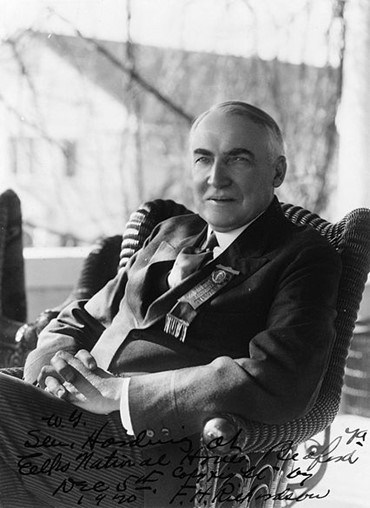
America’s greatest 20th century President – Warren Harding?

Harding kept the U.S. out of entangling alliances such as the League of Nations, released his predecessor’s political prisoners, negotiated a separate peace with Germany, and secured the first significant arms control agreement in U.S. history.

Harding was the first President to openly advocate black political, educational, and economic equality in the 20th century.

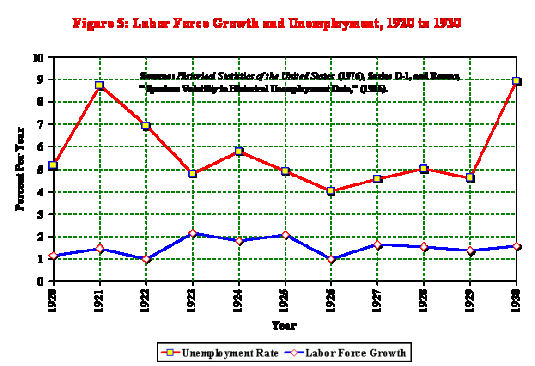
Harding cut taxes and may be absolutely right response to the 1920-21 US depression. He did next to nothing to quicken the recovery in the conventional sense we know today.

Source: Gene Smiley.

Harding cut the U.S. budget nearly in half between 1920 and 1922. Tax rates were slashed and the national debt was reduced by one-third.

This forgotten depression started in 1920 and was over by the end of 1921. Both the sharpest downturn and the quickest recovery in American history with 12% unemployment in 1920 replaced by full-employment by 1923.

Justice Thomas as an unlikely hero for the marijuana decriminalisation movement – updated

The decriminalisation of marijuana possession by American states doesn’t really matter that much because it is still illegal under Federal law. Marijuana markets moved into the open in the states that decriminalised it because the federal authorities have chosen not to enforce their laws against these traders.

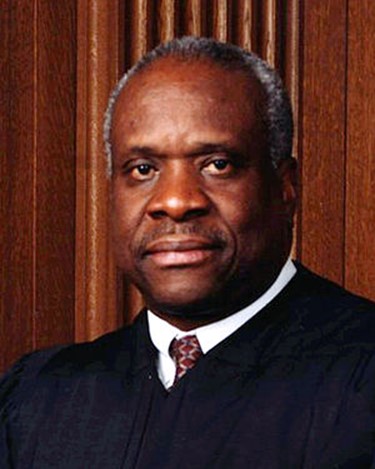
Justice Clarence Thomas is a radical view of the interstate commerce clause. This clause of the US Constitution at the height of the new deal was reinterpreted to allow Congress to regulate both interstate commerce and intrastate markets that affected interstate commerce.
The current interpretation of this clause supported by everyone on the US Supreme Court but Thomas is Congress can regulate the possession of marijuana because this affects interstate commerce. Justice Scalia explains:

…the Commerce Clause permits congressional regulation of three categories:

(1) the channels of interstate commerce;

(2) the instrumentalities of interstate commerce, and persons or things in interstate commerce; and

(3) activities that "substantially affect" interstate commerce.

As …the Court affirms today, Congress may regulate noneconomic intrastate activities only where the failure to do so "could … undercut" its regulation of interstate commerce.

… This is not a power that threatens to obliterate the line between "what is truly national and what is truly local.

Justice Thomas rejects this view and wants to return to the original meaning of the interstate commerce clause:

Respondent’s local cultivation and consumption of marijuana is not "Commerce … among the several States."

Certainly no evidence from the founding suggests that "commerce" included the mere possession of a good or some personal activity that did not involve trade or exchange for value.

In the early days of the Republic, it would have been unthinkable that Congress could prohibit the local cultivation, possession, and consumption of marijuana

and

If the Federal Government can regulate growing a half-dozen cannabis plants for personal consumption (not because it is interstate commerce, but because it is inextricably bound up with interstate commerce), then Congress’ Article I powers – as expanded by the Necessary and Proper Clause – have no meaningful limits.

and further:

If the majority is to be taken seriously, the Federal Government may now regulate quilting bees, clothes drives, and potluck suppers throughout the 50 States.

This makes a mockery of Madison’s assurance to the people of New York that the "powers delegated" to the Federal Government are "few and defined", while those of the States are "numerous and indefinite."

In closing, Thomas said:

The majority prevents States like California from devising drug policies that they have concluded provide much-needed respite to the seriously ill.

Our federalist system, properly understood, allows California and a growing number of other States to decide for themselves how to safeguard the health and welfare of their citizens.

The adoption of the view of Thomas could not be more unlikely. Most federal regulation in the United States is based on linking it to the power of the Congress to regulate interstate commerce and foreign commerce. Thomas once noted that:

[w]hen asked at oral argument if there were any limits to the Commerce Clause, the Government was at a loss for words

The decriminalisation of marijuana in the United States will have to be based on more and more states choosing to decriminalise in the hope that the Federal Government does not enforce its rather savage criminal laws on drugs in their state. That’s is what seems to be happening. Whether that will still happen when a Republican wins the White House in 2016 remains to be seen.

Three American States have even passed hopelessly unconstitutional right to try laws. These laws  purport to allow the residents try experimental drugs that have not yet received approval of the Federal level by the FDA.

Even under the narrow interpretation of federal powers by Justice Thomas, these laws are unconstitutional. These laws nonetheless have social value because they are push the boundaries of the current political sense consensus.

This  evaluation applies to marijuana decriminalisation laws too.  They test the  current boundaries and can create the possibility of social change through democratic action.

Many who want a strong central government forget that the social agendas of the crazies to the left and right of them will also be implemented all in good time at the national level as well. Power rotates in any democracy so with enough time the meddlesome preferences of most sides of politics will be legislated into law so that everyone ends up been annoyed and over-regulated and more than a few end up before the courts and even in prison.

A wiser course in constitutional design is to give the parliament as much powers as you might wish those wreckers  and crazies that make up your political opponents to have when they come to office, as they surely must in six or nine years time. Even the British Labour Party took an interest in devolution and an assembly for London after 15 years of Maggie Thatcher, good and hard.

Winston Churchill – Never Surrender

Video

Poverty isn’t what it used to be

In 1960-61, according to the BLS Consumer Expenditure Survey, the bottom one-fourth of American homes spent about 12 per cent more than their pre-tax reported incomes each year.

By 2011, according to that same survey, those in the lowest quintile were spending nearly 125 per cent more than their reported pre-tax incomes and nearly 120 per cent more than their reported post-tax, post-transfer incomes.

By 2011, average per capita housing space for people in poverty was higher than the U.S. average for 1980, and crowding (more than one person per room) was less common for the 2011 poor than for the non-poor in 1970.

More than three-quarters of the 2011 poor had access to one or more motor vehicles, whereas nearly three-fifths were without an auto in 1972-73.

Refrigerators, dishwashers, washers and dryers, and many other appliances were more common in officially impoverished homes in 2011 than in the typical American home of 1980 or earlier.

Microwaves were virtually universal in poor homes in 2011, and DVD players, personal computers, and home Internet access are now typical in their amenities of the poor that not even the richest U.S. households could avail themselves of at the start of the War on Poverty in 1964.

The charts the third of the charts below shows below show that below American households that are poor and that are not poor do not differ greatly in the consumer amenities that they.


Percentage of Poor U.S. Households Which Have Various Amenities

Percentage of All U.S. Households Which Have Various Amenities

Amenities in Typical Households

Americans counted as poor today are manifestly living longer, are healthier, better nourished (or over-nourished), and more schooled than their predecessors half a century ago.

The United States’ Big Welfare State

Jason Sorens's avatarPILEUS

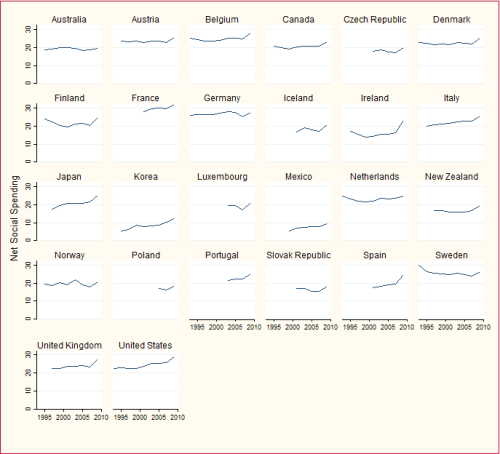
The United States has long had a larger welfare state than most other Western democracies. Surprised? You may not be aware of the new research on “net social spending.”

Net social spending includes not just government expenditures on social programs, but also tax credits for social purposes and, as a debit, government taxation of social benefits. It turns out that many of the so-called “generous” European welfare states tax social benefits at a high rate. Meanwhile, the United States uses the tax code to help the poor, through the Earned Income Tax Credit. We should also include mandatory private social payments, which are not directly paid by the government.

Using the OECD data, I have plotted total net social expenditure over time for 26 rich countries (click the image to zoom in).

the united states has a bigger welfare state than most other democracies

As of 2009, the United States had the second largest welfare state in the world, at 28.8%…

View original post 90 more words

Fraudulent use of Dada | Catallaxy Files

Fraudulent use of Dada | Catallaxy Files.

Can New Zealand blame its small size for its economic woes?

The median national population size is not much more than New Zealand’s current population.

  • Controlling for location, Easterly and Kraay (2002) found that smaller states were richer than other states in per capita real GDP.
  • Rose (2006) reviewed the impact of size on the level of income, inflation, material well-being, health, education, and the quality of a country’s institutions and found that small countries are more open to trade than large countries, but are not systematically different otherwise.

As I argued in my previous post on distance, New Zealand were prosperous from the time of European settlement despite a small population and their great distance from the main markets of the world on each side of the Atlantic.

Of the ten richest countries in terms of GDP per capita, only four have populations above one million people (Alesina 2003). These countries are the USA (290 million people), Switzerland (7 million people), Norway (4 million people) and Singapore (3 million people). Of these four nations, two are below the global national population median of six million (Alesina 2003).

New Zealand’s population is similar and often larger in size than most of the richest countries in the world. Singapore and Hong Kong were initially far from the global Trans-Atlantic economic hubs before their respective development miracles unfolded in the mid and late 20th century.

Something must have happened recently for either small population size or distance to have become important when it was not important for most of the history of New Zealand. New Zealand has been on the same place on the map for all its history.

Transport costs on exports to England and the rest of Europe did not hold back New Zealand’s economic development in the 19th century and for most of the 20th century despite far more primitive and more expensive forms of transport.

New Zealand specialised in commodities that could be produced at a low cost because land and water was plentiful and exported them in bulk to large markets on the other side of the world because of falling transport costs. The invention of refrigeration in 1881 was a major boost to meat exports to England.

The main economic difference between smaller and larger nation-states around the globe is smaller nations are more open to international trade and foreign investment (Alesina et al. 2005).

In a world of freer overseas trade, small countries can extend the size of their markets by trade and sidestep many of the costs of small internal markets. As long as political borders do not greatly limit international trade, economic success is increasingly independent of national size (Alesina 2003; Alesina et al. 2000).

A leading economic advantage of large national size in more isolationist times was a large marketplace free of trade and investment barriers and fewer national borders and different legal systems to parry. As more nations open up to the world, the single market benefits of large size for a country start to melt away quickly (Alesina 2003; Alesina and Spolaore 2003; Alesina et al. 2000).

As countries become larger, administration costs and the growing heterogeneity in the political preferences of larger and more diverse populations counterbalance the benefits of size and scale (Alesina et al. 2003, 2004, 2006; Spolaore 2006). More nation-states and freer trade increase the degree that governments must compete for citizens and investment. Inter-jurisdictional competition increases the incentives for governments to adopt institutions and policies that promote efficiency and productivity and serve their peoples better (Friedman 2005).

Arguments against

Arguments against

Image

Super-Economy “pre-reviewed ” Piketty in 2010

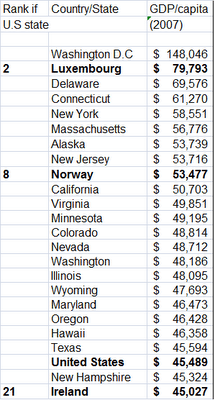
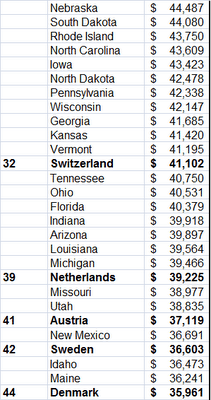
The French are poorer that the 3rd poorest American state: Arkansas. The EU-15 as a whole would qualify to be the 49th poorest American state.

The rich in Europe are poor by American standards. The poor in the USA are middle class by European standards. The European middle class has smaller houses, few cars and few consumers durables that the average poor in the USA.

via Super-Economy: Dynamic America, Poor Europe  and Tino Sanandaji

Housing space per capita

via Heritage Foundation

Gary Becker on crony capitalism in Latin America

One legitimate reason for the opposition to capitalism in Latin America is that it frequently has been "crony capitalism" as opposed to the competitive capitalism that produces desirable social outcomes.

Crony capitalism is a system where companies with close connections to the government gain economic power not by competing better, but by using the government to get favoured and protected positions.

These favours include monopolies over telecommunications, exclusive licenses to import different goods, and other sizeable economic advantages. Some cronyism is found in all countries, but Mexico and other Latin countries have often taken the influence of political connections to extremes.

…The excesses of cronyism have provided ammunition to parties of the left that are openly hostile to capitalism and neo-liberal policies. Yet when these parties come to power they usually do not reduce the importance of political influence but shift power to groups that support them.

…Leftist ideologies take advantage of the discontent this causes among intellectuals and the poor, and promise a redistribution of assets and better education opportunities for the poor.

Promises of redistribution have figured prominently in the speeches of Chavez, Lula, Morales, Peronists in Argentina, and Andres Manuel Lopez Obrador, former mayor of Mexico City and a leading candidate to be Mexico’s next president.

When it is discovered that left wing governments usually do not end up helping the poor very much, they tend to be voted out of office.

… The overall trend during the past several decades in practically all countries of this region has been toward more open economies with greater competition within industries, with much more reliance on private enterprise, and with a reduced role for government mandates, government-run enterprises, and cronyism.

Since these policies have provided greater benefits to all classes than the socialist policies of a Fidel Castro or a Hugo Chavez, the vast majority of people that live under such leaders will be, or in Cuba have been, disappointed by the unfulfilled promises. They are likely to come back to parties that support more market policies as long as free elections are preserved.

Gary Becker 2006

I forgot to vote once because I forgot there was an election on

Tasmania’s House of Assembly election in 1982 had no party campaigns, no TV or newspaper ads, no how to vote cards and all candidates could only solicit votes for themselves, not for others in their party or anyone else.

A late legal opinion was that any form of expenditure on co-ordinated campaigning and joint solicitation of votes would be added to each individual candidate spending limits of $1000 separately.

With no party campaigns, no TV or newspaper ads, no how to vote cards and all candidates could only solicited votes for themselves, the date of the election slipped my mind and I forgot to get a postal vote before going inter-state for a holiday.

The Liberal Party won in a landslide defeating the incumbent Labor Government.

The campaigning ban seemed to give an advantage to the party already leading because the party on the nose could not dig itself out of a hole in the campaign by pointing out that they may be bad, but, on closer inspection, the other side is worse.

I do not know of any studies of this unusual election.

Greens as heirs of the 19th century Tory radicals

The Greens are no more than a reincarnation of the 19th century British Tory Radicals with their aristocratic sensibilities that combined strong support for centralised power with a paternalistic concern for the plight of the poor:

  • 19th century Tory radicals opposed the middle classes and the aesthetic ugliness they associated with an industrial economy; and
  • Like the 19th century Tory Radicals, today’s green gentry see the untamed middle classes as the true enemy.

Environmentalists have an aristocratic vision of a stratified, terraced society in which the knowing ones would order society for the rest of us.

Environmentalism offered the extraordinary opportunity to combine the qualities of virtue and selfishness

Many left-wingers thought they were expressing an entirely new and progressive philosophy as they mouthed the same prejudices as Trollope’s 19th century Tory squires: attacking any further expansion of industry and commerce as impossibly vulgar, because it was:

ecologically unfair to their pheasants and wild ducks.

Neither the failure of the environmental apocalypse to arrive nor the steady improvement in environmental conditions because of capitalism has dampened the ardour of those well-off enough to be eager to make hair-shirts for others to wear.

The 19th century Tory radical’s disdain for the habits of their inferiors remains undiminished in their 21st century heirs and successors.

True to its late 1960s origins, political environmentalism gravitates toward bureaucrats and hippies: toward a global, little-brother government that will keep the middle classes in line and toward a back-to-the-earth, peasant-like localism, imposed on others but presenting no threat to the inner city elites’ comfortable middle class lives.

Unlike most, green voters tend to be financially secure and comfortable enough to be able to put aside immediate self-interest when imposing their political opinions.

The rising Green vote is a product of increasing tertiary education. Green voters are typically tertiary educated or undergoing tertiary education.

Green votes are defined by what they studied at university: arts, society and culture, architecture and education. Professionally they tended to be consultants, or worked in the media, health or education. Theses jobs are heavily concentrated in tertiary disciplines that are focused on much more than just making money.

Greens are very well-paid inner-urban dwellers who make more use of public transport and have few religious convictions. They tend not to have children until their 30s, if at all, which makes them even richer and gives them lots more spare time to organise political activities and annoy the rest of us. Some of them still haunt campuses, churning out more arts graduates, but increasingly, green voters comprise a well-heeled professional group.

Greens are distinct from the typical Labor or National voter demographic but they support the the Green Party for social rather than economic reasons. Not unlike middle-class Catholics in the 1950s and 1960s who voted Labour.

How ironic that the green gentry—progressives against progress—turn out to be nothing more than nineteenth-century urbane conservatives. There is nothing new under the sun.

Big HT: http://www.city-journal.org/2010/20_3_american-liberalism.html

Previous Older Entries Next Newer Entries

Libertarian Land

Celebrating humanity's flourishing through the spread of capitalism and the rule of law

Arin’s Substack

Celebrating humanity's flourishing through the spread of capitalism and the rule of law

David Andolfatto

Celebrating humanity's flourishing through the spread of capitalism and the rule of law

Monetary Non-Neutrality

Celebrating humanity's flourishing through the spread of capitalism and the rule of law

Reason Magazine

Celebrating humanity's flourishing through the spread of capitalism and the rule of law

Coyote Blog

Celebrating humanity's flourishing through the spread of capitalism and the rule of law

Thoughts from the North

Celebrating humanity's flourishing through the spread of capitalism and the rule of law

Fardels Bear

A History of the Alt-Right

Vincent Geloso

Econ Prof at George Mason University, Economic Historian, Québécois

Bassett, Brash & Hide

Celebrating humanity's flourishing through the spread of capitalism and the rule of law

Truth on the Market

Scholarly commentary on law, economics, and more

The Undercover Historian

Beatrice Cherrier's blog

Matua Kahurangi

Celebrating humanity's flourishing through the spread of capitalism and the rule of law

Temple of Sociology

Celebrating humanity's flourishing through the spread of capitalism and the rule of law

Velvet Glove, Iron Fist

Celebrating humanity's flourishing through the spread of capitalism and the rule of law

Why Evolution Is True

Why Evolution is True is a blog written by Jerry Coyne, centered on evolution and biology but also dealing with diverse topics like politics, culture, and cats.

NoTricksZone

Celebrating humanity's flourishing through the spread of capitalism and the rule of law

Homepaddock

A rural perspective with a blue tint by Ele Ludemann

Kiwiblog

DPF's Kiwiblog - Fomenting Happy Mischief since 2003

The Dangerous Economist

Celebrating humanity's flourishing through the spread of capitalism and the rule of law

Watts Up With That?

The world's most viewed site on global warming and climate change

The Logical Place

Tim Harding's writings on rationality, informal logic and skepticism

Doc's Books

A window into Doc Freiberger's library

The Risk-Monger

Let's examine hard decisions!

Uneasy Money

Commentary on monetary policy in the spirit of R. G. Hawtrey

Barrie Saunders

Thoughts on public policy and the media

Liberty Scott

Celebrating humanity's flourishing through the spread of capitalism and the rule of law

Point of Order

Politics and the economy

James Bowden's Blog

A blog (primarily) on Canadian and Commonwealth political history and institutions

Science Matters

Reading between the lines, and underneath the hype.

Peter Winsley

Economics, and such stuff as dreams are made on

A Venerable Puzzle

"The British constitution has always been puzzling, and always will be." --Queen Elizabeth II

The Antiplanner

Celebrating humanity's flourishing through the spread of capitalism and the rule of law

Bet On It

Celebrating humanity's flourishing through the spread of capitalism and the rule of law

History of Sorts

WORLD WAR II, MUSIC, HISTORY, HOLOCAUST

Roger Pielke Jr.

Undisciplined scholar, recovering academic

Offsetting Behaviour

Celebrating humanity's flourishing through the spread of capitalism and the rule of law

JONATHAN TURLEY

Res ipsa loquitur - The thing itself speaks

Conversable Economist

In Hume’s spirit, I will attempt to serve as an ambassador from my world of economics, and help in “finding topics of conversation fit for the entertainment of rational creatures.”

The Victorian Commons

Researching the House of Commons, 1832-1868

The History of Parliament

Articles and research from the History of Parliament Trust

Books & Boots

Reflections on books and art

Legal History Miscellany

Posts on the History of Law, Crime, and Justice

Sex, Drugs and Economics

Celebrating humanity's flourishing through the spread of capitalism and the rule of law

European Royal History

Exploring the Monarchs of Europe

Tallbloke's Talkshop

Cutting edge science you can dice with