A taxonomy of political disagreement

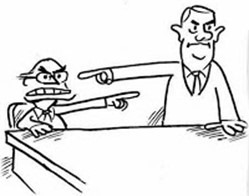
It is just too comforting to think that those you disagree with are ignorant or steeped in moral turpitude, preferably both.

clip_image001

Milton Friedman argued that people agree on most social objectives, but they differ often on the predicted outcomes of different policies and institutions.

This leads us to Robert and Zeckhauser’s taxonomy of disagreement:

Positive disagreements can be over questions of:
1. Scope: what elements of the world one is trying to understand?
2. Model: what mechanisms explain the behaviour of the world?
3. Estimate: what estimates of the model’s parameters are thought to obtain in particular contexts?

Values disagreements can be over questions of:
1. Standing: who counts?
2. Criteria: what counts?
3. Weights: how much different individuals and criteria count?

Any positive analysis tends to include elements of scope, model, and estimation, though often these elements intertwine; they frequently feature in debates in an implicit or undifferentiated manner.

Likewise, normative analysis will also include elements of standing, criteria, and weights, whether or not these distinctions are recognised.

The origin of political disagreement is a broad church indeed in a liberal democracy. Those you disagree with are not evil, they just disagree with you. As Karl Popper observed:

There are many difficulties impeding the rapid spread of reasonableness. One of the main difficulties is that it always takes two to make a discussion reasonable. Each of the parties must be ready to learn from the other.

A nice case against the notion of the ignorance and moral turpitude of your opponents is the obituary by Brad DeLong for Milton Friedman which was as good as any written saying:

His wits were smart, his perceptions acute, his arguments strong, his reasoning powers clear, coherent, and terrifyingly quick. You tangled with him at your peril. And you left not necessarily convinced, but well aware of the weak points in your own argument

AND

Milton Friedman’s thought is, I believe, best seen as the fusion of two strongly American currents: libertarianism and pragmatism. Friedman was a pragmatic libertarian. He believed that–as an empirical matter–giving individuals freedom and letting them coordinate their actions by buying and selling on markets would produce the best results… For right-of-center American libertarian economists, Milton Friedman was a powerful leader. For left-of-center American liberal economists, Milton Friedman was an enlightened adversary. We are all the stronger for his work. We will miss him.

Why do recessions cheer the Left up?

Why is it that the further to the Left that people go, the more cheerful they seem to be in recessions and economic crises? They are miserable when times are good.

The Left supported the discretionary fiscal, monetary and regulatory policies that caused the recession and then supported crisis management policies that deepen the recession. The Left always wants to tax and regulate their way out of every recession.

Most crisis management policies distort the incentives to hire and invest and reduce competition and efficiency. While different sorts of shocks lead to ordinary downturns, it is overreactions by governments to stem the crisis that prolong and deepen economic downturns, turning them into depressions.

One in three EU unemployed are Spanish because of employment protection laws. Cahuc et al. 2012 estimated that Spanish unemployment would be 45% lower if Spain adopted the less strict French laws! Differences in their employment protection laws accounted for nearly half of the dramatic rise in Spanish unemployment since 2007. Who is for and against these terrible laws?

The Greatest Speech Ever – Robert F Kennedy Announcing The Death Of Martin Luther King

This speech will take your breath away.

HT: Mohammad Azzam


Video

The Household Demand for Low Carbon Public Policies

Matt Kahn at Environmental and Urban Economics: Carbon Politics and Economic Research.

How biased is the Australian media?

Camped firmly over the middle-ground. Sorry to disappoint.


Leigh and Gans in "How Partisan is the Press? Multiple Measures of Media Slant" in The Economic Record 2012 employed several different approaches to find that the Australian media are quite centrist, with very few outlets being statistically distinguishable from the middle of Australian politics.

The minor exceptions were ABC Channel 2 and perhaps the Melbourne Age in its news slant in the 2004 election. Their media slants were small.

Australian newspapers tended to endorse the Liberal-National coalition in the federal elections from 1996 to 2007 although The Australian, right-wing rag that it is, backed the Labor Party in 2007! I agree that this was a serious lapse of judgement.

Another lapse is the editorial of April 6, 1995, where the Australian said: "The scientific consensus that global warming is occurring unnaturally, primarily as a result of industrial development and deforestation, is no longer seriously disputed in the world." Murdoch’s paper supports global action on climate change based on science.

The editorial endorsements series should have been longer in the analysis of Leigh and Gans because some newspapers back winners just before they become winners and oppose the re-election of tired and smelly governments that have being there too long no matter what their party.

The results of Leigh and Gans should come as no surprise. Newspapers that are out of tune with their readers lose sales and risk going broke. Plenty of newspapers are losing money these days because of the digital revolution in media. There is no scope left to indulge the political preferences of the owners at the expense of circulation. Margaret Simons got it right when she said:

The market is too small to support newspapers that don’t play to the centre ground … In a marketplace full of bland centrist publications and carefully mixed stables of commentators, small deviations can look extreme.

For links discussing the quality of the analysis of Leigh and Gans, see http://offsettingbehaviour.blogspot.co.nz/2009/09/measuring-media-bias-in-oz.html and http://economics.com.au/?p=4226 for Gans’ rely to http://andrewnorton.info/2009/09/02/can-public-intellectuals-be-used-to-assess-partisan-media-slant/

Let the climate science be settled! Only the economics matter

The great tactical victory of environmentalists is keeping the debate on the science going because even if the science is right, the economic costs are small.

Let the climate science be settled. How much will global warming cost is the correct question for policy debate.

Global warming, although real, is not apt to be severe. It will lower the level of GDP by maybe 2%. The loss of one year’s income growth! Courtesy of David Friedman’s reading of the report, this is what the IPCC said this week:

With these recognized limitations, the incomplete estimates of global annual economic losses for additional temperature increases of ~2°C are between 0.2 and 2.0% of income (±1 standard deviation around the mean)

Many of the consequences of global warming will be beneficial – warmer in some places, colder in others; wetter in some places and drier in others. The sea level rises will mean local problems, not a planetary crisis.

New Zealand will have a more reliable power supply because of increased winter rainfall as well as warmer winters. Most of New Zealand’s power supply is from lakes that rely on the Spring melting of the winter snow rather than winter rainfall.

The chances of India, China and the rest of the Third World agreeing to forego or even slow their economic development to fight global warming is zero even before you consider the international collective action, verification and free rider problems.

Climate changes have a greater impact in the most under-developed countries that are yet to embrace capitalism. Agriculture provides the livelihoods of 30 per cent or more of their populations, many of whom still practice subsistence agriculture.

Yet the trend in developing countries is to be much less dependent on agriculture as a  source of employment and family incomes. If per capita income in the poor countries grows in the next forty years as rapidly as it has in the forty years just past, their vulnerability to climate change should diminish.

Adaptation and richer is safer are the only games in town for both the developed and the developing worlds.

The only case for even a token carbon tax is to avoid green tariffs in the EU and USA on exports. We may as well collect the revenue for ourselves rather than let the EU and USA pocket it.

p.s The report of the IPCC yesterday was a one-day media wonder in the country where I live. I could not find a single story today in the Dominion Post, which is the paper for the political capital for New Zealand.

One of the greatest moments in TV – The Wire – Major Colvins speech: A paper bag for drugs

the best single case made for ending the war on drugs from the greatest TV show of them all. A bit over 3 minutes long.

Years ago, I remember reading a short news note about a Rand study of occupational hazards facing drug gangs in Washington, DC in the 1970s.

In a typical career of a few years, the annual risks were these:

  1. The chances of being caught by the police was 22% – usually 18 months in prison;
  2. the chances of serious injury 7%;
  3. The chances of being murdered by a business associate or market rival was 1.4%;
  4. the pay for street dealers is rather poor and not much better than their next best job opening.

Gave up on the war on drugs right there and then. Death and injury are the main occupational hazards of a drug dealer.

Murder was the leading cause of death of young black Americans.

Another paper pointed out that one reason the death penalty did no work so well was because people spent so long on death row due to appeals that taking them out of the drug trade increased their life expectancy.

The execution rate on death row is about twice the death rate from accidents and violence for all American men, and only slightly greater than the rate of accidental and violent death for all black males aged 15 to 34.

Bad prison conditions—well known, pervasive and immediate—have a more significant deterrent role against crime. Death row is a rather safe place to be?

Video

When two refugees from the Khmer Rouge found paradise on Earth

When a Cambodian man and his pregnant wife, having fled the Khmer Rouge, were on the bus from Sydney Airport, they quickly concluded that they were in paradise. They slept on top of the blankets of the neatly made bed at the migrant hostel in 1978 because they did not want to get into any trouble for messing up the bed and be sent back to hell. Such was their ingrained fear of arbitrary power and victimisation.

After a few weeks, they stopped stealing the sauces and other condiments from the dining hall at the hostel because they realised that the food would keep coming and there was no need to hoard. They then started to act as mentors to incoming refugees assuring them that they could sleep under the blankets, and the food would arrive three times a day, every day.

When the Salvation Army helped them and their new baby into a house in suburban Sydney, the Salvos were very embarrassed about the furniture they managed to find for them.

The Cambodian couple thought they were in paradise again. The house and furniture were better than anything they had seen in a middle-class home in their own country.

After a few years of hard work, the father saved enough to open an electrical retailing franchise store in the suburbs.

The mother went to the store one afternoon to fill in for an absent worker.

She did not come back for 7-years.

She was great at bargaining with fellow refugees. She knew that her fellow refugees only had a certain amount of money, and she bargained to find out what that was. She wrapped the goods up tightly because she knew that they took public transport home.

The word spread that her store was a good place for a bargain, and the store prospered.

Their daughter grew up to be a lawyer and wrote one of the best autobiographies I have read.

I had some Cambodian friends at graduate school in Japan in 1995 to 1997. Friendly, kind people despite growing up in hell.

They also gave me great insight into the blinding power of nationalism.

Two Cambodian friends, educated urbane people, referred to the time after the Vietnamese invasion of Cambodia as when they were a Vietnamese colony.

Another Cambodian, who no one liked, when he annoyed his Vietnamese class mates too much, they would say, “Remember 1979.”

This taunt would throw this Cambodian into a fit of nationalist pique. He raged against the invasion.

If any country would have benefited from an invasion from hell, it would have been Cambodia under Pol Pot and the Khmer Rouge by 1979. At least, the Devil waits for you to die before he torments you.

The withering away of the union wage premium

The union wage premium is supposed to be 10-15%. There is evidence that it may be close to zero and has been close to zero for some time at least in the USA.


In this paper (QJE 2004), John DiNardo and David Lee compared business establishments from 1984 to 1999 where US unions barely won the union certification election (e. g., by one vote) with workplaces where the unions barely lost.

If 50% plus 1 workers vote in favour of the union proposing to organise them, management has to bargain for a collective agreement in good faith with the certified union, if the union loses, management can ignore that union.

Most winning union certification elections resulted in the signing of a collective agreement not long after. Unions who barely win have as good a chance of securing a collective agreement as those unions that win these elections by wide margins. Few firms subsequently bargained with a union that just lost the certification election. Employers can choose to recognise a union.

Because the vote is so close, a particular workplace becoming unionised was close to a random event.

  • This closeness of the union certification election may disentangle unionisation from just being coincident with well-paid workplaces, more skilled workers and well-paid industries.
  • Unions could be organising at highly profitable firms that are more likely to grow and pay higher wages independent of any collective bargaining. The unions are claiming credit for wage rises that would have happened anyway.

DiNardo and Lee found only small impacts of unionisation on all outcomes that they examined:

  • The estimated changes for wages are close to zero.
  • Impacts on survival rates of the unionised business and their profitability were equally tiny.
  • This evidence suggests that in recent decades, requiring an employer to bargain with a certified union has had little impact because unions have been unsuccessful in winning significant wage gains.

This means that there may not be a union wage premium at all since the early 1980s in the USA.

Private sector union membership is about 7% in the USA. Private sector union membership is barely in the teens in Australia and New Zealand. Fewer people are joining unions because they are not of any value to them.

The transferability of these results to Australia are in doubt, to the extent that there is the option for compulsory arbitration, which there is. The union wage premium may be the product of the ability to lobby for wage regulation.

New Zealand and U.S. unions are more similar in that both are on their own in bargaining with employers for a wage rise. The U.S. result sends a message to New Zealand that unions are a bit of a relic in terms of wage bargaining.

Regulated industries are a little different because it is wise for employers to share the rents from the higher prices with their employees as higher wages. They then unite in a political coalition to support continued regulation and tariffs. There are far fewer industries these days where entry is regulated and prices are higher because of such anti-competitive regulation.

These results about the small size of the union wage premium, of course, would come as no surprise to Milton Friedman. He said in 1950 that most unions could not overcome market forces that would tend to keep wages aligned with competitive rates.

Lessons from how Australia came out of the Great Depression-updated

How Australia got out of the Great Depression in the 1930s could have lessons for today, for the global financial crisis and the Great Recession. In Australia, the massive fiscal contraction from late 1930 onwards was called the Premiers’ Plan. In 1931, unemployment rates was 25% or more.

The Premiers’ Plan required the federal and state governments to cut spending by 20%, including cuts to wages and pensions and was to be accompanied by tax increases, reductions in interest on bank deposits and a 22.5% reduction in the interest the government paid on internal loans.

The Premiers’ Plan was complementary to the Arbitration Court’s 10 per cent nominal wage cut in January 1931 and the devaluation of the Australian pound. Most countries had abandoned the gold standard by 1931 and 1932 and devalued by about 10% including the UK. These competitive devaluations were called currency wars. Most countries below started to recovery before they left the gold standard, a year or two before they left the cross of gold.

Real GDP and dates of exit from gold standard

clip_image002

Sources: GGDC‑Maddison International Historical Database (http://www.ggdc.net/Maddison/), Bernanke et al. 1990; Gruen and Clark 2009.

The New Zealand Government also cut everything that could be cut by 20% in 1931.

Maclaren (1936) dated the Australian economic recovery from the last months of 1932. It was to take another three years before unemployment rates fell below 10 per cent — the rate it had been during most of the 1920s.

The June 1931 Premiers’ Plan of fiscal consolidation had time by late 1932 to become credible and take hold given the usual leads and lag on fiscal policy.

Unemployment data in the 2001 Australian yearbook of the Australian Bureau of Statistics graphed below shows a rapid fall in the high twenties unemployment rate in 1932 to be below 10 per cent by 1937. This fall started just after the 1931 Premiers’ Plan of fiscal consolidation.

Australian unemployment was 7.5 per cent in 1938, which is the long-term average for the period 1906 to 1929. The USA had an unemployment rate twice that in 1938 and was coming out of a double dip great depression.

Australia and New Zealand came out of the Depression earlier than most other countries because of the fiscal austerity under the Premiers’ Plan. The New Deal prolonged the great depression in the USA.

For those that doubt, how much lower would have been the Australian unemployment rate between 1932 and 1937 but for the fiscal contraction? What is your counter-factual? The role of fiscal policy in Australia in the 1930s is rather under-studied in Keynesian macroeconomics. Why?

The fiscal consolidation in the Premiers’ Plan removed fears of even harsher future taxes, stabilised expectations, increased consumers’ expected disposable incomes, and increased investor confidence and therefore stimulated private investment. See Keynes’ 1932 letter where he says

I am sure the Premiers’ Plan last year saved the economic structure of Australia.

Expressive voting – three case studies

Obama won nearly 80% of the Jewish vote. He and the Democratic Party are rather divided on support for Israel. The Republicans are more in favour of Israel.

Now see Expressive voting and identity: evidence from a case study of a group of U.S. voters, A review of Norman Podhoretz, Why are Jews Liberals? by Arye L. Hillman, Public Choice (2011).

Podhoretz describes behaviour that backs up the hypothesis that people vote expressively to affirm their identity. Podhoretz was concerned that liberal Jews vote against their self-interest.

Most of the Jews who voted for Obama did care about Israel but downplayed his anti-Israel associations; they voted for him anyway. The expressive behaviour hypothesis explains why many Jews do this. As a single vote is not decisive in most elections, the main benefit from voting is its expressive value:

  • Liberal Jews, manifesting a rational behaviour, choose the expressive utility from voting against the “Right”, which is identified with past prejudice against Jews and contemporary privilege.
  • The identity of a person who opposes privilege and cares about social justice is confirmed through the act of voting for the “Left”.

Liberal Jews support liberal principles through the low-cost actions of voting and rhetoric, so as to place themselves at the centre of society despite their higher-than-average incomes.

People also vote for parties that will never win elections for expressive reasons. Since maybe 1945, up to a quarter of UK voters knowingly vote for the Liberals and now the LDP knowing that it is usually a wasted vote. But is it?

  • Voting for a third party that will not win is a way of being a middle-of-the-road voter without voting for the socialists or the Tory party.
  • Third party votes change the identity of the median voter. The swinging voter in the UK is often an LDP voter.

To win this LDP vote, the major parties must change their policies or these voters will park their vote somewhere else while still signalling their vote is up for grabs to both sides. These voters affirm themselves as sensible middle-of-the-road voters without voting for either Labour or the Tory party.

The same happens for third-party candidates in America. They are protest votes. The major parties spend a lot of time wooing back these voters at the next election. A protest vote is very affirming to an expressive voter.

Expressive voting also offers much insight into why some democratically elected governments continued to pursue terrible wars of attrition. The unwillingness to discuss peace terms in World War I is an example. A voter might prefer peace to war but showing patriotism might outweigh this. One candidate offers a policy of appeasement, recognising the enormous cost in lives that further fighting might involve. The other candidate stands for national pride, not surrendering to bullies, and avenging past losses. A careful reflection on the costs and benefits of war or peace is what the voter does not do. What is relevant is showing patriotism and strength of purpose.

The main point is that expressive voters are not disciplined by outcomes, and that democratic choice is suspect for this reason even on the biggest of issues.

What is neoliberalism? Please tell me – show me one.

I want to meet someone who believes neoliberalism was the leading light of the economic reforms since 1980. They can then tell me what neoliberalism is. Please, tell me.

The prefix “neo-” makes “neoliberalism” sound like something that morphed into something bad. Is neoliberalism something more than a sustained sneer – a personal attack as a way of avoiding debate?

Not only is there no single definition of neoliberalism, there is no one who identifies himself or herself as a neoliberal. At least communists and socialists were proud to be called so.

In Neoliberalism: From New Liberal Philosophy to Anti-Liberal Slogan, Taylor Boas & Jordan Gans-Morse went in search of anyone who identifies one’s self as a neoliberal:

  • They did not uncover a single contemporary instance in which an author used the term self-descriptively, and only one – an article by New York Times columnist Thomas Friedman (1999) – in which neoliberal was applied to the author’s own policy recommendations.
  • Digging into the archives, they did find that while Milton Friedman (1951) embraced the neoliberal label and philosophy in one of his earliest political writings, he soon distanced himself from the term, trumpeting “old-style liberalism” in later manifestoes (Friedman 1955). See “Neo-liberalism and its Prospects”, Milton Friedman Papers, Box 42, Folder 8, Hoover Institution Archives. 1951. Hardly a smoking gun?

What Boas and Gans-Morse found, based on a content analysis of 148 journal articles published from 1990 to 2004, was that the term is often undefined. It is employed unevenly across ideological divides; it is used to characterise an excessively broad variety of phenomena.

That is academic speak for neoliberalism is an empty slogan.

Neoliberalism was supposed to rule the roost under Reagan, Thatcher, Hawke and Lange-Douglas. The local branches of neoliberalism were Thatchernomics, Rogernomics, and Reaganomics.

Milton Friedman is said to have mesmerised several countries with a flying visit. The Friedman Monday Conference on ABC in 1975 and by Hayek in 1976 are still ruling the Australian policy roost, if some serious public commentators are to be believed.

In the 1980s and up to the mid-1990s, despite all the neo-liberal deregulation and Milton Friedman taking over monetary policy, mentioning Friedman’s name at job interviews would have been extremely career limiting, and that was at the Australian Treasury.

Back then, the much less radical Friedman was just graduating from being a wild man in the wings to just a suspicious character.

If you name dropped Hayek in the early 1990s, any sign of name recognition would have indicated that you were being interviewed by educated people.

When the Left gets on its high horse and goes on about Hayek and Friedman running neoliberalism, with Hayek as Friedman’s mentor, it is refreshing to remind all how little they had in common on macroeconomics. The University of Chicago Department of Economics did not offer Hayek a job in the late 1940s despite his outstanding record at LSE as Keynes’ principal critic in the 1930s.

While working at the next desk to a monetary policy section in the late 1980s, when mortgage rates were 18%, I heard not a word of Friedman’s Svengali influence:

  • The mantra for several years was that the market determined interest rates, not the Reserve Bank. Joan Robinson would have been proud that her 1975 Monday conference was still holding the reins.
  • Monetary policy was targeting the current account. Read Edwards’ biography of Paul Keating’s time as Treasurer and Prime Minister and his extracts from very Keynesian treasury briefings to Keating signed by David Morgan that reminded me of Keynesian Macro 101.

As a commentator on an Australian Treasury seminar paper in 1986, Peter Boxhall – freshly educated from the 1970s Chicago School – suggested using monetary policy to reduce the inflation rate quickly to zero. David Morgan and Chris Higgins almost fell off their chairs. These Treasury Deputy CEOs had never heard of such radical ideas.

In their breathless protestations, neither Morgan nor Higgins were sufficiently in tune with their Keynesian education to remember the role of sticky wages or even the need for monetary growth reductions to be gradual and, more importantly, credible, as per Milton Friedman.

By the way, Friedman’s presidential address to the AEA in 1967 is now recognised as perhaps the single most influential journal article of the 20th century. That article is the essence of good communication and empirical testing of competing hypotheses as was his 1976 Noble Prize lecture. No wonder both were hidden from impressionable undergraduates such as me a few years after.

The war against terror really is a war

Some pretend that the war on Al-Qaeda is not a war and attacking them with drones is illegal under international law. Under this theory, terrorism is a crime, not an act of war. Terrorists such as Australia’s own David Hicks are just criminals. These criticisms rest on profound misconceptions about the international laws of war.
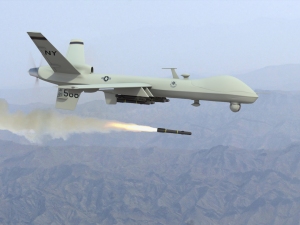
The hijacking of airliners was defined by the UN in the 1970s as aerial piracy.

The 9/11 terrorists were air pirates. NATO and allied military entered Afghanistan to subdue the home base of these brigands and those that harboured them:

  • Naval and military deployments against pirate’s lairs date back thousands of years.
  • The first war of the USA was with the Barbary Pirates in 1801 to 1805, with another war in 1815. These pirates waged war against the shipping of other nations, seized cargoes and ships, and sold captives into slavery.
  • Punitive expeditions against bandits were commonplace too, such as chasing Pancho Villa and his gang of bandits back into Mexico in 1916.
  • The U.S. military recently attacked a Somalian maritime pirate camp to rescue hostages. EU naval forces have also attacked these pirate lairs to destroy boats and supplies.

The case for attacking Afghanistan was as a limited, punitive expedition to degrade it as a terrorist base camp. That mission was accomplished in 2001 and 2002.

Does Al-Qaeda and other terrorist militias wear uniforms and carry their weapons openly as required by international law to qualify as a lawful combatant? Al-Qaeda and other terrorist militias routinely commit war crimes under the Geneva conventions by intermingling with civilians and by “locating military objectives within or near densely populated areas”.

International humanitarian law permits members of the armed forces of a state that is party to an international armed conflict and associated militias who meet the requisite criteria to wear uniforms, carry their weapons openly, and directly engage in hostilities. They are generally considered lawful, or privileged, combatants who, when captured, may not be prosecuted for taking part in hostilities as long as they respect international humanitarian law.

The whole purpose of requiring belligerents to wear uniforms recognisable at a distance and to carry their weapons openly is to protect civilians. Each side can see the other clearly and has no excuse for getting ‘trigger happy’ around civilians.

It is the terrorists who violate the laws of war by hiding themselves and their bases within civilian populations, thereby drawing unwilling and unsuspecting innocents into the fighting.

If civilians directly engage in hostilities, they are considered unlawful or unprivileged combatants or belligerents. They may be prosecuted under the law of the detaining state. The Allies detained 11 million POWs (and captured enemy personnel) without charge or trial by the time World War II ended. None were allowed access to a lawyer or had the right to seek bail.

Because the USA and others are at war with Al-Qaeda, they can use force to conduct hostilities against the enemy and those who harbour them. The Taliban was warned. A Wiki has this nice quote by Stone (1921):

When the territorial sovereign is too weak or is unwilling to enforce respect for international law, a state which is wronged may find it necessary to invade the territory and to chastise the individuals who violate its rights and threaten its security.

When a nation goes to war, it seeks to defeat and subdue its enemy to prevent further attacks.

The U.S. and allied military and intelligence services are legally and morally free to target Al-Qaeda for an attack whether they are on the front lines or behind them, with or without warning and without any attempt to capture.

A corollary of the right to kill enemy personnel is that the deaths of civilians that occur in legitimate attacks against military targets are not illegal. It is pious to deny this. It denies the most basic and best understood of moral distinctions: between premeditated murder and unintended killing.

It is the central principle of the international laws of war that innocent civilians should not be targeted. On the other hand, the rules of war accept the death of civilians in or near legitimate military targets.

Al-Qaeda will never follow the rules of war. Al-Qaeda gains its only tactical advantages by systematically flouting them and hiding among civilians.

The renegade Left for decades wanted terrorists to be treated as prisoners of war, and thereby held to the end of the war and not otherwise punished. Now, the renegade Left don’t want terrorists to be held as captured combatants to the end of the war. Instead, they want them to have the right to apply for bail.

As part of law-fare, one or two fathers applied to the U.S. courts for injunctions to stop drone attacks on their wayward sons on a best friend basis. They failed and were reminded by the Court that if they were so worried, their sons could pop down to the nearest U.S. embassy and discuss their fears: surrender for extradition.

Al-Qaeda and 9/11 will not go away if only history were different and the USA had kept more to itself prior to 9/11. The war against Al-Qaeda started from the world as it was on 9/11 for all its flaws. After 9/11, mutual defence obligations were triggered under NATO and ANZUS, in addition to the UN resolutions. Navies and armies have fought pirates and bandits for thousands of years.

P.S. All terrorists and members of the Taliban are war criminals because:

  • Article 51 (7) of Protocol I of the Geneva Convention states: “The presence or movements of the civilian population or individual civilians shall not be used to render certain points or areas immune from military operations, in particular attempts to shield military objectives from attacks or to shield, favour or impede military operations”.
  • The Geneva Convention also holds that “The presence of a protected person may not be used to render certain points of areas immune from military operations”. (Geneva Convention Relative to the Protection of Civilian Persons in Time of War, 1949, Laws of Armed Conflicts, 495, 511.)
  • The Rome Statute is clear that “utilizing the presence of civilians or other protected persons to render certain points, areas or military forces immune from military operations is recognized as a war crime by Article 8 (2) (b) (xxiii)”.
Privatisation screw-ups are the best case for privatisation

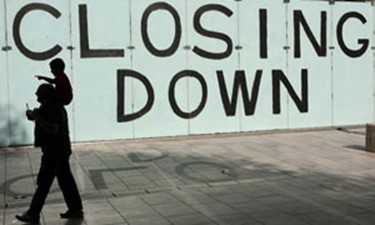
Governments are so bad as business owners and so incapable of running a commercial process free of politics that governments cannot even sell a state-owned enterprise for a good price under the full glare of the media and public.

Anyone can sell an asset. It is the simplest task of ownership. Hire some consultants and go for the best price. Governments lack this ability.

Privatisations are often politicised, with discounts for small buyers from the middle class, for employees and other special interests. These messy privatisations are the best case out there against state ownership of businesses.


“No asset sales” was the Labour Party’s most coherent slogan in the 2011 general election in New Zealand. It cannot be claimed that the more recent privatisations in New Zealand were not subject to the maximum amount of public and parliamentary scrutiny possible in a democracy. The 2011 election was said to be a referendum on asset sales.

This inability to sell state-owned enterprises for a profit and free of politics calls into question the ability of governments to make complicated day-to-day business management and entrepreneurial judgements as owners of business enterprises. Imagine the quality of the day-to-day state-owned enterprise decision making that is further away from the glare of an election?

Private asset owners have a strong incentive to sell assets at a profit as it will otherwise hurt their share price and their personal wealth. Inferior entrepreneurs and owners are punished by losses. Any assets that inferior entrepreneurs either mismanaged or sell at a bargain price will, through further buying and selling, end up in the hands of more alert entrepreneurs and owners.

There are no similar feedback and error correction measures disciplining governments as asset owners and in their day-to-day monitoring of their business portfolios. Governments who own business assets have an inherently softer budget constraint.

Beware of Greeks bearing debts

The Greeks initially did a fine job in squeezing huge subsidies and debt write-offs! The Irish played by the rules, guaranteeing bank bond holders to which they had no obligation, but got screwed.

Arellano, Conesa, and Kehoe explain in Chronic Sovereign Debt Crises in the Eurozone, 2010–2012 that the post-GFC recession in many Eurozone countries created an incentive to gamble for redemption.

This gamble for redemption is betting that the post-2008 recession will soon end.

  • If Greece sold more bonds to smooth government spending in the interim, and if the Greek and EU economies recover, the stronger revenue growth will pay off the enlarged Greek government debt.
  • Under some circumstances, this policy is the best that a government can do for its country, but it carries a risk!
  • If the recession goes on for too long (and it did in southern Eurozone), a government will either have to stop increasing its debt or default on its bonds.

The global bond markets will anticipate this prospect of default as a country’s government debt accumulates and will seek higher and higher interest for new bonds, and importantly, to roll over existing Greek Government bonds.

EU policies that result in higher interest rates on government bonds and high costs of default provide incentives for a national government to reduce its debts and avoid sovereign default.

EU policies that result in lower interest rates and lower the cost of a sovereign default provide incentives for a government to gamble for redemption.

The interventions taken to date by the EU and the IMF – lowering the cost of borrowing and reducing default penalties, the bailouts and the 50% write-off of the existing Greek government debts – encourage southern Eurozone governments to gamble for redemption.

Greece and a few others are gambling for redemption by betting that the recession will end soon, selling more bonds to smooth government spending in the interim, and reducing the enlarged debt if their economies recover.

If the recession continues for too long, the government will have to stop increasing debt or default on its bonds. Greece has been in default in more than 50% of the time since it became independent in 1822.

A 2014 paper by Kehoe argued that if Germany and France start to get tough with Greece and charge it penal interest rates on further loans and debt rollovers, it will make it optimal for Greece to just default on its government debts and leave the Eurozone.

A resumption in economic growth is one of the few solutions that avoid these calamities.

Greece’s problem is that it is 119th in the 2014 index of economic freedom, just ahead of India. The World Bank ranks Greece 161st in the world for ease of registering property and 91st for enforcing contracts; it takes an average of 1,300 days to enforce a contract through the Greek courts. This low base says something about how Greek politics works and will work for some time to come.

The lengthy shortcomings of the Eurozone were well-known before it was formed. As Michael Bordo pointed out in 1999:

the absence of a central lender of last resort function for EMU, the lack of a central authority supervising the financial systems of EMU, unclear and inconsistent policy guidelines for the ECB, the absence of central co-ordination of fiscal policies within EMU, unduly strict criteria for domestic debt and deficits, as set out in the Maastricht rules, in the face of asymmetric shocks, and Euroland is not an optimal currency area.

Milton Friedman predicted that the Euro would not survive its first major recession.

I told you so is never a solution.

Europe has extensive experience with currency union break-ups:

  • The Latin Monetary Union joined Belgium, Italy, and Switzerland with France in 1867. The arrangement held together until the generalized breakdown of global monetary relations during World War I.
  • The Scandinavian Monetary Union was formed in 1873 by Sweden and Denmark and Norway joined two years later. This was disrupted by the suspension of convertibility and floating of the three currencies at the start of World War I. The agreement was abandoned during the global financial crisis of 1931.
  • Following the start of the Zollverein (the German customs union) in 1834, members established a German Monetary Union. A full merger of all the currencies did not arrive until after consolidation of modern Germany in 1871.
  • The only truly successful monetary union in Europe came in 1922 with the birth of the Belgium-Luxembourg Economic Union (BLEU), which remained in force until 1999.
  • After the Austro-Hungarian Empire was dismembered by the Treaty of Versailles, in an abrupt and quite chaotic manner, new five currencies were introduced.

Rather than saying the Euro cannot fail, the discussion should be about how the dissolution of currency unions is common, especially where Greece is a member. What happened? What can we learn from the past to prepare for a possible Greek departure from the Eurozone?

Previous Older Entries Next Newer Entries

Libertarian Land

Celebrating humanity's flourishing through the spread of capitalism and the rule of law

Arin’s Substack

Celebrating humanity's flourishing through the spread of capitalism and the rule of law

David Andolfatto

Celebrating humanity's flourishing through the spread of capitalism and the rule of law

Monetary Non-Neutrality

Celebrating humanity's flourishing through the spread of capitalism and the rule of law

Reason Magazine

Celebrating humanity's flourishing through the spread of capitalism and the rule of law

Coyote Blog

Celebrating humanity's flourishing through the spread of capitalism and the rule of law

Thoughts from the North

Celebrating humanity's flourishing through the spread of capitalism and the rule of law

Fardels Bear

A History of the Alt-Right

Vincent Geloso

Econ Prof at George Mason University, Economic Historian, Québécois

Bassett, Brash & Hide

Celebrating humanity's flourishing through the spread of capitalism and the rule of law

Truth on the Market

Scholarly commentary on law, economics, and more

The Undercover Historian

Beatrice Cherrier's blog

Matua Kahurangi

Celebrating humanity's flourishing through the spread of capitalism and the rule of law

Temple of Sociology

Celebrating humanity's flourishing through the spread of capitalism and the rule of law

Velvet Glove, Iron Fist

Celebrating humanity's flourishing through the spread of capitalism and the rule of law

Why Evolution Is True

Why Evolution is True is a blog written by Jerry Coyne, centered on evolution and biology but also dealing with diverse topics like politics, culture, and cats.

NoTricksZone

Celebrating humanity's flourishing through the spread of capitalism and the rule of law

Homepaddock

A rural perspective with a blue tint by Ele Ludemann

Kiwiblog

DPF's Kiwiblog - Fomenting Happy Mischief since 2003

The Dangerous Economist

Celebrating humanity's flourishing through the spread of capitalism and the rule of law

Watts Up With That?

The world's most viewed site on global warming and climate change

The Logical Place

Tim Harding's writings on rationality, informal logic and skepticism

Doc's Books

A window into Doc Freiberger's library

The Risk-Monger

Let's examine hard decisions!

Uneasy Money

Commentary on monetary policy in the spirit of R. G. Hawtrey

Barrie Saunders

Thoughts on public policy and the media

Liberty Scott

Celebrating humanity's flourishing through the spread of capitalism and the rule of law

Point of Order

Politics and the economy

James Bowden's Blog

A blog (primarily) on Canadian and Commonwealth political history and institutions

Science Matters

Reading between the lines, and underneath the hype.

Peter Winsley

Economics, and such stuff as dreams are made on

A Venerable Puzzle

"The British constitution has always been puzzling, and always will be." --Queen Elizabeth II

The Antiplanner

Celebrating humanity's flourishing through the spread of capitalism and the rule of law

Bet On It

Celebrating humanity's flourishing through the spread of capitalism and the rule of law

History of Sorts

WORLD WAR II, MUSIC, HISTORY, HOLOCAUST

Roger Pielke Jr.

Undisciplined scholar, recovering academic

Offsetting Behaviour

Celebrating humanity's flourishing through the spread of capitalism and the rule of law

JONATHAN TURLEY

Res ipsa loquitur - The thing itself speaks

Conversable Economist

In Hume’s spirit, I will attempt to serve as an ambassador from my world of economics, and help in “finding topics of conversation fit for the entertainment of rational creatures.”

The Victorian Commons

Researching the House of Commons, 1832-1868

The History of Parliament

Articles and research from the History of Parliament Trust

Books & Boots

Reflections on books and art

Legal History Miscellany

Posts on the History of Law, Crime, and Justice

Sex, Drugs and Economics

Celebrating humanity's flourishing through the spread of capitalism and the rule of law

European Royal History

Exploring the Monarchs of Europe

Tallbloke's Talkshop

Cutting edge science you can dice with