Is the IPCC Government Approval Process Broken? | Robert Stavins

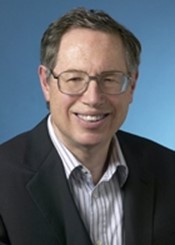
Robert Stavins, the Co-Coordinating Lead Author of Chapter 13, “International Cooperation:  Agreements and Instruments,” of Working Group III (Mitigation) of the Fifth Assessment Report of the Intergovernmental Panel on Climate Change (IPCC) has written a letter arguing the following:

  • If the IPCC is to continue to survey scholarship on international cooperation in future assessment reports, it should not put country representatives in the uncomfortable and fundamentally untenable position of reviewing text in order to give it their unanimous approval. 
  • In my view, with the current structure and norms, it will be exceptionally difficult, if not impossible, to produce a scientifically sound and complete version of text for the SPM on international cooperation that can survive the country approval process.
  • The general motivations for government revisions – from most (but not all) participating delegations – appeared to be quite clear in the plenary sessions.
  • These motivations were made explicit in the “contact groups,” which met behind closed doors in small groups with the lead authors on particularly challenging sections of the SPM.
  • In these contact groups, government representatives worked to suppress text that might jeopardize their negotiating stances in international negotiations under the United Nations Framework Convention on Climate Change (UNFCCC).
  • Nearly all delegates in the meeting demonstrated the same perspective and approach, namely that any text that was considered inconsistent with their interests and positions in multilateral negotiations was treated as unacceptable.

HT: Catallaxyfiles

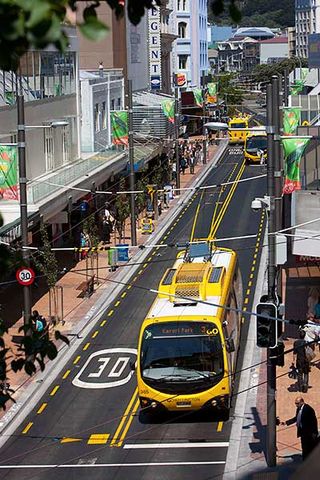
@NZGreens @GreenpeaceNZ The scrapping of the trolley buses is great news – killer green technology alert

The extra costs associated with the wire network and the difficulty of changing the buses’ routes were the main factors in this great decision.

Goldenmile-busroute-lg

Trolley buses cause backlogs when they brake down because they cannot overtake a broken-down bus. The trolley buses just stake-up behind the broken-down bus because they cannot overtake.

I have been trapped on a diesel express bus this way commuting to work many times. Central Wellington grinds to halt when one trolley bus breaks-down.

The 50-year-old power system would need upgrading soon costing “tens of millions of dollars,” and maintaining the 160 kilometres of wires and 15 substations costs $6m a year. The one-off cost of dismantling this network is cheaper than this!

Trolley bases are a killer green technology: drivers have been killed while standing on the road behind the bus reconnected the arms on the top of the bus to the overhead wires. These arms disconnect frequently, and have even hit people on the side of the road.

Wellington is earthquake prone. Having public transport run off a single electric power source connected to overhead wires is fool hardy.

I grew up in a small country town. I have none of the obsessions that big-city folk and the inner-city green voters, in particular, have with buses.

Climate policy targets revisited | Richard Tol

The IPCC’s Fifth Assessment Report estimates lower costs of climate change and higher costs of abatement than the Stern Review. However, current UN negotiations focus on stabilising atmospheric concentrations of greenhouse gases at even lower levels than recommended by Stern.

This column argues that, given realistic estimates of the rate at which people discount the future, the UN’s target is probably too stringent.

Moreover, since real-world climate policy is far from the ideal of a uniform carbon price, the costs of emission reduction are likely to be much higher than the IPCC’s estimates.

PRTP is the preferred rate of time preference used in net present value calculations.

via Climate policy targets revisited | vox.

Rod Croome’s unanticipated revolution

Back in 1986, an old University mate of mine, Rod Croome was very physically brave in his protesting for reforms to the Tasmanian state criminal law.

  • Rod even walked into a Tasmanian police station and confessed to abominations against the order of nature, as the Tasmanian criminal code called it.
  • The Police said they could not prosecute without the other party coming forward as the witness. The abominee did.
  • The Tasmanian Director of Public Prosecutions then declined to prosecute on public interest grounds. His discretion to not prosecute is absolute.

These days, Rod is campaigning for the equal right to marry. All inside one generation!

When Rod walked out of that police station rather disappointed at being a free man, I wonder if he anticipated how much change would happen regarding gay rights in his lifetime, much less in the next 5, 10, and 20-years.

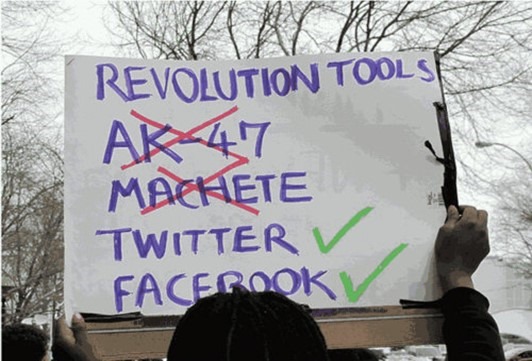
A good explanation of this rapid social change is in Timur Kuran’s “Sparks and Prairie Fires: A Theory of Unanticipated Political Revolutions” and “Now Out of Never: The Element of Surprise in the East European Revolution of 1989“.

Kuran suggests that political revolutions and large shifts in political opinion will catch us by surprise again and again because of people’s readiness to conceal their true political preferences under perceived social pressure:

People who come to dislike their government are apt to hide their desire for change as long as the opposition seems weak.

Because of the preference falsification, a government that appears unshakeable might see its support crumble following a slight surge in the opposition’s apparent size, caused by events insignificant in and of themselves.

Kuran illustrated his bandwagon effect first with the fall of the Russian Czar in 1918. On the morning of the day that the Czar abdicated, he thought it was just another day at the office. But the regiment stationed in St. Petersburg to put down riots had been recently sent to the front. The raw recruits that replaced them melted away in the front of the rioters. The rest is history.

Then there is the Ayatollah Khomeini: two months before the Iranian Revolution, the main concern of his aides was his French visa was expiring; He needed a new country to seek refuge. Just before the Iranian Revolution of 1979, a CIA report characterised the Shah of Iran as an “island of stability.”

clip_image001

Yeltsin came to power after the coup attempt by hard-liners against Gorbachev because a KBG regiment sent to arrest Yeltsin mutinied against the orders of the hard-line coup leaders. Then everyone at the top of the military and security forces saw their main chance and switched sides. All popular revolutions against autocrats are ultimately palace revolutions, as I have argued before.

The loyalties of security forces are crucial in any political revolution. Within the security forces, a key concern is ending-up on the winning side in any show-down. Moving too early, too late or not at all have risks of their own when the time comes after a military coup to reward supporters and punish those that chose the wrong side, or even worse, sat on the side-lines waiting to see who would win.

Kuran argues that everyone has a different revolutionary threshold where they reveal their true beliefs, but even one individual shift to opposition leads to many others to come forward and defy the existing order. Small concessions only emboldens the ground-swell of revolution.

Those ready to oppose social intolerance or who are lukewarm in their intolerance keep their views private until a coincidence of factors gives them the courage to bring their views into the open. They find others share their views and there is a revolutionary bandwagon effect.

Plenty of people have had personal experiences of this in the 1980s and the 1990s when there were rapid changes in social and political attitudes about racism, sexism and gay rights.

A few political entrepreneurs such as Rod Croome had to stand up for what was right, and a surprisingly large number of others will quickly join the side pushing for social change.
clip_image002

In switching sides, these early movers and initial protestors encourage other hidden opponents of the established social and political order to switch. As knowledge of the opposition spreads and grows, the external cost of joining becomes lower.

clip_image003

In Crime Waves, Riots, and Revolutions, Alex Tabarrok makes the important related point that when the courts and police are over-crowded and over-whelmed, proportionately fewer criminals or protestors will be apprehended, convicted, and imprisoned or otherwise socially pressured to conform. This feedback effect from one decision to participate in crime or protest to the decisions of others to break the law or rebel can be highly significant.

Kuran argued that fear changes sides once the revolutionary bandwagon takes hold: genuine supporters of the old political or social older or the traditional social values falsify their publicly professed preferences, pretending that they support the new order.

These are late-switchers. Do not trust them.

These late switchers are opportunists who will as easily switch back or move on to support another coup or a counter-coup or a return to traditional values.

Kuran argued that the reason for the bloody purges among revolution movements after many takeovers is to find and route-out these late-switchers. Many are purged, rightly or wrongly, before they have a chance to betray the current leaders of the revolution or military coup.

There are plenty of Christian and family parties winning upper house seats in Australia and soon in the New Zealand House of Representatives. There are plenty of morally manoeuvrable politicians willing to switch to their side if they have enough votes.

Ministers of course have a whole range of dazzling qualities, including … um … well, including an enviable intellectual suppleness and moral manoeuvrability.

Sir Humphrey, The Death List

Addendum: don’t pretend it was just the old fogeys who were the social reactionaries back then in the 80s.

When a gay men’s club sought affiliation with the Tasmanian University Union’s Societies Council in 1983, a number of clubs spoke against it because they simply didn’t like gays. I was there representing a catholic college students club so I seconded the motion.

When the motion was put to the vote, it was carried on the voices with a lot of people not saying anything or mumbling against it.

The chairman of the meeting, who was a member of the Liberal club, wisely didn’t put the motion to a vote. He declared it carried and moved as quickly as possible to the next item of business in case there was a call for show of hands.

Anti-gay rhetoric was common among young people in the 1980s.
Paul Krugman, Tom Sargent and Me

Paul Krugman seems to be implying that I am the double-secret ring-leader of a vast right-wing conspiracy.

clip_image001

Today in his blog at the New York Times, Krugman said:

…why the sudden attention to Sargent’s 2007 speech?

I think it’s fairly obvious: it’s essentially stealth anti-Keynesian propaganda, cloaked in the form of a widely respected and liked economist uttering what sound like eternal truths.

But they aren’t, and the real goal here is to undermine the case for fighting unemployment in the here and now. There are virtues to that 2007 talk, but right now is no time for 2007 Sargent.

In my reply at his blog, I said that I originally posted the link to Sargent’s speech to make a point that most economic analysis is free of politics because the average economist is a moderate Democrat. Tom Sargent is a life-long Democrat.

To add to my reply at Krugman’s blog, Krugman said earlier in his blog that:

It’s not so much that what Sargent said is wrong, although some of his principles are by no means universally agreed upon, even in normal times.

What’s so striking about Sargent’s points is that it’s hard to think of a worse time to cite them.

And the people citing that old speech clearly have ulterior motives.

I live in New Zealand. Not everything is about U.S. domestic politics.

I rather prophetical said on Marginal Revolution on the 20th that “Too many on social media such as Reddit responded by smearing Sargent as a right-winger and neo-liberal. He is a life-long Democrat.”

My conspiratorial minions span the globe to include initially Newmark’s Door and then Marginal Revolution,  Stephen Williamson, Vox.com, the American Enterprise Institute, Catallaxyfiles and the Business Insider to name but a few. There are other unindicted co-conspirators.

Karl Popper argued that conspiracy theories overlook the pervasive unintended consequences of political and social action; conspiracy theorists assume that all consequences must have been intended by someone.

Krugman agrees that Sargent’s 12-points are not that controversial in themselves. Krugman then plays the man rather than the ball:

“How to discredit an unwelcome report:

… Stage Four: Discredit the person who produced the report. Explain (off the record) that
1. He is harbouring a grudge against the Department.
2. He is a publicity seeker.
3. He is trying to get a Knighthood/Chair/Vice Chancellorship.
4. He used to be a consultant to a multinational.
5. He wants to be a consultant to a multinational.

Sir Humphrey, The Greasy Pole

The case against industry policy in one photo

Industry policy is back in vogue in New Zealand:

  • The National Party-led Government is keen on smart specialisation.
  • The Labour Party wants a Manufacturing Upgrade targeting R&D and innovation.

The case against picking winners is the answer to the question in the picture of the weirdoes below.

One of the people in the photo won a competition on the radio that offered free company photos. That is how Microsoft could afford the photo. That photo became one of the most iconic photos in American business history.

I first saw this photo 12-14 years ago at a presentation, so who first designed the caption is lost in time.

The Case for Boring Courts and Very Bored Lawyers

The world would be a better place if law was the most boring occupation about.

Lawyers and the court room make for great TV drama, but if the outcome of most litigation was fairly predictable, we would all be better-off.

Ordinary people would not fear law suits or suing to uphold their rights if the law was simple. With the law clear-cut, every-one knows where they stand. People settle out of court. They do not misbehave in the first place because they know they will be liable and will have to pay.

Richard Epstein contents that

…greater judicial sophistication has not brought forth higher quality judgments, but rather the reverse

…An easy mistake for a modern judge to make is to assume that the tools he or she possesses are capable of being put to good ends, and that it is possible to tell which of the parties in a given case are the ‘good guys’ and which are the ‘bad guys’.

…Most of the cases that a judge sees are aberrations.

Yet it is a great mistake for a judge to assume that the rules a court creates only apply to the aberrational cases.

The legal rules will also govern the mundane cases that remain within the system, to be resolved without litigation.

The judge needs to fear that laying down an ideal rule for this one case in a thousand may unglue the system that works well for the other 999 cases.

We all bargain in the shadow of the courts and the law. Bargaining and the enforcement of contracts and property rights and the resolution of disputes would be a lot cheaper if we knew what would happen if we did not settle and went to court.

As an example of the simple rules he champions, Epstein proposed that the default divorce settlements be 50:50.

Epstein also supports employment at will as the default rule because "you’re fired, I quit" could not be simpler to understand and administer.

Everyone knows where they stand and a free to make more detailed marital or employment agreements if they wish. Many do: contractors and short-term routinely earn a premium over permanent employees with more job security.

The law attracts more than its share of reformers wanting to use the courts and judge-made law for political purposes.

If you want to reform the world, do what we ordinary people have to do: change your vote, write a mail to an MP, protest, donate to or even join a political party, or run for parliament.

Some lawyers think themselves above how ordinary people must resolve their differences in democracies: by trying to persuade each other and elections.

The great strength of democracy is a small group of concerned and thoughtful citizens can band together and change things by running for office and winning elections.

That is how new Australian parties such as the Labor Party, the Country Party, Democratic Labor Party, the Australian Democrats and the Greens changed Australia. One Nation even had its 15 minutes of fame with its 11 MPs. Australian state upper houses even have Christian, family and shooters parties and many independents. A middle-of-the-road Senate independent in South Australia nearly topped the poll.

All of these parties started in a living room full of angry, motivated people.

I agree with Antonin Scalia when he said that the purpose of the law is to slow the impassioned majority down:

Judges are sometimes called upon to be courageous, because they must sometimes stand up to what is generally supreme in a democracy: the popular will.

Their most significant roles, in our system, are to protect the individual criminal defendant against the occasional excesses of that popular will, and to preserve the checks and balances within our constitutional system that are precisely designed to inhibit swift and complete accomplishment of that popular will.

Those are tasks which, properly performed, may earn widespread respect and admiration in the long run, but — almost by definition — never in the particular case.

Democracy is government by checks and balance by putting the parties and branches of government in continual tension with each other – it is not trusting the specific people who are currently in power.

Tyler Cowen on the common mistakes of left-wing economists?

1. Suggesting that money matters in politics far more than the peer-reviewed evidence indicates.

2. Evaluating government spending on a program-by-program basis, rather than viewing the budget as a series of integrated accounts.  Cross check with the phrase “Social Security,” or for use to take many discretionary spending cuts off the table.

3. A reluctance to incorporate sophisticated “public choice” theories into the analysis of favored programs.

4. Sins of omission: there are plenty of bad policies, such as occupational licensing, which fail to come under much attack from the left.  Sometimes this is because the critique would run counter to the narrative of needing more government or needing more regulation.

5. Significantly overestimating the quality of the political economy of an America with more powerful labor unions and underestimating the history of labor unions as racist, corrupt, protectionist, and obstructions to positive change.

6. Overestimating the efficacy of fiscal policy, underestimating the power of monetary policy, and sometimes ignoring or neglecting how the two interact (“the monetary authority moves last”).

7. Citing weak versions of structural unemployment theories and dismissing them with a single sentence or graph, while relying on stronger versions of structural theories in other, non-cyclical contexts.

8. Lack of interest in discussing ethnicity and IQ as relevant for social policy, except in preferred contexts.

9. Overly optimistic views of the fiscal positions of state governments.  Since the states don’t have the same tax-raising powers that the feds do, and since state government spending is favored, there is a tendency to see these fiscal crises as not so severe, or as caused by mere obstructionists who will not raise taxes to the required levels.

10. A willingness to think that one has “done one’s best” in the realm of policy, and to blame subsequent policy failures on Republican implementation, rather than admitting that a policy which cannot be implemented by both political parties is perhaps not a good policy in the first place.

11. Use of a strong moral argument for universal health care coverage, combined with a fairly practical, hard-headed approach to the scope of the mandate, and not realizing the tension between the two.  Failure to indicate where the “bleeding heart” argument actually should stop and at what margins we should (and will) let non-elderly people die, if only stochastically.

12. Implicitly constructing a two-stage moral theory, which first cordons off the sphere of the nation-state (public goods provision, etc.) and then pushing cosmopolitan questions off the agenda in the interests of expanding a social welfare state.  (In fairness, many individuals on the right don’t give cosmopolitan considerations even this much consideration, although right-oriented economists tend to be quite cosmopolitan.)

13. What about countries?  Classical liberals are increasingly facing up to the enduring successes of the Nordic nations.  There is not always a similar reckoning with the successes of Chile and Hong Kong and Singapore; often this is a sin of omission.

14. Reluctance to admit how hard the climate change problem will be to solve, for fear of wrecking any emerging political consensus on taking action.

via Common mistakes of left-wing economists?.

Stephen Franks: Time to call out the earthquake sooks-updated

An over-the-top blog post title spoiled a great round-up by Stephen Franks of the costs and benefits of higher building standards regarding earthquakes:

  • Employees are pressing employers to avoid premises seen as risky even if the earthquake risk is a fraction of the risks faced by employees in their homes, or getting to and from work;
  • Retroactive earthquake strengthening may cost more than the cost of a completely new building (the Canterbury Earthquake Royal Commission mentions up to 120%);
  • Retroactively strengthening buildings outside our highest seismic risk regions is rarely likely to pass any rational cost/benefit test because few if any of them will ever cause an injury.
  • The Martin Jenkins & Associates cost benefit study mentioned by the Canterbury Earthquake Royal Commission showed no  retrospective upgrading policy that could deliver net economic benefit.
  • Rationally, almost all existing weaker buildings should be allowed to end their useful life naturally and be replaced.
  • In high risk Wellington the $60m the Council is looking at spending on the Town Hall would save more lives if spent on dedicated cycle-ways.

via StephenFranks.co.nz » Blog Archive » Time to call out the earthquake sooks.

I remember reading a justifiably bitter op-ed by a woman who survived the bus on which a wall fell on and flattened in the second Canterbury Earthquake in February 2011. Eleven died.

That historic wall was known to be in risk is collapse both before and after the first Canterbury Earthquake in 2010.

The wall could not be demolished because of restrictions under the Historic Places Act.

A relative sat on a council committee in a small country town that was among other things trying to demolish a derelict building. The building was protected by heritage legislation.

Permission was refused to demolish the derelict building even after it caught fire and nearly burnt down the pub next door.

What do Ross Perot and the Tea Party have in common?

Popular uprisings are common in US politics. Of late, there has been the Tea Party, Moveon.org and the anti-Iraq war movement.

Remember Ross Perot? He was a well-mannered, TV friendly version of the Tea Party. Perot won 19% of the presidential vote in 1992, and 8.4% in 1996.

Perot appealed to disaffected voters across the political spectrum who had grown weary of the two-party system. NAFTA played a role in Perot’s support, and Perot voters were relatively moderate on hot button social issues.

Perot siphoned votes nearly equally among Bush and Clinton in 1992, but of the voters who cited Bush’s broken "No New Taxes" pledge as "very important," two thirds voted for Clinton.

Attacking Perot as politically unrefined, arrogant and more than a little unstable did not do any good in 1992. Just made him fight harder and also belittled the concerns of his potential supporters thus turning them even more against the major party candidates.

The worst way to ask for someone’s vote is to belittle what troubles them and insult them personally to round things off.

Combining fiscal conservatism with social moderation was Clinton’s response to the Perot insurgency by the time of the 1996 election; adapt or lose office. Clinton was re-elected easily. This made him the first elected incumbent Democratic president to be re-elected since Roosevelt.

Do empirical studies change minds?

Economics got on just fine before the attack of the econometricians and their data mining and publication bias:

From ‘The Scientific Illusion in Empirical Macroeconomics’, Lawrence H. Summers , The Scandinavian Journal of Economics, Vol. 93, No. 2, Proceedings of a Conference on New Approaches to Empirical Macroeconomics. (June 1991), pp. 129-148.

A baser reason for holding out against the latest empirical is in Most Published Research Findings Are False, John Ioannidis says that:

There is increasing concern that in modern research, false findings may be the majority or even the vast majority of published research claims. However, this should not be surprising. It can be proven that most claimed research findings are false

Ioannidis goes on the say that

  • The truth of a research claim is true may depend on study power and bias, the number of other studies on the same question, and, the ratio of true to no relationships among the relationships probed in each scientific field; and
  • a research finding is less likely to be true when the studies conducted in a field are smaller, when effect sizes are smaller, when there is a greater number and lesser preselection of tested relationships, where there is greater flexibility in designs, definitions, outcomes, and analytical modes; when there is greater financial and other interest and prejudice; and when more teams are involved in a scientific field in chase of statistical significance.

Simulations show that for most study designs and settings, it is more likely for a research claim to be false than true. Ioannidis also says that for many current scientific fields, claimed research findings may often be simply accurate measures of the prevailing bias.

Now let The Guardian finish matters with “False positives: fraud and misconduct are threatening scientific research: High-profile cases and modern technology are putting scientific deceit under the microscope”:

Cases of scientific misconduct tend to hit the headlines precisely because scientists are supposed to occupy a moral high ground when it comes to the search for truth about nature. 

The scientific method developed as a way to weed out human bias. But scientists, like anyone else, can be prone to bias in their bid for a place in the history books. 

Increasing competition for shrinking government budgets for research and the disproportionately large rewards for publishing in the best journals have exacerbated the temptation to fudge results or ignore inconvenient data.

Massaged results can send other researchers down the wrong track, wasting time and money trying to replicate them. Worse, in medicine, it can delay the development of life-saving treatments or prolong the use of therapies that are ineffective or dangerous.

Malpractice comes to light rarely, perhaps because scientific fraud is often easy to perpetrate but hard to uncover.

Obama’s opportunistic record on fighting global warming

Even in the US, where nothing can be done through legislation thanks to Republican delusionists.

The 2008 Republican Party presidential nominee supported cap-and-trade. McCain had a strong legislative record; he introduced a bill with Joe Lieberman to introduce carbon trading in 2003.

McCain has been one of the most outspoken members of Congress on the issue of climate change’ and he “managed to force the first real Senate vote on actually doing something about the largest environmental peril our species has yet faced.

McCain used a Senate parliamentary manoeuvre that forced a floor vote on the climate legislation. The McCain-Lieberman bill lost 43-55.

In 2007 he reintroduced his bill, with bipartisan co-sponsorship. Obama missed the June 2008 vote on McCain’s Climate Security Bill.

In a March 2008 speech, McCain called for a “successor to the Kyoto Treaty” and a cap-and-trade system “that delivers the necessary environmental impact in an economically responsible manner.”

McCain’s climate policy includes several target dates. By 2012, McCain said U.S. emissions should return to 2005 levels. By 2050, he says, the U.S. emissions should be 60 per cent below 1990 levels.

In January 2010, the Pew Research Center asked Americans to rank the importance of twenty-one issues. Climate change came in last.

After winning the fight over health care, another issue for which polling showed weak support, Obama moved on to the safer issue of financial regulatory reform.

There were 5 Republican senators who would have voted for cap and trade in April 2010: Lindsey Graham, Susan Collins, Olympia Snowe, Scott Brown, and George LeMieux. There were 57 Democrat Senators. It takes 60 votes to break a filibuster.

President Obama could have fought harder to get the Bill the House passed through the Senate but he did not.

Blame Obama, no one else. He is supposed to make change happen. He lacked the political skills to build coalitions even within his own party to deliver.

Many others, including McCain softened or reversed positions as voter support waned as the great recession deepened.

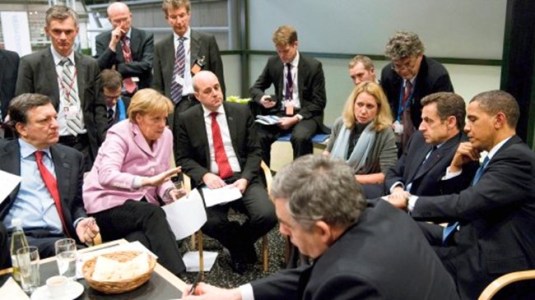
In Copenhagen’s final private negotiations, Obama, Brown, Sarko and Merkel sat down with He Yafei, the Chinese vice-minister of foreign affairs. There is a tape of this meeting at Der Spiegel. HT: The Guardian.

He Yafei was the smartest guy in the room – listen to the tape. Wen Jiabao refused to attend most of the negotiating sessions.

Given the choice of walking out and sitting down with a vice-minister, they chose humiliation. One response of Obama was:

It would be nice to negotiate with somebody who can make political decisions.

Rather than blaming vast right-wing conspiracies, using Google searches for “unemployment” and “global warming”, Kahn and Kotchen found that:

  • Recessions increase concerns about unemployment at the expense of public interest in climate change;
  • The decline in global-warming searches is larger in more Democratic leaning states; and
  • An increase in a state’s unemployment rate decreases in the probability that Americans think global warming is happening, and reduces the certainty of those who think it is.

The middle-of-the-road voters changed their priorities and their political leaders followed them.

It’s the peoples’ will, I am their leader, I must follow them. – Jim Hacker, The Greasy Pole

As Geoff Brennan has argued, CO2 reduction actions will be limited to modest unilateral reductions of a largely token character. There are many expressive voting concerns that politicians must balance to stay in office and the environment is but one of these. Once climate change policies start to actually become costly, expressive voting support for these policies will fall away, and it has.

Tom Sargent’s 12 lessons from economics for public policy

Tom Sargent is a life-long Democrat who is old enough to remember when Democrats were fiscal conservatives.

At a graduation speech at Berkeley, Sargent listed these lessons:

    1. Many things that are desirable are not feasible.
    2. Individuals and communities face trade-offs.
    3. Other people have more information about their abilities, their efforts, and their preferences than you do.
    4. Everyone responds to incentives, including people you want to help. That is why social safety nets don’t always end up working as intended.
    5. There are trade-offs between equality and efficiency.
    6. In an equilibrium of a game or an economy, people are satisfied with their choices. That is why it is difficult for well-meaning outsiders to change things for better or worse.
    7. In the future, you too will respond to incentives. That is why there are some promises that you’d like to make but can’t. No one will believe those promises because they know that later it will not be in your interest to deliver. The lesson here is this: before you make a promise, think about whether you will want to keep it if and when your circumstances change. This is how you earn a reputation.
    8. Governments and voters respond to incentives too. That is why governments sometimes default on loans and other promises that they have made.
    9. It is feasible for one generation to shift costs to subsequent ones. That is what national government debts and the U.S. social security system do (but not the social security system of Singapore).
    10. When a government spends, its citizens eventually pay, either today or tomorrow, either through explicit taxes or implicit ones like inflation.
    11. Most people want other people to pay for public goods and government transfers (especially transfers to themselves).
    12. Because market prices aggregate traders’ information, it is difficult to forecast stock prices and interest rates and exchange rates

So privatisation, deregulation and tax cuts in Australia were mistakes?

The test of a mistake is if you can, you undo it.

The Most Dangerous Landing Page Mistakes & How You Can Fix Them

The classic in Australia is Kim Beazley in the 1998 federal election:

  • He was asked by a journalist that if the GST is a mistake, as he claimed, would he repeal the GST if he won office at some later time.
  • Beazley waffled about you can’t unscramble an egg and so on. He could not admit the truth.

If deregulation was a mistake, campaign for a reintroducing of the two-airline policy, the bank regulation that suppressed competition, high tariffs on cars, electrical goods and clothes, and media regulation that outlawed cable TV. Campaign for a repeal of the GST and for 66% tax rates again on the middle class!

The Left must campaign for a buy back of the Commonwealth Bank, Qantas and Telecom. They will be a good buy. Public ownership is said by them to be as least as efficient as private ownership, and the cost of capital cost for state owned enterprises is allegedly less.

Go for it. It will ensure another 60 years is the wilderness for the Left. The only Left-wing government that held office in Australia since 1949 was the Whitlam Government from 1972 to 1975.

President Obama’s persistent ’77-cent’ claim on the wage gap gets a new Pinocchio rating–updated

http://www.washingtonpost.com/blogs/fact-checker/wp/2014/04/09/president-obamas-persistent-77-cent-claim-on-the-wage-gap-gets-a-new-pinocchio-rating/

The fact checker at the Washington Post said:

Few experts dispute that there is a wage gap, but differences in the life choices of men and women — such as women tending to leave the workforce when they have children — make it difficult to make simple comparisons.

…From a political perspective, the Census Bureau’s 77-cent figure is golden. Unless women stop getting married and having children, and start abandoning careers in childhood education for naval architecture, this huge gap in wages will almost certainly persist. Democrats thus can keep bringing it up every two years.

…There appears to be some sort of wage gap and closing it is certainly a worthy goal. But it’s a bit rich for the president to repeatedly cite this statistic as an “embarrassment.” …The president must begin to acknowledge that “77 cents” does not begin to capture what is actually happening in the work force and society.


In premiere episode of ‘Factual Feminist’ Christina Sommers explains how the gender wage gap is based on bogus statistics

Previous Older Entries Next Newer Entries

The War on Prices

Celebrating humanity's flourishing through the spread of capitalism and the rule of law

The Bleeding Heart Libertarian

Celebrating humanity's flourishing through the spread of capitalism and the rule of law

More Stories from the Stories I Publish!

Celebrating humanity's flourishing through the spread of capitalism and the rule of law

In My Tribe

Celebrating humanity's flourishing through the spread of capitalism and the rule of law

Coordination Problem

Celebrating humanity's flourishing through the spread of capitalism and the rule of law

Libertarian Land

Celebrating humanity's flourishing through the spread of capitalism and the rule of law

Arin’s Substack

Celebrating humanity's flourishing through the spread of capitalism and the rule of law

David Andolfatto

Celebrating humanity's flourishing through the spread of capitalism and the rule of law

Monetary Non-Neutrality

Celebrating humanity's flourishing through the spread of capitalism and the rule of law

Reason Magazine

Celebrating humanity's flourishing through the spread of capitalism and the rule of law

Coyote Blog

Celebrating humanity's flourishing through the spread of capitalism and the rule of law

Thoughts from the North

Celebrating humanity's flourishing through the spread of capitalism and the rule of law

Fardels Bear

A History of the Alt-Right

Vincent Geloso

Econ Prof at George Mason University, Economic Historian, Québécois

Bassett, Brash & Hide

Celebrating humanity's flourishing through the spread of capitalism and the rule of law

Truth on the Market

Scholarly commentary on law, economics, and more

The Undercover Historian

Beatrice Cherrier's blog

Matua Kahurangi

Celebrating humanity's flourishing through the spread of capitalism and the rule of law

Temple of Sociology

Celebrating humanity's flourishing through the spread of capitalism and the rule of law

Velvet Glove, Iron Fist

Celebrating humanity's flourishing through the spread of capitalism and the rule of law

Why Evolution Is True

Why Evolution is True is a blog written by Jerry Coyne, centered on evolution and biology but also dealing with diverse topics like politics, culture, and cats.

NoTricksZone

Celebrating humanity's flourishing through the spread of capitalism and the rule of law

Homepaddock

A rural perspective with a blue tint by Ele Ludemann

Kiwiblog

DPF's Kiwiblog - Fomenting Happy Mischief since 2003

The Dangerous Economist

Celebrating humanity's flourishing through the spread of capitalism and the rule of law

Watts Up With That?

The world's most viewed site on global warming and climate change

The Logical Place

Tim Harding's writings on rationality, informal logic and skepticism

Doc's Books

A window into Doc Freiberger's library

The Risk-Monger

Let's examine hard decisions!

Uneasy Money

Commentary on monetary policy in the spirit of R. G. Hawtrey

Barrie Saunders

Thoughts on public policy and the media

Liberty Scott

Celebrating humanity's flourishing through the spread of capitalism and the rule of law

Point of Order

Politics and the economy

James Bowden's Blog

A blog (primarily) on Canadian and Commonwealth political history and institutions

Science Matters

Reading between the lines, and underneath the hype.

Peter Winsley

Economics, and such stuff as dreams are made on

A Venerable Puzzle

"The British constitution has always been puzzling, and always will be." --Queen Elizabeth II

The Antiplanner

Celebrating humanity's flourishing through the spread of capitalism and the rule of law

Bet On It

Celebrating humanity's flourishing through the spread of capitalism and the rule of law

History of Sorts

WORLD WAR II, MUSIC, HISTORY, HOLOCAUST

Roger Pielke Jr.

Undisciplined scholar, recovering academic

Offsetting Behaviour

Celebrating humanity's flourishing through the spread of capitalism and the rule of law

JONATHAN TURLEY

Res ipsa loquitur - The thing itself speaks

Conversable Economist

In Hume’s spirit, I will attempt to serve as an ambassador from my world of economics, and help in “finding topics of conversation fit for the entertainment of rational creatures.”

The Victorian Commons

Researching the House of Commons, 1832-1868

Books & Boots

Reflections on books and art