Women and WW II – Rosie the Riveter
10 Sep 2016 Leave a comment
in economics, labour economics, labour supply, occupational choice, politics - USA, population economics, war and peace Tags: female labour force participation, female labour supply, World War II
Pro-Clinton Group Goes Nuclear on Donald Trump
07 Sep 2016 Leave a comment
in defence economics, politics - USA Tags: 2016 presidential election
20 Years Ago, Welfare Reform Was Signed Into Law
07 Sep 2016 Leave a comment
in applied price theory, applied welfare economics, comparative institutional analysis, economic history, labour economics, labour supply, politics - USA Tags: 1996 US welfare reforms
The spread of #GMO crops in the USA
02 Sep 2016 Leave a comment
in health economics, politics - USA Tags: agricultural economics, antiscience left, cranks, GMOs, Quacks

Source: USDA ERS – Adoption of Genetically Engineered Crops in the U.S.: Recent Trends in GE Adoption.
Poverty in America after 20 years of welfare reform
01 Sep 2016 Leave a comment
in applied welfare economics, economic history, labour economics, politics - USA, welfare reform Tags: 1996 US welfare reforms, child poverty, family poverty, single mothers, single parents, social insurance, welfare state
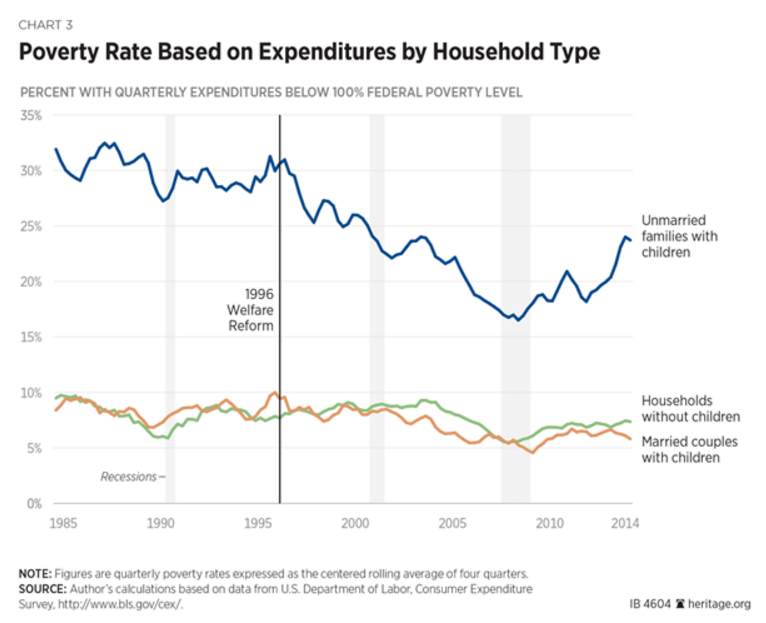
Source: Did Welfare Reform Increase Extreme Poverty in the United States?
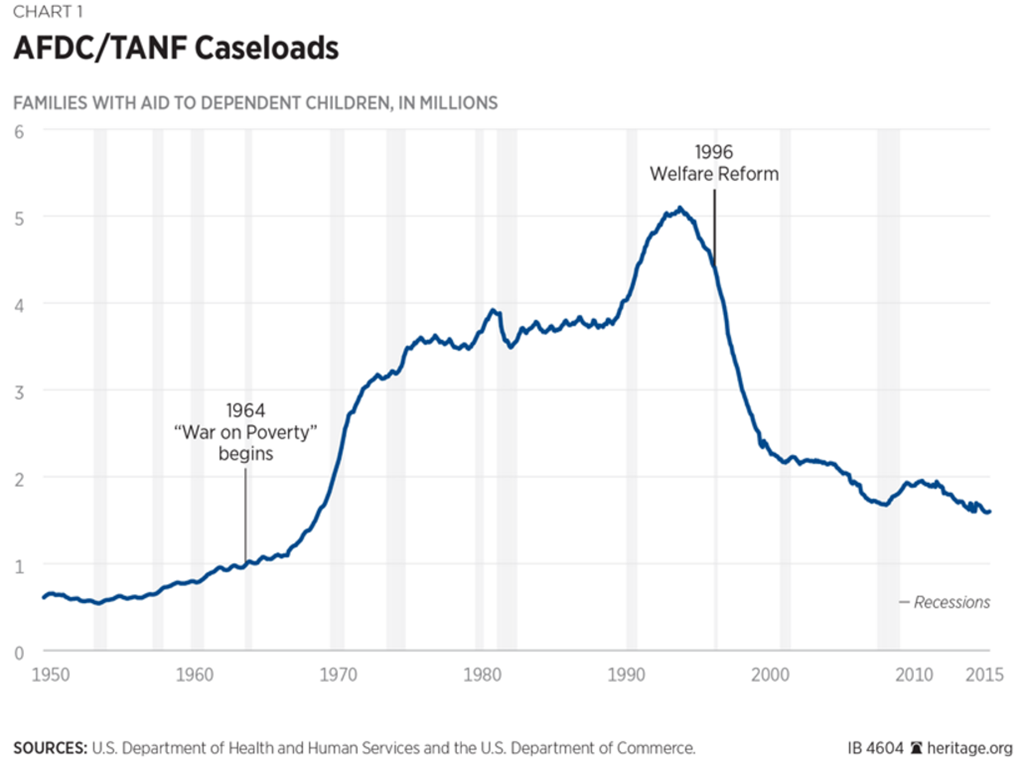
Source: Did Welfare Reform Increase Extreme Poverty in the United States?
#Corbyn’s path to peace
29 Aug 2016 Leave a comment
in defence economics, politics - USA, war and peace Tags: British politics, Ronald Reagan
Late switchers alert – when did Obama start supporting gay marriage
28 Aug 2016 Leave a comment
in economics of love and marriage, politics - USA, Public Choice
#EpiPen has two rival suppliers
28 Aug 2016 Leave a comment
in health economics, industrial organisation, politics - USA Tags: intellectual property rights, monopoly and competition, patents and copyrights
Poverty Has Declined a Lot Over the Past 30 Years in the USA
27 Aug 2016 Leave a comment
in economic history, labour economics, labour supply, politics - USA, poverty and inequality, welfare reform Tags: 1996 US welfare reforms, child poverty, family poverty, single parents, social insurance, welfare state
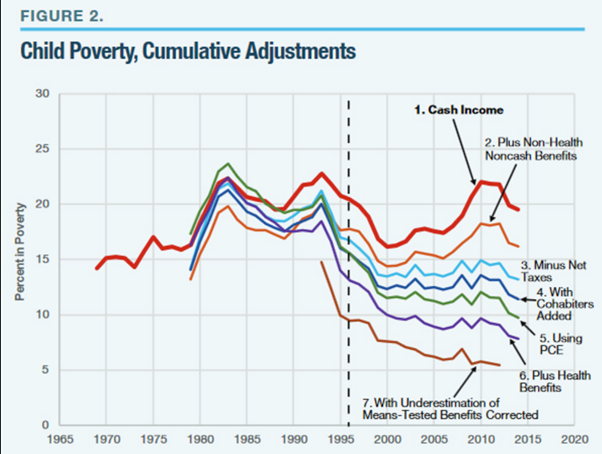
Source: Poverty Has Declined a Lot Over the Past 30 Years | Mother Jones from Poverty After Welfare Reform | Manhattan Institute.
Do You Understand the Electoral College?
23 Aug 2016 Leave a comment
in constitutional political economy, economics, politics - USA
The queen of the anti-science Left @drjillstein
19 Aug 2016 Leave a comment
in defence economics, economics of regulation, energy economics, environmental economics, health economics, politics - USA Tags: Anti-Science left
Why so few successful left-wing populists
16 Aug 2016 Leave a comment
in politics - Australia, politics - New Zealand, politics - USA, Public Choice Tags: economics and immigration, growth of government, left-wing populists, right-wing populists, size of government, social insurance, welfare state
The Twitter Left is doing its best to attribute the surge against globalisation and immigration to inequality. This is despite the main beneficiary at the ballot box is right-wing populists.
The beneficiaries in the last few years were UKIP, the French National Front, Alternative for Germany, various pro-welfare state but anti-immigration parties in the rest of Europe, Pauline Hanson and Donald Trump. Barely a left wing party in sight outside of Greece.

Source: Only a third of the EU is governed by the centre-left | World news | The Guardian.
Bernie Sanders is a fake left-wing populist because much of his support comes from college students and the university educated, not the aroused working class. These college students are unwilling to pay more than $1000 in taxes for the socialist revolution especially if they have a job.
At the last New Zealand election, two-thirds of the electorate voted for other than centre-left and left-wing parties. The hard left party, Mana-Internet, won 1% of the party vote despite having millions of dollars in campaign donations from a criminal fugitive hoping to avoid extradition.
These right-wing populists combine a heady brew of nationalism and social conservatism, scepticism about market competition, strong support for social security and old-age pensions but not welfare dependency, and opposition to immigration, imports and cultural change. The rise of the parties are not the first signs of an aroused working class seeking to overthrow capitalism. Face up to it.
Trump supporters have a pretty low opinion of @realDonaldTrump
15 Aug 2016 Leave a comment
In common with UKIP supporters, Trump supporters have no illusions about who they are supporting. UKIP supporters know their party is led by a bunch of clowns but want their views in the Commons and hope the party will improve once they get in office.


Recent Comments