By 2050, there could be up to 142 million missing women, mostly from China and India: https://t.co/RrAfVhZbMt pic.twitter.com/kYFTPj6AcE
— The Wall Street Journal (@WSJ) November 28, 2015
The impact of one child policy on birth sex ratios
08 Dec 2015 Leave a comment
in development economics, economic history, population economics Tags: China. one-child policy, The fatal conceit
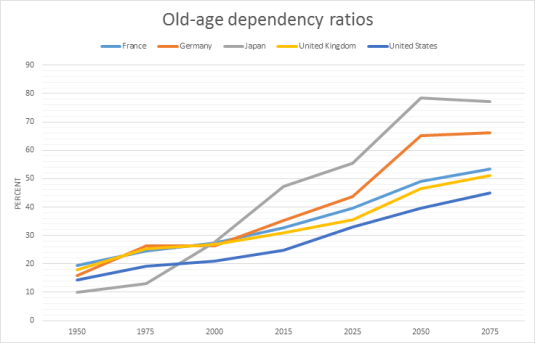
The robots better be coming: Old age dependency ratios (1950 – 2075) USA, UK, France, Germany and Japan
08 Dec 2015 Leave a comment
in economic history, labour supply, population economics
I hope the robots have taken over by 2050 because there won’t be enough working age people left to pay the taxes to pay old-age pensions.
Source: Pensions at a Glance 2015 – Statistics – OECD iLibrary.
What is scarier is maybe hopefully the robots will have arrived to take over by 2025. Even 10 years from now there aren’t that many working age people to pay the taxes to fund old-age pensions. The Japanese and Germans in particular will be praying for robots to become taxpayers as quickly as possible.
how India will pass China to become world’s most populous country
05 Dec 2015 Leave a comment
in development economics, economic history, economics, growth miracles, population economics Tags: ageing society, China, economics of fertility, India, Population demographics
Where Europe’s populations are growing (yellow) and declining
03 Dec 2015 Leave a comment
in population economics Tags: ageing society, demographic crisis, EU, Europe, Population demographics
About 101 billion people have lived & died
30 Nov 2015 Leave a comment
in economic history, population economics Tags: Population demographics
About 101 billion people have lived & died
fivethirtyeight.com/features/what-… http://t.co/Rk4j6Q8HRl—
Conrad Hackett (@conradhackett) October 17, 2015
Peak China
20 Nov 2015 Leave a comment
in development economics, population economics Tags: China, offsetting behaviour, one child policy, The fatal conceit, The pretence to knowledge, unintended consequences
The western environmental movement’s role in China’s one-child policy
19 Nov 2015 Leave a comment
in development economics, environmental economics, environmentalism, growth disasters, growth miracles, health economics, labour economics, labour supply, population economics Tags: China, cranks, doomsday profits, doomsday prophecies, one child policy
Who spends more than half their income on housing in the UK?
12 Nov 2015 Leave a comment
in population economics, urban economics Tags: British economy, British politics, housing affordability
% young adults still living with their parents in Europe
06 Nov 2015 1 Comment
in economics of love and marriage, population economics
Russia has a serious shortage of men
05 Nov 2015 Leave a comment
in health economics, population economics Tags: ageing society, alcoholism, Russia, sex-ratios
Chinese birth and death rates and the Chinese population since 1950
04 Nov 2015 Leave a comment
in development economics, growth disasters, growth miracles, labour economics, labour supply, population economics Tags: China, economics of fertility, one child policy, The fatal conceit, The pretense to knowledge, unintended consequences
Chinese and Hong Kong fertility since the one child policy was adopted
01 Nov 2015 Leave a comment
in development economics, growth disasters, growth miracles, Marxist economics, population economics Tags: China, economics of fertility, Hong Kong, one child policy, The fatal conceit, The pretense to knowledge
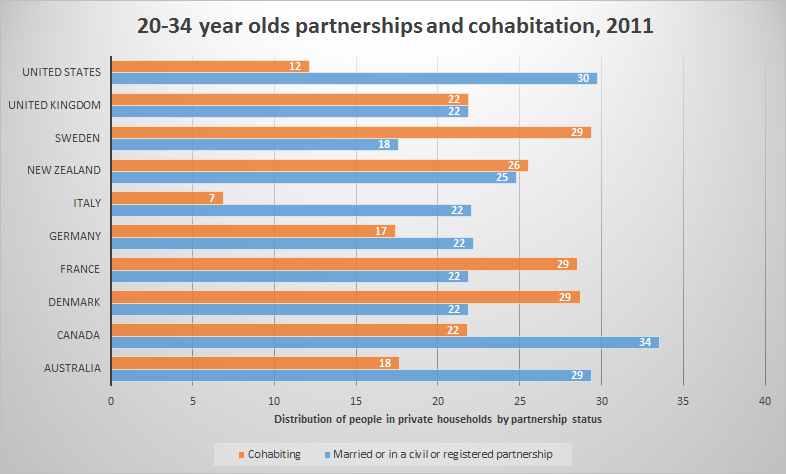
Partnership status of young adults, USA, UK, Sweden, New Zealand, Italy, Germany the, France, Denmark, Canada and Australia
26 Oct 2015 Leave a comment
in economics of love and marriage, population economics Tags: economics of fertility, family demographics, marriage and divorce, search and matching
They certainly don’t go much for cohabiting in Italy or indeed the USA among young adults. Cohabitation is pretty much the same everywhere else. Marriage is not so common in Sweden generally among young people.
Source: OECD Family Database – OECD.
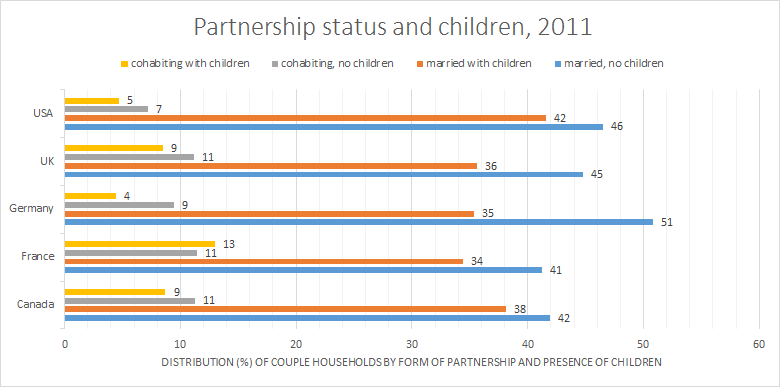
Who is married with children in USA, UK, Canada, Germany and France?
25 Oct 2015 Leave a comment
in economics of love and marriage, population economics Tags: economics of fertility, marriage and divorce, search and matching, single parents, soul parents
Source: OECD Family Database – OECD.
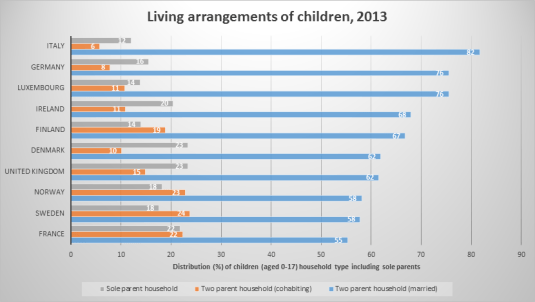
How common is marriage in two-parent households, selected OECD countries
24 Oct 2015 Leave a comment
in economics of love and marriage, population economics
Living in sin is much more popular in some countries. The French and Scandinavians are really big on not bothering to marry but live together and raise children.
Source: OECD Family Database.
Data on the number of two-parent households who were married or not was not available for the USA, Australia or New Zealand, unfortunately.
 Utopia, you are standing in it!
Recent Comments