Paul Ehrlich has died, the environmentalist most well know for being wrong about basically everything. Richard Hanania has read Ehrlich’s infamous “The population bomb” and summarises for us what Ehrlich thought. Click through and read the whole series. It is amazing. The post Paul Ehrlich first appeared on Kiwiblog.
Paul Ehrlich
Paul Ehrlich
04 Apr 2026 Leave a comment
in environmentalism, population economics
‘Ever-wrong Ehrlich’s’ Greatest Hits (er, misses)
18 Mar 2026 Leave a comment
in development economics, economic history, environmentalism, growth disasters, growth miracles, labour economics, labour supply, population economics Tags: pessimism bias, population bomb, population bust
His famous 1968 book, “The Population Bomb,” changed the world. He famously predicted that human “overpopulation” would soon outstrip food supplies, leading to catastrophic famines, and societal collapse. He predicted that hundreds of millions of people would starve to death in the 1970s and 1980s, that India would be unable to feed its population by 1980, and…
‘Ever-wrong Ehrlich’s’ Greatest Hits (er, misses)
So much for the population bomb
25 Feb 2026 Leave a comment
in labour economics, labour supply, population economics Tags: ageing society, Japan, population bust
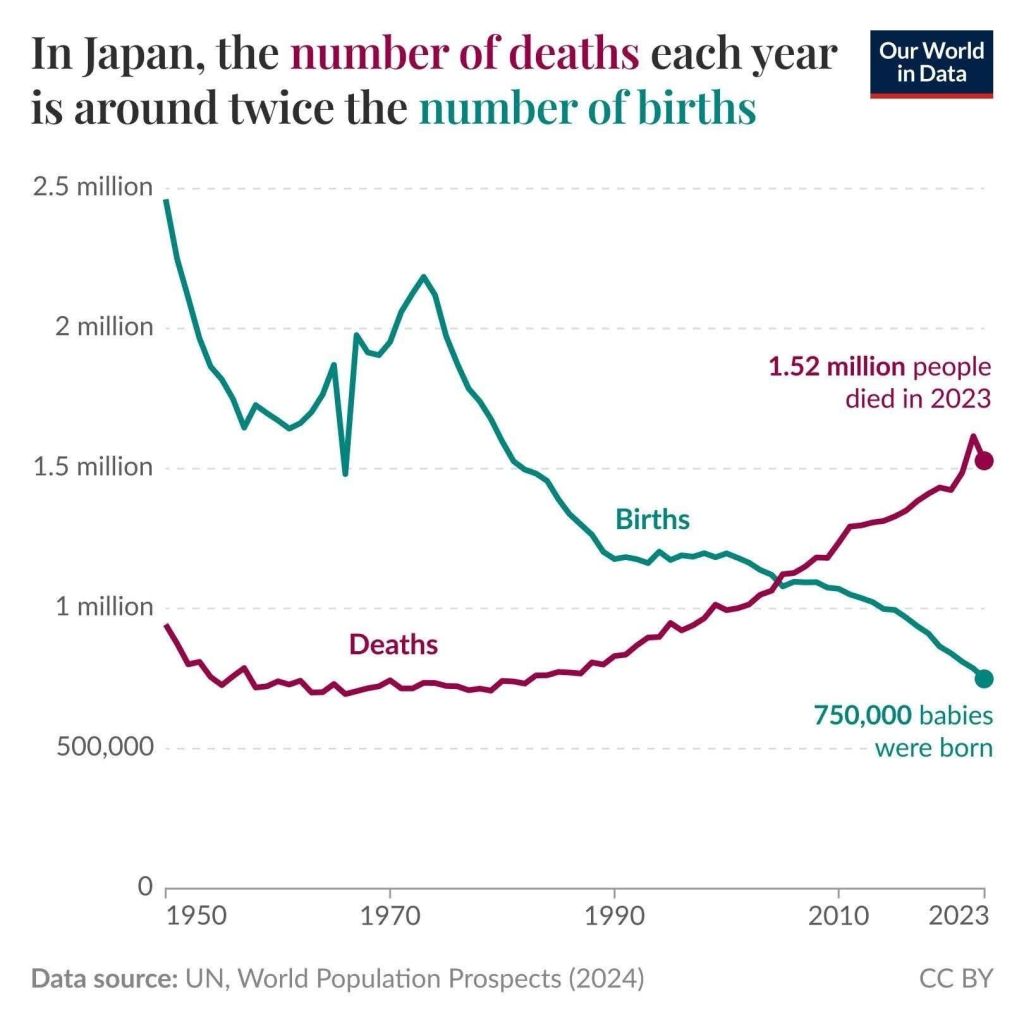
Can fertility return to replacement levels?
23 Feb 2026 Leave a comment
in labour economics, labour supply, population economics
Many countries, including almost all developed countries and many developing countries, are now experiencing below-replacement fertility, with fertility rates having declined substantially over the past decade or more. That means that each generation will be progressively smaller than the last, and almost inevitably that leads to a declining population (in the absence of offsetting migration…
Can fertility return to replacement levels?
Some Snapshots of the US Demographic Future
13 Jan 2026 Leave a comment
in labour economics, labour supply, politics - USA, population economics Tags: ageing society, population bust

Demography is the study of the structure of human populations, including factors like births, deaths, aging, as well as health and economic factors. Some demographic changes happen slowly, over decades, but in a predicable way. For example, if you want to look at projections for the year 2050 of the ratio of the US working-age…
Some Snapshots of the US Demographic Future
So much for overpopulation
02 Jan 2026 Leave a comment
in development economics, economic history, labour economics, labour supply, population economics Tags: ageing society, population bust
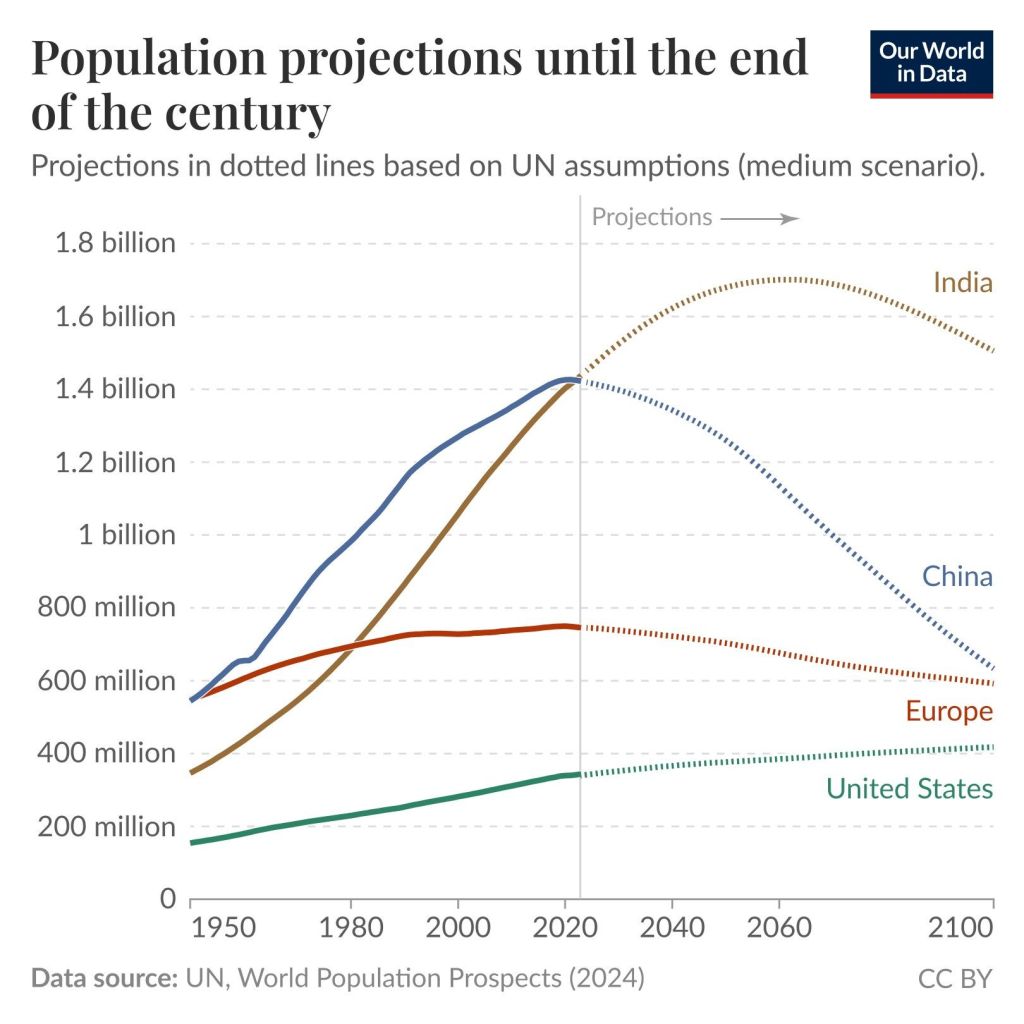
Some Snapshots of Global Urbanization
26 Dec 2025 Leave a comment
in development economics, economic history, population economics, urban economics

During the last half-century or so, one of the biggest changes in how humans live is the greater share of people around the world who live in cities. The UN Department of Economic and Social Affairs describes some pattern in its report on World Urbanization Prospects 2025: Summary of Results (November 2025). The report defines…
Some Snapshots of Global Urbanization
Demographic Decline, Part I: Baby Subsidies Are an Ineffective Response
15 Dec 2025 Leave a comment
in economic growth, fiscal policy, labour economics, labour supply, macroeconomics, population economics, urban economics Tags: ageing society, population bust

I have a five-part series (here, here, here, here, and here) explaining that demographic decline will lead to fiscal crisis. The main takeaway is that entitlement programs are a ticking time bomb, and I castigate politicians who want to kick the can down the road (or make a bad situation even worse). This is a global problem, not merely an American problem, as […]
Demographic Decline, Part I: Baby Subsidies Are an Ineffective Response
Japan’s Growing Burden of Government Means an Inevitable Fiscal Crisis
03 Dec 2025 Leave a comment
in budget deficits, economic growth, economic history, financial economics, fiscal policy, macroeconomics, population economics, public economics Tags: ageing society, Japan, population bust

I often get asked when the United States will suffer a Greek-style fiscal crisis. My answer is always “I don’t know,” though I freely admit we are heading in that direction. My lack of specificity isn’t merely because economists are lousy forecasters. I tell people it’s all about investor sentiment, and it’s hard to know […]
Japan’s Growing Burden of Government Means an Inevitable Fiscal Crisis
The population bust
02 Oct 2025 Leave a comment
in development economics, economic history, growth miracles, labour economics, labour supply, population economics Tags: ageing society, China, population bust
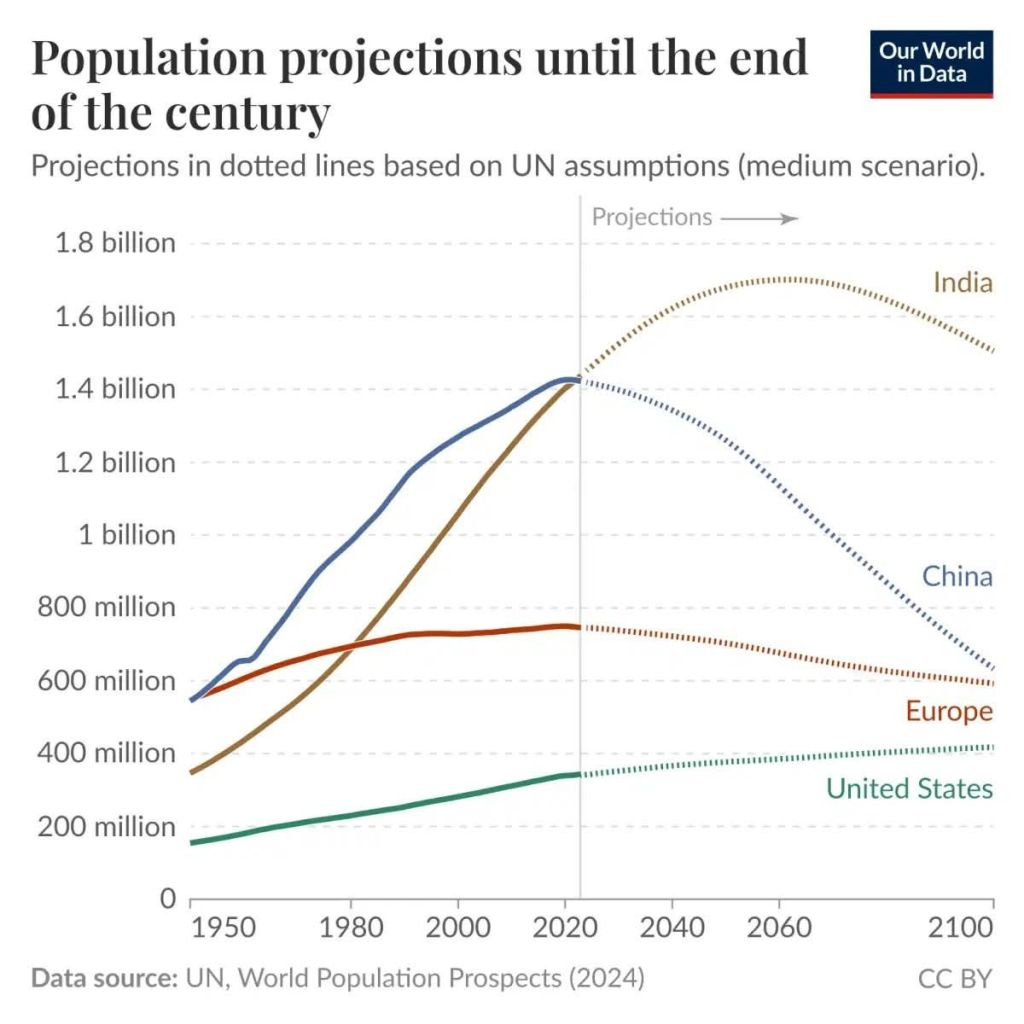
270 Deception and Psychopathy Robert Trivers EP 270
11 Sep 2025 Leave a comment
in discrimination, economics of education, gender, population economics Tags: evolutionary biology
Population bust
09 Sep 2025 Leave a comment
in labour economics, labour supply, population economics Tags: ageing society, economics of fertility, population bust
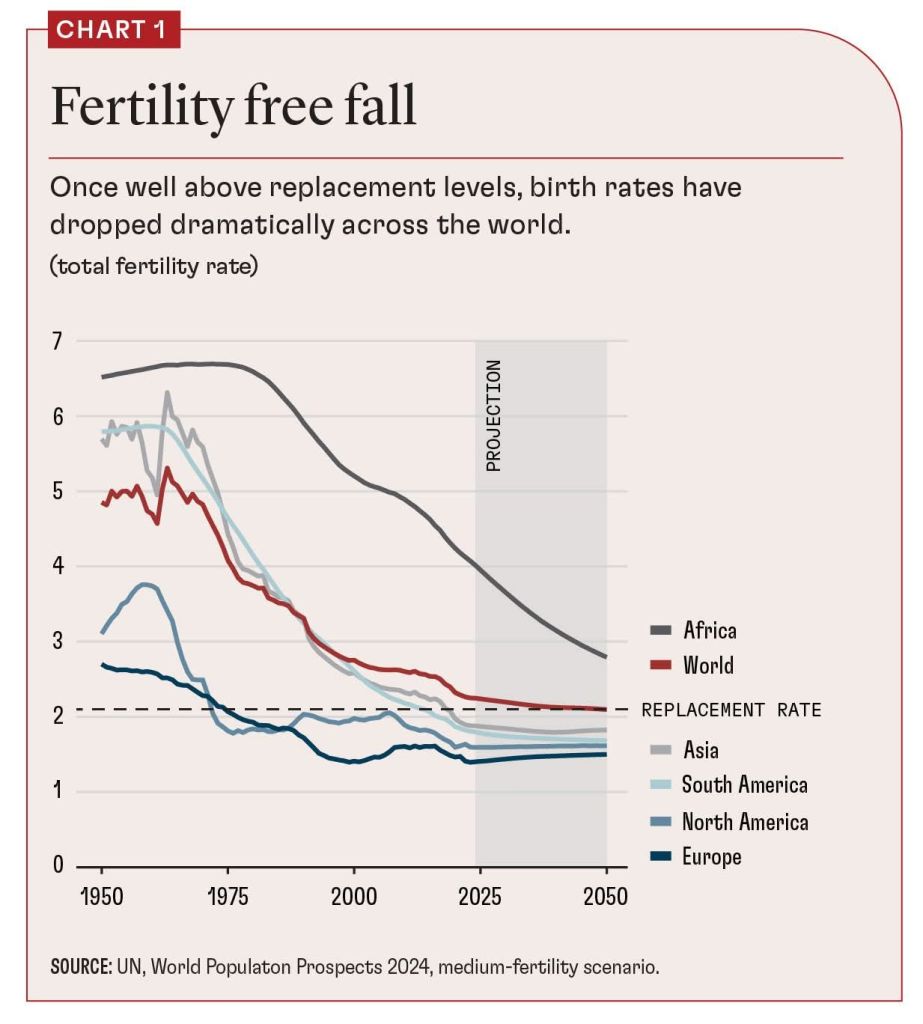
Fertility
29 Aug 2025 Leave a comment
in population economics Tags: baby bust, economics of fertility

French President Macron: a blockhead whose ignorance will harm Israel
30 Jul 2025 1 Comment
in defence economics, economics of crime, International law, law and economics, laws of war, population economics, war and peace Tags: Gaza Strip, Israel, Middle-East politics, regressive left, war against terror, West Bank

A fair number of countries have decided to recognize Palestine as a sovereign state (the U.N. can’t as it requires Security-Council approval, and the U.S. is on that council). This has had little effect as simple declarations like this have no force in international law (see reference to Natasha Hausdorff below). Now, however, another state […]
French President Macron: a blockhead whose ignorance will harm Israel
Immigrant Assimilation Is Obviously High
19 Jul 2025 Leave a comment
in labour economics, labour supply, politics - USA, population economics Tags: economics of immigration

I recently argued that self-reports understate the personality gender gap. As long as some men rate their personalities relative to the average male, and some women rate their personalities relative to the average female, the gap the data reveal is less than the true gap. 798 more words
Immigrant Assimilation Is Obviously High


Recent Comments