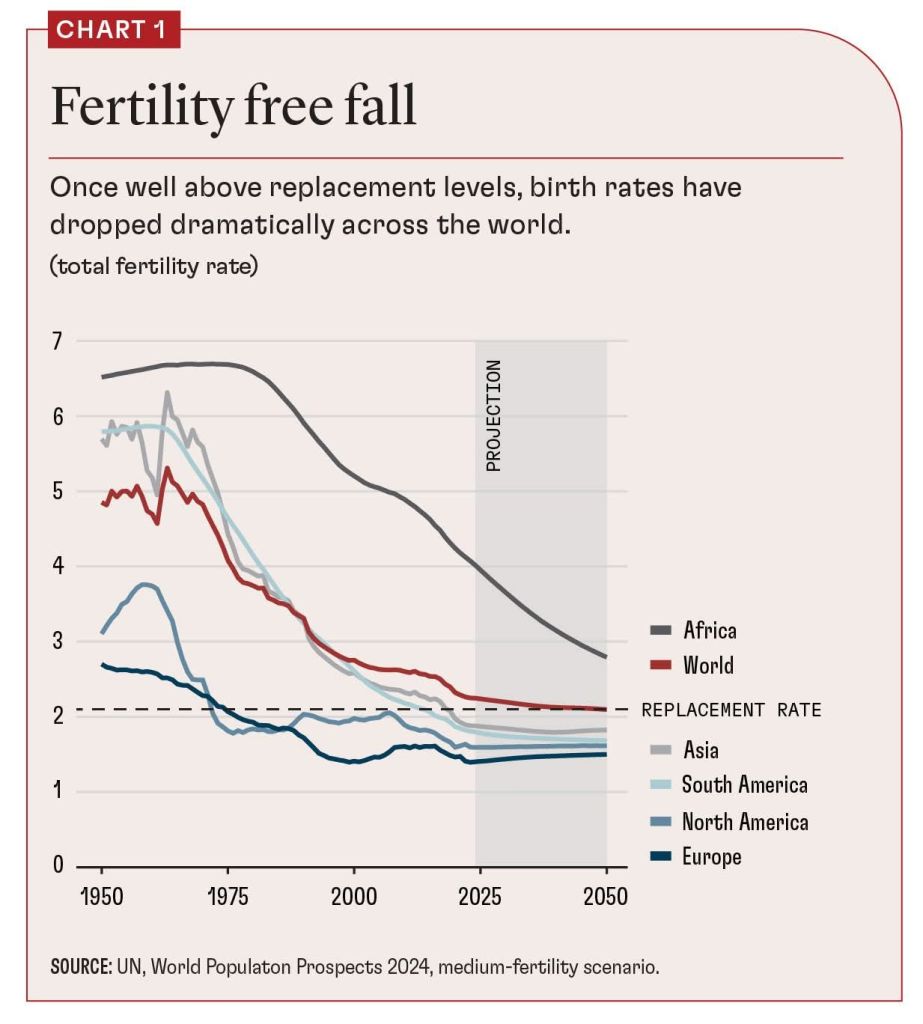
The population bust
15 Jul 2025 Leave a comment
in development economics, economic history, labour economics, labour supply, population economics Tags: ageing society, economics of fertility, population bust
Japan facts of the day
12 Jun 2025 1 Comment
in labour economics, labour supply, population economics Tags: ageing society, Japan, population bust
Japan must stop being overly optimistic about how quickly its population is going to shrink, economists have warned, as births plunge at a pace far ahead of core estimates. Japan this month said there were a total of 686,000 Japanese births in 2024, falling below 700,000 for the first time since records began in the […]
Japan facts of the day
The grandson of the 10th US President has just died
01 Jun 2025 Leave a comment
in economics of media and culture, population economics
John Tyler was born in 1790 – 235 years ago. He became the 10th President of the United States, yet his grandson has just died. He had 15 children between 1815 (when he was 25) and 1860 (when he was 70). He was President from 1841 to 1845. One of the 150 was Lyon Tyler […]
The grandson of the 10th US President has just died
Japan’s population crisis reaches tipping point | FT Film
26 May 2025 1 Comment
in labour economics, labour supply, population economics Tags: ageing society, Japan
US State-Level Abortion Regulations: Causes and Effects
23 May 2025 Leave a comment
in applied price theory, discrimination, econometerics, economic history, gender, health economics, labour economics, politics - USA, population economics Tags: abortion law reform

Regulations about abortion are often wildly controversial. But what effects to they actually have? Caitlin Myers addresses these issues in “From Roe to Dobbs: 50 Years of Cause and Effect of US State Abortion Regulations” (Annual Review of Public Health 2025, pp. 433-446). As a starting point, consider the years before and after the 1973 US Supreme Court…
US State-Level Abortion Regulations: Causes and Effects
Korea’s Low Fertility Rate
08 May 2025 Leave a comment
in economics of love and marriage, human capital, labour economics, law and economics, population economics Tags: ageing society, South Korea

Fertility rates are falling around the world, but Republic of Korea is the outlier, with a fertility rate of 0.72 in 2024. The International Monetary Fund, in its report on Korea’s economic situation (generally quite good), thought that Korea’s low fertility justified adding an “Annex” to its most recent report on Korea’s economy: “Addressing Korea’s…
Korea’s Low Fertility Rate
The Silver (-Haired) Economy
30 Apr 2025 Leave a comment
in labour economics, labour supply, population economics

In its most recent World Economic Outlook report, the IMF includes a chapter on “The Rise of the Silver Economy: Global Implications of Population Aging” (April 2025). Here are the big trends in a nutshell. The red line (measured on the right-hand axis) shows that the average age of the global poulation was about 27…
The Silver (-Haired) Economy
Federal Judge Halts Trump Administration’s Deportation of Half a Million Biden “Parolees”
16 Apr 2025 Leave a comment
in labour economics, labour supply, law and economics, politics - USA, population economics Tags: 2024 presidential election, economics of immigration

The intense struggle between the Trump Administration and federal judges continued this week with another court ordering a halt to a nationwide program. In Massachusetts, District Judge Indira Talwani is preventing President Donald Trump from canceling a Biden program granting parole and the right to work to immigrants from Cuba, Haiti, Nicaragua, and Venezuela (CHNV). […]
Federal Judge Halts Trump Administration’s Deportation of Half a Million Biden “Parolees”
There’s little evidence that subsidies and protections have substantially raised the number of children women have over their lifetime
13 Apr 2025 Leave a comment
in economics of love and marriage, labour economics, labour supply, law and economics, population economics Tags: economics of fertility
See They Want More Babies: Now They Have Friends in the White House by Lydia DePillis of The NY Times. Excerpts: “In designing policy requests for federal legislators, however, pronatalists run into a problem: There’s little evidence that subsidies and protections have substantially raised the number of children women have over their lifetime. It’s not for…
There’s little evidence that subsidies and protections have substantially raised the number of children women have over their lifetime
Foreigners
08 Apr 2025 Leave a comment
in human capital, labour economics, labour supply, population economics Tags: economics of immigration
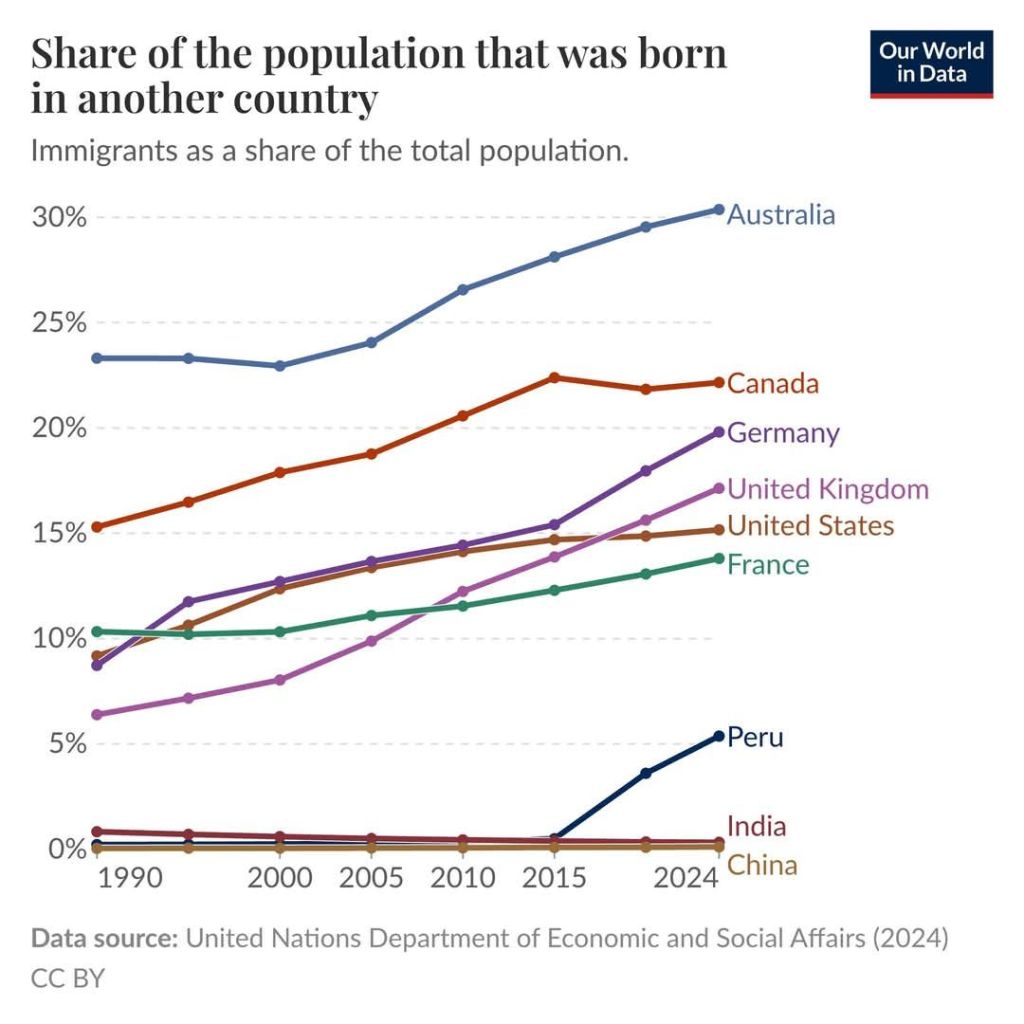
The Anatomy of Marital Happiness
22 Mar 2025 Leave a comment
in applied price theory, econometerics, economic history, economics of love and marriage, industrial organisation, labour economics, population economics Tags: dating markets, economics of fertility, marriage and divorce, marriage premium
How can I not link to a new Sam Peltzman piece on such a topic? Here goes: Since 1972, the General Social Survey has periodically asked whether people are happy with Yes, Maybe or No type answers. Here I use a net “happiness” measure, which is percentage Yes less percentage No with Maybe treated as […]
The Anatomy of Marital Happiness
So Much for the one child policy
01 Dec 2024 Leave a comment
in development economics, economic history, economics of love and marriage, growth miracles, human capital, labour economics, labour supply, law and economics, population economics Tags: China

Desired Fertility versus the Mueller Effect
28 Nov 2024 Leave a comment
in applied price theory, economics of love and marriage, labour economics, labour supply, law and economics, population economics Tags: economics of fertility
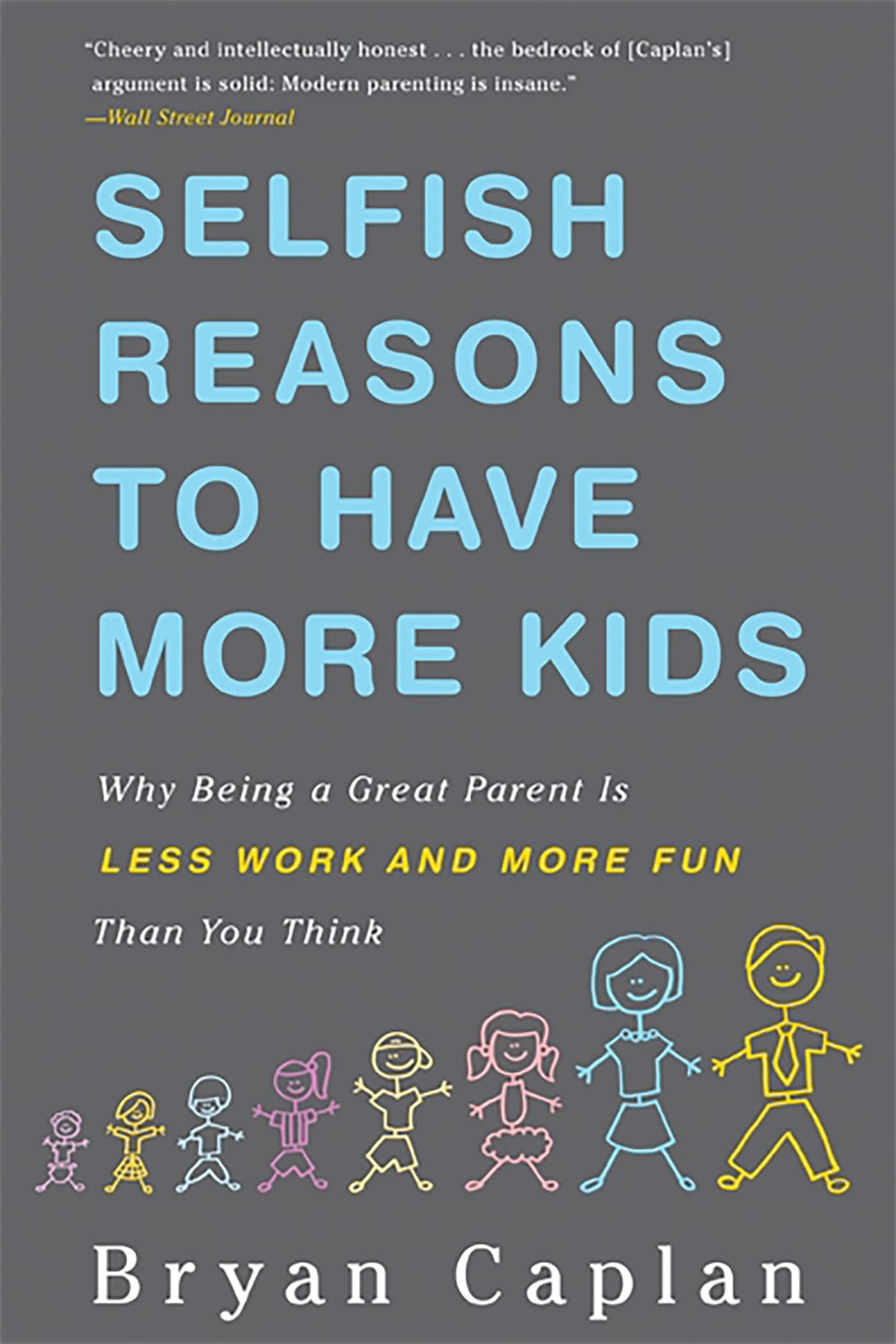
Six months ago, I’m not sure that I’d ever heard of demographer Lyman Stone. Now, people in my circles randomly drop his name on a weekly basis. His favorite topic, in case you haven’t heard, is global fertility decline. As a longtime natalist, I share his concerns. One of Stone’s top takeaways: Instead of talking…
Desired Fertility versus the Mueller Effect
The Borjas-Caplan Immigration Debate
20 Nov 2024 Leave a comment
in applied price theory, development economics, human capital, labour economics, labour supply, population economics Tags: economics of immigration
Before the fictional musical Borjas-Caplan immigration debate of 2024, there was the non-fictional non-musical Borjas-Caplan immigration debate of 2019. It was an unusual format: Both of us had the floor for over hour each. Borjas:Me:If you pay close attention to my opponent’s presentation, you’ll discover that he’s quite unlike every other critic of immigration. In…
The Borjas-Caplan Immigration Debate
The Puzzle of Japan’s Economy: When Productivity Gains Are Outside National Borders
26 Oct 2024 Leave a comment
in development economics, economic growth, economic history, growth miracles, labour economics, labour supply, macroeconomics, population economics Tags: economics of fertility, Japan
In total size, Japan’s economy is fourth-largest in the world, just behind Germany for third-largest. In per capita GDP, Japan is ahead of Spain and South Korea, although well behind Italy and France. With a life expectancy at birth of 84 years, ,Japan has one of the highest levels in the world. Clearly, Japan has…
The Puzzle of Japan’s Economy: When Productivity Gains Are Outside National Borders


Recent Comments