
Do STAR TREK’s Transporters Turn You Into a Different Person? (Because Science w/ Kyle Hill)
16 Sep 2018 Leave a comment
in movies, television
Towards the Flame: Empire, War and the End of Tsarist Russia by Dominic Lieven (2015)
16 Sep 2018 Leave a comment

Towards the Flame is a diplomatic history of imperial Russia in the years 1905 to 1920. By diplomatic history, I mean a detailed, a really detailed, account of the men who ran Russia’s Foreign Ministry and its embassies (with sometimes a nod to the heads of the army, navy or other government ministers), their policies, debates and disagreements. We are given pen portraits of Russia’s premiers, foreign and finance ministers, and key ambassadors to London, Paris, Berlin, Vienna and beyond.
And the guts of the book is a history of their diplomacy – the papers and memos they wrote laying out Russia’s strategies – the information they gathered about rival nations’ aims and goals – the assessments each nations’ military attaches made about their rivals’ readiness for war. (Position papers like the brilliantly prescient memorandum former head of secret police Petr Durnovo gave Tsar Nicholas in February 1914 which said…
View original post 6,128 more words
Storm of Steel by Ernst Jünger (1920)
16 Sep 2018 Leave a comment
A figure stripped to the waist, with ripped-open back, leaned against the parapet. Another, with a triangular flap hanging off the back of his skull, emitted short, high-pitched screams. This was the home of the great god Pain, and for the first time I looked through a devilish chink into the depths of his realm. (p.31)
Ernst Jünger (1895-1998) fought for the German army in the First World War. Wikipedia details his war career.
Most other memoirs and fictions about the war took years to surface, while the authors struggled with their memories and to find words to describe the experience. No such hesitation for Jünger, who converted the 16 diaries he’d kept during his three-year service into a narrative – titled In Stahlgewittern – which he had privately printed in 1920 in an edition of 2,000.
 Ernst Jünger in 1919 – looking miraculously untouched…
View original post 6,402 more words
World Bank Study Confirms that Free Markets Encourage Development in Poor Nations
16 Sep 2018 1 Comment

I periodically explain that pro-market policies are the best way of helping poor people.
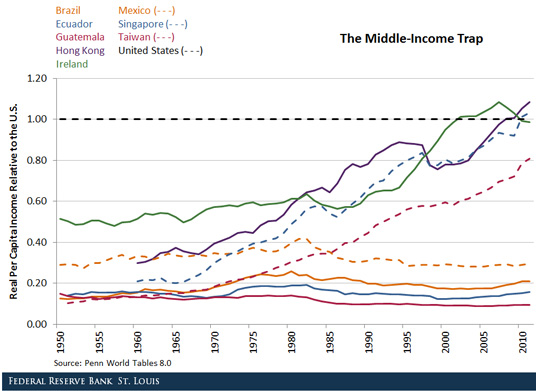 The reason rich countries are rich is because they had lengthy periods of limited government, free markets, and the rule of law.
And the convergence literature shows that the same thing is true for developing nations.
Today, let’s look at some new research from the World Bank on how good policy plays a role in generating wealth from natural resources. The authors start by explaining the issue they want to investigate.
The literature on economic development often assumes that natural resource endowments are exogenous. …the resource economics literature has emphasized that the resource base is endogenous to investment in exploration
and extraction. That literature has, however, overlooked the role that market orientation and institutions play in driving investments in the resource sector. Our aim is to bridge the gap between these two literatures and explore the…
View original post 691 more words
Ferdinand Magellan – First Circumnavigation of the Earth
16 Sep 2018 Leave a comment
in economic history, transport economics Tags: Age of Discovery
K-pop is now a $5 billion industry, with fans from every corner of the world
16 Sep 2018 Leave a comment
in Music
The crimes of @Greenpeace @NZGreens and the anti-science left
16 Sep 2018 Leave a comment
in development economics, environmental economics, health economics Tags: Anti-Science left, GMOs

Why You Can Never Argue with Conspiracy Theorists | Argument Clinic | WIRED
16 Sep 2018 Leave a comment
in economics of media and culture Tags: conspiracy theories, Karl Popper, philosophy of science
Scorpion Venom Is The Most Expensive Liquid On Earth At $38,858,507.46 Per Gallon
16 Sep 2018 Leave a comment
What’s next in history of economics? A wish list
16 Sep 2018 Leave a comment

I just defended my habilitation, a rite de passage meant to evaluate an academic’s ability to develop a research program, to mentor graduate students and to hold a professorship. It’s a long process which begins with writing a thesis and ends up with answering two hours of questions from a peer jury. Part of the discussion looks like an unbounded meditation on the intellectual challenges ahead, with questions on methodology and future topics, yet the other is about navigating the financial and institutional constraints besetting the field, and they are especially critical in history of economics. The whole thing involves a deal of reflexivity and an insane amount of red tape.
Below is the list of topics I wrote down when preparing the defense, those I wish to see historians of recent economics research in the years to come. It is more a wish list than an actual research program…
View original post 1,000 more words


Recent Comments