
Sweet dreams are made of this: The lying-down desk has landed | City A.M.
19 Jan 2015 Leave a comment
in managerial economics, organisational economics, personnel economics Tags: Japan
Zombie lending and lower Japanese productivity growth
15 Jan 2015 Leave a comment
in economic growth, macroeconomics, politics - New Zealand, public economics Tags: fiscal stimulus, Japan, Lost Decade, Think Big
The low Japanese productivity growth throughout the 1990s could have been the result of subsidies to inefficient firms and declining industries both directly and through a banking system rolling over loans in arrears to insolvent firms.
This policy is known as zombie lending, and it lowered productivity because higher cost firms kept producing a greater share of Japanese output than would otherwise have been the case (Hayashi and Prescott 2003; Ahearne and Shinada 2005).
- Zombie firms are insolvent firms often propped up with new loans and loan rollovers from Japanese banks.
- Zombie banks are insolvent banks propped up with loans from the central bank and by lax regulatory inspections of their weak loan portfolios and lack of adequate capital.
Japan’s economic policies have until recently kept insolvent banks operating, further encouraging zombie lending, which impeded the flow of capital to the more efficient firms.
The competitive process where zombies shed workers and lose market share was thwarted. The Japanese authorities subsidised insolvent banks and firms and provided credit to some firms and not to others (Prescott 2002; Hayashi and Prescott 2002; Caballero et al. 2005; Hoshi and Kashyap 2004).
The pervasiveness and long-term persistence of zombie lending as a shock to Japanese productivity growth cannot be understated. As Kashyap noted:
The government allowed even the worst banks to continue to attract financing and support their insolvent borrowers
…By keeping these unprofitable borrowers alive, banks allowed the zombies to distort competition throughout the rest of the economy.
Caballero et al. (2008) estimated that 30 per cent of all publicly traded Japanese manufacturing, construction, real estate, retail, wholesale, and service sector firms were on life support from banks in the early 2000s, and that most large Japanese banks only complied with capital standards because regulators were lax in their inspections.
The percentage of zombies hovered between 5 and 15 per cent up until 1993 and rose sharply over the mid-1990s to exceed 25 per cent for every year after 1994 (Caballero et al. 2008).
Figure 1: Prevalence of Firms Receiving Subsidized Loans in Japan

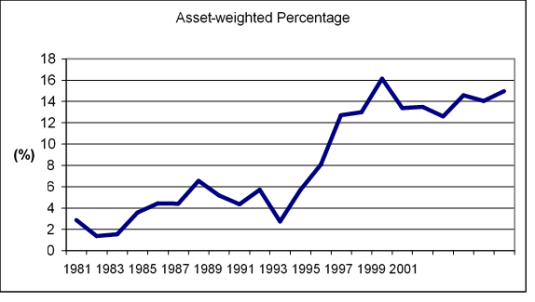
Source: Caballero et al. (2008) Zombie Lending and Depressed Restructuring in Japan. American Economic Review.
Zombie lending is a more serious problem for Japanese non-manufacturing firms than for manufacturing firms (Caballero et al. 2008). Small and medium size firms were also major beneficiaries of zombie lending.
Zombie lending also discourages new investments that increase Japanese productivity, encourages inefficient firms to avoid making the decisions necessary to raise their profitability, and impedes the solvent Japanese banks from finding good lending opportunities (Caballero et al. 2008; Sekine et al. 2003). As Kashyap noted:
Usually when an industry is hit by a bad shock, many firms exit… In Japan, firms never exited. Given that they never exited, it is not surprising that new firms weren’t created.
Under normal conditions, higher cost firms would go bankrupt and be replaced by new and better ideas and firms. Instead, firms that were more efficient than the zombie firms tended to exit industries because their demise does not require the banks to acknowledge large bad loans. This exit of the firms of intermediate efficiency rather than the exit of the least efficient firms dragged productivity down even further (Nishimura et al. 2005; Okana and Horioka 2008). New Zealand in the 1970s and in the early 1980s also had a range of policy measures that supported high-cost firms and declining industries.
When bankrupt firms can stay in business, they retain workers who otherwise would be willing to work for lower wages at a healthy firm and depress market prices for their products. Low prices and high wages reduce the profits that more productive firms can earn which discourages entry and investment.
The creation of new jobs is a measure of industry dynamism. In manufacturing, which suffered the least from the zombie problem, job creation hardly changed from the early 1990s to the late 1990s. In contrast, there was a large decline in job creation in the non-manufacturing sectors, particularly in construction (Caballero et al. 2008; Hoshi 2006; Caballero et al. 2008).
There was less restructuring of employment and market shares in favour of the more productive firms. The gap in productivity growth between the Japanese manufacturing and non-manufacturing sectors more than doubled over the 1990s (Caballero et al. 2008).
Japanese R&D spending has also slowed down significantly since the start of the 1990s (Comin forthcoming). The gap in the rate of computer adoption between Japan and USA also increased in the 1990s. The speed of diffusion of new technologies slowed to the point that South Körea has now surpassed Japan in the diffusion of computers and the Internet (Comin forthcoming).
Over the 1990s, there were ten massive fiscal packages to maintain employment and investment. Much of this additional Japanese government spending was on public works and other projects whose social payoffs have been queried by independent observers. The consumption tax was increased from 3 per cent to 5 per cent in 1997. There were two rounds of temporary tax cuts – for 2 years only.
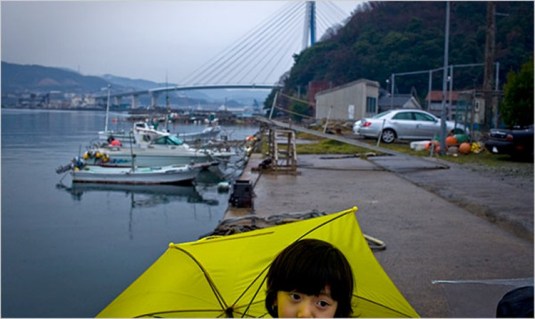
Japan pursued economic policies in response to a recession that stifled total factor productivity by providing bad incentives to the private sector.

The unproductive firms depressed Japanese productivity because they competed for labour and capital that could have been used by the more productive firms. Zombie lending allowed many firms to stay in business long after the monetary policy changes that uncovered their unprofitable petered out. The diversion of resources to these insolvent firms prevented a productivity recovery. The lack of a productivity recovery depressed wages, incomes and consumer demand.
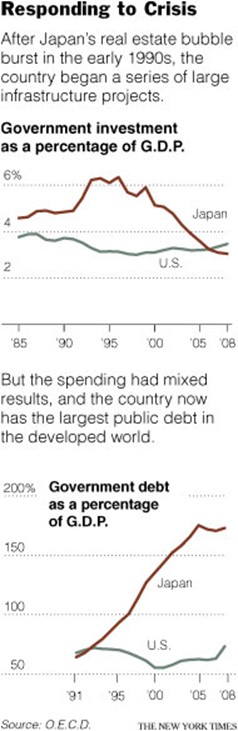
The zombie lending and fiscal packages compounded the 1990 monetary contraction into the highly persistent shocks that were required to be able to depress Japanese productivity growth for more than a decade.

More and more resources were tied up in high cost firms and in declining industries. This was rather than be reallocated to more productive uses by the normal market processes of relative price and wage changes, free entry and profit and loss. Kashyap argues that:
The experience in Japan definitely shows that providing subsidized credit to dying firms will be costly over time. Keeping an industry from restructuring only delays the day of reckoning and raises the cost substantially
…There are many examples besides Japan where people fail to recognize that it is dangerous to keep people attached to businesses that are fundamentally unprofitable
The massive Japanese government investments have echoes of the ‘Think Big’ energy investments in New Zealand in the late 1970s.

The productivity impact of ‘Think Big’ was suspect. In addition, state-owned enterprises offering a net return of zero to the Crown in the 1980s has Japanese parallels.
The propping up of high cost state owned and private firms in the 1970s and 1980s in New Zealand helped to depress productivity growth rates. State-owned enterprises offered a net return of about zero to the taxpayer, even as recently as last year in New Zealand.
More and more resources were tied up in New Zealand in the high cost firms and declining industries than be reallocated to more productive uses by the market processes of price and wage changes, free entry and profit and loss. The lack of productivity growth depressed wages, incomes and consumer demand in New Zealand.
The productivity based explanations for the slumps in New Zealand from 1974 to 1992 and in Japan from 1990 to 2003 have a number of common threads.
The role of the introduction of a five day working week in Japan’s Lost Decade
13 Jan 2015 2 Comments
in business cycles, economic growth, economic history, labour economics, labour supply, macroeconomics, monetarism Tags: Japan, Japanese banking system, Lost Decade
When I lived in Japan between 1995 and 1997, they are undergoing the transition from a six-day week to a five day week. At the time, workers at my University had to show up on Saturday morning. They then went home at lunchtime. Saturday morning at the office was phased out a few years later.
In explanations of the Lost Decade of growth in Japan dating from the early 1990s, with the exception of Ed Prescott, the explanation that the Japanese simply chose to produce less per worker over the course of the 1990s does not figure highly.
The Japanese working week was reduced by law from 48 to 44 hours per week in 1988 and further reduced by the same labour standards law to 40 hours per week from 1993 (Prescott 1999; Hayashi and Prescott 2002). The Japanese stopped routinely working on Saturdays over the 1990s. The number of national holidays was increased by three and an extra day of annual leave was also prescribed by law.
Figure 1 shows this regulatory change about the length of the standard working week that started in 1987 was followed by a sharp drop in hours worked per working per working age Japanese over the period 1988 to 1993. The Japanese working age population is defined as those aged 20 to 69 (Hayashi and Prescott 2002).
Figure 1: Weekly hours worked per Japanese aged 20 to 69, 1970-2000

Source: Hayashi and Prescott 2002.
The regulatory process to end the standard six day working week in Japan straddled the start of the Lost Decade. This major change in the regulation of the supply of labour per week in the number of hours worked and the stagnation of GDP growth soon after could be more than a coincidence (Prescott 1999; Hayashi and Prescott 2002).
Americans work more hours a year than workers in Japan. But both work less than before. Data: buff.ly/1LhU5gH http://t.co/7oaGYKLRmk—
HumanProgress.org (@humanprogress) August 18, 2015
More employment did not fill the short-fall in weekly labour supply per worker after the introduction of the 44 hour week and then the 40 hour week in Japan. Many offices and factories closed on Saturday rather than employ more to make up the hours. The regulatory change was a clear cut constraint on the length of the working week that was hard to get around because of the need to recruit a separate set of workers to come in on Saturday afternoon and then all day Saturday.
During the transition to a five day working week, Japanese real GDP growth should slow down because output levels must taper during a transitional period because one day per week less in labour is supplied in production and capital is being worked for one day a week less than before (Prescott 1999; Hayashi and Prescott 2002).
Output per working age person depends on capital-labour ratios, on hours worked per week and on changes in total factor productivity due to factors such as technological progress and changes in institutions and economic policies.
The effects of the change in the length of the working week on output per working age Japanese will persist for a significant time because investment plans and the capital stock must also adjust to a shorter working week. This is another example of a highly persistent shock that can partly account for the Lost Decade. As Prescott (1999) observed:
Given the change in Japanese law and the resulting drop in normal market hours, growth theory predicts the almost stagnant output of the Japanese economy in the 1990s. This reduction in market hours lowered the marginal product of capital, making investment unprofitable.
Given the lack of profitable domestic investment opportunities, the Japanese began saving by investing abroad. This explains Japan’s large trade surpluses
…The Japanese economy in the 1990s is not as depressed as the U.S. economy was in the 1930s. Market hours in Japan in the 1990s have fallen only half as much as market hours fell in the United States during the Great Depression.
More importantly, the reduction in market hours in Japan in the 1990s was the stated objective of policy.
The reduction in weekly hours worked will also reduce the working week of capital because labour and capital are usually complementary inputs. The reduced length of the working week will see some existing capital producing less, some capital will go spare, and the rate of wear and depreciation will fall.
The drop in weekly hours worked will lower the marginal productivity of existing and new capital which will make new capital investments in Japan less profitable than before. Net investment will be less while the Japanese capital stock is adjusting down to the reduced working week for capital and labour.
Measured total factor productivity will fall because of an under-utilisation of a capital stock that is now larger than required for the available labour force. Net investment will decline by a large amount because investment demand is a small yearly addition to the capital stock.
For example, if annual investment demand is 5 per cent of the capital stock, and the desired capital stock becomes 1 per cent smaller than previous, annual net investment will fall 20 per cent. GDP growth will resume at the trend rate once the lower level of output per working age person is reached.
For those that still doubt, consider the contrary, what would you expect to happen in your country moved from five day week before day working week? Do you expect workers to produce as much as before? Britain was on a three day working week during the coal miners’ strike. As expected, output fell because the working week was shorter.
The main gap in the English language literature about the reduction in the working week in Japan is a lack of publications I can find by Japanese economists discussing what predictions of a made about the likely consequences for output, investment and productivity before the reduction in the length of working week was legislated. Did the reduction in the length of the working week in Japan turn out as planned and predicted before it was implemented?
France introduced a 35 hour week some years ago. Although there were various options for over time, albeit strictly regulated, a uniform prediction was that the 35 hour week would reduce productivity. The new workweek was phased in slowly, with large firms adopting it in February 2000 and smaller firms doing so only in January 2002.
French employees were expected to bear only a small part of the cost of the working-time reduction, continuing to earn roughly the same monthly income – in line with the unions’ slogan ’35 hours pays. To ease that transition, the law reduced the overtime premium for small firms and increased their annual limit on overtime work compared with large firms.
The reduction in the length of the French working week failed as work sharing strategy and reduced productivity. This was a fair summary by the IMF:
The 35-hour workweek appears to have had a mainly negative impact. It failed to create more jobs and generated a significant—and mostly negative—reaction both from companies and workers as they tried to neutralize the law’s effect on hours of work and monthly wages.
While it cannot be ruled out that individuals who did not change their behaviour because of the law became more satisfied with their work hours, simple survey measures do not show increased satisfaction.
Between 1997 and 2000, Quebec reduced its standard workweek from 44 to 40 hours to stimulate jobs growth – the old work sharing ideal. The Quebec policy contained no suggestion or requirement that employers provide wage increases to compensate workers for lost hours.
Despite a 20% reduction among full-time workers in weekly hours worked beyond 40, the policy failed to raise employment at the provincial level or within industries. If anything, there were job losses.
Japan was the only case where a reduction in the length of the working week met with wide approval by the public and people simply stopped working on Saturdays. The law succeeded simply because it did but it was designed to do: reduce the number of days existing workers worked. Japan was undergoing mild deflation at the time, so the need to reduce wages was minimal.

Annual hours worked per employed Japanese has continued to slowly taper down since the late 1990s, which may be a further explanation of its continual slow growth.

David Andolfatto wrote a nice paper explaining the consequences for the financial and monetary sectors of this reduction in the length of the Japanese working week:
- a steady decline in bank lending;
- the money multiplier declines;
- nominal interest rates that are close to zero; and
- massive infusions of liquidity by the Bank of Japan that seem to have no effect at all.
In his analysis, David Andolfatto referred generally to a productivity slowdown as discussed by Prescott rather than to the specifically to the reduction in the length of the Japanese working week. Nothing detracts in his analysis, as Andolfatto said, that Japan has a problem: lagging productivity growth and as Andolfatto concluded:
…monetary and fiscal policies, or reforms directed exclusively at the banking sector, are unlikely to re-establish productivity growth. What is likely needed are economy-wide reforms that enhance the willingness and ability of individuals to adopt potentially disruptive technological advancements and work practices.
It took Japan a long time to realize that the 1970s drop in fertility wasn’t temporary
06 Jan 2015 Leave a comment
in labour economics, labour supply, political change, technological progress Tags: demographic crisis, demographics, fertility crisis, forecasting errors, Japan

Japan’s demographic challenge
17 Dec 2014 Leave a comment
in labour economics, labour supply, population economics Tags: ageing society, demographics, Japan
As its new parliament comes in, here's a look at Japan's longer-term economic challenges pewrsr.ch/1pjgZx5 http://t.co/StGWEGdNfi—
PewResearch FactTank (@FactTank) December 16, 2014
What if Abenomics fails?
15 Dec 2014 Leave a comment
What if #Abenomics fails? #Japan's Abe Faces Challenge to Stoke Economy After Election Victory bloom.bg/1GDvKgO http://t.co/hhBVEZQPJ7—
Holger Zschaepitz (@Schuldensuehner) December 15, 2014
Abe’s snap election pays off with big win for LDP | The Japan Times
15 Dec 2014 Leave a comment
in economic growth, macroeconomics, politics, Public Choice Tags: Edward Prescott, Japan

the ruling bloc secured a two-thirds supermajority in the 475-seat House of Representatives, giving it the power to override the Upper House.
When I arrived in Japan in 1995, the LDP was out of power and written off.
The LDP were true stayers in politics. They managed to get back into power soon after the 1995 general election by forming a coalition with the Socialist party.
The Socialist party leader was initially the Prime Minister then he resigned later and was replaced by an LDP Prime Minister.
The grip on power of the LDP was consolidated by the great competence of the Koizumi administration.

Source: Edward Prescott
The LDP lost power again in about 2007 but regained power in the next election through the extreme incompetence of their opposition.
In the current election, the main opposition party were unable even to put up enough candidates to actually win a majority.
The key contribution of the main opposition parties in Japan was well stated when they last won an election in 2007. They have shown that they can actually win an election when the LDP performs poorly. That is an important discipline that may not have been there in the 1980s.
via Abe’s snap election pays off with big win for LDP | The Japan Times.
Euroland and Japan compared since 2008
16 Nov 2014 Leave a comment
in budget deficits, business cycles, economic growth, global financial crisis (GFC), great recession Tags: Euroland, great recession, Japan, lost decades
Who rules Japan? A public choice analysis of the courts and the bureaucracy
14 Oct 2014 Leave a comment
in organisational economics, personnel economics, Public Choice Tags: agent principal problems, Eric Rasmusen, GRIPS, Japan, Mark Ramseyer, political science, public choice
Gullible gaijin (外人), especially those in the foreign media, foreign ministries and academia think that the bureaucrats rule Japan. Nothing could be further from the truth.
I’ll illustrate this first with the way in which the ruling Liberal Democratic Party (LDP) in Japan exercises a tight control over the courts.
Judges in Japan are career judges starting straight out of a specialised Law School for trainee judges in their late 20s as an assistant judge with various promotions all the way to the top to various courts with different jurisdictions in different places in Japan.
Control over transfers between courts in different parts of Japan as well as over promotions is the key to making sure judges know what is required of them and punishing those judges who step out of line.
Japanese lower court judges are reassigned every three years to different courts in different parts of the country. Most Japanese judges find administrative duties prestigious and branch office assignments embarrassing.
The judicial secretariat supervised by the Supreme Court can moves judges up and down the hierarchy from the High Courts (the courts of appeals) to the District Courts (the trial courts) to the Family Courts and to the branch offices of the District and Family Courts. It routinely sends judges to less prestigious postings. Supreme Court judges are appointed directly by the government in their 60s and must retire at the age of 70.
- Like the vast majority of other professionals, Japanese judges want to live in Tokyo if possible, and in Osaka if not.
- If a difficult judges is posted to the north of Japan, which is next to Siberia, they must leave their family behind because of the need to go to good schools and universities.
Every Japanese judge knows that when they are reassigned, the next reassignment is not necessarily as prestigious as the last, depending on how they rule in contentious cases.
J. Mark Ramseyer and Eric B. Rasmusen have written several very good papers and a book on this topic of judicial independence, or more correctly, the lack of judicial independence in Japan.
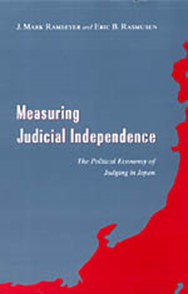
Lower court judges defer to the wishes of the LDP on sensitive political questions because they will do better in their careers. Japan has a judicial career structure that rewards and punishes judges according to their work product, including their rulings in sensitive political cases.
Ramseyer and Rasmusen reviewed the quality of the assignments of 400 judges after deciding politically charged cases, holding constant proxies for effort, intelligence, seniority, and political bias. These political sensitive cases involve judges:
- who held the Self-Defence Force or U.S. bases unconstitutional;
- rejected national electoral apportionment schemes advantageous to the LDP; and
- enjoined the national government in administrative law suits.
Ramseyer and Rasmusen found that judges who defer to the LDP in politically disputes do better in their career assignments than those who do not. Similarly, judges who grant injunctions against the national (but not local) government have less successful careers.
This distinction is important because the national government wants to keep local governments in line with the laws they pass. This differentiation between issuing injunctions against local governments, but not the national government, shows the detail at which judicial decisions are controlled by the ruling party through favourable assignments and promotions.
Ramseyer and Rasmusen also found that:
- judges who joined a communist-leaning bar organization in the 1960s had fewer administrative postings than those who did not join;
- judges who consistently convicted criminal defendants spent less time in branch offices than those who occasionally acquitted;
- judges who found their tax opinions reversed on appeal had fewer administrative assignments and more branch office postings than those without such reversals; and
- judges who held a ban on door-to-door canvassing unconstitutional suffered in their careers.
If the national government, the ruling LDP, exercises such close control over the courts, it would be surprising that they let the bureaucracy tell them what to do.
The LDP controls the bureaucracy, even though it isn’t apparent, as explained by Mark Ramseyer.

The most reliable agent for your interests is the agent who thinks he in charge because the face has grown to fit the mask. Ramseyer as pointed out that a bureaucracy would act the same whether
- it were completely independent or
- it were doing only what the LDP wants (i.e. observational equivalence).
Ramseyer and Rosenbluth argue that the institutional framework of government – the rules of the game among political players – decisively shapes the character of political competition and incentives in Japan.
The ruling LDP works within Japanese electoral rules to maximize its success with voters, and within constitutional constraints to enforce its policies on bureaucrats and judges.
The LDP has several ways of keeping the bureaucracy under control:
- They can easily veto any bureaucratic actions;
- They have control over promotion;
- They encourage dissatisfied constituents to report complaints to the LDP;
- Would-be politicians work in the bureaucracy and have to please the party if they want to run;
- Ministries compete for policy influence;
- The LDP requires “large portions of [bureaucrats’] lifetime earnings as bonds contingent on faithful performance” through their control of post-retirement jobs.
The LDP keeps bureaucratic action closely in line with its preferences through the control of promotions and three yearly transfers and by encouraging intense rivalry between ministries.
Bureaucrats who do as they are told and anticipate the needs of their political masters in the LDP get the best transfers and are promoted to the top and then win the best post-retirement positions.
Japanese bureaucrats start retiring in their mid 40s so having a favourable post retirement job is vital. The Japanese system is based on back loading of pay. This is a well-known system for ensuring fidelity of agents where effort and performance is more difficult to monitor.
The main payoff been a bureaucrat in Japan is the prize at the end of the road. This prize will be denied for you if you step out of line, don’t do as you’re told and don’t know what is required of you.
My political science professor in Japan at the National Graduate Institute of Policy Studies (GRIPS) introduced me to the work of Mark Ramseyer in 1996. Ramseyer is completely fluent in Japanese and writes in Japanese as well as English on law and economics.
Hankos take the place of signatures in Japan
02 Oct 2014 Leave a comment
in comparative institutional analysis Tags: Hanko, Japan

Instead of signing their name, Japanese stamp their name on forms, bank withdrawal slips and letters with a hanko (a signature stamp).
Without a hanko one can’t open a bank account in Japan or register for a university class. One professor told the Los Angeles Times, "I don’t exist in this society without my hanko."

Hankos are cylinders about the size of a piece of chalk. They have the person’s name carved at one end in Chinese characters and they leave an imprint after being stamped in ink.

Everyone from the Emperor to a homeless man living in a park has a hanko, and they are used for everything from finalizing a multi-million-dollar business deal to signing for packages delivered to one’s house.
The average Japanese has five hankos but only one is registered with the government to certify ownership and it is only used on important documents. Since these seals are considered too valuable to carry around, people have other seals to use for things like bank transactions and taking deliveries. A certificate of authenticity is required for any hanko used in a significant business transaction.
Many government documents have several hanko stamps. According to one estimate, typical bureaucrats puts his hanko on 100,000 documents in a 25 year career.

When I had a bank account in Japan, my hanko was the letters JR inside a circle. Anyone who stole that hanko could run of with my bank account balance. This did worry me and my friends at the International house . Anyone can go to a shop at the train station and get a hanko made with my initials on it.
Japan: Why It Works, Why It Doesn’t: Economics in Everyday Life
02 Oct 2014 Leave a comment
Most of this fascinating book appears to be readable at Google books.

Squeamishness kills alert: were the atomic bombings unnecessary? Would have Japan surrendered anyway?
09 Aug 2014 2 Comments
in war and peace Tags: atomic bombings, hand wringing, Japan, World War II

Those that argue that Japan surrendered for reasons other than the atomic bomb put forward contradictory arguments.
The first is the Japan was already seeking terms for surrender. That is true, but among those terms was avoiding occupation.
The Japanese leadership had already interpreted the terms of the Potsdam declaration was a sign of weakness. They hoped that by making the invasion of Japan as bloody as possible, they could extract even better terms in light of this sign of weakness at Potsdam. Kyushu, the obvious initial invasion site in southern Japan, was being heavily reinforced by the middle of 1945.
Japan no longer had a realistic prospect of winning the war by the end of 1944 and they knew it.
Japan’s leaders believed they could make the cost of conquering Japan too high for the Allies to accept, leading to some sort of armistice rather than total defeat. The Japanese army fought to the death with 99% plus casualty rates as the Americans moved from island to island to show that any attempt to invade Japan would be too high a price to pay.

The second explanation as to why the atomic bombing was unnecessary contradicts the first. The second explanation is Japan surrendered because Russia into the war rather than because of the atomic bombings.
You can’t have it both ways Japan seeking terms before the bombing and Japan seeking terms after the bombing only because Russia into the war.

After the atomic bombing of the Japanese War Cabinet split 3:3 on seeking terms. A figurehead Emperor was then used to purportedly intervened so that no one lost face. That Japanese government could have fallen such as Tojo’s government did in 1944 simply by either the Army or the Navy ministers resigning. The army and navy ministers did not resign, but the generals in the Tokyo military district sat on the fence to see what happened at the attempted military coup by junior officers who were attempting to stop surrender.
The 12-15 August coup plotters failed to persuade the Eastern District Army and the high command of the Imperial Japanese Army to move against the surrender.
Importantly, the junior officers leading the coup felt secure enough to approach the Army minister and senior army officers as potential co-conspirators. The army leadership knew of the coup plans but neither joined the plotters nor arrested them.
Once again, the revisionist literature never addresses the possibility of orderly surrender of Japanese forces overseas. If Japan just throwing the town before the bombings, they were more likely to go rogue. Become governments in exile.
Japanese politics of that time was extraordinarily violent with assassination a real risk for every prime minister. The Emperor was also surrounded with plenty of bodyguards.
In Downfall:The End of the Imperial Japanese Empire (1999), Richard Frank offered new research from previously unused and classified sources, along with closely detailed arguments, that Japan was nowhere near to surrendering in August of 1945:
It is fantasy, not history, to believe that the end of the war was at hand before the use of the atomic bomb.
How would you have brought the war with Japan to a conclusion? The willingness of the Japanese oligarchy to waste the blood of their own people and spill the blood of others without limit was central to their strategy of avoiding occupation and the dismantling of the old order.
Truman could have chosen to not use the 2 bombs at his disposal and let the fire bombings burn down most Japanese cities and towns from new air bases for B26s from Okinawa, let 100,000 Chinese be slaughtered on average every month at the hands of the occupying Japanese army, and invade in December and call forth a slaughter of a million or two more.
The bomb and only the bomb galvanised Japan’s peace party within the war cabinet to take actions necessary to terminate the Pacific War.

Would World War 2 have finished even one day earlier if the handwringers had their way on how wars should be fought by the good guys? Who would have won?
The puzzlingly large cross country differences in sector labour productivity
02 Aug 2014 Leave a comment
in applied price theory, entrepreneurship, macroeconomics Tags: barriers to riches, Britain, France, Germany, Japan, relative labour productivity, USA
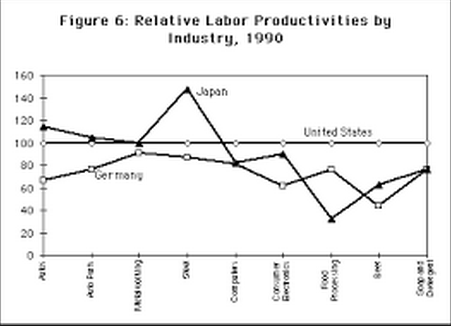
There are large productivity differences between the global industrial leaders at the industry level. In a 1993 McKinsey’s study, large differences were uncovered in value added per worker between the USA, Japan, France, the UK and Germany across individual industries, by a factor of three in some cases (Prescott and Parente 2000, 2005).
- The USA competes with Japan for productivity leadership in many manufacturing industries.
- The Japanese services sector productivity can be as little as a one-third of that of the USA. Japanese labour productivity is almost twice Germany’s in producing automobiles and is better that Germany by a large margin for many other manufactured goods.
- The USA is uniformly more productive in services sector labour productivity. For example, British, French and German telecom workers were 38 to 56 per cent as productive as their American counter-parts.
Figure 1: Relative Value Added Per Worker: Germany, Japan, and the United States Manufacturer’s Industries
| Industry | Japan | Germany |
| Automobiles | 116 | 66 |
| Automobile Parts | 124 | 76 |
| Metal Working | 119 | 100 |
| Steel | 145 | 100 |
| Computer | 95 | 89 |
| Consumer Electronics | 115 | 62 |
| Food | 33 | 76 |
| Beer | 69 | 44 |
| Soap and Detergent | 94 | 76 |
Differences in the access to the global pool of useful knowledge cannot explain such large productivity differences at the sector and the individual industry levels between the USA, Japan, France, the UK and Germany and between these three European neighbours. The stock of useful technological knowledge does not vary that much across these countries (Prescott and Parente 2000, 2005). These countries produce and are the markets for the majority of that knowledge.
Figure 2: Relative Value Added Per Worker – service industries
| Industry | Japan | Germany | U.K. | France |
| Retailing | 44 | 96 | 82 | 69 |
| Telecommunications | 66 | 50 | 38 | 56 |
| Banking | – | 68 | 64 | – |
Lags in technology diffusion cannot be important. The USA, Japan, France, the UK, and Germany define the global technological frontier.
Differences in the skills of the individual worker or in the total stock of human capital of all workers in a country cannot explain these differences in value added per worker. The USA, Japan, France, the UK and Germany all have relatively well-educated, experienced and tested labour forces. For example, the 1993 McKinsey’s study inquired into the education and skills levels of Japanese and German steel workers. Comparably skilled German steel workers were half as productive as their Japanese counterparts (Prescott and Parente 2000, 2005).
What differ between these countries at the glob technological frontier is the amount of the global pool of useful productive of knowledge that is used and as work practices. Ford Europe failed to adopt Japanese just-in-time production, but Ford U.S.A. has adopted it. In the beer industry, much of the high technology machinery in Japan and U.S. is manufactured in Germany but German breweries fail to use these more productive technologies. The less productive airline sector in Europe vis-à-vis the United States is the result of over-staffing.


Recent Comments