
Environmentalists are the biggest science deniers of all #EarthDay
24 Apr 2016 Leave a comment
in economics of regulation, energy economics, environmental economics, global warming, Public Choice, rentseeking Tags: antimarket bias, antiscience left, green rent seeking, Greenpeace, nuclear power, pessimism bias, rational irrationality, wind power
Why tertiary education is ‘out of reach for many’
24 Apr 2016 Leave a comment
in economics of education, human capital, income redistribution, labour economics, minimum wage, poverty and inequality, rentseeking Tags: Director's Law, IQ, rational irrationality, social justice warriors
The majority of New Zealanders do not qualify for university. Perhaps Labour and the Greens should spend more time worrying about those who do not achieve university entrance standard.

Source: School leavers with NCEA level 3 or above | Education Counts.
Anyone who achieve university entrance standard is among the intellectual elite. They have a head start in life. Labour and the Greens are preoccupied with giving those with a head start in life more freebies.
Poverty in #India under the Permit Raj and then the dead hand of #neoliberalism
24 Apr 2016 Leave a comment
in applied welfare economics, constitutional political economy, development economics, growth disasters, growth miracles, Marxist economics Tags: antiforeign bias, antimarket buyers, economics of socialism, India, permit raj, rational irrationality
E-cigarettes as a way of reducing obesity?
23 Apr 2016 Leave a comment
in economics of regulation, health economics Tags: E-cigarettes, economics of obesity, economics of smoking, expressive voting, meddlesome preferences, nanny state, rational irrationality
One of the many interesting things that Maori Party MP Marama Fox said at a panel discussion for the launch of the New Zealand Initiative’s Health of the State report was that the Maori women she knew who smoked did so out of stress relief.
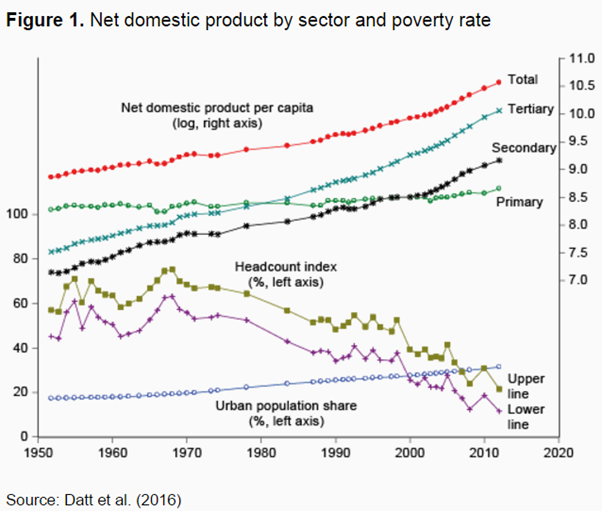
It is also well known that there is a weight gain after stopping smoking. If people cannot smoke because of higher taxes but still need to have an outlet for their stress, they look elsewhere and seek comfort in food.

Source: Weight Gain After Quitting Smoking – Quit Smoking Community.
This is before you consider the general pleasure seeking aspect of smoking. Some people find smoking pleasurable; I find it disgusting.

This suggests to me that the restrictions on E-cigarettes are the worst of both worlds. If people are going to smoke, you may as well let them have access to a technology that is safer.

Instead, the do-gooders prefer to put an extra bullet in the chamber as smokers play Russian roulette.
SPECIFIC TYPES OF IRRATIONALITY THAT CAUSE GOVERNMENT FAILURE
21 Apr 2016 Leave a comment
in applied price theory, comparative institutional analysis, constitutional political economy, economics of bureaucracy, economics of information, Public Choice Tags: behavioural public choice, growth of government, rational irrationality, size of government
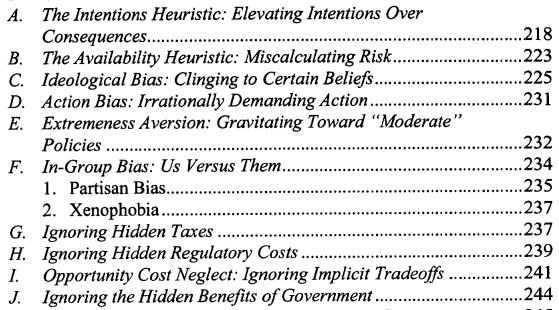
Source: Gary Lucas and Slavisa Tasic‘s "Behavioral Public Choice and the Law" (West Virginia Law Review, 2015) via Bryan Caplan
Forget avoidance outrage: public’s real attitude to tax is revealed by their actions @JordNZ
21 Apr 2016 Leave a comment
in applied price theory, constitutional political economy, economic history, economics of media and culture, politics - Australia, politics - New Zealand, politics - USA, Public Choice, public economics Tags: British economy, British politics, expressive voting, growth of government, rational irrationality, revealed preference, size of government, voter demographics
Left-wing Biases, Too, May Block Progress on Climate Change @GarethMP @JulieAnneGenter
20 Apr 2016 Leave a comment
in applied price theory, applied welfare economics, economics of media and culture, energy economics, environmental economics, global warming, Public Choice Tags: antimarket bias, carbon emissions, climate alarmists, expressive voting, greenhouse gases, nuclear power, rational irrationality

Source: Liberal Biases, Too, May Block Progress on Climate Change – The New York Times.

Source: Mr. Sanders’s war on clean energy – The Washington Post.
P.T. Bauer on @BernieSanders extending #fightfor15 to entire Third World!
19 Apr 2016 Leave a comment
in applied welfare economics, behavioural economics, constitutional political economy, development economics, economic history, growth disasters, growth miracles, P.T. Bauer, politics - USA, Public Choice Tags: 2016 presidential election, antiforeign buyers, George Orwell, living wage, rational irrationality, The fatal conceit, The pretense to knowledge
India tried that in the 1950s as part of its five-year plans. It did not work that well. Bauer said that in development economics there is a “need to restate the obvious.”

Source: Ending the Race to the Bottom – Bernie Sanders.
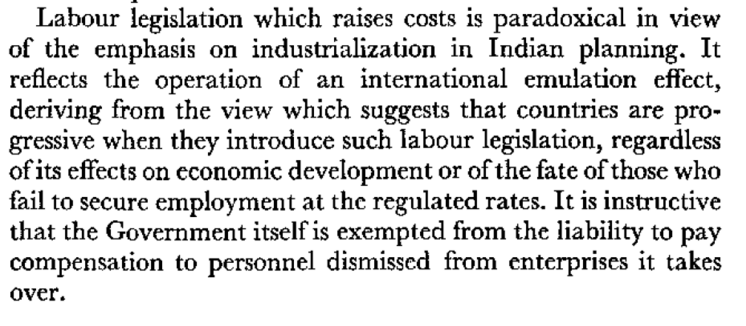
Source: Indian Economic Policy and Development – P. T. Bauer (1959) – Google Books
<p><img src="http://quotes.lifehack.org/media/quotes/quote-George-Orwell-we-have-now-sunk-to-a-depth-39424.png" /></p> <p>
@StatModeling @ryanmcmaken Europe sub-Reddit just can’t handle the truth about how poor they are!?
17 Apr 2016 Leave a comment
in applied welfare economics, economic history, economics of media and culture, politics - USA Tags: European Union, living standards, rational ignorance, rational irrationality, Reddit

@garethmorgannz gives optimal tax theory a pass once again @JordNZ
17 Apr 2016 Leave a comment
in applied price theory, entrepreneurship, fiscal policy, macroeconomics, politics - New Zealand, public economics Tags: company tax, Gareth Morgan, rational irrationality, taxation and entrepreneurship, taxation and investment, taxation and labour supply, taxation of capital income
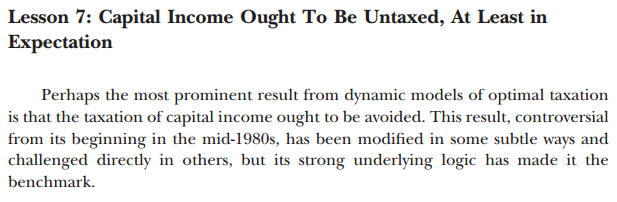
The Morgan Foundation gave optimal tax theory a pass in yesterday’s publication about taxes on land and capital. Gareth Morgan is keen on a comprehensive capital tax.
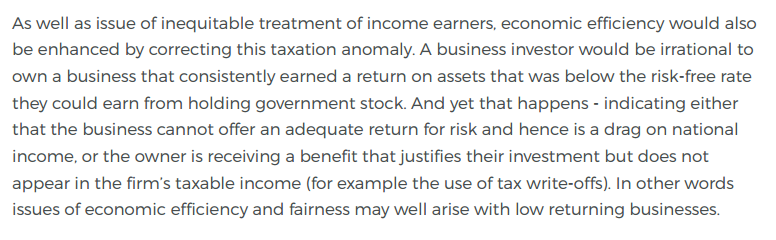
Source: Taxing Wealth & Property – What Works? A Morgan Foundation Report.
This failure to refer to optimal tax theory is despite the Foundation’s strong commitment to evidence-based policy. Any discussion of tax policy that is evidence-based must refer optimal tax theory.
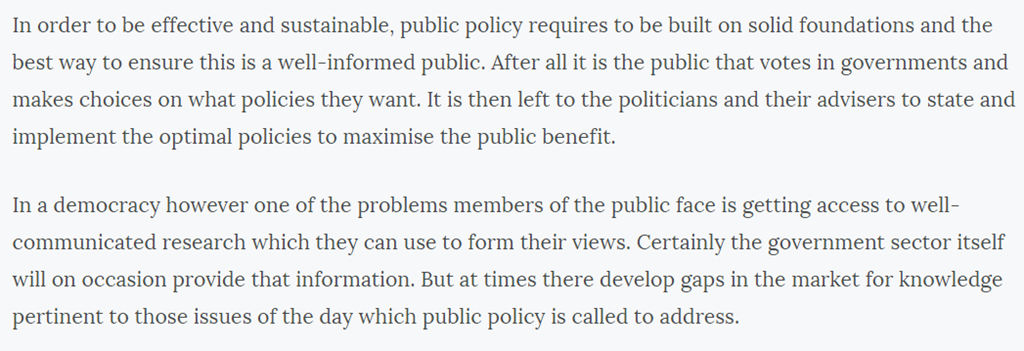
Source: Morgan Foundation, Public Policy Education.
<p>
Americans used to be much more trusting of government
15 Apr 2016 Leave a comment
in constitutional political economy, economics of bureaucracy, income redistribution, politics - USA, Public Choice, rentseeking Tags: rational ignorance, rational irrationality, special interests, voter demographics
4 Lessons for Morgan Foundation on How to Sell the #UBI @JordNZ
13 Apr 2016 Leave a comment
in applied welfare economics, labour economics, labour supply, politics - New Zealand, welfare reform Tags: expressive voting, rational irrationality, universal basic income
![clip_image002[4]](https://utopiayouarestandinginit.com/wp-content/uploads/2016/04/clip_image0024.gif "clip_image002[4]")
Source: Morgan Foundation (12 April 2016) Four Lessons for Labour on How to Sell the UBI.
I will contract out to Geoff Simmons of the Morgan Foundation my reply to the claim yesterday by the Morgan Foundation’s Susan Guthrie that there are no negatives from a Universal Basic income. Simmons said:
With an unconditional basic income, most beneficiaries would be no better off than they are now (in fact sole parents would almost certainly receive a lower benefit).
Single parents are $150 a week worse off and retirees are $50 worse off per week if their current income support were replaced by a Universal Basic Income of $11,000 per adult.
Both were entitled to much more under the current welfare benefit system and New Zealand Superannuation respectively. Unemployment, sickness and invalid beneficiaries are about 5% better off under a Universal Basic Income.
Labour’s background paper described a Universal Basic Income of $11,000 as not enough. Guthrie is even franker yesterday about how inadequate a Universal Basic Income is for the poor:
A basic income policy would provide everyone aged 18 and over with an unconditional, tax free survival-level of income each and every year.
I will contract out to Gareth Morgan (2011) why a Universal Basic Income that provides a “survival-level of income” is not good enough:
Rather than decreeing a minimum wage and discovering the consequences for jobs and top-up payments, let’s agree on what is a minimum income every adult should have in order to live a dignified life and then see what flows from that.
We begin by specifying the income level below which we are not prepared to see anyone having to live.
A survival-level of income and a minimum income on which every adult can live a dignified life are not the same thing.
Gareth Morgan’s universal basic income of $11,000 for adults makes most better off except those for whom the modern welfare state was established to protect.
Most of the evidence against the Universal Basic Income comes from examining the numbers put forward by its proponents such as the Morgan Foundation and its excellent online tool. Brian Easton (2015) put it well when he said:
Many advocates put the UMI forward without doing the sums.
Those who do, find that the required tax rates are horrendous or the minimum income is so low that it is not a viable means of eliminating poverty. Among the latter are New Zealanders Douglas, Gareth Morgan and Keith Rankin.
How to tell if you are a modern progressive – a two-part test by Scott Sumner
13 Apr 2016 Leave a comment
in international economics, labour economics, minimum wage, politics - New Zealand, politics - USA Tags: antiforeign bias, antimarket bias, expressive voting, Leftover Left, living wage, makework bias, rational irrationality

Will @JulieAnneGenter’s KiwiBank plan bankrupt KiwiPost? @JordNZ
03 Apr 2016 Leave a comment
in financial economics, industrial organisation, politics - New Zealand, privatisation, survivor principle Tags: economics of banking, government ownership, KiwiBank, New Zealand Greens, offsetting behaviour, rational irrationality, state owned enterprises, The fatal conceit
The Greens are followed up on an earlier suggestion by Julie Anne Genter, the Green’s Shadow Minister of Finance, that KiwiBank should be refocused to keeping interest rates low. To that end, it would not be required to pay dividends to the government to help fund the effort. KiwiBank has only just started paying dividends to its parent, KiwiPost.
If that were to be the case, that KiwiBank was no longer be required to pay dividends, that would blow quite a hole in the balance sheet of its parent company KiwiPost.
KiwiPost owns the share capital of KiwiBank, which must be valued on a commercial basis to pass auditing as a state owned enterprise which is commercially orientated.

Source: Historic $21 million dividend paid by state owned bank Kiwibank | interest.co.nz.
That share capital owned by KiwiPost in KiwiBank would be have to be written off if KiwiBank were to pay no further dividends because it is no longer commercially orientated entity. Such a write-off of its investment in KiwiBank would write off most of Kiwi Post’s equity capital.

The reason why state owned enterprises are required to be valued on commercial principles is to ensure that any subsidies or other favours sought by politicians show up in the profit and loss statement or the balance sheet through asset write-offs. Section 7 of the State-Owned Enterprises Act 1986 non-commercial activities states that:
Where the Crown wishes a State enterprise to provide goods or services to any persons, the Crown and the State enterprise shall enter into an agreement under which the State enterprise will provide the goods or services in return for the payment by the Crown of the whole or part of the price thereof.
This statutory safeguard ensures that the cost of any policies proposed by ministers, and the Greens are very keen on transparency and independent costing of political promises, are plain to all.
@NZGreens expand KiwiBank into wrong market to cut mortgage rates @JulieAnneGenter
03 Apr 2016 1 Comment
in industrial organisation, monetary economics, politics - New Zealand, survivor principle Tags: economics of banking, government ownership, KiwiBank, New Zealand Greens, offsetting behaviour, privatisation, rational irrationality, state owned enterprises, The fatal conceit
The Greens want to cut mortgage rates by having KiwiBank expand in business lending. Wrong market.
This expansion into a market that is not the mortgage market is to be underwritten by a capital injection as the Greens explain:
- Inject a further $100 million of capital in KiwiBank to speed its expansion into commercial banking;
- Allow KiwiBank to keep more of its profits to help it grow faster; and,
- Give KiwiBank a clear public purpose to lead the market in passing on interest rate cuts.
Note well that the $100 million capital injection is to expand in to commercial banking. More aggressive passing on of interest rate cuts may jeopardise credit ratings if this lowers the profitability of KiwiBank. KiwiBank has an A- rating
The bigger hole in the policy is the more aggressive mortgage rate setting by KiwiBank will be done by keeping more of its profits and paying fewer dividends to its parent company Kiwi Post and through that to the taxpayer. There are next to no dividends currently to stop distributing to fund a more aggressive mortgage rate setting policy.
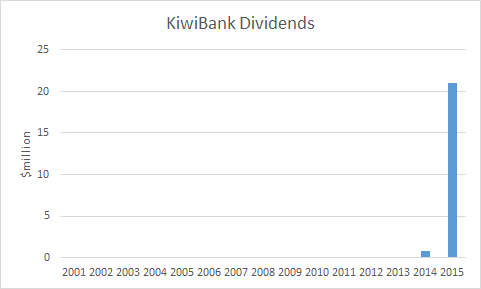
Source: KiwiBank pays its first dividend of $21 million to Government | Stuff.co.nz.
KiwiBank paid its first dividend last year. Prior to that, the bank kept all profits to allow it to expand its lending base. $20 million in foregone dividends does not go far given the actual size of all lending markets in New Zealand.
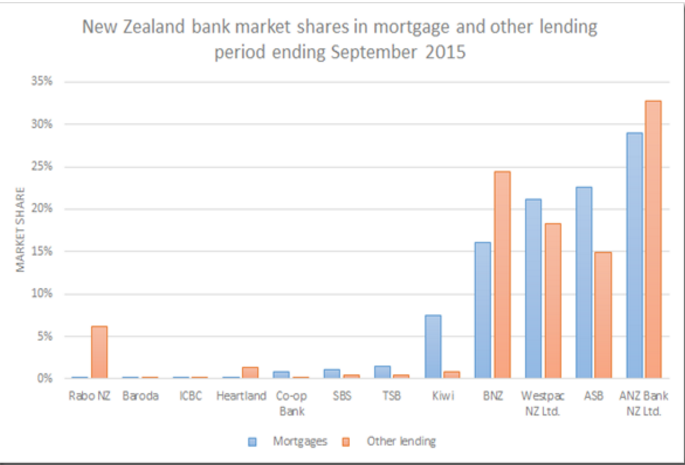
Source: G1 Summary information for locally incorporated banks – Reserve Bank of New Zealand.
KiwiBank is minnow in the mortgage market and a pimple in commercial lending. Rapid business expansion is risky in any market, much less in banking.
The government has declined further capital injections so profits were retained to meet capital adequacy ratios. The government in 2010 earmarked NZ$300 million for an uncalled capital facility for NZ Post to help maintain its credit rating and KiwiBank’s growth.
Saving the best for last, KiwiBank last year announced plans to borrow up to $150 million through an issue of BB- perpetual capital notes to be used to bolster the bank’s regulatory capital position.
The Margin for the Perpetual Capital Notes has been set at 3.65% per annum and the interest rate will be 7.25% per annum for the first five years until the first reset date of 27 May 2020. Kiwi Capital Funding Limited is not guaranteed by KiwiBank, New Zealand Post nor the New Zealand Government.
The Perpetual Capital Notes have a BB- credit rating compared to KiwiBank which has an A- rating. These capital notes were issued in addition to prior subordinate debt in the form of CHF175 million (about NZ$233 million) worth of 5-year bonds.
I doubt that KiwiBank can raise capital through subordinated debt under normal commercial conditions if it does not plan to seek profits in the same way as other commercial banks do. The current issue of Perpetual Capital Notes are already rated as junk bonds:
An issue of $150 million of perpetual capital notes from KiwiBank with a speculative, or "junk", credit rating have been priced at the bottom of their indicative margin range.
The closest the prospectus for these Perpetual Capital Notes got to complementing KiwiBank changing from a normal business to being a public good is the following risk statement:
Kiwibank’s banking activities are subject to extensive regulation, mainly relating to capital, liquidity levels, solvency and provisioning.
Its business and earnings are also affected by the fiscal or other policies that are adopted by various regulatory authorities of the New Zealand Government.
The interest rate on this subordinate debt will go up to offset the additional risk of aggressive lending and aggressive expansion, which will cancel out many of the advantages of not having to pay for dividends and the capital injection.
That discipline is one of the purposes of subordinate debt in the regulatory capital of banks. This is to provide another pair of eyes and ears to watch the performance of the bank and through rising costs of lending and risk ratings, signal trouble of imprudent lending and lack of cost control.
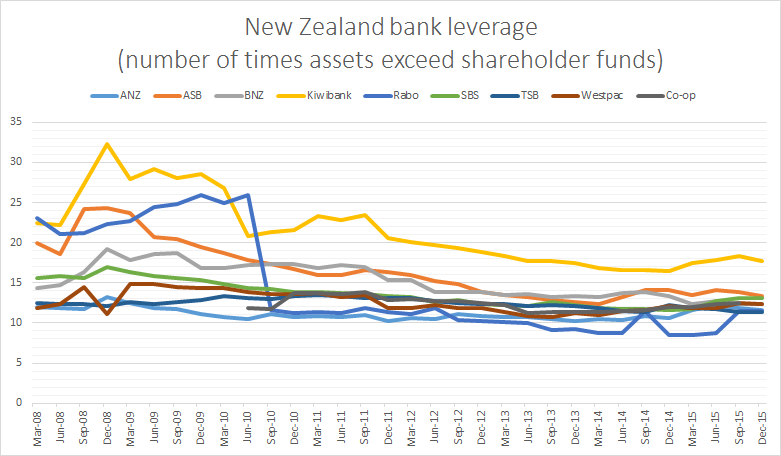
The proposal to use KiwiBank to lower mortgage rates does not add up. KiwiBank does not pay much in the way of dividends to fund such a foray. KiwiBank is already far more leveraged than any other New Zealand major bank.
 Utopia, you are standing in it!
Recent Comments