25 Aug 2016
by Jim Rose
in applied welfare economics, labour economics, politics - New Zealand, poverty and inequality
Tags: child poverty, family poverty, homelessness, social housing, social insurance, welfare state
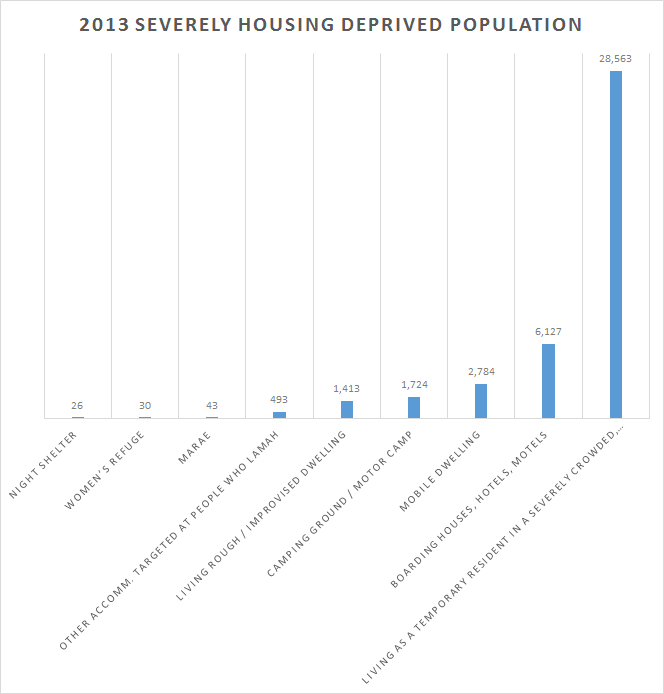
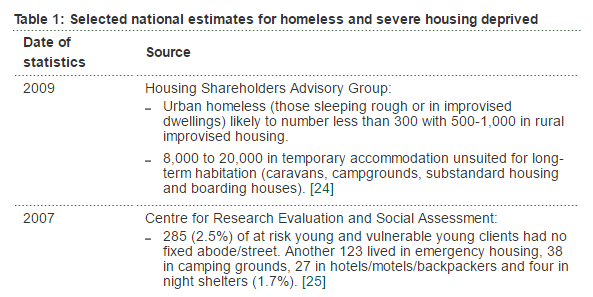
There is a difference between not having a roof over your head and being in emergency or temporary accommodation. It disrespects those who lack a roof over their head tonight to equate their grave misfortune with those fortunate enough to already be in emergency accommodation. Once they are in emergency accommodation, that shows that the system is working. Finding them somewhere to stay pending finding something more permanent.
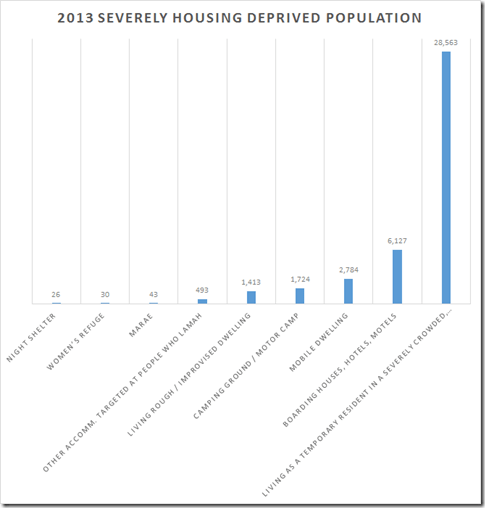
Source: 24 August 2016, Most homeless people working or studying, News, University of Otago, New Zealand, table 4.
https://twitter.com/childpovertynz/status/768631393459040256
https://twitter.com/PhilTwyford/status/768672477807456256
.
16 Aug 2016
by Jim Rose
in politics - Australia, politics - New Zealand, politics - USA, Public Choice
Tags: economics and immigration, growth of government, left-wing populists, right-wing populists, size of government, social insurance, welfare state
The Twitter Left is doing its best to attribute the surge against globalisation and immigration to inequality. This is despite the main beneficiary at the ballot box is right-wing populists.
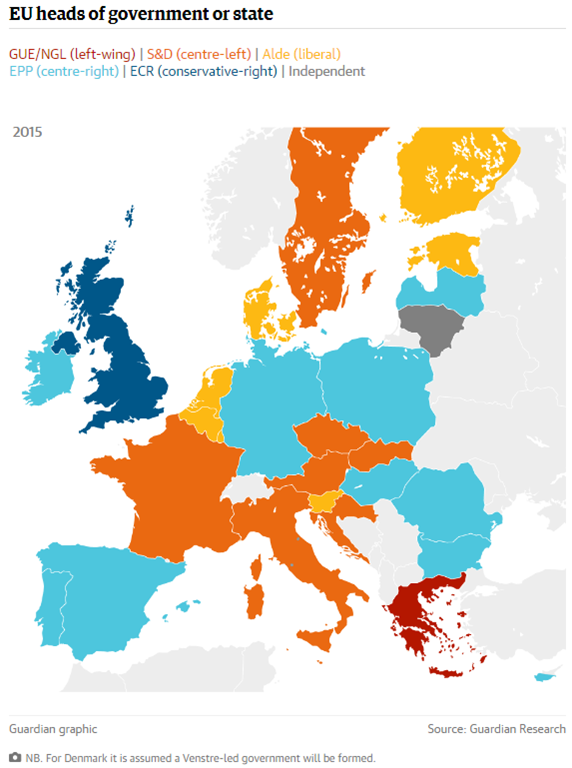
The beneficiaries in the last few years were UKIP, the French National Front, Alternative for Germany, various pro-welfare state but anti-immigration parties in the rest of Europe, Pauline Hanson and Donald Trump. Barely a left wing party in sight outside of Greece.
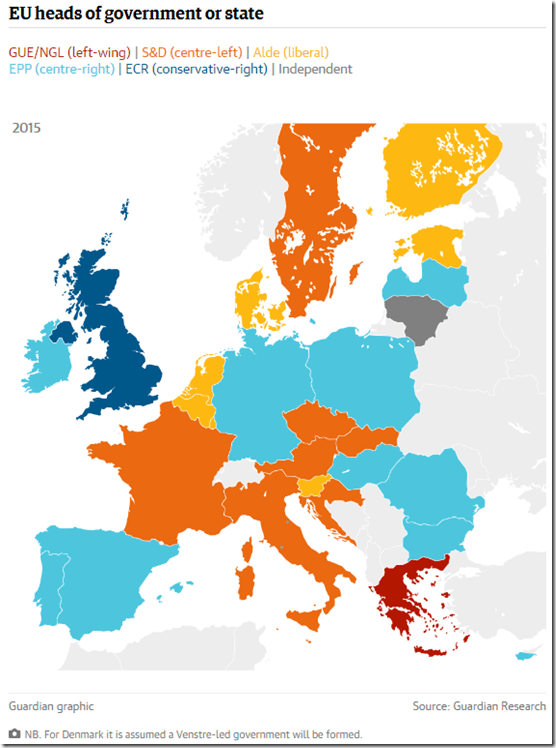
Source: Only a third of the EU is governed by the centre-left | World news | The Guardian.
Bernie Sanders is a fake left-wing populist because much of his support comes from college students and the university educated, not the aroused working class. These college students are unwilling to pay more than $1000 in taxes for the socialist revolution especially if they have a job.
At the last New Zealand election, two-thirds of the electorate voted for other than centre-left and left-wing parties. The hard left party, Mana-Internet, won 1% of the party vote despite having millions of dollars in campaign donations from a criminal fugitive hoping to avoid extradition.
These right-wing populists combine a heady brew of nationalism and social conservatism, scepticism about market competition, strong support for social security and old-age pensions but not welfare dependency, and opposition to immigration, imports and cultural change. The rise of the parties are not the first signs of an aroused working class seeking to overthrow capitalism. Face up to it.
23 Jun 2016
by Jim Rose
in applied welfare economics, income redistribution, politics - USA, poverty and inequality, public economics
Tags: expressive voting, social insurance, universal basic income
Firing the entire welfare state bureaucracy does not save the day for a universal basic income as Robert Greenstein explains
Suppose UBI provided everyone with $10,000 a year. That would cost more than $3 trillion a year — and $30 trillion to $40 trillion over ten years.
This single-year figure equals more than three-fourths of the entire yearly federal budget — and double the entire budget outside Social Security, Medicare, defense, and interest payments. It’s also equal to close to 100 percent of all tax revenue the federal government collects…
Where would the money to finance such a large expenditure come from? That it would come mainly or entirely from new taxes isn’t plausible.
We’ll already need substantial new revenues in the coming decades to help keep Social Security and Medicare solvent and avoid large benefit cuts in them. We’ll need further tax increases to help repair a crumbling infrastructure that will otherwise impede economic growth. And if we want to create more opportunity and reduce racial and other barriers and inequities, we’ll also need to raise new revenues to invest more in areas like pre-school education, child care, college affordability, and revitalizing segregated inner-city communities.
A UBI that’s financed primarily by tax increases would require the American people to accept a level of taxation that vastly exceeds anything in U.S. history. It’s hard to imagine that such a UBI would advance very far, especially given the tax increases we’ll already need for Social Security, Medicare, infrastructure, and other needs.
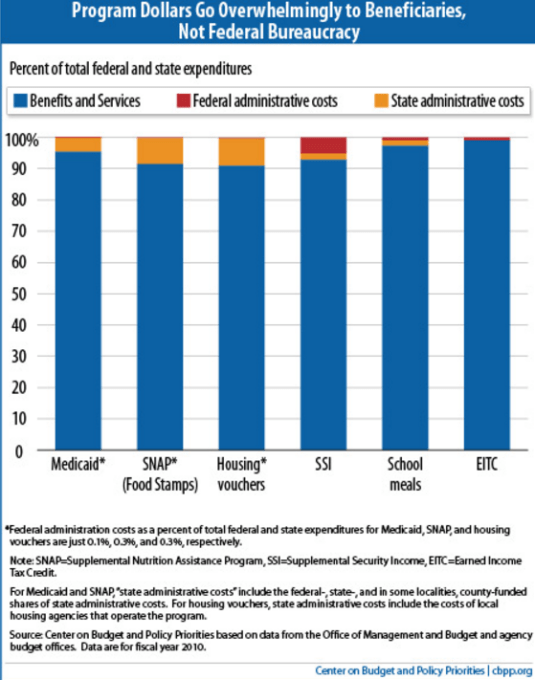
Source: Romney’s Charge That Most Federal Low-Income Spending Goes for “Overhead” and “Bureaucrats” Is False | Center on Budget and Policy Priorities
10 Jun 2016
by Jim Rose
in labour economics, labour supply, minimum wage, politics - New Zealand, poverty and inequality, public economics
Tags: child poverty, family poverty, female labour force participation, living wage, New Zealand Labour Party, single mothers, single parents, social insurance
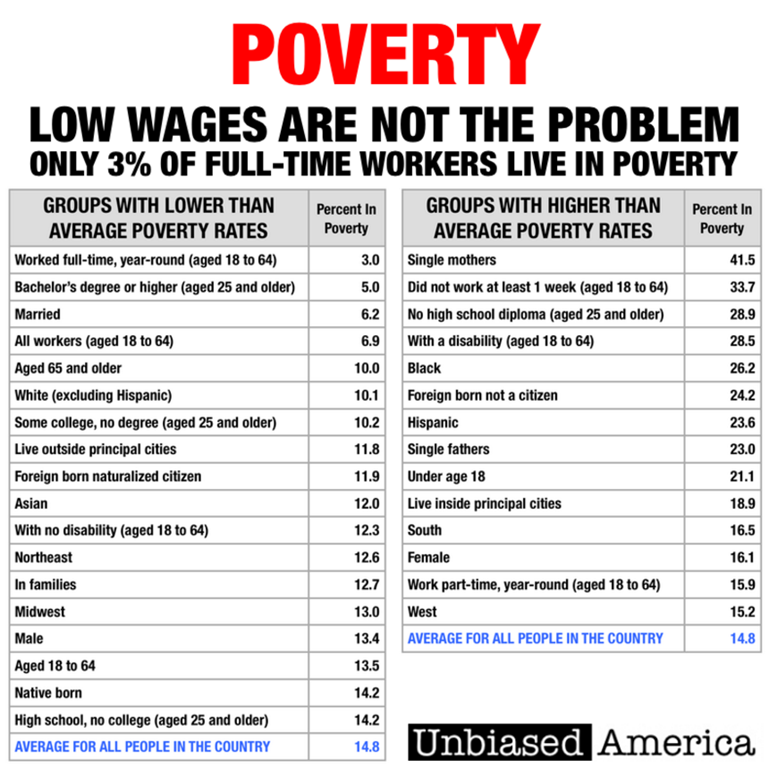
The Left thinks the solution to poverty is giving the poor more money because poverty is caused by the poor not having enough money.
Labour MP Jacinda Ardern introduced the exception in an op-ed in the Sunday Star Times. People are poor because they do not have enough money unless that is because of a lack of money because you are not married or not living with the father of the child.
Ardern was raging against a report by Lindsey Mitchell arguing that a major driver of child poverty is the breakdown of the family and the rise of single parent households. Ardern said that
I’ve spent the better part of six years reading and researching the issue of child poverty, and what we need to do to resolve this complex problem in New Zealand.
And yet here it was, the silver bullet we have all been looking for. Marriage. Getting hitched. Tying the knot. It turns out that we didn’t need an Expert Advisory Group on child poverty, or any OECD analysis for that matter – apparently all we really need is a pastor and a party
Ardern preferred to attribute the increase in child poverty to welfare benefit cuts in the early 1990s.
There is an exception within this exception for the living wage as Ardern says
But the other factors Family First was so quick to dismiss – low wages and staggering housing costs – mean we have 305,000 children in poverty. And this is the stuff that needs to change. It’s time we faced reality.
A living wage increase can solved family poverty. Actually getting a job and earning a wage does not reduce poverty among single-parent households but living wage increases do for families.

Source: Jacinda Ardern: Govt must improve the lot of our children – National – NZ Herald News.
You cannot have it both ways. That low wages cause family poverty but no wages does not.
The best solution to child poverty is to move their parents into a job. Simon Chapple is quite clear in his book last year with Jonathan Boston that.
Sustained full-time employment of sole parents and the fulltime and part-time employment of two parents, even at low wages, are sufficient to pull the majority of children above most poverty lines, given the various existing tax credits and family supports.
08 Jun 2016
by Jim Rose
in fiscal policy, labour economics, politics - Australia, politics - New Zealand, politics - USA, poverty and inequality, public economics
Tags: expressive voting, growth of government, rational rationality, size of government, social insurance, universal basic income

The universal basic income is a rare bird for the left. It is the only time the usual suspects on the left are happy to cut government bureaucracy.

Furthermore, the left makes no inquiries as to how these redundant bureaucrats who administered the welfare state will find jobs. The market is left to work its magic for once. How convenient.

When a tariff cut is proposed, a trade deal signed, or job reduction in a bureaucracy suggested perhaps as the result of a privatisation, left-wing activists chain themselves to factory gates or government offices in solidarity. The social upheaval from the job losses among existing workers and their dim prospects of reemployment are paramount in their minds.

Why in the case of a universal basic income is the left so relaxed about job losses. Indeed, it celebrates as an advantage of a universal basic income that “Most of the bureaucracy of the welfare system [is] swept away” .

The universal basic income is the only time the left welcomes a reduction in bureaucracy and the role in the state. This switch from welfare payments to a universal basic income does not make those on the benefit any better off. Normally they are worse off under a universal basic income.
None of the the less well groups which of the concern of the left gain from a universal basic income. Despite this, they sell the jobs of their comrades in the public sector down the river.

I cannot believe the explanation is job losses are OK as long as they are the result of left-wing policies. Unless the labour market is liberalised, its ability to find new jobs for workers, for example, made redundant in the public sector after the introduction of a universal basic income is not any under greater than under a right-wing policy that costs jobs.
04 Jun 2016
by Jim Rose
in labour economics, labour supply, politics - New Zealand, poverty and inequality
Tags: expressive voting, growth of government, New Zealand Labor Party, rational irrationality, size of government, social insurance, universal basic income, welfare state
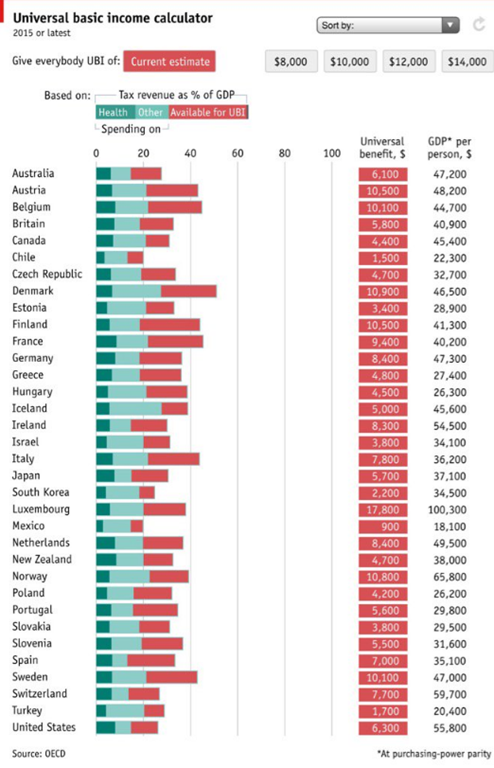
A universal basic income in New Zealand will have to be financed by a great big new tax because the existing ones are not enough according to the Economist calculations below.
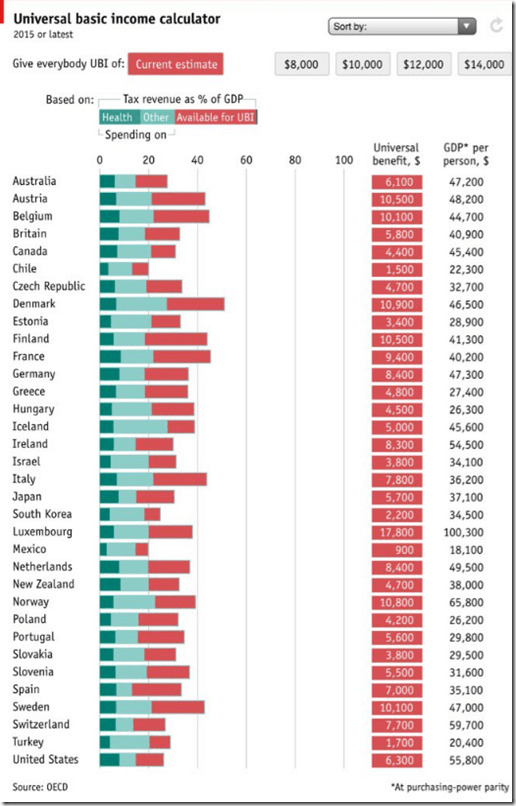
HT: Paul Kerby.
11 Apr 2016
by Jim Rose
in gender, labour economics, labour supply, politics - USA, poverty and inequality, welfare reform
Tags: 1996 US welfare reforms, 2016 presidential election, Bill Clinton, child poverty, family poverty, single mothers, single parents, social insurance, welfare state
Previous Older Entries Next Newer Entries


 Utopia, you are standing in it!
Recent Comments