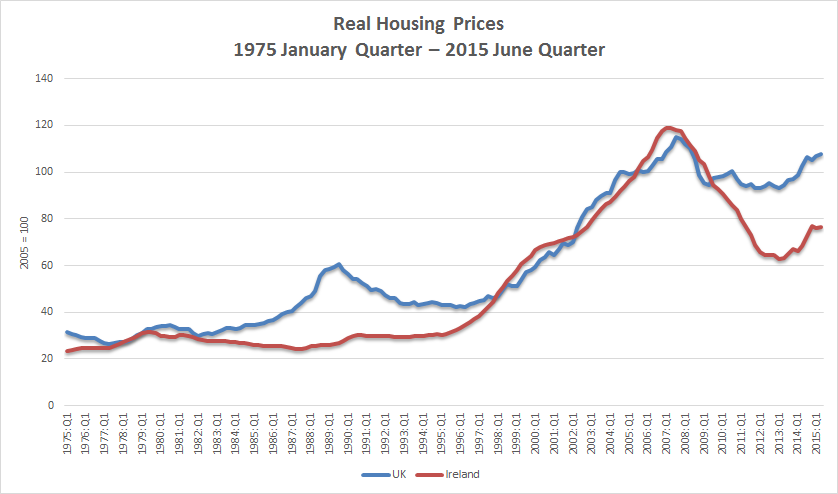
Source and notes: International House Price Database – Dallas Fed June 2015; nominal housing prices for each country is deflated by the personal consumption deflator for that country.
Celebrating humanity's flourishing through the spread of capitalism and the rule of law
18 Oct 2015 Leave a comment
in applied price theory, applied welfare economics, economic history, economics of regulation, urban economics Tags: British politics, housing prices, Ireland, land supply, land use planning, zoning
Source and notes: International House Price Database – Dallas Fed June 2015; nominal housing prices for each country is deflated by the personal consumption deflator for that country.
17 Oct 2015 2 Comments
in applied price theory, economics of regulation, politics - New Zealand, Public Choice, rentseeking, urban economics Tags: land supply, land use planning, New Zealand Greens, New Zealand Labour, RMA, zoning
The Labour Party and the Greens both plan to build 100,000 affordable houses as a way of offsetting soaring housing prices in Auckland and other New Zealand cities. These plans were announced in the 2014 Election in New Zealand.
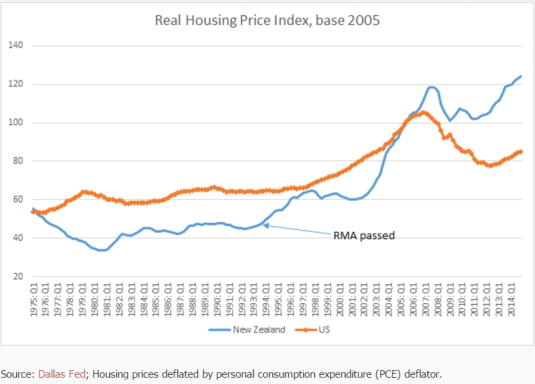
A trite but insurmountable objection to the proposal to build 100,000 affordable houses is there are no plans to increase the supply of land. That would require RMA reform which both Labour and the Greens oppose. They oppose RMA reform partly for ideological reasons and partly to cultivate middle-class home owner votes.
Unless there is an increase in the supply of land in Auckland and the other New Zealand cities, the government under the plans of the Labour Party and the Greens are building houses the private sector would have built anyway but for the government bought from the same new supply of land released every year by local councils.
The proposals of Labour and the Green to build affordable houses simply changes the identity of who builds the same number of new houses in New Zealand. There is no net increase in this supply of houses so there will not be any improvement in housing affordability.
If the supply of land were to be increased through RMA reforms, there be no need to for the government to build the houses. This is because the market will take care of building the houses on the additional land released by local councils if there is a demand for them and they’re obviously is.
Attempts by a Labour and Green Government to build affordable houses is no more than displace the efforts of private developers to supply houses but in configurations more closely aligned with market demand in terms of the quality and size of the house.
Another insurmountable but still minor objection to supplying 100,000 affordable houses is Friedman’s second law of economics: you can’t give anything away for free because people will queue up for access.
If the government is selling cheap houses to ordinary families, people change that circumstances to make themselves more eligible for the house, which presumably will be targeted by income. Easiest way to do that is to fund a low income family member such as a student to buy the house and sell it to you. Alternatively, you could make an advanced of them against their inheritances as a way of them buying a house.
The classic New Zealand example of the inability to give anything away for free was the introduction of school zoning. People now pay hundreds of thousands of dollars more for a house if it is in a favourable school zone.
A more serious objection that can never be overcome is as soon as the lucky ordinary family buys the affordable house, they will renovate it to the proper standing reflecting the underlying value of the land. Affordable houses under the plans of the New Zealand Labour Party and the Greens is to build a cheap house on expensive land in Auckland. Land in Auckland is 60% of the price of a house. Land use to be 40% of the value of the house in Auckland.

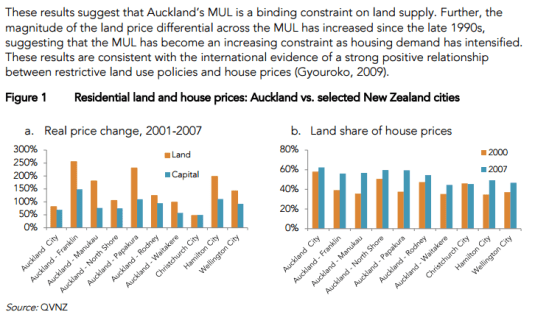
Source: New Zealand Productivity Commission (2013).
Plenty of people are in the game of home renovation; some do it as a full-time occupation. They buy an old rundown house on good land and a good location and renovate the house to match the value of the underlying land and location.
The possibility of subsequent renovation to the cheap house on the good land is the death knell of any attempt to sell affordable housing in Auckland or the other New Zealand cities where house prices are spiralling upwards because of restrictions on the supply of land.
Building 100,000 affordable houses were simply present 100,000 renovation opportunities to entrepreneurs. The families who are lucky enough to be first to buy the affordable house will get a marvellous windfall. There will be no long-term impact on the price of land in Auckland because you can’t give anything away for free. Any undervalued good as quickly resold at a profit by budding entrepreneurs after renovating the house to bring it up to market standard given the value of the underlying land.
If the Labour Party and the Greens want more affordable housing, they must support RMA reforms that will increase the supply of land. They won’t do out of sheer political expediency. Labour and the Greens want to win the votes of disgruntled National party voters who already own homes.
12 Oct 2015 Leave a comment
in economic history, politics - USA, urban economics Tags: housing affordability, housing prices, land prices, land supply, land use planning, zoning
Increase in the Cost of Housing in the US 1901-2002 bit.ly/195NbKb http://t.co/kt7pmOFPVi—
Catherine Mulbrandon (@VisualEcon) August 25, 2014
10 Oct 2015 1 Comment
in economic history, economics of regulation, environmental economics, politics - New Zealand, politics - USA, urban economics Tags: Auckland, housing affordability, land supply, land use planning, RMA, San Francisco, zoning
https://twitter.com/JoshZumbrun/status/652517712070082561/photo/1
"Your neighborhood could be next." San Francisco-wide mailer in support of Prop I, the Mission housing moratorium. http://t.co/PtN38JTaUM—
Jed Kolko (@JedKolko) October 10, 2015
@sival84 @MarketUrbanism @SFyimby More for thought: Permits vs prices for top ten tech hubs trulia.com/blog/trends/pr… http://t.co/yRvjVWDova—
Ralph B. McLaughlin (@housingnomix) October 01, 2015
17 Sep 2015 Leave a comment
in economic history, urban economics Tags: Finland, Generation Rent, housing affordability, housing prices, land supply, land use planning, NIMBYs, Norway, Sweden, zoning
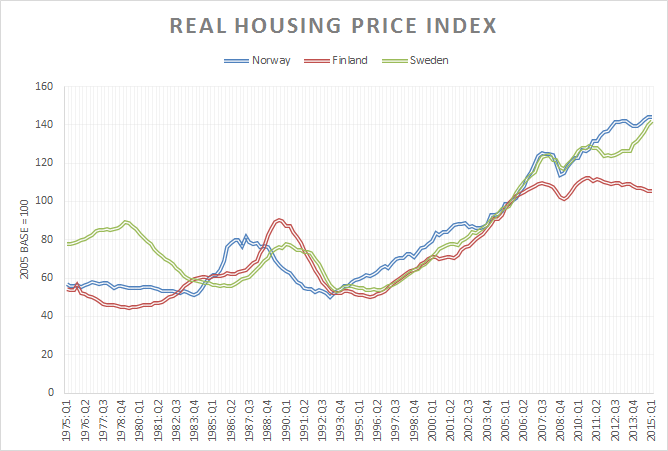
Source: International House Price Database – Dallas Fed
Note: The house price index series is an index constructed with nominal house price data. The real house price index is an index calculated by deflating the nominal house price series with a country’s personal consumption expenditure deflator.
16 Sep 2015 Leave a comment
in development economics, economic history, growth miracles, urban economics Tags: Generation Rent, housing affordability, housing prices, Japan, land supply, land use planning, NIMBYs, South Korea, zoning
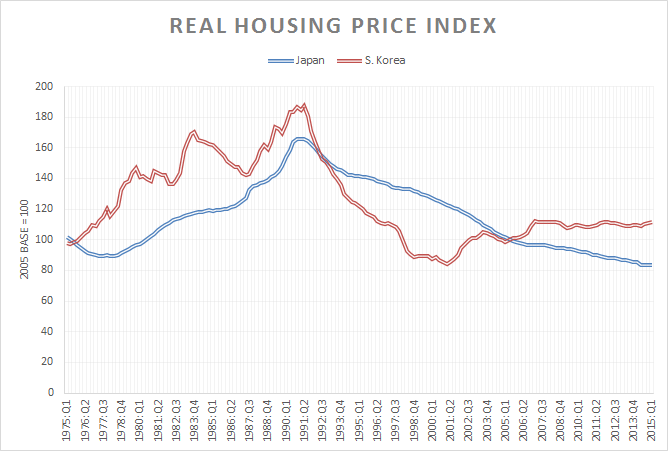
Source: International House Price Database – Dallas Fed
Note: The house price index series is an index constructed with nominal house price data. The real house price index is an index calculated by deflating the nominal house price series with a country’s personal consumption expenditure deflator.
15 Sep 2015 Leave a comment
in politics - Australia, politics - New Zealand, urban economics Tags: Australia, housing affordability, housing prices, land supply, land use planning, NIMBYs, zoning
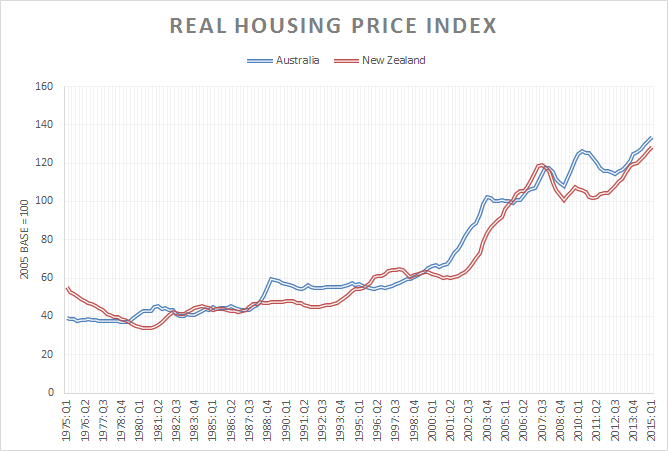
Source: International House Price Database – Dallas Fed
Note: The house price index series is an index constructed with nominal house price data. The real house price index is an index calculated by deflating the nominal house price series with a country’s personal consumption expenditure deflator
14 Sep 2015 Leave a comment
in economic history, urban economics Tags: France, Generation Rent, Germany, housing affordability, housing prices, Italy, land supply, land use planning, NIMBYs, zoning
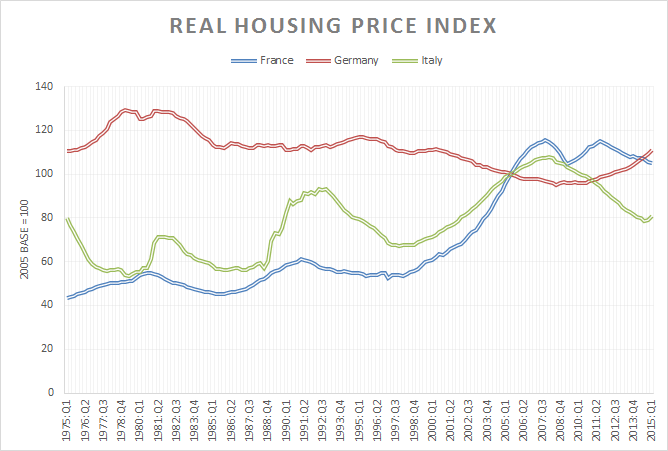
Source: International House Price Database – Dallas Fed
Note: The house price index series is an index constructed with nominal house price data. The real house price index is an index calculated by deflating the nominal house price series with a country’s personal consumption expenditure deflator.
13 Sep 2015 Leave a comment
in economic history, economics of regulation, politics - USA, urban economics Tags: British economy, British politics, housing affordability, housing prices, land supply, land use planning, NIMBYs, zoning

Source: International House Price Database – Dallas Fed
Note: The house price index series is an index constructed with nominal house price data. The real house price index is an index calculated by deflating the nominal house price series with a country’s personal consumption expenditure deflator.
13 Aug 2015 1 Comment
in applied welfare economics, economic history, economics of regulation, labour economics, politics - New Zealand, poverty and inequality, urban economics Tags: antimarket bias, child poverty, expressive voting, family poverty, green rent seeking, housing affordability, land use planning, Leftover Left, New Zealand Greens, NIMBYs, rational ignorance, rational irrationality, RMA, zoning
#moreinclusivenz @povertymonitor Killer graphs & #infographics by NZ Children's Commissioner. Shameful content, NZ http://t.co/mG987C5kh0—
Isabella Cawthorn (@fixiebelle) July 26, 2015
Nothing much has happening to child poverty before housing costs in New Zealand since the early 1980s. It is after housing costs poverty that is crucifying the children in New Zealand.
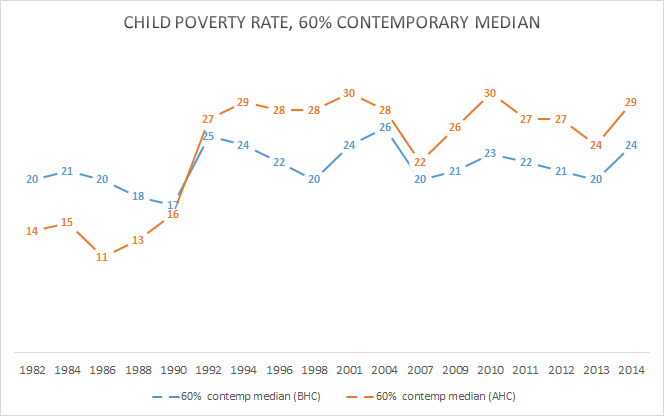
Source: Bryan Perry, Household Incomes in New Zealand: trends in indicators of inequality and hardship 1982 to 2014 – Ministry of Social Development, Wellington (August 2015), Table F6 and table F7.
An economy that is not working for all of us, is simply not working. http://t.co/zZu0LOy7ED—
Green Party NZ (@NZGreens) August 13, 2015
From HES 2013 to HES 2014 median household income rose 5% in real terms (5% above the CPI inflation rate)…
On the AHC moving line measures, child poverty rates in HES 2014 are around the same as their peak after the GFC. A good amount of the rise from HES 2013 to HES 2014 is due to the large rise in the BHC median, as noted above, rather than a change in the numbers in low income per se.
The parties that oppose measures to increase the supply of land and reduce the cost of housing through reform of the Resource Management Act and its many restraints on the supply of land are the New Zealand Labour Party and New Zealand Greens.
Children's views on poverty #childpovertynz occ.org.nz/assets/Uploads… http://t.co/wZHJ19QcpN—
Child Poverty NZ (@povertymonitor) September 08, 2015
12 Aug 2015 Leave a comment
in politics - New Zealand, politics - USA, Public Choice, rentseeking, urban economics Tags: Director's Law, expressive boating, green rent seeking, housing affordability, land supply, land use planning, Left-wing hypocrisy, NIMBYs, rational ignorance, rational irrationality, zoning
All homeowners have an incentive to stop new housing because if developers build too many homes, prices fall, and housing is many families’ main asset. But in cities with many Democrats and Green Party members, environmental concerns might also be a factor. The movement might be too eager to preserve the past.

via Why Middle-Class Americans Can’t Afford to Live in Liberal Cities – The Atlantic.
06 Aug 2015 1 Comment
in applied price theory, applied welfare economics, economics of regulation, industrial organisation, law and economics, politics - New Zealand, property rights, Public Choice, rentseeking, Richard Epstein, survivor principle Tags: common law, economics of agriculture, food snobs, green rent seeking, land use conflicts, land use planning, law of nuisance, noise pollution, nuisance, old common law, organic farming, Richard Epstein, William Blackstone, zoning
Writing this blog of sound mind and sober disposition, I still have considerable sympathy with two organic farmers over a land use conflict they have with the neighbouring gun range.

Local land use regulations allows a gun club to set up 600 m away with competitive shooting days all day for 88 days a year. That is a voluntary self restraint. They could hold shooting competitions every day of the year. The local land use regulations allow the use of guns on rural land. The gun club used this absence of a prohibition on the use of guns in the frequency of use to set up a gun range to fire guns all day long on rural land.

Now here is the rub. There something wrong with the concept of quiet enjoyment of your land if a neighbour can fire off a large amount of noises continuously. The occasional noise, the occasional gunshot yes, but all day? I live near the airport, but I knew it was there when we bought the property and the lands was a little cheaper because of that.
The organic farmers are unusually pristine and prissy about what they want by neighbours to protect the sacredness of their more expensive snob food. I’m not too sure whether they would want to grant their neighbours an equal right to unusual land uses such as opening a gun range. That said, the organic farmers do have a point about a very noisy neighbouring land use that can be heard some distance away.
The organic farmers, of course, could have negotiated with their neighbours for covenants to restrict land use that undermine there are unusually pristine requirements for quiet enjoyment of their land and their neighbours land too. Easy to do when the land is first unused, but once economic activity accumulates, not so easy in terms of transaction costs and hold-outs.

15 Jul 2015 Leave a comment
in economics of regulation, environmental economics, politics - Australia, politics - New Zealand, politics - USA, urban economics Tags: green rent seeking, Inner-city Left, land supply, land use planning, NIMBYs, zoning
22 Jun 2015 Leave a comment
in economics of regulation, politics - New Zealand, politics - USA, urban economics Tags: Auckland, land supply, land use planning, RMA, zoning
Rising mortgage rates to test U.S. housing market rebound on.wsj.com/1IsKVde http://t.co/vHDJAdM292—
Pedro da Costa (@pdacosta) June 22, 2015
Celebrating humanity's flourishing through the spread of capitalism and the rule of law
Celebrating humanity's flourishing through the spread of capitalism and the rule of law
Celebrating humanity's flourishing through the spread of capitalism and the rule of law
Celebrating humanity's flourishing through the spread of capitalism and the rule of law
Celebrating humanity's flourishing through the spread of capitalism and the rule of law
Celebrating humanity's flourishing through the spread of capitalism and the rule of law
Celebrating humanity's flourishing through the spread of capitalism and the rule of law
Celebrating humanity's flourishing through the spread of capitalism and the rule of law
Celebrating humanity's flourishing through the spread of capitalism and the rule of law
A History of the Alt-Right
Econ Prof at George Mason University, Economic Historian, Québécois
Celebrating humanity's flourishing through the spread of capitalism and the rule of law
Scholarly commentary on law, economics, and more
Beatrice Cherrier's blog
Celebrating humanity's flourishing through the spread of capitalism and the rule of law
Celebrating humanity's flourishing through the spread of capitalism and the rule of law
Celebrating humanity's flourishing through the spread of capitalism and the rule of law
Why Evolution is True is a blog written by Jerry Coyne, centered on evolution and biology but also dealing with diverse topics like politics, culture, and cats.
Celebrating humanity's flourishing through the spread of capitalism and the rule of law
A rural perspective with a blue tint by Ele Ludemann
DPF's Kiwiblog - Fomenting Happy Mischief since 2003
Celebrating humanity's flourishing through the spread of capitalism and the rule of law
The world's most viewed site on global warming and climate change
Tim Harding's writings on rationality, informal logic and skepticism
A window into Doc Freiberger's library
Let's examine hard decisions!
Commentary on monetary policy in the spirit of R. G. Hawtrey
Thoughts on public policy and the media
Celebrating humanity's flourishing through the spread of capitalism and the rule of law
Politics and the economy
A blog (primarily) on Canadian and Commonwealth political history and institutions
Reading between the lines, and underneath the hype.
Economics, and such stuff as dreams are made on
"The British constitution has always been puzzling, and always will be." --Queen Elizabeth II
Celebrating humanity's flourishing through the spread of capitalism and the rule of law
Celebrating humanity's flourishing through the spread of capitalism and the rule of law
WORLD WAR II, MUSIC, HISTORY, HOLOCAUST
Undisciplined scholar, recovering academic
Celebrating humanity's flourishing through the spread of capitalism and the rule of law
Res ipsa loquitur - The thing itself speaks
In Hume’s spirit, I will attempt to serve as an ambassador from my world of economics, and help in “finding topics of conversation fit for the entertainment of rational creatures.”
Researching the House of Commons, 1832-1868
Reflections on books and art
Posts on the History of Law, Crime, and Justice
Celebrating humanity's flourishing through the spread of capitalism and the rule of law
Exploring the Monarchs of Europe



Recent Comments