In a world with lots of problems and even more proposed policies to address each of these problems, it makes sense to study the possibilities–and then to prioritize policies with highest estimated ratio of benefits to costs. The Copenhagen Consensus think tank carried out this exercise and came up with 12 policies. A special issue…
Development Policies with the Best Benefit-Cost Ratios
Development Policies with the Best Benefit-Cost Ratios
29 May 2024 Leave a comment
in applied price theory, applied welfare economics, development economics, econometerics, growth disasters, growth miracles, public economics
India, Dependency, and the 17th Theorem of Government
28 May 2024 Leave a comment
in applied price theory, development economics, economic history, financial economics, growth disasters, growth miracles, income redistribution, macroeconomics, Public Choice, public economics, rentseeking Tags: India
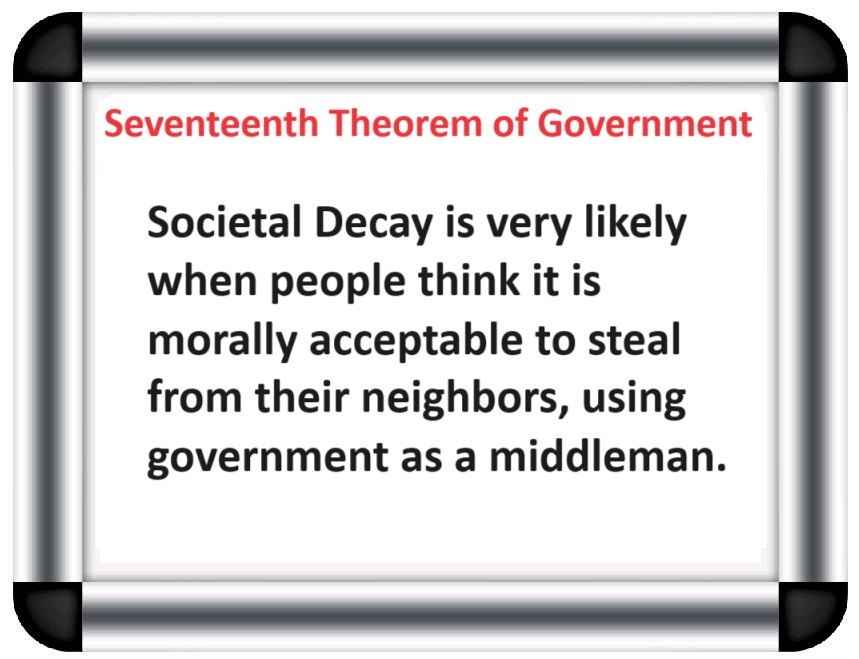
I released my First Theorem of Government in 2015 and today I’m going to unveil the 17th iteration in the series. But I’ll confess upfront that I’m doing a bit of recycling. My latest Theorem is very similar to something I shared back in 2014. I decided to upgrade my 2014 column to a Theorem […]
India, Dependency, and the 17th Theorem of Government
There’s Nothing More Expensive Than A Cheap EV
25 May 2024 Leave a comment
in applied price theory, energy economics, environmental economics, global warming Tags: electric cars
That’s a variation on an old joke about BMW’s, but it’s turning out to be even more true of EV’s: iSeeCars reported in January that, on average, “electric cars have a five-year depreciation rate of 49.1%… compared to an overall industry average of a 38.8% five-year depreciation rate.” Executive analyst Karl Brauer added, “This pattern will […]
There’s Nothing More Expensive Than A Cheap EV
Almost Observable Human Capital
24 May 2024 Leave a comment
in applied price theory, economic history, economics of education, history of economic thought, human capital, industrial organisation, labour economics, labour supply, occupational choice

Previously, we could observe a higher proportion of men than women in, say, steel fabrication and suspect that men have “some sort” of physical or mental comparative advantage related to steel fabrication. But what does that mean?
Almost Observable Human Capital
New article by some middling economists about Biden Admin. merger policy
24 May 2024 Leave a comment
in applied price theory, econometerics, industrial organisation, law and economics Tags: competition law, merger law enforcement
DETERRENCE IN MERGER REVIEW: LIKELY EFFECTS OF RECENT U.S. POLICY CHANGESBy Luke M. Froeb, Steven T. Tschantz & Gregory J. WerdenWe model likely effects of Biden Administration changes in merger enforcement on five discrete decisions in the review process. We find that the policy changes can be expected to stop many bad mergers but only at the cost…
New article by some middling economists about Biden Admin. merger policy
Claude 3 on why the US leads China and the EU in economic dynamism
21 May 2024 Leave a comment
in applied price theory, comparative institutional analysis, development economics, economics of regulation, entrepreneurship, growth miracles, industrial organisation, managerial economics, organisational economics, public economics, survivor principle Tags: taxation and entrepreneurship, taxation and investment
QUESTION TO CLAUDE 3: The EU and China lag behind the US in economic dynamism, measured by start-up activity, number of unicorns, age of unicorns (younger indicates more rapid innovation), and in productivity growth. Can you document this and tell me why?ANSWER: Here is the data to document the economic dynamism gap between the US,…
Claude 3 on why the US leads China and the EU in economic dynamism
Why prediction markets are not popular
20 May 2024 Leave a comment
in applied price theory, comparative institutional analysis, economics of information, entrepreneurship, financial economics
By Nick Whitaker and J. Zachary Mazlish, this is the best piece on this question so far. Excerpt, noting I will not double indent: “Rather than regulation, our explanation for the absence of widespread prediction markets is a straightforward demand-side story: there is little natural demand for prediction market contracts, as we observe in practice. […]
Why prediction markets are not popular
OneNews blames immigration to NZ for emigration (of young Kiwis out of NZ). Maybe they’re leaving because our Media has depressed them?
20 May 2024 Leave a comment
in applied price theory, human capital, labour economics, labour supply, politics - New Zealand, population economics Tags: economics of immigration
If a Blogger accused immigrants of nicking houses & jobs off young native NZ’ers, causing them to leave the country, then we’d likely be prosecuted under anti-freedom of speech legislation. But seems our State-owned broadcaster, OneNews, can get away with it. After all, like the Reserve Bank, TVNZ can do what it wants. Its above…
OneNews blames immigration to NZ for emigration (of young Kiwis out of NZ). Maybe they’re leaving because our Media has depressed them?
Debunking Bad Class Warfare and Debunking Nonsensical Class Warfare
19 May 2024 Leave a comment
in applied price theory, economic history, economics of education, entrepreneurship, human capital, income redistribution, industrial organisation, labour economics, labour supply, occupational choice, politics - USA, poverty and inequality, Public Choice Tags: taxation and entrepreneurship, taxation and investment

Like Thomas Piketty, Gabriel Zucman is a French economist who promotes economically destructive class-warfare tax policy. He’s also infamous for dodgy data manipulation, as Phil Magness explains in this Reason discussion. The interview lasts for 64 minutes, and I recommend the entire discussion. Yes, that’s a lot of time, but Phil has encyclopedic knowledge and […]
Debunking Bad Class Warfare and Debunking Nonsensical Class Warfare
Is it time to take the Interislander away from Kiwirail?
17 May 2024 Leave a comment
in applied price theory, economics of bureaucracy, industrial organisation, law and economics, managerial economics, politics - New Zealand, privatisation, property rights, Public Choice, survivor principle, theory of the firm, transport economics
The Herald reports: KiwiRail’s seemingly endless requests for more money is damning. At one point, KiwiRail assured Robertson when he was the Finance Minister that the worst-case scenario would be an extra $300 million before requesting $1.2 billion a few months later. Not what most people regard as worst case. It’s no wonder Ministry of Transport officials […]
Is it time to take the Interislander away from Kiwirail?
New York restaurants find a new way to respond to the minimum wage
17 May 2024 Leave a comment
in applied price theory, development economics, entrepreneurship, labour economics, labour supply, minimum wage
The New York Times (paywalled, but also available here) reported last month:At Sansan Chicken in Long Island City, Queens, the cashier beamed a wide smile and recommended the fried chicken sandwich.Or maybe she suggested the tonkatsu — it was hard to tell, because the internet connection from her home in the Philippines was spotty.Romy, who…
New York restaurants find a new way to respond to the minimum wage
The Treasury and productivity
10 May 2024 Leave a comment
in applied price theory, economic growth, economic history, human capital, labour economics, labour supply, macroeconomics, politics - New Zealand

Late last week The Treasury released a new 40 page report on “The productivity slowdown: implications for the Treasury’s forecasts and projections” (productivity forecasts and projections that is, rather than any possible fiscal implications – the latter will, I guess, be articulated in the Budget documents). In short, if (as it has) productivity growth has slowed down […]
The Treasury and productivity
The work culture that is German, something about France too
10 May 2024 Leave a comment
in applied price theory, economics of regulation
In Germany, robots must obey the sabbath pic.twitter.com/vphLpXAA0e — Matthew Yglesias (@mattyglesias) April 25, 2024 As for Canada, “Justice Minister defends house arrest power for people feared to commit a hate crime in future.“
The work culture that is German, something about France too
The Rise and Decline and Rise Again of Mancur Olson
09 May 2024 Leave a comment
in applied price theory, comparative institutional analysis, constitutional political economy, development economics, economic history, growth disasters, growth miracles, history of economic thought, income redistribution, industrial organisation, law and economics, property rights, Public Choice, public economics, rentseeking

Mancur Olson’s The Rise and Decline of Nations is one of my favorite books and a classic of public choice. Olson may well have won the Nobel prize had he not died young. He summarized his book in nine implications of which I will present four: 2. Stable societies with unchanged boundaries tend to accumulate […]
The Rise and Decline and Rise Again of Mancur Olson
Dishonest Pimping for a Global Wealth-Tax Cartel
07 May 2024 Leave a comment
in applied price theory, economic growth, economic history, entrepreneurship, human capital, income redistribution, industrial organisation, labour economics, labour supply, macroeconomics, Marxist economics, politics - USA, Public Choice, public economics Tags: taxation and entrepreneurship, taxation and investment, wealth tax
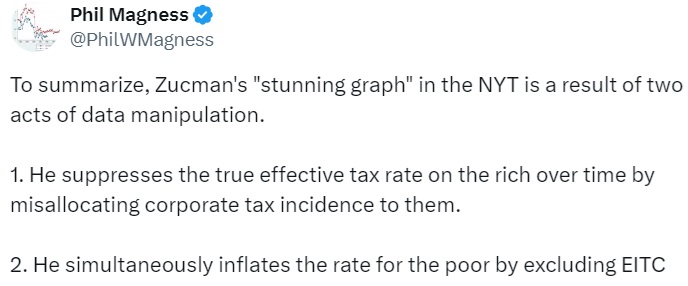
Everything you need to know about wealth taxation can be summarized in two sentences. The biggest problem with most tax systems is the pervasive tax bias against income that is saved and invested, which discourages the accumulation of capital that helps to finance future growth. Wealth taxes would dramatically increase the tax bias against saving […]
Dishonest Pimping for a Global Wealth-Tax Cartel


Recent Comments