
Only one line in this chart matters
04 Jul 2015 Leave a comment
in applied welfare economics, development economics, economic history, growth disasters, growth miracles Tags: capitalism and freedom, child poverty, extreme poverty, global poverty, Malaysia, The Great Escape, The Great Fact
In #Malaysia inequality and poverty are falling.
More at: bit.ly/1KLUA02 http://t.co/aXEmuA0bnb—
Max Roser (@MaxCRoser) July 02, 2015
Doing business in the PIGS (Portugal, Italy, Greece and Spain) – World Bank rankings
03 Jul 2015 Leave a comment
in applied price theory, applied welfare economics, currency unions, economic growth, economics of bureaucracy, economics of regulation, Euro crisis, health and safety, income redistribution, industrial organisation, labour economics, law and economics, minimum wage, occupational regulation, property rights, Public Choice, rentseeking, survivor principle, unions, welfare reform Tags: cost of doing business, Eurosclerosis, Greece, Italy, PIGS, Portugal, Spain
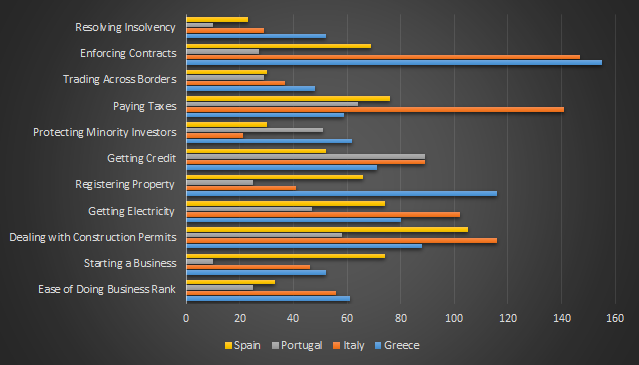
Figure 1: Doing Business rankings, PIGS, 2014
Source: World Bank Doing Business 2015.
All in all, Italy and Greece are a dog of a place to enforce a contract. The long-suffering taxpayer is better off paying taxes in Greece than in Italy! Not surprisingly, trading across borders is the greatest strength in doing business in the PIGS. The European Union does have some benefits.
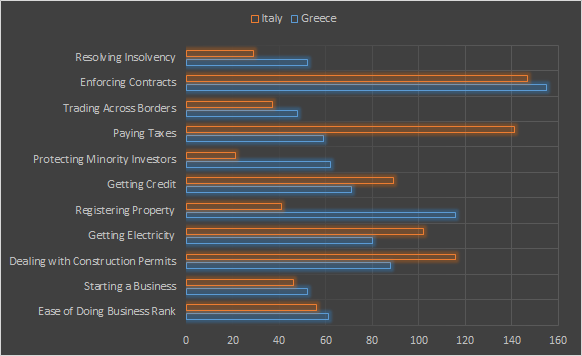
Figure 2: Doing Business rankings, Greece and Italy, 2014
Source: World Bank Doing Business 2015.
All in all, Italy and Greece are equally bad places to do business and Italy is much worse when it comes to taxes. About the only saving graces of Italy is the registration of property and the protection of minority interests in companies.
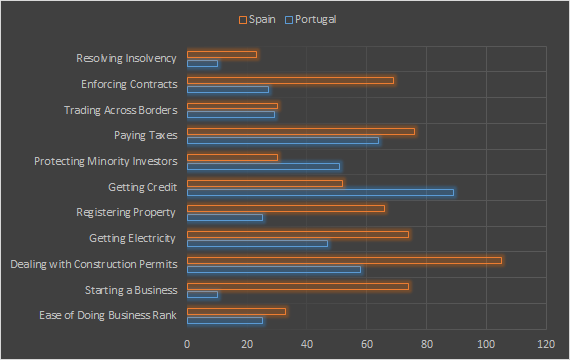
Figure 3: Doing Business rankings, Spain and Portugal, 2014
Source: World Bank Doing Business 2015.
Spain and in particular Portugal are much better places to do business than Italy and Greece.

New Zealand is an anomaly in the OECD Better Life index
02 Jul 2015 Leave a comment
in applied welfare economics, politics - New Zealand Tags: New Zealand, OECD Better Life Index
OECD Better Life Index correlates with GDP
But US lower than poorer countries
& NZL higher than richer countries http://t.co/yrTCnO1B0l—
Max Roser (@MaxCRoser) June 26, 2015

Extreme poverty is not the same thing as digital poverty
01 Jul 2015 Leave a comment
Percentage of people around the world who own smartphones, via @conradhackett. Note #China. http://t.co/wAOmIklVbW—
Legatum Institute (@LegatumInst) May 30, 2015
Down and out in Australia as measured by consumer durables affordability
30 Jun 2015 Leave a comment
in applied welfare economics, economic history Tags: Australia, living standards, The Great Enrichment
Economic freedom improves everyone's lives – especially the poor – as this graph from the IPA's @NovakMikayla shows: http://t.co/5qHIRcVRcN—
InstofPublicAffairs (@TheIPA) April 17, 2015

Food is now much smaller share of the average family’s budget than in the 60s
28 Jun 2015 Leave a comment
in applied welfare economics, labour economics, population economics, welfare reform Tags: child poverty, family poverty, poverty line, poverty measurement, statistics
Bicycles (at night) must go!
26 Jun 2015 5 Comments
in applied welfare economics, health and safety, transport economics
I had an unnerving near miss at my local roundabout tonight with a bike as I was turning left. The bicycle appeared out of nowhere on my right in the middle of the roundabout as I glanced of the left to check again while turning so I crash stopped.
The bike had a light at the front but wasn’t visible to me until it was halfway into the roundabout when I glanced of the right again. The bike rider was going into that roundabout at a good speed against a wall of car lights behind it, so it was impossible to see it until it was close to the door of my car because of the background of car lighting after dark.

Bike riders have an overinflated self-perception of their visibility at night. Not surprisingly, more accidents happen during peak hours when drivers think motorists can see them when they cannot. 
Even on an empty road, bicycles are not easy to see at night – certainly there not as perceived as quickly as cars. Bicycles are a much more dangerous transport mode than driving a car.
A recent study found the bicycle lighting is overrated as a method of making bikes more conspicuous – perceptions of visibility do not necessarily match reality:
The presence of a bicycle light, whether static or flashing, did not enhance the conspicuity of the bicyclist; this may result in bicyclists who use a bicycle light being overconfident of their own conspicuity at night.
Consider this thought experiment. Suppose bicycles have never been invented until tonight. The business case for allowing them on to the road is as follows:
- Certain pedestrians should be allowed to share the road with cars as long as these pedestrians travel quickly on a metal contraption that is slower than cars, but still allows them to move relatively quickly;
- These fast moving pedestrians are near invisible in rear-view mirrors;
- These fast moving pedestrians should be allowed on the road at night when their visibility is poor against an every-varying contrast of a moving landscape;
- These pedestrians moving quickly at night on the road are overconfident in the extent to which drivers perceive their presence against a moving landscape; and
- Older drivers are 50% less likely to perceive the presence of a bike with lights and illumination at night than are younger drivers.
Would that business case pass under the precautionary principle championed by environmentalists, many of whom are bicyclists? Would that business case pass under normal cost benefit analysis? I say no. Bicycles at night must go.
HL Mencken on the Harmful Digital Communication Bill
26 Jun 2015 Leave a comment
in applied price theory, applied welfare economics, comparative institutional analysis, constitutional political economy, economics of crime, economics of media and culture, economics of regulation, law and economics, liberalism, politics - New Zealand, Public Choice Tags: chilling effect, disorderly conduct, free speech, infotopia, Internet trolls, meddlesome preferences, nanny state, offsetting behaviour, The fatal conceit, The pretence to knowledge, unintended consequences
More heat than light in the recent inequality debate
26 Jun 2015 1 Comment
The rise in articles about inequality in NZ sure doesn't match the data on inequality.
youtube.com/watch?v=uCT7aE… http://t.co/z2eWKgXJiL—
Eric Crampton (@EricCrampton) June 26, 2015
"You didn’t build that" – which of sport superstars, celebrities and top CEOs earn their pay more?
25 Jun 2015 Leave a comment
in applied price theory, applied welfare economics, entrepreneurship, financial economics, industrial organisation, Marxist economics, politics - New Zealand, politics - USA, rentseeking, sports economics, survivor principle Tags: CEO pay, Leftover Left, obama, superstar wages, superstars, top 1%
Defenders have also pointed to the pay of pro ballplayers or Hollywood stars, but they do not determine their own pay (as CEOs do) and are paid based on performance. Once they begin to fail, they are dumped. By contrast, CEO pay isn’t tied to performance in any meaningful way.
It’s a big concession to say that athletes and celebrities earn their pay but top CEOs don’t. Most of all, that concession changes the case against the top 1% from inequality to just desert – a big shift in theories of distributive justice. It’s also a big risk to base the argument for greater equality and a 80% top tax rate not only on the excesses of CEOs but on the very specific and testable hypothesis that these CEOs determine their own pay.
if we are to look at CEOs, top athletes and Hollywood celebrities, it is the athletes and celebrities who benefited the most from the windfall of been able to service huge markets through the global media market.
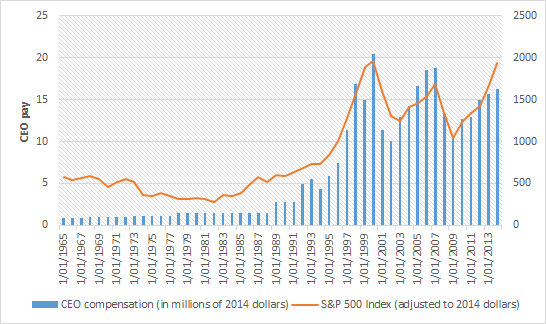
Figure 1: CEO pay and share market performance
Source: Economic Policy Institute.
CEOs actually have to run large complex companies to earn their pay, which is why their compensation tracks the share market relatively closely. Athletes and celebrities don’t do that what they do any better than in the past. They simply do it in front of a global media market. Since the late 1970s, the ratio of average pay of CEOs of large public companies to the average market value of those companies has stayed relatively constant: CEO pay grew hand in hand with corporations.
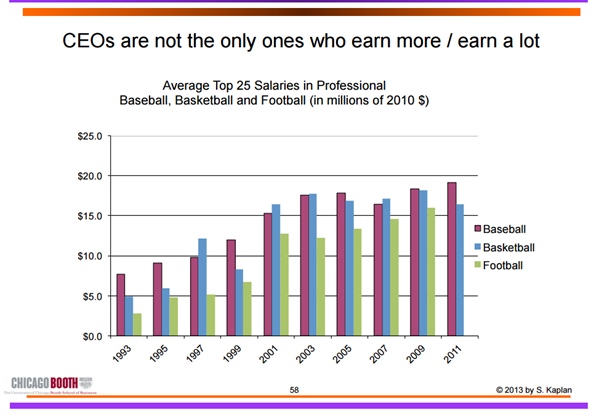
Steven Kaplan and Joshua Rauh make a number of basic points backed up by detailed evidence about CEO pay:
- While top CEO pay has increased, so has the pay of private company executives and hedge fund and private equity investors;
- ICT advances increase the pay of many – of professional athletes (technology increases their marginal product by allowing them to reach more consumers), Wall Street investors (technology allows them to acquire information and trade large amounts more easily), CEOs and technology entrepreneurs in the Forbes 400; and
- Technology allows top executives and financiers to manage larger organizations and asset pools – a loosening of social norms and a lack of independent control of CEO pacesetting does not explain similar increases in pay for private companies– technology explains it;
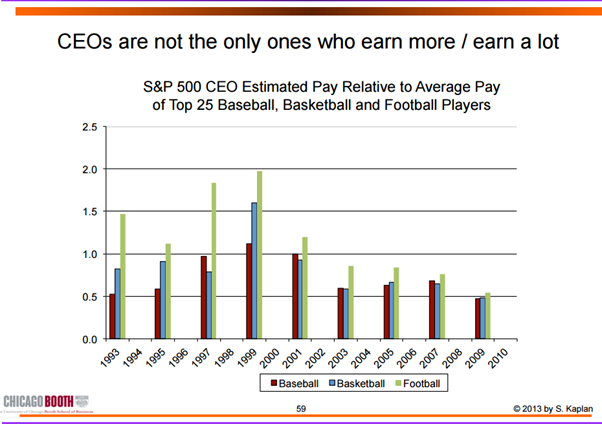
To put it simply:
If the reason for growth of incomes at the very top is, say, managerial power in publicly owned companies, then one would expect the increases in income at the top levels to be much larger for that group.
But the breadth of the occupations that have seen a rise in top income levels is much more consistent with the argument that the increase in “superstar” pay (or pay at the top) has been driven by the growth of information and communications technology, and the ways this technology allows individuals with particular skills that are in high demand to expand the scale of their performance.
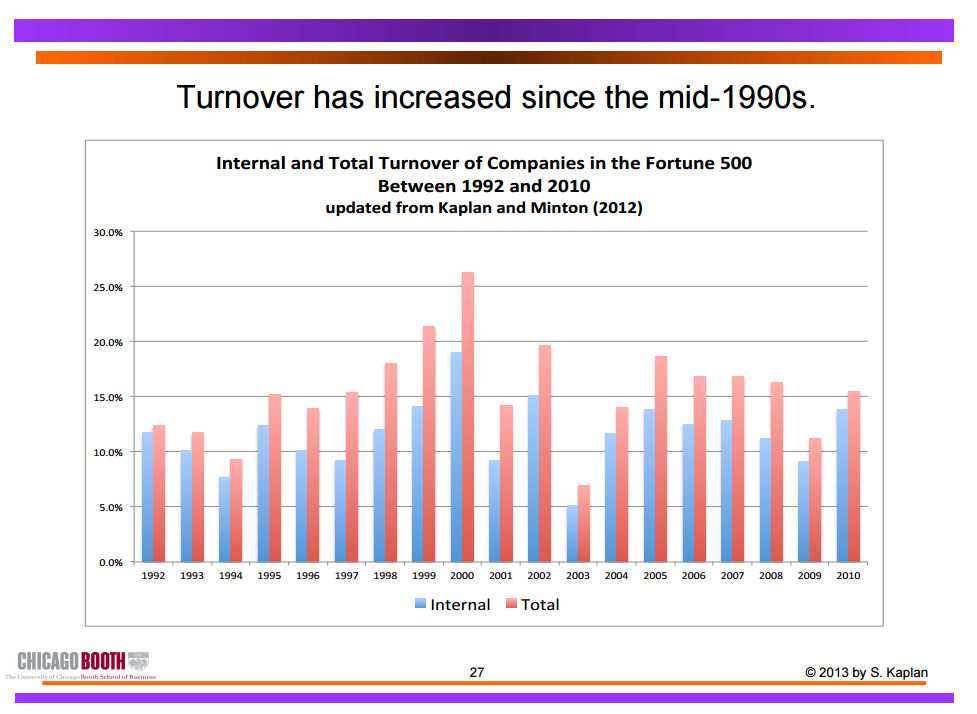
As for the turnover argument, that underperforming athletes and celebrities are dropped, prior to the GFC, CEO turnover was already on the rise:
Turnover is 14.9% from 1992 to 2005, implying an average tenure as CEO of less than seven years. In the more recent period since 1998, total CEO turnover increases to 16.5%, implying an average tenure of just over six years.
Internal turnover is significantly related to three components of firm performance – performance relative to industry, industry performance relative to the overall market, and the performance of the overall stock market.
Only 21.3% of CEOs in 1992 remained in that role in 1999; only 16.35% of CEOS on the job in 2000 were there in 2007. In any given year, one out of six Fortune 500 CEOs loses their jobs, compared to one out of 10 in the 1970s.
Dirk Jenter and Fadi Kanaan in a study of of 3,365 CEO turnovers from 1993 to 2009 found that:
CEOs are significantly more likely to be dismissed from their jobs after bad industry and, to a lesser extent, after bad market performance. A decline in industry performance from the 90th to the 10thpercentile doubles the probability of a forced CEO turnover.
In another study, Kaplan found that average CEO pay increased substantially during the 1990s, but declined by more than 30% from peak levels reached around 2000.
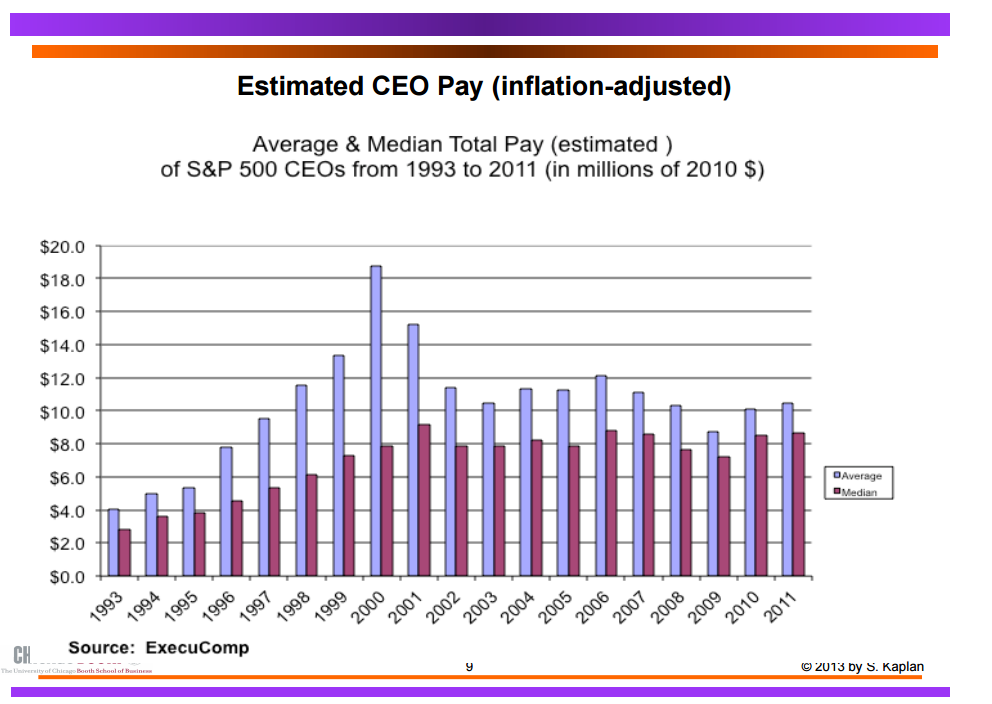
In addition, private company executives have seen their pay increase by at least as much as public companies. Private company executives with fewer agency problems have increased by more than public company executives. To close with another quote from Kaplan:
The point of these comparisons is to confirm that while public company CEOs earn a great deal, they are not unique. Other groups with similar backgrounds–private company executives, corporate lawyers, hedge fund investors, private equity investors and others—have seen significant pay increases where there is a competitive market for talent and managerial power problems are absent.
Again, if one uses evidence of higher CEO pay as evidence of managerial power or capture, one must also explain why these professional groups have had a similar or even higher growth in pay. It seems more likely that a meaningful portion of the increase in CEO pay has been driven by market forces as well.
@MaxRashbrooke The top 1% in New Zealand are lazy and incompetent as a ruling class
24 Jun 2015 1 Comment
in applied price theory, applied welfare economics, economic history, entrepreneurship, health and safety, human capital, industrial organisation, liberalism, Marxist economics, poverty and inequality, Rawls and Nozick, unions Tags: capitalism and freedom, Class war, Joan Robinson, Joseph Schumpeter, social insurance, The Great Enrichment, top 1%, welfare state, withering away in the proletariat
New work by Chris Ball and John Creedy shows substantial *declines* in NZ inequality.
initiativeblog.com/2015/06/24/ine… http://t.co/f94fw4Bhae—
Eric Crampton (@EricCrampton) June 24, 2015
The top 1% in New Zealand really have been dropping the class war ball for at least a generation.
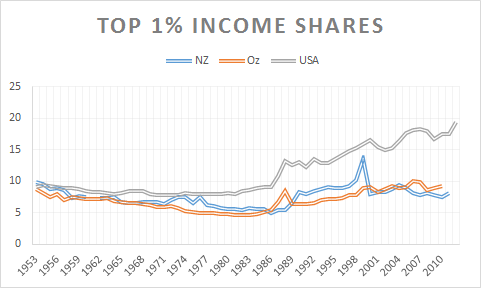
Source: The World Top Incomes Database.
Not only have the New Zealand top 1% been pretty miserable at increasing their share of incomes, hardly any change since 1990 and not much before that, the top 1% allowed inequality in both consumption and disposable income to actually fall since 1990 as shown by Treasury analysis published today.
Joan Robinson was on to this in the 1940s when she said the battle cry of Marxists would have to change from the 1848 version “rise up ye workers, rise up for you have nothing to lose but your chains” to “rise up ye workers, rise up for you have nothing to lose but the prospect of a suburban home and a motorcar”.

Today that battle cry of the Marxist revolution would have to be “rise up ye workers rise up for you have nothing to lose but your iPhone and your air points”. As Joan Robinson observed in the 1940s, that’s not much of a basis for a revolutionary movement.
 Utopia, you are standing in it!
Recent Comments