Maggie Thatcher on the Greek crisis
17 Jul 2015 Leave a comment
in applied welfare economics, budget deficits, comparative institutional analysis, constitutional political economy, currency unions, economic growth, economic history, economics of regulation, Euro crisis, fiscal policy, income redistribution, macroeconomics, Marxist economics, Public Choice, rentseeking Tags: Greece, growth of government, Margaret Thatcher, size of government
Latin American populism versus the East Asian Tigers
17 Jul 2015 Leave a comment
in comparative institutional analysis, constitutional political economy, development economics, economics of bureaucracy, growth disasters, growth miracles, income redistribution, Public Choice, rentseeking Tags: East Asian Tigers, Latin American populism
Growth paths of #LatAm & the Caribbean the South East Tigers: wrld.bg/NCtLt #RiseoftheSouth http://t.co/IFuUOWldox—
World Bank Pubs (@WBPubs) May 31, 2015
Capitalism and The Great Fact in China
17 Jul 2015 Leave a comment
in applied price theory, applied welfare economics, comparative institutional analysis, development economics, economic history, economics of education, economics of regulation, entrepreneurship, environmental economics, growth disasters, growth miracles, history of economic thought, industrial organisation, Marxist economics, Public Choice Tags: capitalism and freedom, China, fall of communism, Leftover Left, transitional economies
As China grew freer economically, its poverty rate fell. buff.ly/1KohOxS http://t.co/OpaxOzNdNs—
HumanProgress.org (@humanprogress) June 29, 2015
And the rich got richer, who cares
16 Jul 2015 Leave a comment
in applied price theory, applied welfare economics, Austrian economics, comparative institutional analysis, constitutional political economy, development economics, economic history, economics of bureaucracy, economics of education, economics of regulation, economics of religion, energy economics, entrepreneurship, environmental economics, financial economics, growth disasters, growth miracles, income redistribution, industrial organisation, international economics, labour economics, labour supply, liberalism, poverty and inequality, Public Choice, rentseeking, survivor principle, transport economics, urban economics Tags: Deirdre McCloskey, entrepreneurial alertness, The Great Enrichment, The Great Escape, The Great Fact, top 1%
"The rich got richer, true. But…" —@DeirdreMcClosk buff.ly/1Imdv4o http://t.co/M3ERx3JTIn—
HumanProgress.org (@humanprogress) June 28, 2015
Should Majorities Decide Everything?
15 Jul 2015 Leave a comment
in comparative institutional analysis, constitutional political economy, economics of bureaucracy, income redistribution, liberalism, Public Choice, rentseeking Tags: constitutional law, expressive voting, median voter theorem, Mike Munger, rational ignorance, rational irrationality, tyranny of the majority
Global poverty is in free fall – what does Oxfam have to say about what caused this?
14 Jul 2015 Leave a comment
in applied welfare economics, comparative institutional analysis, constitutional political economy, development economics, economic history, economics of bureaucracy, growth disasters, growth miracles, liberalism, Marxist economics, Public Choice Tags: extreme poverty, global poverty, ODA, overseas aid, Oxfam, professional activists, professional do-gooders, The Great Escape, The Great Fact
The world is getting better all the time, in 11 maps and charts vox.com/2015/7/13/8908… http://t.co/cBbN4L0dqF—
Vox (@voxdotcom) July 13, 2015
William Easterly on the Tyranny of Experts and the Forgotten Rights of the Poor
13 Jul 2015 Leave a comment


Naomi Klein versus The Great Fact
12 Jul 2015 Leave a comment
in comparative institutional analysis, development economics, economic history, growth disasters, growth miracles Tags: activists, do gooders, evidence-based policy, extreme poverty, global poverty, Naomi Klein, The Great Enrichment, The Great Fact
71% of the world live on less than $10 per day buff.ly/1D5kA3c http://t.co/GLCifBBOGP—
Business Insider (@businessinsider) July 11, 2015
Extreme poverty declined > 50% from 1.9 bil in '90 to 836 mil today: on.undp.org/Ppj00 #WPD2015 #MDGs http://t.co/vUDO5AYd4H—
UN Development (@UNDP) July 12, 2015
Starting a business rankings in the USA, UK, Germany and France compared
11 Jul 2015 Leave a comment
in applied price theory, applied welfare economics, comparative institutional analysis, economics of regulation, industrial organisation, law and economics, politics - USA, property rights Tags: British economy Doing Business, France, Germany, World Bank
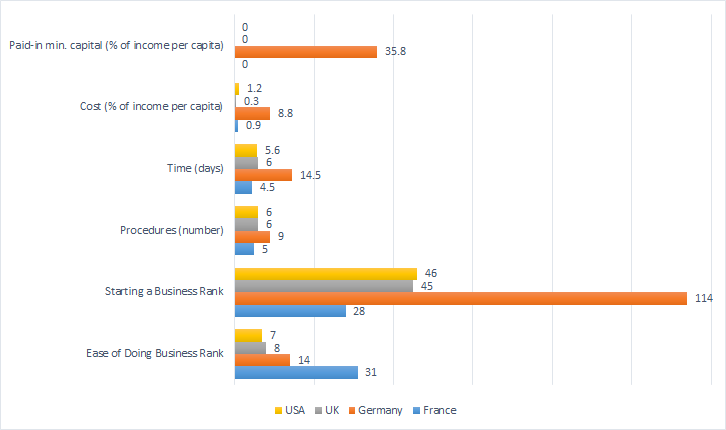
Figure 1: Starting a business rankings, USA, UK, Germany and France – World Bank Doing Business rankings, 2014
Source: Doing Business – Measuring Business Regulations – World Bank Group.
I have no idea why you have to pledge one third of German per capita income to start a business in Germany. It takes about a week and a half a dozen procedures to start a business in the other countries.
In New Zealand, you can start a business within the hour by registering for GST and registering your company online.
The left-wing solution to Greek bankruptcy
10 Jul 2015 Leave a comment
in applied price theory, applied welfare economics, comparative institutional analysis, constitutional political economy, currency unions, fiscal policy, global financial crisis (GFC), income redistribution, liberalism, macroeconomics, Marxist economics, Public Choice, public economics, rentseeking Tags: Eurosclerosis, expressive voting, Greece, rational ignorance, rational irrationality, sovereign default
Doing Business in France, Germany and the UK – World Bank rankings compared
10 Jul 2015 Leave a comment
in applied price theory, applied welfare economics, comparative institutional analysis, economics of regulation, industrial organisation, law and economics, property rights Tags: British economy, doing business, France, Germany, World Bank
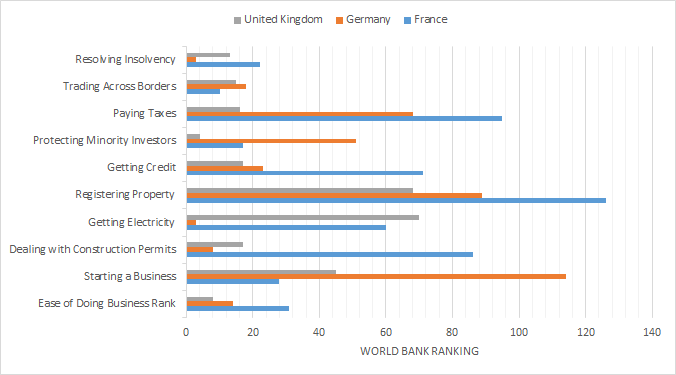
Figure 1: World Bank Doing Business rankings, France, Germany and the UK, 2014
Source: Doing Business – Measuring Business Regulations – World Bank Group.
Some things are decidedly harder to do in Germany and France than for businesses in the UK. On the other hand, it is surprisingly hard to register property in all three countries including the UK after 700 years of the blessings of the British common law.
Paying taxes in Germany and France are far harder than in the UK. Don’t have anything to do with construction permits in France unless you must. It is surprisingly hard to get the electricity on in the UK and France.
The European Union must have some benefits when it comes to trading across the borders of all three countries. Only problem is in Germany where it is very difficult to start a business in the first place. Why is for a later posting.
OECD starting a business rankings (New Zealand (1st) to Germany (114th)) – World Bank Doing Business rankings
09 Jul 2015 Leave a comment
in applied price theory, applied welfare economics, comparative institutional analysis, economics of regulation, industrial organisation, law and economics, politics - Australia, politics - New Zealand, politics - USA, property rights Tags: British economy, doing business, France, Germany, Italy, World Bank
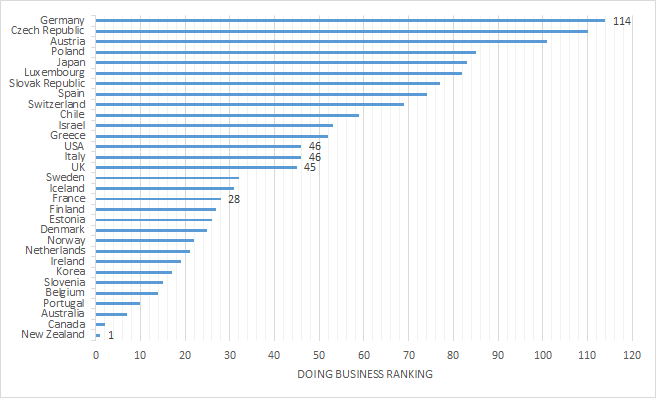
Figure 1: Starting a business rankings – World Bank Doing Business rankings, OECD countries, 2014
Source: Doing Business – Measuring Business Regulations – World Bank Group.
There is surprising wide range in the World Bank Doing Business ranking of the difficulty and delays in starting a business across the OECD.
Germany is ranked 114 from the world for starting a business. New Zealand is ranked first with the USA, Italy and the UK ranked in the mid 40s in the Doing Business database.
Can NZ double migrant investors and entrepreneurs from $3.5 billion to $7 billion at no cost to taxpayers!?
07 Jul 2015 Leave a comment
in applied price theory, applied welfare economics, comparative institutional analysis, economics of bureaucracy, entrepreneurship, income redistribution, industrial organisation, managerial economics, organisational economics, politics - New Zealand, Public Choice, public economics, rentseeking, survivor principle Tags: corporate welfare, entrepreneurial alertness, industry policy, industry targeting, The fatal conceit, The pretence to knowledge
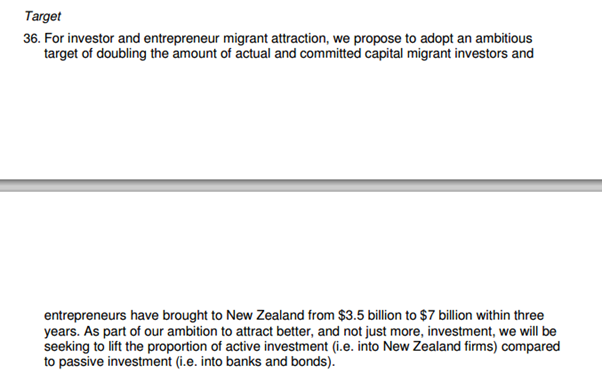

I didn’t notice any discussion in the Cabinet paper of a government doing this before and whether their investment promotion efforts succeeded or not. This latest policy proposal cannot even count as evidence-based policy dreaming, much less a serious contribution to public policy.

Hoping to double incoming foreign investor and entrepreneur migration from $3.5 billion to $7 billion inside three years without spending any extra public money is breathless public policy making. I am sure lots of governments previously tried to get something for nothing.

It will be helpful if ministers pointed to where overseas governments have been successful in doubling foreign investment by simply reprioritising existing investment promotion efforts.

There are at least 2,500 national, provincial and city investment promotion agencies out. Some of them must have been subject to some sort of evaluation as to their success.

This overseas literature review would be in addition to the recent findings of the Ministry of Economic Development about the poor performance and perhaps futility of the foreign direct investment promotion by New Zealand Trade and Enterprise.
Imagine how much bigger a boost in foreign investor and entrepreneur migration lays before us if actual real new money was put on the table.
via beehive.govt.nz – Strategy targets international investors and Evaluation of NZTE investment support activities [929 KB PDF]
.


Recent Comments