Chileans' life expectancy is now higher than Americans', while Venezuela's still catching up https://t.co/PMJ9e3TTly pic.twitter.com/T8Nje1gmtK
— Human Progress (@HumanProgress) January 14, 2016
Chileans’ life expectancy is now higher than Americans’, while Venezuela’s still catching up
08 Feb 2016 1 Comment
in development economics, economic history, growth disasters, growth miracles, health economics Tags: Chile, life expectancies, The Great Escape, Venezuela
@paul1kirby why does @OECD claim that Indians trust their judicial system so much?
07 Feb 2016 Leave a comment
in development economics, economics of regulation, growth disasters, law and economics, property rights Tags: bribery and corruption, capitalism and freedom, doing business, economics of corruption, Index of Economic Freedom, India, rule of law
For a country riddled with corruption, Indians report the surprising amount of confidence in their courts despite the corruption in those courts as well.
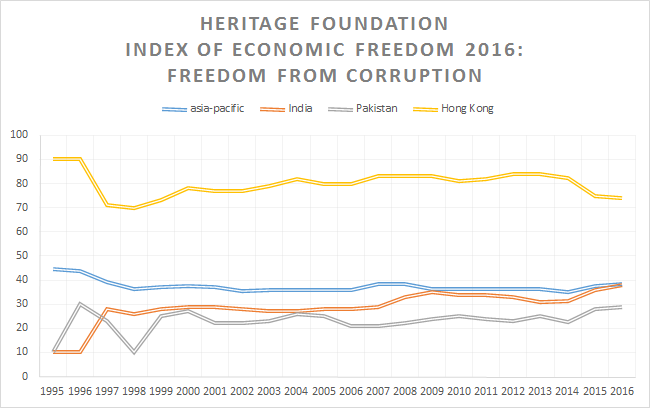
Source: Index of Economic Freedom.

#TPPANoWay @oxfamNZ @GreenpeaceUSA The Effects of Globalization
07 Feb 2016 Leave a comment
in applied price theory, applied welfare economics, development economics, economic history, growth disasters, growth miracles, international economics, Marxist economics Tags: customs unions, expressive voting, free trade, Leftover Left, ODA, preferential trading agreements, rational ignorance, rational irrationality, The Great Escape, The Great Fact, TPA, TPPA, Twitter left, Tyler Cowen
Why Does 1% of History Have 99% of the Wealth? @Oxfam #TPPANoWay
06 Feb 2016 Leave a comment
in development economics, economic history, growth disasters, growth miracles, history of economic thought, international economics Tags: capitalism and freedom, free trade, global poverty, globalisation, industrial revolution, international technology diffusion, technology diffusion, The Great Enrichment, The Great Fact, TPPA
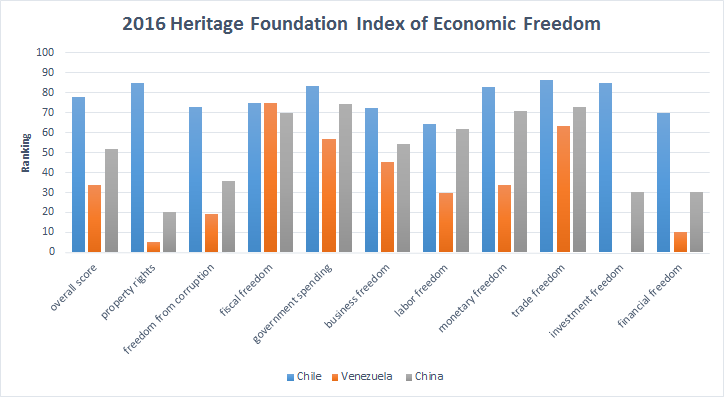
@OwenJones84 @K_Niemietz Venezuelan, Chilean and Chinese index of economic freedom rankings 2016
06 Feb 2016 Leave a comment
in development economics, economics of regulation, entrepreneurship, fiscal policy, growth disasters, growth miracles, industrial organisation, labour economics, law and economics, macroeconomics, monetary economics, property rights, public economics Tags: capitalism and freedom, Chile, China, The Great Escape, Venezuela
North and South America at night
06 Feb 2016 Leave a comment
in development economics, energy economics
@OwenJones84 @K_Niemietz Ease of Doing Business in Latin America and the Caribbean – World Bank rankings
05 Feb 2016 Leave a comment
in development economics, economics of regulation, growth disasters, growth miracles, law and economics, property rights Tags: doing business, Venezuela
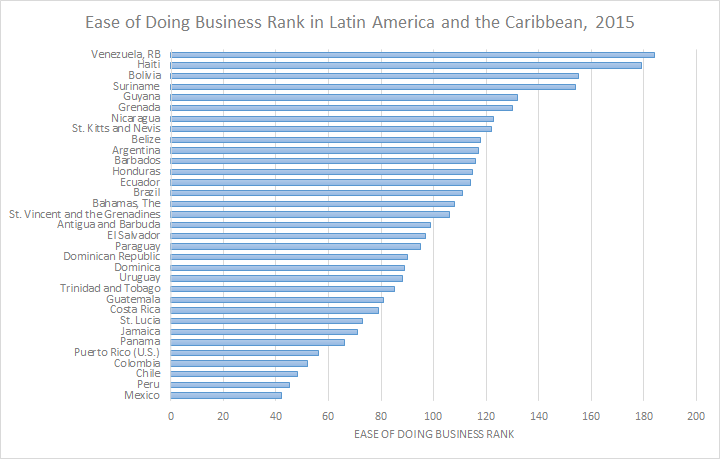
Source: World Bank Doing Business Database 2015.
@OwenJones84 @K_Niemietz GDP per capita has not more than doubled @chavezcandanga
05 Feb 2016 Leave a comment
in development economics, economic history, growth disasters, growth miracles, Marxist economics Tags: Argentina, Chile, China, left-wing populism, Leftover Left, Oil prices, The Great Fact, Twitter left, Venezuela
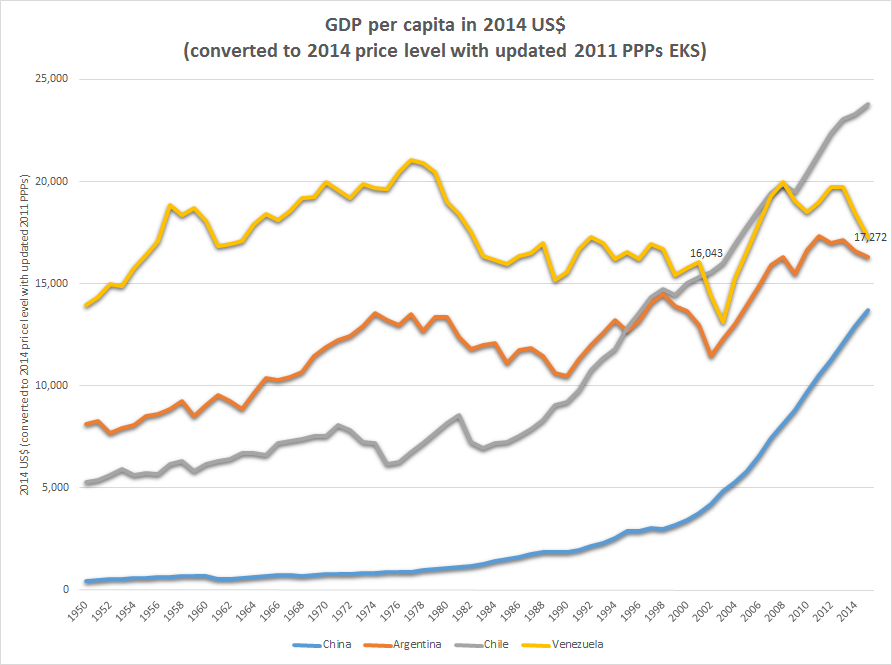
Source: The Conference Board. 2015. The Conference Board Total Economy Database™, May 2015, http://www.conference-board.org/data/economydatabase/
Poverty’s development 1800-2015
05 Feb 2016 Leave a comment
in development economics, economic history, growth disasters, growth miracles, technological progress Tags: global poverty, industrial revolution, The Great Enrichment, The Great Escape, The Great Fact
Despite population growth, see how the total number of people in extreme poverty has fallen
04 Feb 2016 Leave a comment
in development economics, economic history, growth miracles Tags: extreme poverty, global poverty, The Great Escape, The Great Fact
@GreenpeaceUSA @Oxfam some people are just never happy
02 Feb 2016 Leave a comment
in development economics, economic history, growth miracles
#TPPANoWay @janlogie @oxfamnz trade agreements and consolidating democracy
02 Feb 2016 Leave a comment
in constitutional political economy, development economics, economics of regulation, growth miracles, international economics, politics - New Zealand, Public Choice, rentseeking
The key reason why China joined the World Trade Organisation and other trade agreements is to bring some semblance of law to an authoritarian country. 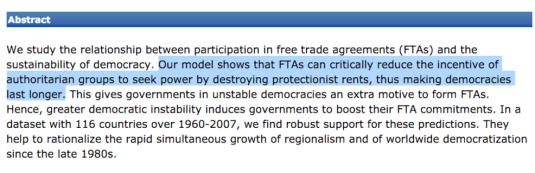
Source: AEAweb: AEJ: Macro (6,2) p. 29 – Free Trade Agreements and the Consolidation of Democracy via Max Roser.
Both the elites and ordinary people are prospering tremendously from the rise of capitalism in China, Vietnam and other places. A move away from this liberalisation to a more authoritarian setting would cost too many people too much money.
In the course of these economic liberalisations, China and Vietnam, for example, changed from totalitarian dictatorships to tin-pot dictatorships. As long as you keep out of politics in these countries, there is a fair degree of freedom and much more freedom compared to the days of communism.
Percentage employed in agriculture in the world's major economies over the last 50 years. https://t.co/UbaDnaE8Lr—
Robert Wilson (@CountCarbon) January 08, 2016
From 1950, Japan doubled their standard of living every 8 years
02 Feb 2016 Leave a comment
in development economics, economic history, growth miracles Tags: East Asian Tigers, Japan
The 1st @NYTimeskrugman on #TPPANoWay @Oxfamnz #JaneKelsey
30 Jan 2016 Leave a comment
in applied price theory, applied welfare economics, development economics, economic history, growth disasters, growth miracles, international economics Tags: customs unions, free trade agreements, globalisation, Jane Kelsey, Leftover Left, Oxfam, Paul Krugman, preferential trading agreements, rational irrationality, TPP, Twitter left, Yes Minister
https://twitter.com/TPPMediaMarch/status/692055631579185152
If George Bush had not won the 2000 presidential election, Paul Krugman would have taken over as the best communicator of economics since Milton Friedman. Instead, he became patient number no.1 of George Bush derangement syndrome. Ann Coulter was patient no. 1 of Clintons derangement syndrome.

Source: Enemies of the WTO.


Recent Comments