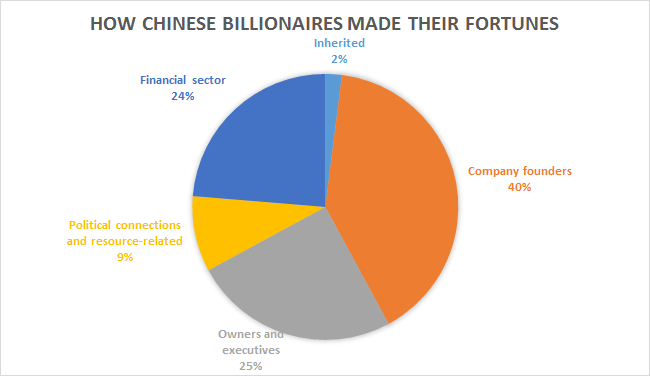
How did the Chinese billionaires make their money?
15 Feb 2016 Leave a comment
in applied price theory, development economics, economic history, entrepreneurship, growth miracles, human capital, industrial organisation, labour economics Tags: billionaires, China, entrepreneurial alertness, superstars, top 1%
Trade Routes of The Roman Empire in 180AD
15 Feb 2016 Leave a comment
in economic history Tags: Roman empire

The first “ultra portable” computer!
15 Feb 2016 Leave a comment
in economic history, technological progress
The rapid rise of a UK Generation Rent @PhilTwyford @PeterDunneMP
14 Feb 2016 Leave a comment
in economic history, economics of regulation, urban economics
The good old days were not very good at all
14 Feb 2016 Leave a comment
in economic history Tags: good old days, The Great Enrichment
@NewStatesman @WebbTrust prize-winning essay on inequality missed The Great Escape
13 Feb 2016 Leave a comment
in development economics, economic history, economics of media and culture, growth miracles Tags: capitalism and freedom, extreme poverty, global poverty, Leftover Left, rational irrationality, The Great Escape, The Great Fact, Twitter left
Source: How can growth reduce inequality?
When my father was born, 7 in 10 people lived in absolute poverty.
Today, it's 1 in 10! https://t.co/1Caqku3AY1—
Tim Fernholz (@TimFernholz) October 21, 2015
世界の所得分布、1988 → 2011年 ourworldindata.org/VisualHistoryO…
この間の世界の富裕分の殆どを中国で説明できそうだ。インドはあまり変わってない。 https://t.co/ygWYornmY8—
Spica (@Kelangdbn) October 19, 2015
Cmon aussie c’mon original
13 Feb 2016 Leave a comment
in cricket, economic history, economics of information, economics of media and culture, entrepreneurship, industrial organisation, Ronald Coase, sports economics Tags: advertising, Australia, entrepreneurial alertness
The rise and fall of smoking, 1920-2010
13 Feb 2016 Leave a comment
in economic history, health economics Tags: economics of smoking
More trigger warnings for fainting couch feminists
13 Feb 2016 Leave a comment
in discrimination, economic history, gender, human capital, labour economics, labour supply Tags: gender wage gap
There is widespread ignorance of The Great Escape
13 Feb 2016 Leave a comment
in development economics, economic history, growth miracles Tags: rational ignorance, rational rationality, The Great Escape
The 1996 US federal welfare reforms at 20
12 Feb 2016 Leave a comment
in applied welfare economics, economic history, labour economics, labour supply, politics - USA, welfare reform

Despite the dire predictions, there has been a permanent reduction in child poverty of 25%, a 35% increase in the employment rates of never married mothers and a 16% increase in the employment rates of single mothers.
Minorities benefited the most from the 1996 US federal welfare reforms in terms of higher employment rates and lower child poverty rates.
As part of the 1996 reforms, Medicaid eligibility was not lost when going off welfare and single parents by getting a job qualified for the Earned Income Tax Credit.
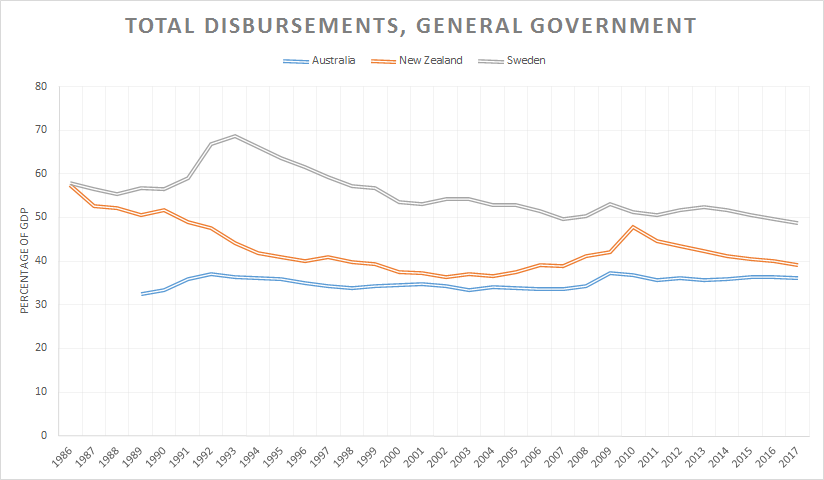
Once were Sweden! New Zealand, Swedish and Australian general government expenditure as % of GDP since 1986
12 Feb 2016 Leave a comment
in economic growth, economic history, fiscal policy, macroeconomics, politics - Australia, politics - New Zealand, public economics Tags: Australia, growth of government, lost decades, size of government, Sweden
I came across this data showing that New Zealand and Sweden had the same sized public sectors in the mid-1980s some years ago. The data could not be found again for a long time in the OECD statistical databases. One reason was the OECD changed its name to general disbursements.
Data extracted on 12 Feb 2016 08:45 UTC (GMT) from OECD.Stat.
The size of the public sector in Australia has not changed much for 30 odd years. The public sector has been in a long decline in Sweden and New Zealand since peaks as a percentage of nominal GDP in the late 1980s and early 1990s respectively.
I know of no comments on the large size of the New Zealand public sector as measured by general government expenditure in the late 1980s. Its contribution to the stagnant economic growth of that time is worth exploring.
Colour films were initially thought to be uncompetitive on cost grounds
12 Feb 2016 Leave a comment
in economic history, entrepreneurship, industrial organisation Tags: creative destruction, Hollywood economics
Where is Holland?
11 Feb 2016 Leave a comment
in economic history, economics Tags: Holland, The Netherlands
Source: Confused? You will be


Recent Comments