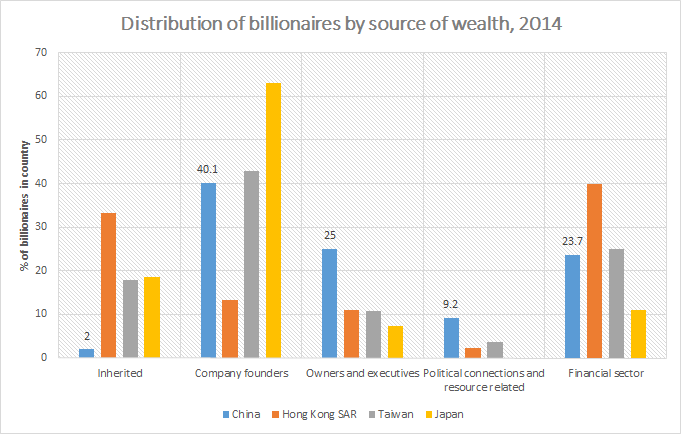
Surprisingly few billionaires in any of the 4 countries obtained their wealth through political connections. Founding a company seems to be still the path of great wealth even in Japan these days. Hong Kong is a financial centre so the large number of billionaires in its financial sector is no surprise.
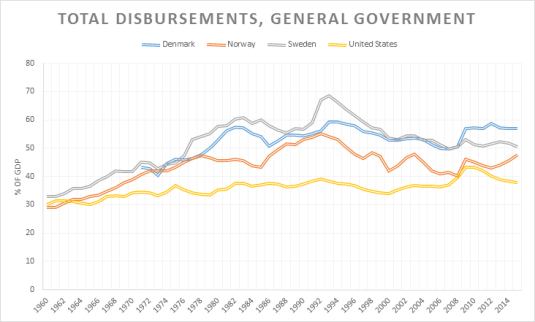
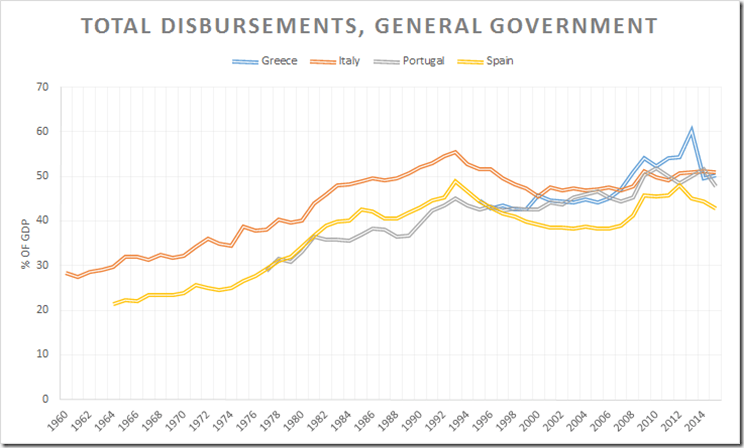
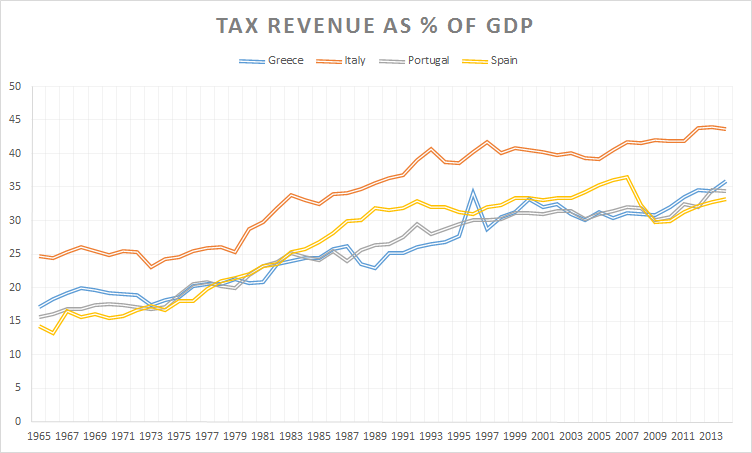
I do not think any of these countries have governments who can really handle managing half of national income on a regular basis. The Italian, and I assume Greek GDPs at least are topped up quite considerably to take account of their underground economies. The top up for Italy is 20%.
Fascinating. Yawning chasm between why Labour members think they lost and why voters think they did. From @thetimeshttp://t.co/MvhZYI2CTr— Joe Watts (@JoeWatts_) July 23, 2015
Left-wingers do whinge about voters not understanding; about how if only the voters understood better their arguments than they do now. The Left thinks voters just keep getting it wrong.
The evidence—most notably, the results of the 1996 Survey of Americans and Economists on the Economy—shows that the general public’s views on economics not only are different from those of professional economists but are less accurate, and in predictable ways.
The public really does generally hold, for starters, that prices are not governed by supply and demand, that protectionism helps the economy, that saving labour is a bad idea, and that living standards are falling.
Politicians mindful of re-election must pander to these four biases.
Fortunately, for the New Zealand Labour Party and the Green Party of Aotearoa New Zealand, voters have no rational reason to correct these four biases. Voters are rationally irrational. As each individual counts so little, why spend any time correcting biased political beliefs?
Anti-market bias: The tendency to underestimate the benefits of the market mechanism. The typical voter equates market phenomena such as profitability and interest as examples of unbridled monetary confiscations by ‘greedy’ businesses. This biased against the market, despite all its successes, is a rich field to till for both Labour and the Greens
Anti-foreign bias: The tendency to underestimate the economic benefits of interaction with foreigners. This antagonism towards such trends as outsourcing employment overseas, or selling raw materials to faraway traders, is reminiscent of the mercantilism Adam Smith so brilliantly demolished but it still lives on today in the hearts of the voting citizenry. Labour and the Greens play to that bias shamelessly.
Make-work bias: The tendency to underestimate the economic benefits from conserving labour. Those who look to the visible face of job losses overlook the job gains (often by those who lost their jobs) to be made tomorrow in emerging industries. The Greens and Labour are sure-fire enemies of creative destruction.
Pessimistic bias: The tendency to overestimate the severity of economic problems, and to underestimate the recent past, present and future performance of the economy. In The Progress Paradox (2003), Gregg Easterbrook ridicules abundance denial:
Our forebears, who worked and sacrificed tirelessly in the hopes their descendants would someday be free, comfortable, healthy, and educated, might be dismayed to observe how acidly we deny we now are these things.
Many average voters seem to feel that Malthus was correct in diagnosing the allegedly poor prospects for the market economy.
CLASSIC VIDEO: Margaret Thatcher on Socialism in 1990 to the House of Commons https://t.co/iB5O3ejoaC
Where would the voting base of the Greens be without a pessimism bias? They are professional pessimists and doomsday prophets from their earliest days. Labour assumes working class Tories are dupes of what is left of fading media barons such as Rupert Murdoch.
Why Evolution is True is a blog written by Jerry Coyne, centered on evolution and biology but also dealing with diverse topics like politics, culture, and cats.
In Hume’s spirit, I will attempt to serve as an ambassador from my world of economics, and help in “finding topics of conversation fit for the entertainment of rational creatures.”





Recent Comments