
NBER this week: Regulation and Housing Supply
06 Oct 2014 Leave a comment
in applied price theory, applied welfare economics, economics of regulation, urban economics Tags: housing affordability, land use regulation, urban economics, zoning

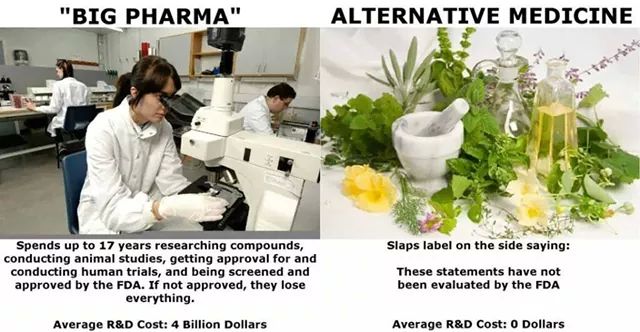
I actually have something nice to say about drug safety regulation!?
03 Oct 2014 Leave a comment
in economics of regulation Tags: Drug safety, Product safety
The share market speaks: the boom in marijuana shares
03 Oct 2014 Leave a comment
in applied price theory, economics of crime, economics of regulation, entrepreneurship, financial economics, industrial organisation Tags: marijuana decriminalisation, marijuana legalisation

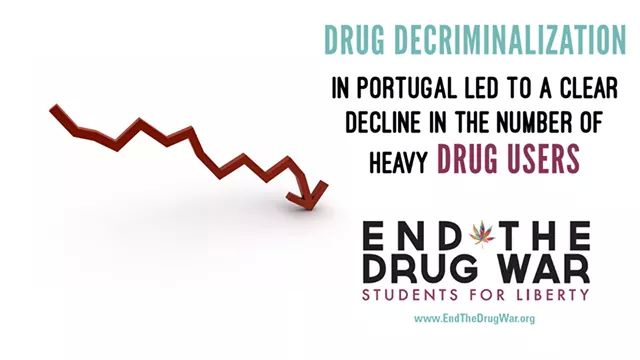
Over the past two years, investors bid up penny stocks, which are stocks that trade for less than $5 a share, for marijuana from a $500,000 market to more than $7 billion.
The sale and use of marijuana is now approved for medical purposes in 22 states and the District of Columbia and is legal for recreational sales in Colorado and Washington state.

Among those will have to put their money where their mouth is, their entrepreneurial forecast is marijuana legalisation is only going to spread and the legal marijuana market is going to grow. Florida will vote on legalizing medical marijuana, and recent polls suggest the measure has the support needed to pass.

In February 2014, President Obama signed a law that allows states to experiment with industrial hemp. In response, 17 states have removed barriers to hemp production.
HT: Vox.com/marijuana-legalization-maps-charts-facts and https://twitter.com/business/status/479287579263524864

Who Is More Irrational – Consumers or Regulators?
08 Sep 2014 Leave a comment
in economics of regulation, energy economics, entrepreneurship, environmental economics, environmentalism, global warming Tags: Bjørn Lomborg, expressive voting, futile gestures, global warming, Kip Viscusi, nanny state, regulatory failure, The fatal conceit, The pretence to knowledge

A study by Ted Gayer and W. Kip Viscusi looked into this implied irrationality of consumers. They have found no empirical evidence to support the view that if consumers are so irrational that government agencies must prohibit certain energy consuming products for us to make the right choices:
Rather than accept the implications that consumers and firms are acting so starkly against their economic interest, a more plausible explanation is that there is something incorrect in the assumptions being made in the regulatory impact analyses.
Indeed, upon closer inspection it is apparent that there is no empirical evidence provided for the types of consumer failures alleged.
Even the EPA acknowledged this logical gap in its economic analysis of energy efficiency regulations:
it is a conundrum from an economic perspective that these large fuel savings have not been provided by automakers and purchased by consumers
Not surprisingly Kip Viscusi observed that
The regulatory impact analyses examined in this study contain virtually no empirical evidence to support the irrationality proposition.
• This proposition ignores the fact that consumers and firms purchase products based on a number of factors—only one of which is energy efficiency.
• Government agencies exhibit a parochial bias by ignoring all product attributes other than energy efficiency.

Managerial Econ: Make the rules or your rivals will: use anti-growth activists to erect entry barriers
08 Sep 2014 Leave a comment
in comparative institutional analysis, constitutional political economy, economics of regulation, environmental economics, Public Choice, rentseeking Tags: bootleggers and baptists, rent seeking
The courts have sanctioned the right to organize community opposition that urges government officials and agencies to deny land use permits to applicants, even when the underlying motive of the opposition is protecting market share and eliminating competition.
What’s more, the courts are protecting third-party funding sources, in many cases anonymous funding sources, which support the opposition efforts in order to block potential competition.

How Much Should a Landlord Pay a Tenant to Move Out of an Apartment?
30 Aug 2014 Leave a comment
in applied price theory, economics of regulation Tags: rent control, rent dissipation, rentseeking



Bootleggers and Baptists alert: Mexican cannabis output falls in wake of legalisation
19 Aug 2014 Leave a comment
in applied price theory, comparative institutional analysis, development economics, economics of regulation Tags: black markets, bootleggers and baptists, decriminalisation of marijuana
Farmers in the storied “Golden Triangle” region of Mexico’s Sinaloa state, which has produced the country’s most notorious gangsters and biggest marijuana harvests, say they are no longer planting the crop.
Its wholesale price has collapsed in the past five years, from $100 per kilogram to less than $25.
“It’s not worth it anymore,” said Rodrigo Silla, 50, a lifelong cannabis farmer who said he couldn’t remember the last time his family and others in their tiny hamlet gave up growing mota. “I wish the Americans would stop with this legalization.”

The people designing your cities don’t care what you want. They’re planning for hipsters. – The Washington Post
19 Aug 2014 Leave a comment
in applied price theory, economics of regulation, income redistribution, rentseeking, urban economics Tags: do gooders, elitism, land supply, new class, rent seeking, the vision of the annointed, zoning

HT: Michael Warby via The people designing your cities don’t care what you want. They’re planning for hipsters. – The Washington Post .
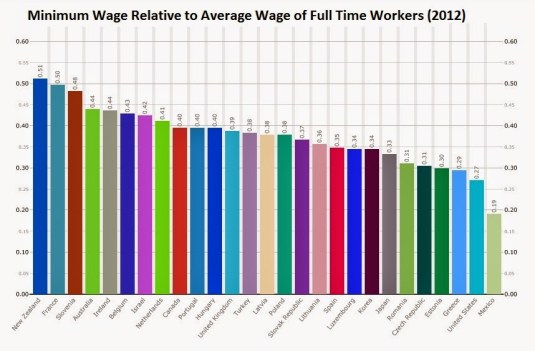
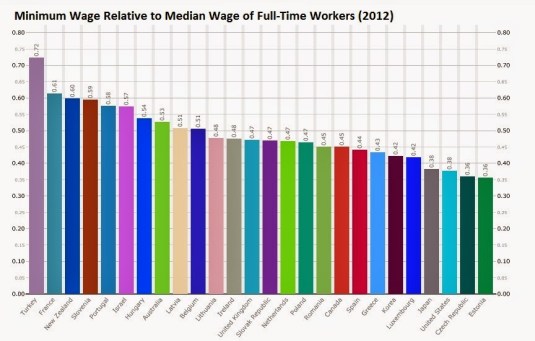
New Zealand has the highest minimum wage in the world
19 Aug 2014 Leave a comment
in economics of regulation, labour economics, minimum wage, Uncategorized Tags: minimum wage, offsetting behaviour, Richard McKenzie, unintended consequences
John Schmitt lists 11 margins along which a minimum wage might cause changes:
- Reduction in hours worked (because firms faced with a higher minimum wage trim back on the hours they want)
- Reduction in non-wage benefits (to offset the higher costs of the minimum wage)
- Reduction in money spent on training (again, to offset the higher costs of the minimum wage)
- Change in composition of the workforce (that is, hiring additional workers with middle or higher skill levels, and fewer of those minimum wage workers with lower skill levels)
- Higher prices (passing the cost of the higher minimum wage on to consumers)
- Improvements in efficient use of labour (in a model where employers are not always at the peak level of efficiency, a higher cost of labour might give them a push to be more efficient)
- “Efficiency wage” responses from workers (when workers are paid more, they have a greater incentive to keep their jobs, and thus may work harder and shirk less)
- Wage compression (minimum wage workers get more, but those above them on the wage scale may not get as much as they otherwise would)
- Reduction in profits (higher costs of minimum wage workers reduces profits)
- Increase in demand (a higher minimum wage boosts buying power in overall economy)
- Reduced turnover (a higher minimum wage makes a stronger bond between employer and workers, and gives employers more reason to train and hold on to workers)
Richard McKenzie argues that the biggest impact of a minimum wage increase is reductions to paid and unpaid benefits for minimum wage workers, including health insurance, store discounts, free food, flexible scheduling, and job security resulting from higher-skilled workers drawn to the higher minimum wage jobs:
- Masanori Hashimot found that under the 1967 minimum-wage hike, workers gained 32 cents in money income but lost 41 cents per hour in training—a net loss of 9 cents an hour in full-income compensation. Several other researchers in independently completed studies found more evidence that a hike in the minimum wage undercuts on-the-job training and undermines covered workers’ long-term income growth.
- Walter Wessels found that the minimum wage caused retail establishments in New York to increase work demands by cutting back on the number of workers and giving workers fewer hours to do the same work.
- Belton Fleisher, L. F. Dunn, and William Alpert found that minimum-wage increases lead to large reductions in fringe benefits and to worsening working conditions.
- Mindy Marks found that workers covered by the federal minimum-wage law were also more likely to work part time, given that part-time workers can be excluded from employer-provided health insurance plans.
McKenzie also argued that if the minimum wage does not cause employers to make substantial reductions in fringe benefits and increases in work demands, then an increased minimum should cause
(1) an increase in the labour-force-participation rates of covered workers (because workers would be moving up their supply of labour curves),
(2) a reduction in the rate at which covered workers quit their jobs (because their jobs would then be more attractive), and
(3) a significant increase in prices of production processes heavily dependent on covered minimum-wage workers.
Wessels found that minimum-wage increases had exactly the opposite effect:
(1) participation rates went down,
(2) quit rates went up, and
(3) prices did not rise appreciably—which are findings consistent only with the view that minimum-wage increases make workers worse off.
McKenzie was the first economist to argue that a minimum wage increase may actually reduce the labour supply of menial workers. Employment in menial jobs may go down slightly in the face of minimum-wage increases not so much because the employers don’t want to offer the jobs, but because fewer workers want these menial jobs that are offered.
The repackaging of monetary and non-monetary benefits, greater work intensities and fewer training opportunities make these jobs less attractive relative to their other options. This reduction in labour supply by low skilled workers is why the voluntary quit rate among low-wage workers goes up, not down, after a minimum wage increase. As McKenzie explains
Economists almost uniformly argue that minimum wage laws benefit some workers at the expense of other workers.
This argument is implicitly founded on the assumption that money wages are the only form of labour compensation.
Based on the more realistic assumption that labour is paid in many different ways, the analysis of this paper demonstrates that all labourers within a perfectly competitive labour market are adversely affected by minimum wages.
Although employment opportunities are reduced by such laws, affected labour markets clear. Conventional analysis of the effect of minimum wages on monopsony markets is also upset by the model developed.
McKenzie argues that not accounting for offsetting behaviour led to a fundamental misinterpretation in the empirical literature on the minimum wage. That literature shows that small increases in the minimum wages does not seem to affect employment and unemployment by that much.
…. wage income is not the only form of compensation with which employers pay their workers. Also in the mix are fringe benefits, relaxed work demands, workplace ambiance, respect, schedule flexibility, job security and hours of work.
Employers compete with one another to reduce their labour costs for unskilled workers, while unskilled workers compete for the available unskilled jobs — with an eye on the total value of the compensation package. With a minimum-wage increase, employers will move to cut labour costs by reducing fringe benefits and increasing work demands…
Proponents and opponents of minimum-wage hikes do not seem to realize that the tiny employment effects consistently found across numerous studies provide the strongest evidence available that increases in the minimum wage have been largely neutralized by cost savings on fringe benefits and increased work demands and the cost savings from the more obscure and hard-to-measure cuts in nonmoney compensation.
McKenzie is correct in arguing that the empirical literature on the minimum wage is dewy-eyed. The first assumption about any regulation is the market will offset it significantly. In the course of undoing the direct effects of the regulation, there will be unintended consequences such as the remixing of wage and nonwage components of remuneration packages of low skilled workers covered by the minimum wage.


Recent Comments