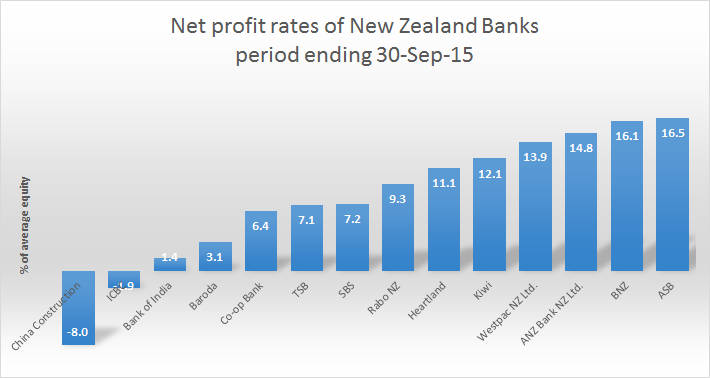
Source: G1 Summary information for locally incorporated banks – Reserve Bank of New Zealand
....
Celebrating humanity's flourishing through the spread of capitalism and the rule of law
15 Mar 2016 Leave a comment
in industrial organisation, law and economics, monetary economics, politics - New Zealand, survivor principle Tags: competition law, competition policy, economics of banking, state owned enterprises
13 Mar 2016 Leave a comment
in applied price theory, labour economics, labour supply, personnel economics, survivor principle

It comes as a surprise to living wage advocates that entrepreneurs are so alert to the impact of downsizing and firm closures on employee morale that they keep these a secret to the last possible minute.
Entrepreneurs are not fools. They profit from alertness to the effects of changes in the fortunes of the firm on labour productivity. There is a vast literature on how to motivate workers towards more effort and diligence and honesty.

I worked at a Japanese private university whose financial survival was always in question. We spent a lot of time gossiping about the security of our jobs.
I refer to one year at one employer as the year of doing nothing because management was so consumed with restructuring and downsizing. They were too busy to sign out the output of their staff.
I have come across an estimate the effect of downsizing announcement on productivity at a German bakery chain of 193 shops.

The study found that announcements of a sale to a new owner and closure reduced sales by six and 21 percent, respectively. This negative effect increased with the share of workers on a permanent contract, even though these workers faced a much lower unemployment risk. Fewer customers were served per unit of time because of less employee effort at the bakery chain.
Going back to my year of doing nothing, which dragged out through worker consultations sought by the unions under the collective agreement, I remember chatting to a mate whose father was in the downsizing consulting business. He told me that private businesses get downsizing over as quickly as possible because of the impact on morale and productivity. Entrepreneurs are perfectly aware that uncertainty promotes office gossip and valuable staff moving on.
11 Mar 2016 Leave a comment
in industrial organisation, politics - New Zealand Tags: The fatal conceit, The pretense to knowledge
It is claimed that New Zealand lacks large firms, that “New Zealand has one very large firm – Fonterra – and a long tale of large to mid-sized firms”. The percentage of the workforce employed by large firms in New Zealand is in the middle of the pack. It is not in any way an outlier.

Source: Entrepreneurship at a Glance 2015 – OECD 2015.
A hurdle to cross-national comparisons of firm size distribution is the number of small firms will fall and the number of large firms will rise with increases in real wages (Lucas 1978; Poschke 2013; Gollin 2008; Eeckhout and Jovanovic 2012). Nations that are more productive than New Zealand have higher wages because they have accumulated more capital per worker. One consequence of more capital per worker is real wages increase at a faster rate than profits (Gollin 2008; Eeckhout and Jovanovic 2012). For example, the rate of return on capital was stable over the 20th century while real wages increased many fold (Jones and Romer 2010).
Higher wages reduces the supply of entrepreneurs and increases the average size of firms because entrepreneurship becomes a less attractive occupational choice (Lucas 1978; Gollin 2008; Eeckhout and Jovanovic 2012). For example, in the mid-20th century, many graduates who were not teachers were self-employed professionals. With an expanding division of labour because of economic growth, many well-paid jobs and new occupations emerged for talented people in white-collar employment.
OECD countries richer than New Zealand should have less self-employment and more firms that are large because paid employment is an increasingly better-rewarded career option for their high skilled workers. The U.S. had the second lowest share of self-employed workers (7 percent) in the OECD in 2010 – the latest data – which is less than half the rate of New Zealand self-employment (16.5 percent) in 2011 (OECD 2013). The Australian self-employment rate was 11.6 per cent in 2010 (OECD 2013).
A companion reason for larger average firm sizes in countries richer than New Zealand is more capital-intensive production can prosper in larger corporate hierarchies than can labour-intensive production (Lucas 1978; Becker and Murphy 1992; Poschke 2011; Eeckhout and Jovanovic 2012).
The more able entrepreneurs can run larger firms with bigger spans of control in richer countries because their employees can profitably use more capital per worker with less supervision. The diseconomies of scale to management and entrepreneurship should rise at a faster rate in less technological advanced countries such as New Zealand because they are more labour intensive economies (Lucas 1978; Becker and Murphy 1992; Poschke 2011; Eeckhout and Jovanovic 2012).
Importantly, the more able entrepreneurs benefit most from introducing frontier technologies because they can deal more easily with their increased complexity and more uncertain prospects (Poschke 2011; Lazear 2005; Shultz 1975; 1980). Growing technological complexity reduces the supply of entrepreneurs because it takes longer to acquire the necessary balance of skills and experience needed to lead a firm (Lazear 2005; Otani 1996).
The more marginal entrepreneurs will switch to be employees as technology advances so the average size of firms will increase. The entrepreneurs that remain in business will be the most able, more skilled and more experienced entrepreneurs and will be more capable of running larger firms that pioneer complex, frontier technologies (Poschke 2011; Lazear 2005, Otani 1996; Lucas 1978). Countries more technologically advanced than New Zealand will have both larger firms and less self-employment because of growing technological complexity.
The greater is the exposure to foreign competition, the smaller is the fraction of self-employed and small firms in a country (Melitz 2003; Díez and Ozdagli 2012). More foreign competition increases wages because of lower prices, which makes self-employment less lucrative. More exporting favours larger firms both because of the fixed costs of entering export markets and because the stiffer competition will weed-out the lower ability entrepreneurs who run the smaller firms (Melitz 2003; Díez and Ozdagli 2012). Countries that export more than New Zealand also will have larger firms.
Average firm sizes are often larger is richer countries because of their high labour productivity and higher wages rather than labour productivity is low in New Zealand because average firm sizes are smaller. Other factors can countermand the effects that occupational choice, frontier technologies, exporting and capital intensity have to increase the average size of firms as real wages rise. This makes comparisons of firm size distributions are even more fraught with institutional complexities.
Tax and regulatory policies appear to reduce the average size of firms in many EU member states to levels that are similar to New Zealand. A nuance in international comparisons of firm size distributions is the EU is less likely to have large firms in its labour intensive sectors. Employment protection laws, product market and land use regulation and in particular, high taxes stifled the growth of labour intensive services sectors in the continental EU (Bertrand and Kramatz 2002; Bassanini, Nunziata and Venn 2009; Rogerson 2008).
EU firms are a biased sample. Their firms are more capital intensive with fewer employees than otherwise because labour is so expensive to hire in the EU. Small and medium sized firms can struggle to grow in much of the EU because of regulatory burdens that phase in with firm size (Garicano, Lelarge and Van Reenen 2012; Hobijn and Sahin 2013; Rubini, Desmet, Piguillem and Crespo 2012). Average firm sizes are 40 percent smaller in Spain and Italy than in Germany. Obstacles to firm growth originate in product, labour, technology and financial and the binding constraints differ from one EU member state to another (Rubini, Desmet, Piguillem and Crespo 2012).
Bartelsman, Haltiwanger, and Scarpetta (2009) found that the USA had a very high proportion of above-average sized firms. Western Europe had smaller firms in most industries with one of the exceptions in low-tech UK industries. Apart from the USA, they could not map differences in firm size against the overall size of the country, the technology levels of an industry, or its degree of maturity.
Another confounding factor is the average number of employees in firms with 500 or more employees in France and New Zealand is similar: 1667 and 1593 respectively (Mills and Timmins 2004; Hobijn and Sahin forthcoming). Preferring the UK over France as the benchmark for very large firms calls for a detailed analysis of Anglo-French institutional differences. This defeats the very purpose of the simple statistical comparisons undertaken to date. These simple cross-national statistical comparisons presuppose relatively common economic drivers and institutional backgrounds. If that is not so, a detailed institutional analysis is required before cross-national comparisons are possible. Bartelsman, Haltiwanger, and Scarpetta (2009) suggest that cross-national comparisons of firm dynamics and firm size distribution are subject to substantial definitional and measurement problems and no one measure will capture properly the many institutional and regulatory differences.
Average firm sizes in the USA and UK may be larger because of fewer tax and regulatory policies that limit business growth. Bartelsman, Scarpetta and Schivardi (2005) found that new entrants in the U.S. started on a smaller scale than in Europe but grew at a much higher rate. This willingness to experiment on a smaller scale was worth the risk because the payoff was much larger in terms of growth in the more flexible U.S. markets.
11 Mar 2016 Leave a comment
in economic history, industrial organisation, politics - New Zealand, transport economics
At 4% of GDP and employment in 2014, that is half estimated size of the New Zealand tourism sector in 2012. Statistics are only estimates. The trouble is politicians and bureaucrats make decisions on the base of them that might not be able to be reversed. Little wonder that Hong Kong prospered by as collecting as few as statistics as possible.
Source: OECD Tourism Trends and Policies 2016 | OECD READ edition.

Source: OECD Tourism Trends and Policies 2014 | OECD READ edition.
The earlier New Zealand data referred to direct and indirect contributions while the latest data refers only to direct contributions. New Zealand is no longer top of the world.
05 Mar 2016 Leave a comment
in applied welfare economics, economic history, economics of media and culture, industrial organisation, politics - USA Tags: good old days, Leftover Left, pessimism bias, rational irrationality, smart phones, The Great Enrichment

Source: When I Was Your Age | Center for American Progress.
The claim by the Centre for American progress is that despite being more educated and working in a more productive economy, 30-year-olds today barely make more than 30-year-old Baby Boomers did in 1984.

Source: When I Was Your Age | Center for American Progress.
Nearly everything from RadioShack ad in 1991 is replaced by a smartphone. https://t.co/xGh6ZzW1Nx—
Vala Afshar (@ValaAfshar) December 19, 2015
The apps in your smartphone cost $900,000 thirty years ago —@datarade https://t.co/pjw7q4QGDp—
Vala Afshar (@ValaAfshar) October 29, 2015
04 Mar 2016 Leave a comment
in economic history, energy economics, industrial organisation, survivor principle Tags: cartel theory, Oil prices, OPEC
03 Mar 2016 Leave a comment
in economic history, industrial organisation, survivor principle Tags: creative destruction
29 Feb 2016 Leave a comment
in economic history, economics of media and culture, entrepreneurship, industrial organisation Tags: cell phones, iPhones, mobile phones, technology diffusion, The Great Enrichment
https://twitter.com/pmarca/status/679842098632249344
https://twitter.com/JustHistoryPics/status/699047605070884866
27 Feb 2016 1 Comment
in environmental economics, financial economics, industrial organisation, politics - New Zealand, public economics, survivor principle Tags: agricultural economics, privatisation, state owned enterprises
As cash cows go, Landcorp has had $2.25 million more in capital injections from taxpayers than it returned to them in dividends since 2007.
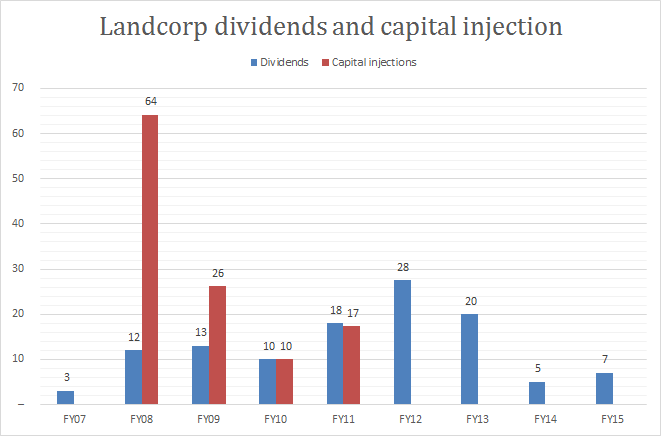
Source: data released by the New Zealand Treasury under the Official Information Act.
Those $1.5 billion in assets in Landcorp do not appear to be worth a cent in net cash to the long-suffering taxpayer.
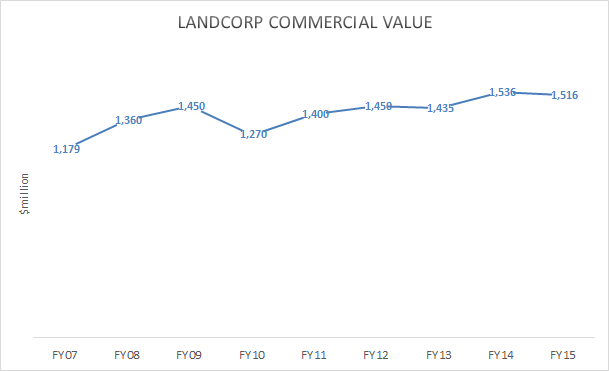
Source: data released by the New Zealand Treasury under the Official Information Act.
Landcorp is a state-owned enterprise of the New Zealand government. Its core business is pastoral farming including dairy, sheep, beef and deer. In January 2012, Landcorp managed 137 properties carrying 1.5 million stock units on 376,156 hectares of land.
26 Feb 2016 Leave a comment
in economic history, economics of regulation, entrepreneurship, industrial organisation, survivor principle Tags: billionaires, British economy, entrepreneurial alertness, France, Germany, Italy, superstar wages, superstars
25 Feb 2016 Leave a comment
in economic history, entrepreneurship, industrial organisation, politics - USA, survivor principle Tags: 2016 presidential election, billionaires, Denmark, entrepreneurial alertness, Finland, inherited wealth, Norway, superstar wages, superstars, Sweden
OK, Nordic billionaire population sizes might be small, but plenty more billionaires make their own money in neoliberal USA than in Bernie Sanders’ Utopia

24 Feb 2016 Leave a comment
in development economics, economic history, entrepreneurship, financial economics, growth miracles, industrial organisation, rentseeking, survivor principle Tags: billionaires, China, entrepreneurial alertness, Hong Kong, Japan, superstar wages, superstars, Taiwan
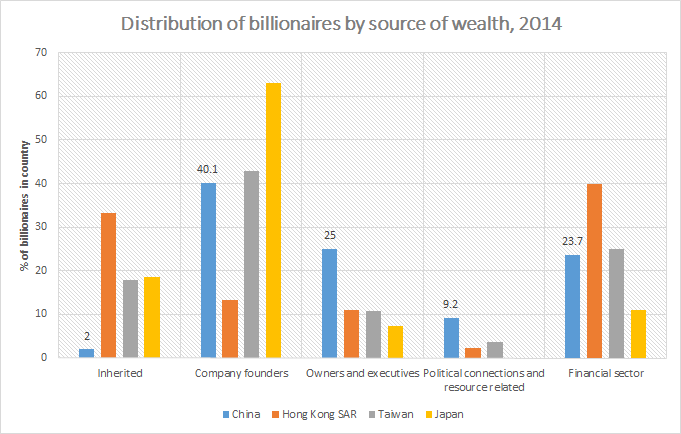
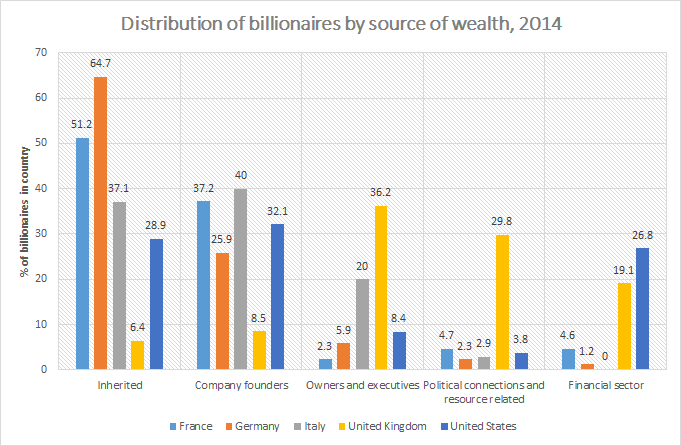
Surprisingly few billionaires in any of the 4 countries obtained their wealth through political connections. Founding a company seems to be still the path of great wealth even in Japan these days. Hong Kong is a financial centre so the large number of billionaires in its financial sector is no surprise.
24 Feb 2016 Leave a comment
in applied price theory, comparative institutional analysis, economics of bureaucracy, industrial organisation, politics - New Zealand, Public Choice, public economics Tags: anti-market bias, New Zealand Greens, privatisation, rational irrationality, state owned enterprises

Green MP Gareth Hughes today nailed the case as to why governments should never run businesses. Too many MPs simply do not understand what dividends represent and what the profits from asset sales represent.
Hughes was reported today saying that taxpayers lost nearly $1 billion in dividends since the recent privatisations of power companies. He is the Green party spokesman on state owned enterprises.

Source: Asset sales cost hits $1 billion | Green Party of Aotearoa New Zealand.
Does the Green Party understand that an asset sells for a price equal to its risk-adjusted discounted net present value of the stream of dividends. When you sell a financial asset, you cash out the net present value of the stream of dividends that might have come from those assets.
The Greens, who are prissy about government transparency and dishonesty of their opponents, did not mention the $4.7 billion in revenue from the asset sale. Taxpayers now receiving more in dividends as a part owner of the privatised power companies than they did as a full owner.
Hughes had the cheek to complain about the politicisation of those privatisations such as favourable terms for small share buyers. That inability of governments to even sell an asset competently is a strong reason why governments should never run businesses in the first place.
If an asset cannot be sold in the full light of day – a major issue in an election campaign and a referendum – without the sale price that is politicised, what is the chance of good management of any state-owned enterprise when it is not the central focus of opposition scrutiny?
It is been many years since dividends from the state-owned enterprise portfolio has been a net positive cash flow for the taxpayer, as the chart below shows.
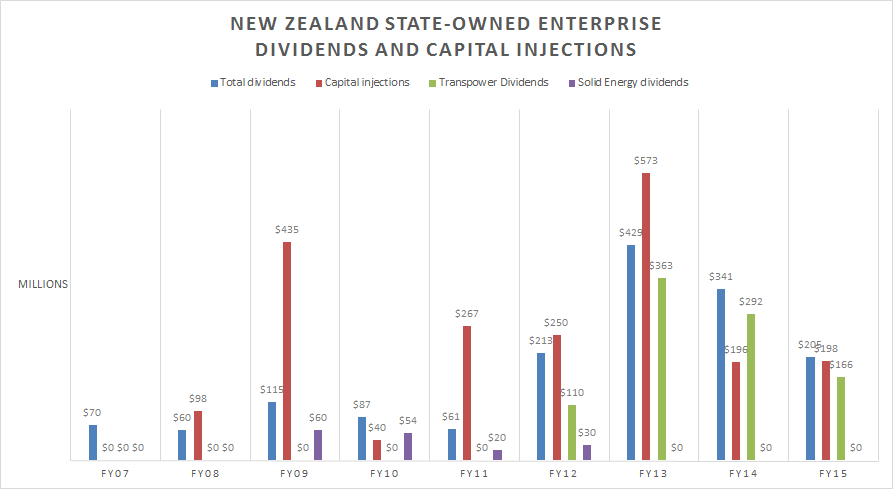
Source: New Zealand Treasury – data released under the Official Information Act.
KiwiRail and Solid Energy gobbled up whatever dividends came out of the power companies. Aside from power companies, state-owned enterprises not really offer much in the way of dividends to the taxpayer as the chart again shows.
Celebrating humanity's flourishing through the spread of capitalism and the rule of law
Scholarly commentary on law, economics, and more
Beatrice Cherrier's blog
Celebrating humanity's flourishing through the spread of capitalism and the rule of law
Celebrating humanity's flourishing through the spread of capitalism and the rule of law
Celebrating humanity's flourishing through the spread of capitalism and the rule of law
Why Evolution is True is a blog written by Jerry Coyne, centered on evolution and biology but also dealing with diverse topics like politics, culture, and cats.
Celebrating humanity's flourishing through the spread of capitalism and the rule of law
Celebrating humanity's flourishing through the spread of capitalism and the rule of law
A rural perspective with a blue tint by Ele Ludemann
DPF's Kiwiblog - Fomenting Happy Mischief since 2003
Celebrating humanity's flourishing through the spread of capitalism and the rule of law
The world's most viewed site on global warming and climate change
Tim Harding's writings on rationality, informal logic and skepticism
A window into Doc Freiberger's library
Let's examine hard decisions!
Commentary on monetary policy in the spirit of R. G. Hawtrey
Thoughts on public policy and the media
Celebrating humanity's flourishing through the spread of capitalism and the rule of law
Politics and the economy
A blog (primarily) on Canadian and Commonwealth political history and institutions
Reading between the lines, and underneath the hype.
Economics, and such stuff as dreams are made on
"The British constitution has always been puzzling, and always will be." --Queen Elizabeth II
Celebrating humanity's flourishing through the spread of capitalism and the rule of law
Celebrating humanity's flourishing through the spread of capitalism and the rule of law
WORLD WAR II, MUSIC, HISTORY, HOLOCAUST
Undisciplined scholar, recovering academic
Celebrating humanity's flourishing through the spread of capitalism and the rule of law
Res ipsa loquitur - The thing itself speaks
In Hume’s spirit, I will attempt to serve as an ambassador from my world of economics, and help in “finding topics of conversation fit for the entertainment of rational creatures.”
Researching the House of Commons, 1832-1868
Articles and research from the History of Parliament Trust
Reflections on books and art
Posts on the History of Law, Crime, and Justice
Celebrating humanity's flourishing through the spread of capitalism and the rule of law
Exploring the Monarchs of Europe
Cutting edge science you can dice with
Small Steps Toward A Much Better World
“We do not believe any group of men adequate enough or wise enough to operate without scrutiny or without criticism. We know that the only way to avoid error is to detect it, that the only way to detect it is to be free to inquire. We know that in secrecy error undetected will flourish and subvert”. - J Robert Oppenheimer.
The truth about the great wind power fraud - we're not here to debate the wind industry, we're here to destroy it.
Celebrating humanity's flourishing through the spread of capitalism and the rule of law
Celebrating humanity's flourishing through the spread of capitalism and the rule of law
Economics, public policy, monetary policy, financial regulation, with a New Zealand perspective
Celebrating humanity's flourishing through the spread of capitalism and the rule of law
Restraining Government in America and Around the World

 Utopia, you are standing in it!
Recent Comments