CHART: Top Ten Most Dangerous Jobs and Percent Male, 2013
@chartoftheday http://t.co/5xfjvM8ll5—
Mark J. Perry (@Mark_J_Perry) May 14, 2015
The gender gap in occupational deaths and injuries
26 Jul 2015 Leave a comment
in discrimination, gender, health and safety, labour economics Tags: gender gap, reversing gender gap
Richer is greener: environmentalists are Environmental Kuznets Curve deniers
07 Jul 2015 Leave a comment
in applied price theory, applied welfare economics, development economics, economic growth, economic history, energy economics, environmental economics, growth disasters, growth miracles, health and safety, industrial organisation, international economics, labour economics, law and economics, liberalism, property rights, public economics Tags: healthier is wealthier, Japan, Kuznets environmental curve, richer is greener, richer is safer
The Kuznets environmental curve describes an empirical regularity between environmental quality and economic growth. Outdoor water, air and other pollution first worse and then improves as a country first experiences economic growth and development.

While many pollutants exhibit this pattern in the Kuznets environmental curve, peak pollution levels occur at different income levels for different pollutants, countries and time periods. John Tierney explains:
In dozens of studies, researchers identified Kuznets curves for a variety of environmental problems.
There are exceptions to the trend, especially in countries with inept governments and poor systems of property rights, but in general, richer is eventually greener.
As incomes go up, people often focus first on cleaning up their drinking water, and then later on air pollutants like sulphur dioxide.
As their wealth grows, people consume more energy, but they move to more efficient and cleaner sources — from wood to coal and oil, and then to natural gas and nuclear power, progressively emitting less carbon per unit of energy.
When I was living in Japan in the mid 1990s, they just completed a period of rapid operation of the Kuznets environmental curve. I was told by my professors at Graduate School that in the 1960s, cities and prefectures welcomed polluting industries because of the better paid jobs they offered. At that time, shipping companies used like to go to Tokyo because the pollution in Tokyo Bay was so bad that it would clean all the barnacles off their ships. That made them sail faster.

Japanese incomes and wages doubled over the course of the 1960s. The Japanese voter was now prepared to support stricter pollution standards and environmental controls.
Life expectancy is at an all time high: buff.ly/1ICraAi http://t.co/jgRqKy8LfQ—
HumanProgress.org (@humanprogress) June 28, 2015
In the early 1970s, the ruling LDP stole the long-standing environmental policies of their opponents in a big crack down on pollution because the country could now afforded them.
Poverty has plummeted in East Asia and the world. buff.ly/1NtIDyY http://t.co/SsY3sf3kyH—
HumanProgress.org (@humanprogress) July 01, 2015
Plenty of developing countries are democracies now. Their people could demand through the ballot box higher environmental standards and clean tap water but they don’t because of its cost to economic development.
These 4 nations are 50% of mankind. That's 3.5 billion people who are living longer. buff.ly/1Kle6mU #health http://t.co/949oqisMsL—
HumanProgress.org (@humanprogress) June 30, 2015
The environmental movement lives in a state of denial regarding the relationship between economic growth and environmental quality.
OECD Better Life Index correlates with GDP
But US lower than poorer countries
& NZL higher than richer countries http://t.co/yrTCnO1B0l—
Max Roser (@MaxCRoser) June 26, 2015
Doing business in the PIGS (Portugal, Italy, Greece and Spain) – World Bank rankings
03 Jul 2015 Leave a comment
in applied price theory, applied welfare economics, currency unions, economic growth, economics of bureaucracy, economics of regulation, Euro crisis, health and safety, income redistribution, industrial organisation, labour economics, law and economics, minimum wage, occupational regulation, property rights, Public Choice, rentseeking, survivor principle, unions, welfare reform Tags: cost of doing business, Eurosclerosis, Greece, Italy, PIGS, Portugal, Spain
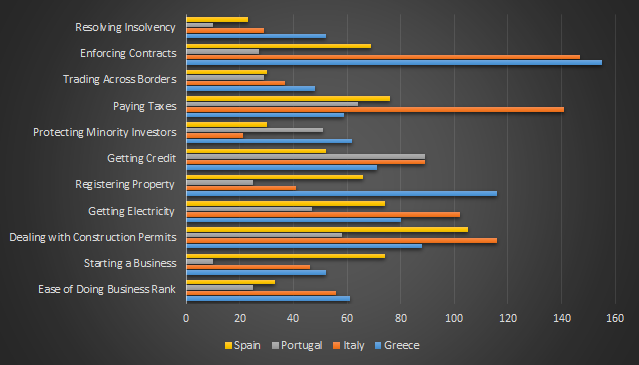
Figure 1: Doing Business rankings, PIGS, 2014
Source: World Bank Doing Business 2015.
All in all, Italy and Greece are a dog of a place to enforce a contract. The long-suffering taxpayer is better off paying taxes in Greece than in Italy! Not surprisingly, trading across borders is the greatest strength in doing business in the PIGS. The European Union does have some benefits.
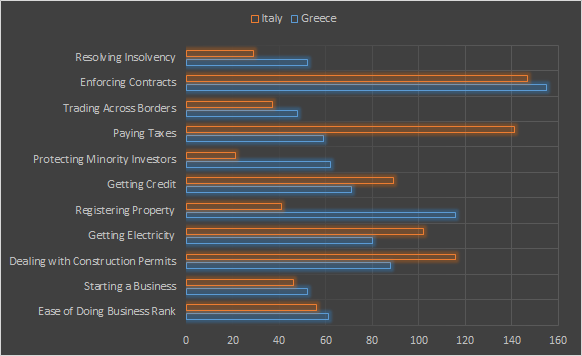
Figure 2: Doing Business rankings, Greece and Italy, 2014
Source: World Bank Doing Business 2015.
All in all, Italy and Greece are equally bad places to do business and Italy is much worse when it comes to taxes. About the only saving graces of Italy is the registration of property and the protection of minority interests in companies.
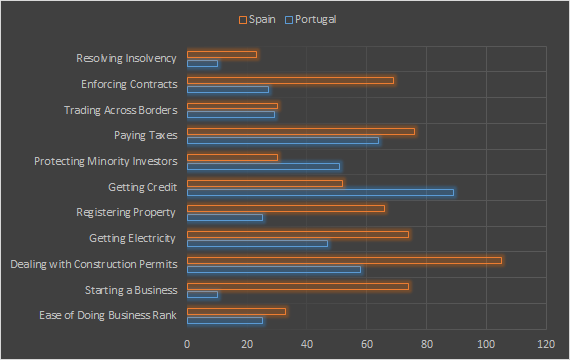
Figure 3: Doing Business rankings, Spain and Portugal, 2014
Source: World Bank Doing Business 2015.
Spain and in particular Portugal are much better places to do business than Italy and Greece.
Why is the gender wage gap mostly an issue now for the middle class and rich?
30 Jun 2015 Leave a comment
in gender, health and safety, labour economics, labour supply, occupational choice Tags: College premium, compensating differentials, gender wage gap, graduate premium, reversing gender wage
Which are the most dangerous jobs?
29 Jun 2015 Leave a comment
in health and safety, labour economics, labour supply, occupational choice Tags: compensating differentials, risk risk trade-off is
Fatal #workplace accidents most prevalent in construction & manufacturing / via @EU_Eurostat
statista.com/chart/3544/eur… http://t.co/gmG6PB5rE3—
Statista (@StatistaCharts) June 10, 2015
Bicycles (at night) must go!
26 Jun 2015 5 Comments
in applied welfare economics, health and safety, transport economics
I had an unnerving near miss at my local roundabout tonight with a bike as I was turning left. The bicycle appeared out of nowhere on my right in the middle of the roundabout as I glanced of the left to check again while turning so I crash stopped.
The bike had a light at the front but wasn’t visible to me until it was halfway into the roundabout when I glanced of the right again. The bike rider was going into that roundabout at a good speed against a wall of car lights behind it, so it was impossible to see it until it was close to the door of my car because of the background of car lighting after dark.

Bike riders have an overinflated self-perception of their visibility at night. Not surprisingly, more accidents happen during peak hours when drivers think motorists can see them when they cannot. 
Even on an empty road, bicycles are not easy to see at night – certainly there not as perceived as quickly as cars. Bicycles are a much more dangerous transport mode than driving a car.
A recent study found the bicycle lighting is overrated as a method of making bikes more conspicuous – perceptions of visibility do not necessarily match reality:
The presence of a bicycle light, whether static or flashing, did not enhance the conspicuity of the bicyclist; this may result in bicyclists who use a bicycle light being overconfident of their own conspicuity at night.
Consider this thought experiment. Suppose bicycles have never been invented until tonight. The business case for allowing them on to the road is as follows:
- Certain pedestrians should be allowed to share the road with cars as long as these pedestrians travel quickly on a metal contraption that is slower than cars, but still allows them to move relatively quickly;
- These fast moving pedestrians are near invisible in rear-view mirrors;
- These fast moving pedestrians should be allowed on the road at night when their visibility is poor against an every-varying contrast of a moving landscape;
- These pedestrians moving quickly at night on the road are overconfident in the extent to which drivers perceive their presence against a moving landscape; and
- Older drivers are 50% less likely to perceive the presence of a bike with lights and illumination at night than are younger drivers.
Would that business case pass under the precautionary principle championed by environmentalists, many of whom are bicyclists? Would that business case pass under normal cost benefit analysis? I say no. Bicycles at night must go.
@MaxRashbrooke The top 1% in New Zealand are lazy and incompetent as a ruling class
24 Jun 2015 1 Comment
in applied price theory, applied welfare economics, economic history, entrepreneurship, health and safety, human capital, industrial organisation, liberalism, Marxist economics, poverty and inequality, Rawls and Nozick, unions Tags: capitalism and freedom, Class war, Joan Robinson, Joseph Schumpeter, social insurance, The Great Enrichment, top 1%, welfare state, withering away in the proletariat
New work by Chris Ball and John Creedy shows substantial *declines* in NZ inequality.
initiativeblog.com/2015/06/24/ine… http://t.co/f94fw4Bhae—
Eric Crampton (@EricCrampton) June 24, 2015
The top 1% in New Zealand really have been dropping the class war ball for at least a generation.
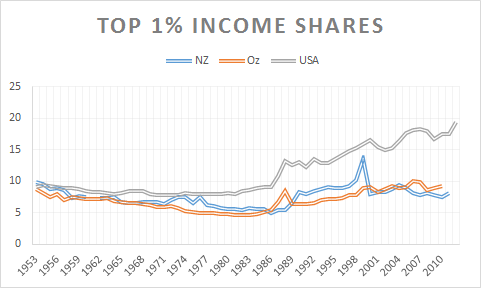
Source: The World Top Incomes Database.
Not only have the New Zealand top 1% been pretty miserable at increasing their share of incomes, hardly any change since 1990 and not much before that, the top 1% allowed inequality in both consumption and disposable income to actually fall since 1990 as shown by Treasury analysis published today.
Joan Robinson was on to this in the 1940s when she said the battle cry of Marxists would have to change from the 1848 version “rise up ye workers, rise up for you have nothing to lose but your chains” to “rise up ye workers, rise up for you have nothing to lose but the prospect of a suburban home and a motorcar”.

Today that battle cry of the Marxist revolution would have to be “rise up ye workers rise up for you have nothing to lose but your iPhone and your air points”. As Joan Robinson observed in the 1940s, that’s not much of a basis for a revolutionary movement.
Dying to be famous: the mortality rates of 1489 rock and pop stars, 1956 and 2006.
24 Jun 2015 Leave a comment
in health and safety, health economics, labour economics, Music, occupational choice Tags: compensating differentials, life expectancy, risk risk trade-offs
Rock/pop star mortality increases relative to the general population with time since fame. Increases are greater in North American stars and those with solo careers.
Relative mortality begins to recover 25 years after fame in European but not North American stars. Those reaching fame from 1980 onwards have better survival rates.
For deceased stars, cause of death was more likely to be substance use or risk-related in those with more adverse childhood experiences.
Those reaching fame from 1980 onwards have better survival rates.
For deceased stars, cause of death was more likely to be substance use or risk-related in those with more adverse childhood experiences.

The entrepreneurial alertness of the Apollo 11 astronauts
22 Jun 2015 Leave a comment
in economic history, economics of media and culture, entrepreneurship, health and safety, labour economics, labour supply, occupational choice Tags: adverse selection, Apollo 11, economics of insurance, entrepreneurial alertness, moon landings, space
DRI-270 for week of 10-6-1: How is Job Safety Produced?
15 Jun 2015 Leave a comment
in health and safety, labour economics Tags: compensating differentials, The Great Escape
This an excellent summary

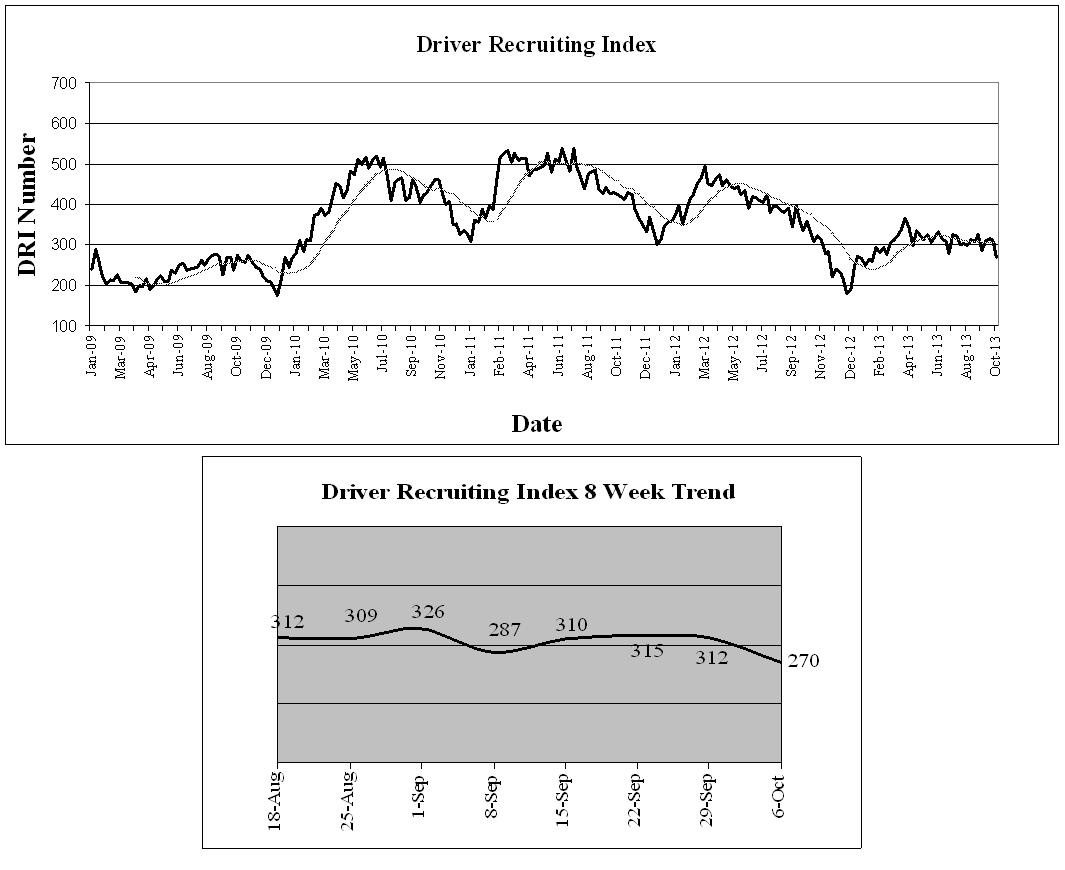
An Access Advertising EconBrief:
How is Job Safety Produced?
The best-selling book on economics in the 20th century was probably Free to Choose, the 1980 defense of free markets by Milton and Rose Friedman. It contained a chapter entitled, “Who Protects the Worker?” In it, the authors highlighted the tremendous improvement in the working conditions and living standards of workers from the Industrial Revolution onward. What, they inquired rhetorically, accounted for this? The Friedmans suggested “labor unions” and “government” as the likely top two answers to any poll taken on this subject.
One of the nation’s leading experts on the subject of risk and safety is W. Kip Viscusi, long an economics professor at Harvard, Duke and Vanderbilt universities and now affiliated with the Independent Institute. In an essay on “Job Safety” for the Fortune Encyclopedia of Economics, Viscusi wrote: “Many people believe that employers do not…
View original post 3,152 more words
Milton Friedman on the essence of the Age of the Worker
13 Jun 2015 Leave a comment
in applied price theory, applied welfare economics, economic growth, economic history, health and safety, income redistribution, industrial organisation, labour economics, labour supply, macroeconomics, Milton Friedman, occupational choice, politics - Australia, politics - New Zealand, politics - USA, Public Choice, rentseeking, unions Tags: competition and monopoly, The Great Enrichment, union power, union wage premium
The Qatar World Cup has a terrible safety record
12 Jun 2015 Leave a comment
in health and safety, labour economics, sports economics Tags: Qatar, soccer, World Cup
"The shocking human toll of FIFA’s corruption" – The Washington Post – wapo.st/1cjC0BZ @BrankoMilan http://t.co/NXa5dqPOVk—
Old Whig (@aClassicLiberal) May 27, 2015
Occupational Health & Safety has come a long way with rising incomes
06 Jun 2015 Leave a comment
Repairing the Hull of the Graf Zeppelin during the flight over the Atlantic, 1934. http://t.co/DhxAiCIowS—
ClassicPics (@History_Pics) May 25, 2015
Hardhats on construction sites were pretty optional back in the day
31 May 2015 Leave a comment
in economic history, health and safety, labour economics, labour supply, occupational choice Tags: Empire State Building, New York City, The Great Escape
The Empire State building is dedicated in NYC. Here's a cool construction photo of the building, May 1st, 1931. http://t.co/map6v6A5dI—
Classic Pics (@classicepics) May 30, 2015


Recent Comments