
The population bust
07 May 2026 Leave a comment
in economics of love and marriage, gender, labour economics, labour supply, law and economics, population economics Tags: ageing society, population bust
African and Muslim roles in the African slave trade
01 May 2026 Leave a comment
in economic history, economics of crime, labour economics, labour supply, law and economics Tags: economics of slavery

The False Simplicity of Blaming “the West” Alone for the African Slave Trade On March 25, 2026, the UN General Assembly adopted a controversial resolution declaring the transatlantic slave trade and racialized chattel enslavement of Africans as the “gravest crime against humanity,” championed by Ghana on behalf of the African Union. The resolution, passed with 123 votes […]
African and Muslim roles in the African slave trade
Technological unemployment in Victorian Britain
29 Apr 2026 Leave a comment
in applied price theory, econometerics, economic history, human capital, labour economics, labour supply, occupational choice Tags: creative destruction
We do not know whether technological unemployment swept across England in the wake of the British Industrial Revolution. In this paper, I propose an approach to quantify jobs lost to, and created by, creative destruction in the 19th century. Using over 170 million individual records from the full-count British census (1851–1911), I generate sub-industry “task”…
Technological unemployment in Victorian Britain
The Luddites Were the First to Attack AI
28 Apr 2026 Leave a comment
in applied price theory, economic history, industrial organisation, labour economics, labour supply Tags: creative destruction
Everyone knows the Luddites smashed looms. What is less appreciated is that the loom was the first serious programmable device — the direct ancestor of the computer. Thus, the Luddites weren’t just the first to resist automation. They were the first to attack AI. The Jacquard loom, introduced in France circa 1805, used a chain…
The Luddites Were the First to Attack AI
Why do Americans No Longer Work So Much More Than Non-Americans?
27 Apr 2026 Leave a comment
in applied price theory, econometerics, economic history, labour economics, labour supply
In the 1990s, Americans used to work much more than non-Americans. Nowadays, about half of the gap in hours worked has reversed. To evaluate the convergence of working hours, we develop a tractable model of labor supply enriched with multiple sources of heterogeneity across individuals, an extensive margin of participation, multi-member households, and an elaborate…
Why do Americans No Longer Work So Much More Than Non-Americans?
Quotation of the Day…
25 Apr 2026 Leave a comment
in applied price theory, history of economic thought, industrial organisation, international economics, labour economics, labour supply Tags: India

Tweet… is from page 150 of Columbia University economics professor Arvind Panagariya’s brilliant 2019 book, Free Trade and Prosperity: In India, Bihar is the poorest state and Kerala one of the richest. Going by the Gini coefficient, Bihar is among the states with the least inequality and Kerala among those with the highest inequality. If…
Quotation of the Day…
The Washington Post vs Elizabeth Warren
25 Apr 2026 Leave a comment
in applied price theory, economics of media and culture, fiscal policy, human capital, income redistribution, labour economics, labour supply, macroeconomics, politics - USA, Public Choice, public economics Tags: taxation and entrepreneurship, taxation and investment, taxation and labour supply
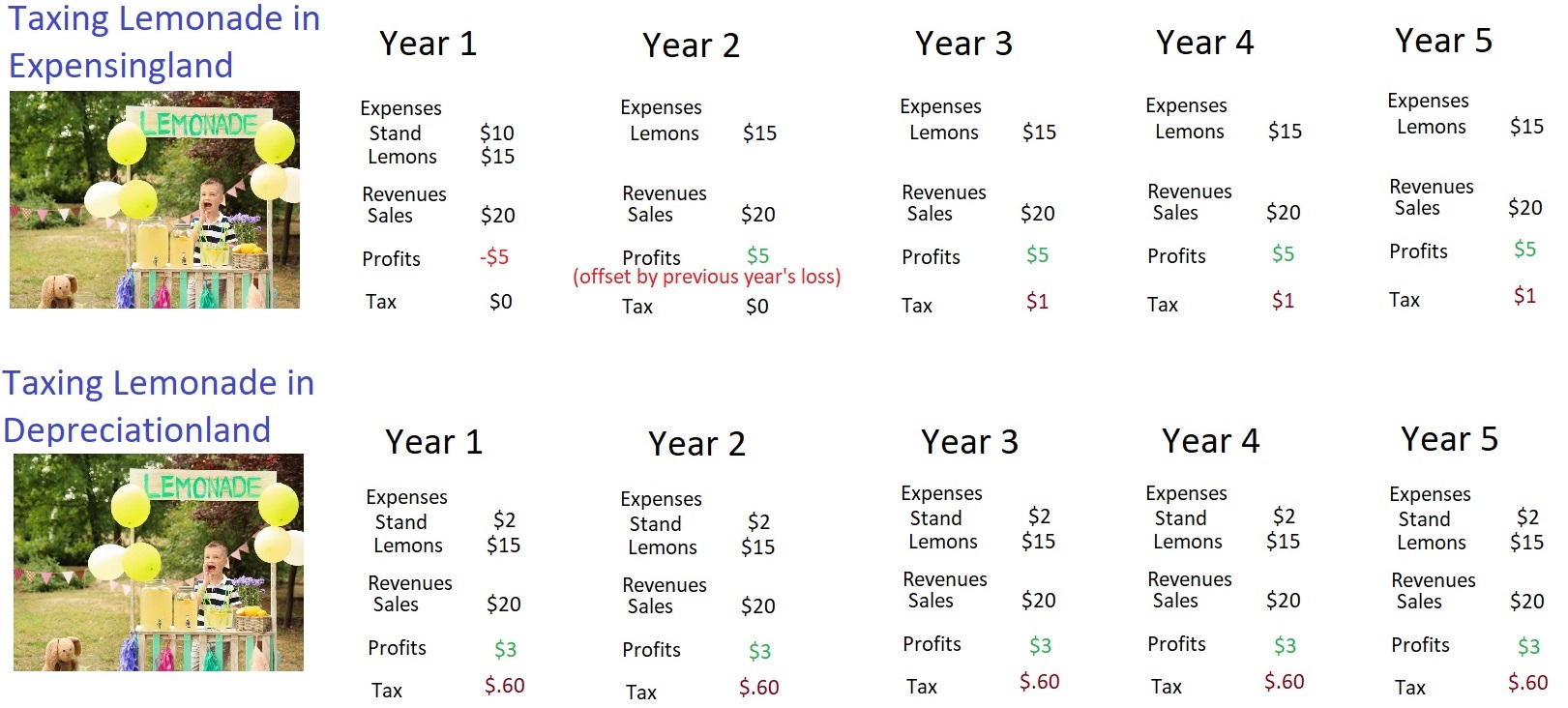
People sometimes will get excited about big-picture tax fights – whether politicians should raise taxes, whether they should add a VAT, or whether they should scrap the IRS for a flat tax. On the other had, there are a handful of tax issues that induce drowsiness but are nonetheless very important for purposes of tax […]
The Washington Post vs Elizabeth Warren
The Chinese Current Account Imbalances
21 Apr 2026 Leave a comment
in applied price theory, development economics, econometerics, economic history, economics of love and marriage, financial economics, growth miracles, labour economics, labour supply, population economics Tags: China
The subtitle of the paper is Puzzles, Patterns, and Possible Causes. Here is the abstract: China’s large current account surplus has been an irritant to its trading partners. While industrial and trade policies often lead to sector-level imbalances, they play a relatively limited role in the economy-wide surplus. Structural factors such as an unbalanced sex…
The Chinese Current Account Imbalances
Does this have implications for higher ed in particular?
20 Apr 2026 Leave a comment
in economics of education, human capital, labour economics, labour supply, population economics
Declining fertility and population loss pose significant challenges for state and federal local governments responsible for providing a range of services to citizens, including education, health care, and infrastructure. Indeed, many areas are already experiencing outright population decline, with roughly half of U.S. counties losing population between 2010 and 2020. This paper examines how shrinking…
Does this have implications for higher ed in particular?
The Laffer Curve and Limits to Class Warfare Tax Policy, Part II
19 Apr 2026 Leave a comment
in applied price theory, econometerics, entrepreneurship, fiscal policy, human capital, income redistribution, labour economics, labour supply, macroeconomics, poverty and inequality, Public Choice, public economics Tags: taxation and entrepreneurship, taxation and investment, taxation and labour supply
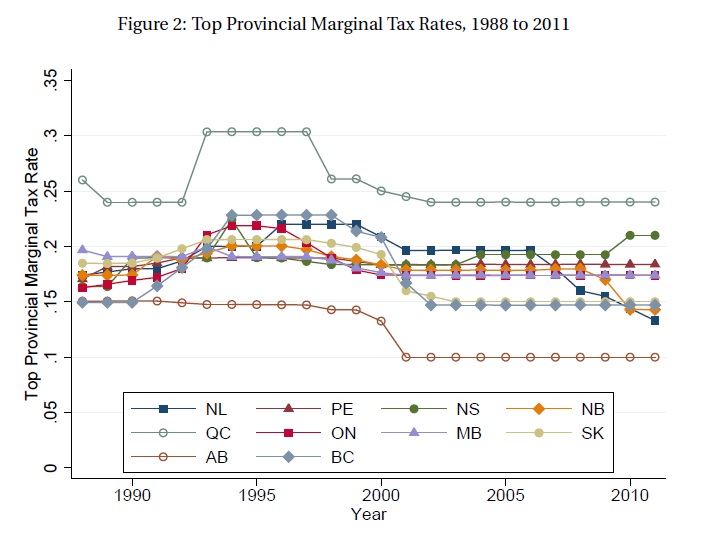
In Part I of this series back in 2014, we looked at some academic research from Canada showing that the revenue-maximizing tax rate on the richest taxpayers was 27.5 percent. A key insight from that research is that high-income taxpayers have considerable control over the timing, level, and composition of their income (just like in […]
The Laffer Curve and Limits to Class Warfare Tax Policy, Part II
The President(s) Fought the Law and the Law Won
18 Apr 2026 Leave a comment
in applied price theory, economic history, history of economic thought, income redistribution, industrial organisation, international economics, labour economics, labour supply, politics - USA, poverty and inequality, Public Choice, rentseeking, survivor principle Tags: creative destruction, free trade, tarrifs
In our textbook, Modern Principles, Tyler and I emphasize that Congress and the President are subject to a higher law, the law of supply and demand. In an excellent column, Jason Furman gives a clear example of how difficult it is to fight the law of inelastic demand: …Today a given number of autoworkers can…
The President(s) Fought the Law and the Law Won
Migrant Income and Long-Run Economic Development
13 Apr 2026 Leave a comment
in development economics, labour economics, labour supply Tags: economics of immigration
We study how international migrant income prospects affect long-run development in origin areas. We leverage the 1997 Asian Financial Crisis exchange rate shocks in a shift-share identification strategy across Philippine provinces. Initial migrant income shocks are magnified six-fold over time, increasing domestic income, education levels, migrant skills, and high-skilled migration. Remarkably, 74.9 percent of long-run…
Migrant Income and Long-Run Economic Development
Why “Gini Coefficients” Are Meaningless
09 Apr 2026 Leave a comment
in economics of education, entrepreneurship, financial economics, history of economic thought, human capital, industrial organisation, labour economics, labour supply, occupational choice, poverty and inequality

I created the 8th Theorem of Government because it’s important to distinguish between people who want to help the poor and people who want to punish the rich. The former group has good motives while the latter group has ignoble motivations. Envy (common among the leftist intelligentsia) Public choice (common among leftist politicians) Zero-sum illiteracy […]
Why “Gini Coefficients” Are Meaningless
The CA Minimum Wage Increase: Summing Up
06 Apr 2026 1 Comment
in applied price theory, econometerics, economics of regulation, income redistribution, labour economics, labour supply, politics - USA, Public Choice, unemployment
Two recent joint-papers Did California’s Fast Food Minimum Wage Reduce Employment? by Clemens, Edwards and Meer and The Effects of California’s $20 Fast Food Minimum Wage on Prices by Clemens, Edwards, Meer and Nguyen give what I think is a plausible and consistent account of California’s $20 fast food minimum wage. California’s $20 fast food…
The CA Minimum Wage Increase: Summing Up
Does working from home raise lifetime fertility?
06 Apr 2026 Leave a comment
in applied price theory, economics of love and marriage, labour economics, labour supply, population economics Tags: economics of fertility, economics of pandemics
See Work from Home and Fertility by Steven J. Davis, Cevat Giray Aksoy, Jose Maria Barrero, Nicholas Bloom, Katelyn Cranney, Mathias Dolls & Pablo Zarate. Abstract”We investigate how fertility relates to work from home (WFH) in the post-pandemic era, drawing on original data from our Global Survey of Working Arrangements and U.S. Survey of Working Arrangements…
Does working from home raise lifetime fertility?


Recent Comments