Do musicians ever make any money from recording music?
24 Mar 2016 Leave a comment
in economics of media and culture, labour economics, labour supply, Music, occupational choice

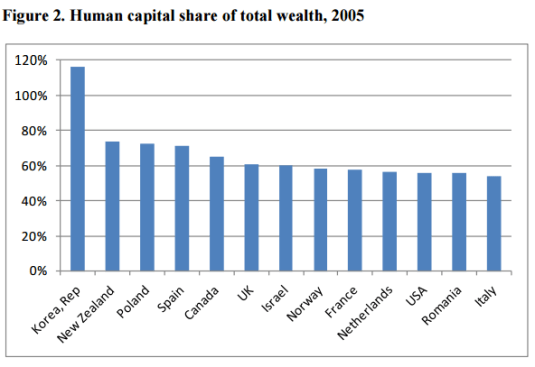
Human capital = 70% NZ’s wealth @WJRosenbergCTU @EricCrampton
24 Mar 2016 Leave a comment
in economics of education, human capital
Median Income for Married Couples with Both Spouses Working
23 Mar 2016 Leave a comment
in economic history, economics of love and marriage, labour economics Tags: asymmetric marriage premium, middle class stagnation, pessimism bias, wage stagnation
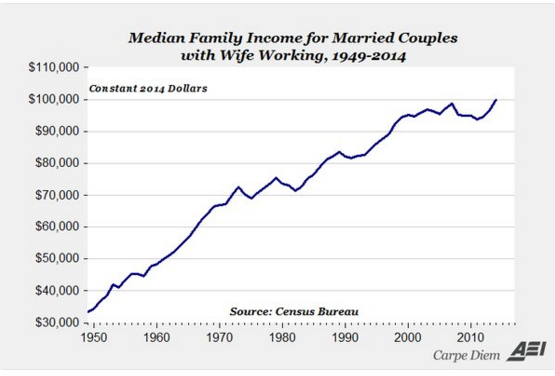
Source: Mark Perry.
What to study if you want to become an evil scientist
22 Mar 2016 Leave a comment
in labour economics, occupational choice Tags: compensating differentials
The 1st @PaulKrugman on @GrantRobertson1’s #futureofwork?
21 Mar 2016 Leave a comment
in economics of regulation, labour economics, minimum wage, politics - USA, poverty and inequality, unemployment Tags: employment law, employment protection laws, France, labour market regulation, New Zealand Labour Party, rent control, social insurance, The fatal conceit, unintended consequences
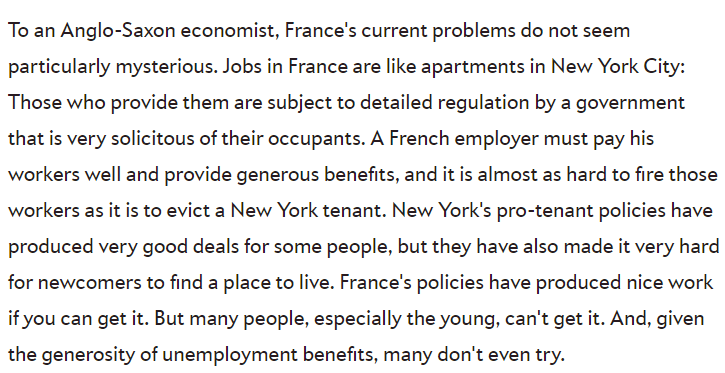
Source: Paul Krugman (1997) Unmitigated Gauls.
Just exactly how big is @grantrobertson1’s great big new tax?
20 Mar 2016 1 Comment
in labour economics, labour supply, politics - USA, poverty and inequality, welfare reform Tags: Director's Law, universal basic income
https://twitter.com/grantrobertson1/status/711303279284629505
Gareth Morgan’s universal basic income, by his own calculations, make well-to-do people better off and the poor and old age pensioners worse off at the cost of $12 billion tax rise. The Labour Party has now adopted this policy as worth considering.

Source: Gareth Morgan Presentation Slide 20 of 27 | Big Kahuna Book.
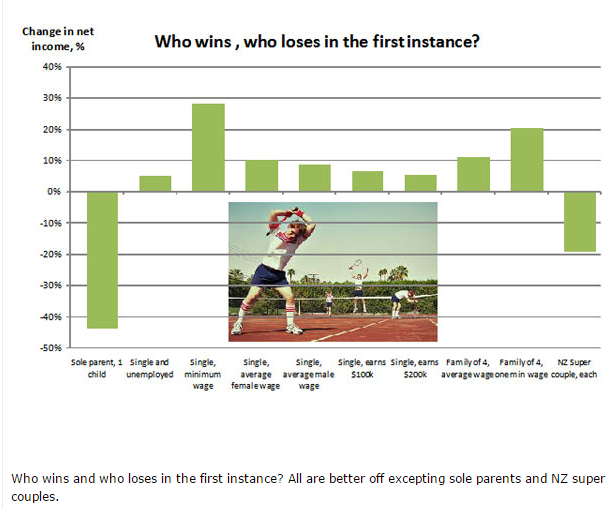
Source: Gareth Morgan Presentation Slide 20 of 27 | Big Kahuna Book.
Usual hours worked per New Zealand working week
20 Mar 2016 Leave a comment
in entrepreneurship, labour economics, labour supply Tags: hours worked, inherent inequality of bargaining power, self-employed, small business
45% of New Zealand employers work at least 50 hours per week and 25% of the work at least 60 hours per week. Less than 15% of permanent employees work similar hours. Who is exploiting whom in the inherent inequality of bargaining power between employers and workers?
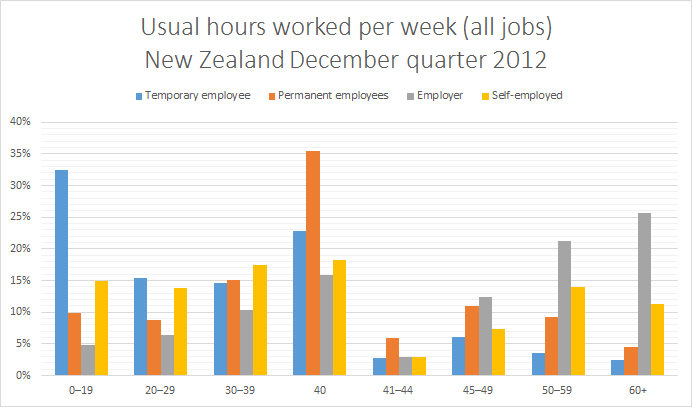
Source: Statistics New Zealand Survey of Working Life: December 2012 quarter.
The self-employed in the above chart employ no one else. Self-employed who also hire others are included in employers. In consequence, many of the self-employed are contractors rather than small business owners.
The US gender wage gap by level of education
20 Mar 2016 Leave a comment
in discrimination, economics of education, gender, human capital, labour economics Tags: gender wage gap
Unadjusted US gender wage gap at the 10th, 50th and 90th percentiles in 1980, 1989, 1998 and 2010
19 Mar 2016 Leave a comment
in discrimination, economic history, gender, human capital, labour economics, labour supply, occupational choice Tags: compensating differentials, gender wage gap
Much ducking and diving is required to explain why the women with most options in life have the largest gender wage gap.
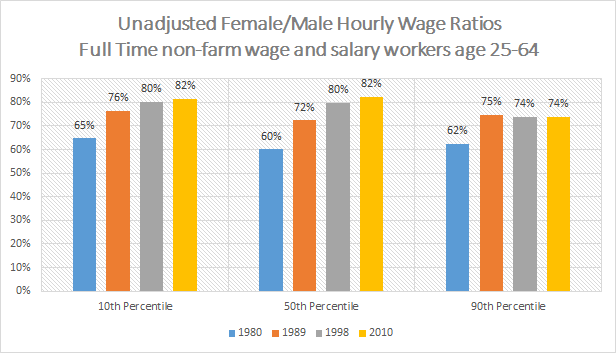
Source: The Gender Wage Gap: Extent, Trends, and Explanations by Francine D. Blau, Lawrence M. Kahn :: SSRN via Panel Study of Income Dynamic (PSID).
How is the gender pay gap going in the USA since 1980, adjusted and unadjusted?
19 Mar 2016 Leave a comment
in discrimination, gender, human capital, labour economics, labour supply, occupational choice, politics - USA Tags: compensating differentials, gender wage gap
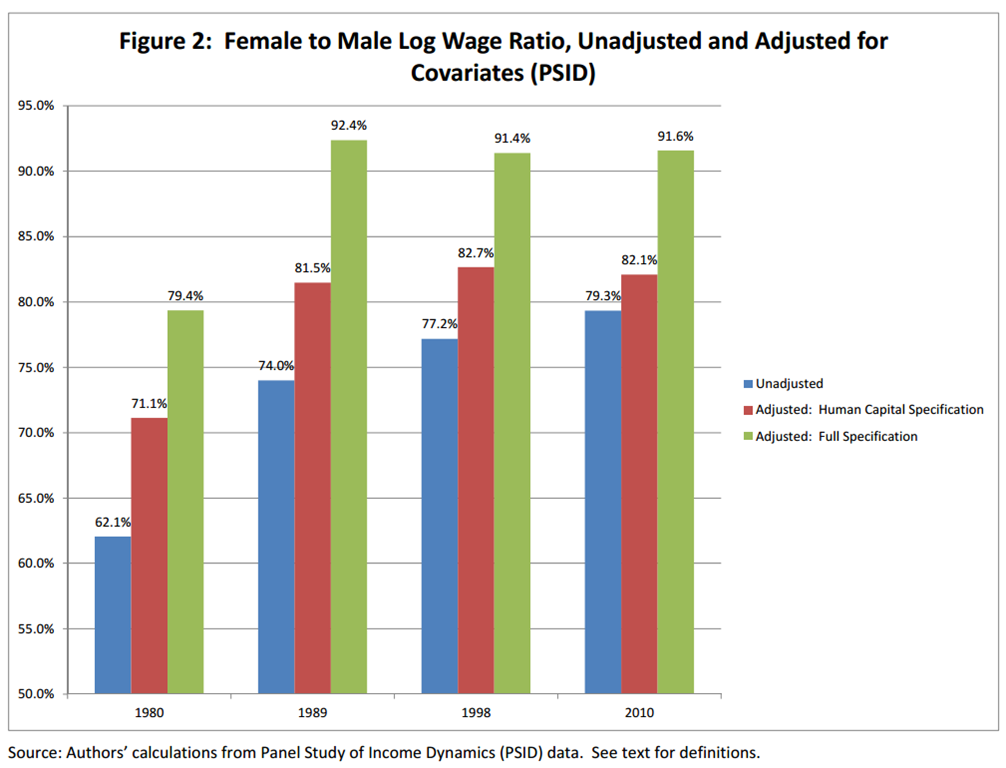
Source: The Gender Wage Gap: Extent, Trends, and Explanations by Francine D. Blau, Lawrence M. Kahn :: SSRN
The rising marriage premium for power couples
19 Mar 2016 Leave a comment
in economics of education, economics of love and marriage, economics of marriage, labour economics, population economics, poverty and inequality
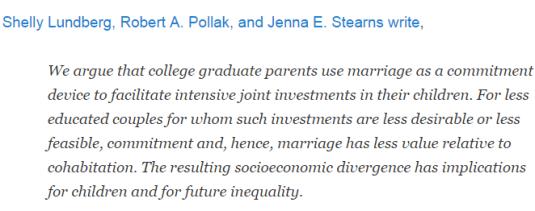
Source: Four Forces Watch | askblog.
Pizza and Conversation with James Heckman
19 Mar 2016 Leave a comment
in applied price theory, applied welfare economics, economics, economics of education, human capital, labour economics, labour supply, poverty and inequality Tags: James Heckman
Poverty rates in two-earner families in the USA
19 Mar 2016 Leave a comment
in labour economics, labour supply, occupational choice, poverty and inequality, welfare reform Tags: asymmetric marriage premium, child poverty, family poverty

HT: Matt Bruenig
@James_ARobins yet another @MaxRashbrooke #inequality fact check
17 Mar 2016 Leave a comment
in applied welfare economics, economic growth, economic history, labour economics, poverty and inequality, unemployment Tags: antimarket bias, pessimism bias, rational irrationality, The Great Enrichment, top 1%

Source: Do inequality and poverty matter? | Pundit – Brian Easton (2016) .
I will outsource to Brian Easton, the CTU, the CTU’s Bill Rosenberg and Closer Together Whakatata Mai – reducing inequalities because the continual correction of Max Rashbrooke on poverty and inequality is becoming tiring.
Source: Love in the time of crisis, James Robins, Wednesday, 16 March 2016, Newstalk NZ.
A brief history of inequality-from Treasury paper Fig4. Note Employment Contracts Act,GST,income tax,benefit cuts,WFF http://t.co/y4w3cUsgjD—
Bill Rosenberg (@WJRosenbergCTU) June 27, 2015
Inequality has not risen for at least 20 years as Bill Rosenberg tweeted. The rise in inequality in the late 1980s and early 1990s was followed by an employment boom that lasted to 2009.
Unemployment was as low as 3 1/2% for several years despite a large increase in labour force participation. Furthermore, the gender wage gap in New Zealand fell rapidly to now be the smallest in any industrialised country.
As the Facebook photos show, there has been strong income and wage growth despite the grizzling of the left. The return of income growth and wages growth after 20 years of real wage stagnation followed the economic reforms of the 1980s and the passage of the Employment Contracts Act in 1991.
As the CTU shows below, the economic reforms in the 1980s put an end to a sharp decline in the relative economic performance of the New Zealand economy.


Recent Comments