The Auckland University Freedom of Expression Statement looks very good. It is clear with few weasel words. Key extracts: The University actively fosters and supports lawful and constructive debate by its staff and students on any topic, including with the participation of external speakers invited by a staff member, or a recognised student association or student…
Auckland Uni gets it right
Auckland Uni gets it right
29 Dec 2025 Leave a comment
in economics of bureaucracy, economics of education, liberalism, Marxist economics, politics - New Zealand, Public Choice Tags: free speech, political correctness, regressive left
Celebrating Two Years of Libertarian Success in Argentina
27 Dec 2025 Leave a comment
in applied price theory, Austrian economics, budget deficits, comparative institutional analysis, constitutional political economy, development economics, economic growth, economics of bureaucracy, economics of regulation, fiscal policy, growth disasters, history of economic thought, income redistribution, industrial organisation, labour economics, liberalism, libertarianism, macroeconomics, Public Choice, rentseeking, unemployment Tags: Argentina
As explained in my four-part series (here, here, here, and here) and in this clip from a recent interview, Javier Milei’s first two years have been amazingly successful. There are two points in the interview that deserve emphasis. First, Javier Milei’s libertarian policies already have been extremely beneficial for the Argentine economy. Inflation has dramatically […]
Celebrating Two Years of Libertarian Success in Argentina
Fuel rationing chaos looms in New York State
25 Dec 2025 Leave a comment
in economics of bureaucracy, economics of climate change, economics of regulation, energy economics, environmental economics, environmentalism, global warming, politics - USA, Public Choice, transport economics Tags: electric cars
Rationing gasoline and diesel under the Climate Act is a predictable prescription for chaos. It is the mobility these motor fuels provide that guarantees rationing to meet the 2030 emissions target will not work.
Fuel rationing chaos looms in New York State
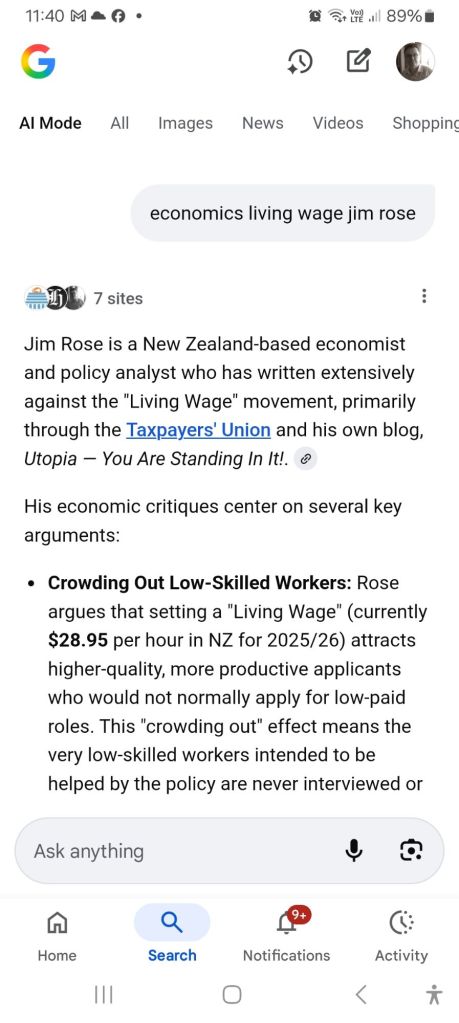
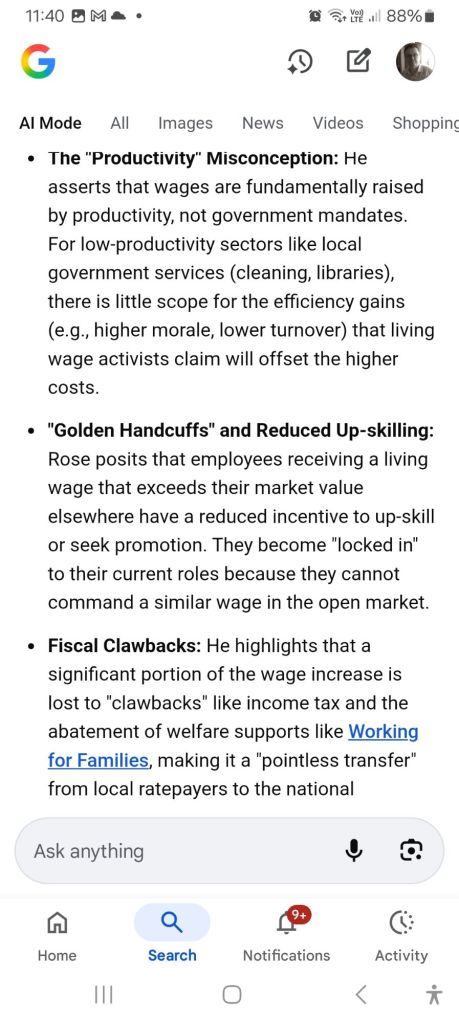
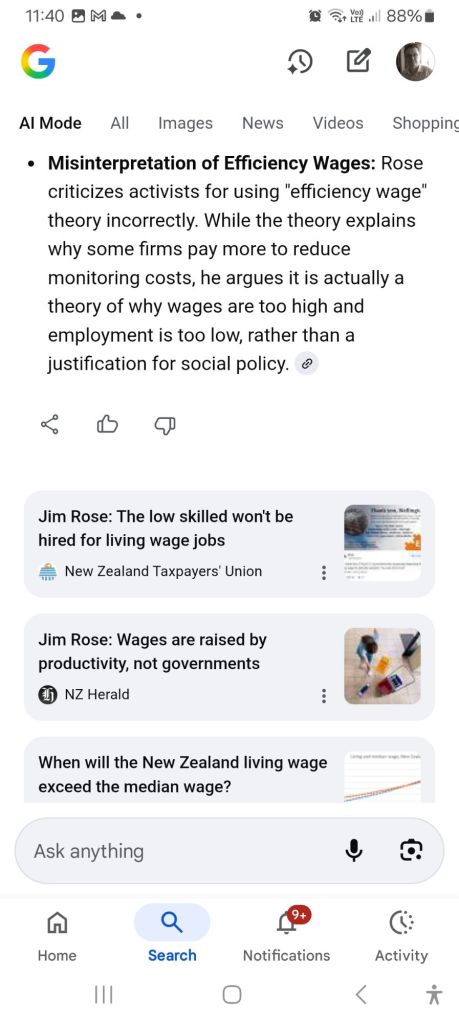
AI summary of my living wage paper
24 Dec 2025 Leave a comment
in applied price theory, history of economic thought, income redistribution, job search and matching, labour economics, labour supply, macroeconomics, minimum wage, politics - New Zealand, poverty and inequality, Public Choice, rentseeking Tags: living wage
STEVE MILLOY: Trump Dismantles Climate-Industrial Complex
23 Dec 2025 Leave a comment
in economics of bureaucracy, economics of climate change, economics of education, economics of natural disasters, economics of regulation, energy economics, environmental economics, environmentalism, global warming, politics - USA, Public Choice Tags: climate alarmism
The Trump administration took a major whack at the climate-industrial complex this week. It’s a fantastic move. But another event this week spotlights the need to do more.
STEVE MILLOY: Trump Dismantles Climate-Industrial Complex
A tale of two cities and rent control
23 Dec 2025 Leave a comment
in applied price theory, comparative institutional analysis, econometerics, economics of regulation, law and economics, market efficiency, property rights, Public Choice, rentseeking, urban economics Tags: rent control
WSJ: What the Twin Cities Tell Us About Fixing the Housing CrisisThe Natural Experiment: In 2022, St. Paul enacted one of the strictest rent-control regimes in the country. The ordinance capped annual rent increases at 3% for most apartments, even empty ones. It didn’t adjust for inflation. … Across the Mississippi River, Minneapolis steered clear of rent…
A tale of two cities and rent control
Time to Stop Pretending Renewables Are Cheap
14 Dec 2025 1 Comment
in economics of climate change, economics of regulation, energy economics, entrepreneurship, environmental economics, environmentalism, global warming, politics - Australia, politics - New Zealand, politics - USA, Public Choice, rentseeking Tags: celebrity technologies, solar power, wind power
Policymakers would do well to heed energy experts like Schernikau and Stein. Chasing luxury beliefs do not cost well-heeled climate bureaucrats and renewables ideologues much, but the burdens of irrational energy policies will be borne by the world’s poorest. The real path forward lies in pragmatic, technology-neutral approaches that prioritise energy abundance over austerity.
Time to Stop Pretending Renewables Are Cheap
New Zealand’s Planning Revolution: bye bye RMA
13 Dec 2025 Leave a comment
in applied price theory, economics of bureaucracy, economics of regulation, law and economics, politics - New Zealand, property rights, Public Choice, urban economics Tags: housing affordability, land supply, zoning

Inside the reform that will change how New Zealand is built Ani O’Brien writes – If you’ve ever tried to build a deck, subdivide a section, or watched a major infrastructure project slowly suffocate in a decade of “consenting hell,” you already know the RMA is New Zealand’s great productivity killer. For over 30 years, […]
New Zealand’s Planning Revolution: bye bye RMA
Humanity Has a Huge Surplus of Economic Misunderstanding
13 Dec 2025 Leave a comment
in applied price theory, history of economic thought, industrial organisation, international economics, politics - USA, Public Choice, rentseeking Tags: free trade, tarrifs
TweetHere’s a letter to AP Fact Check. Editor: Melissa Goldin does a deep dive into the cause(s) of the U.S. “agricultural trade deficit” (“FACT FOCUS: Trump blames Biden for the agricultural trade deficit. It’s not that simple,” December 10). To what extent is this “deficit” caused by the policies of Biden? To what extent is…
Humanity Has a Huge Surplus of Economic Misunderstanding
Greyhound racing law change is legal overreach
12 Dec 2025 Leave a comment
in economics of bureaucracy, economics of regulation, law and economics, politics - New Zealand, property rights, Public Choice, public economics, sports economics Tags: constitutional law, takings
Oliver Hartwich writes – Let me state this clearly at the outset: I have never placed a bet on a greyhound. I have never owned a greyhound. If I were a dog, I would likely prefer a soft sofa to a hard track. I am not writing this because I have a passion for racing, […]
Greyhound racing law change is legal overreach
Congressional leadership is corrupt
11 Dec 2025 Leave a comment
in applied price theory, econometerics, economic history, financial economics, politics - USA, Public Choice
Using transaction-level data on US congressional stock trades, we find that lawmakers who later ascend to leadership positions perform similarly to matched peers beforehand but outperform them by 47 percentage points annually after ascension. Leaders’ superior performance arises through two mechanisms. The political influence channel is reflected in higher returns when their party controls the…
Congressional leadership is corrupt
The state of the books
11 Dec 2025 Leave a comment
in budget deficits, fiscal policy, macroeconomics, politics - New Zealand, Public Choice, public economics
Eric Crampton writes – StatsNZ has put up its year-end accounts for the government, split out across functional areas. Their data goes back to 2009 in the main table; I’m sure earlier data’s available somewhere in Infoshare. But sticking with the Excel sheet they’ve provided, we can lob in June-year population statistics and June quarter […]
The state of the books
Humphrey’s Estate and Jackson’s Experts: Supreme Court Justice Offers Surprising View of the Separation of Powers
10 Dec 2025 Leave a comment
in economics of bureaucracy, law and economics, politics - USA, Public Choice Tags: constitutional law

As I discussed in yesterday’s coverage of the oral arguments in Trump v. Slaughter, the argument went poorly for those…
Humphrey’s Estate and Jackson’s Experts: Supreme Court Justice Offers Surprising View of the Separation of Powers
Germany’s Accelerating Fiscal and Economic Decline
09 Dec 2025 Leave a comment
in budget deficits, economic growth, economic history, fiscal policy, income redistribution, labour economics, labour supply, macroeconomics, Public Choice, public economics Tags: ageing society, Germany
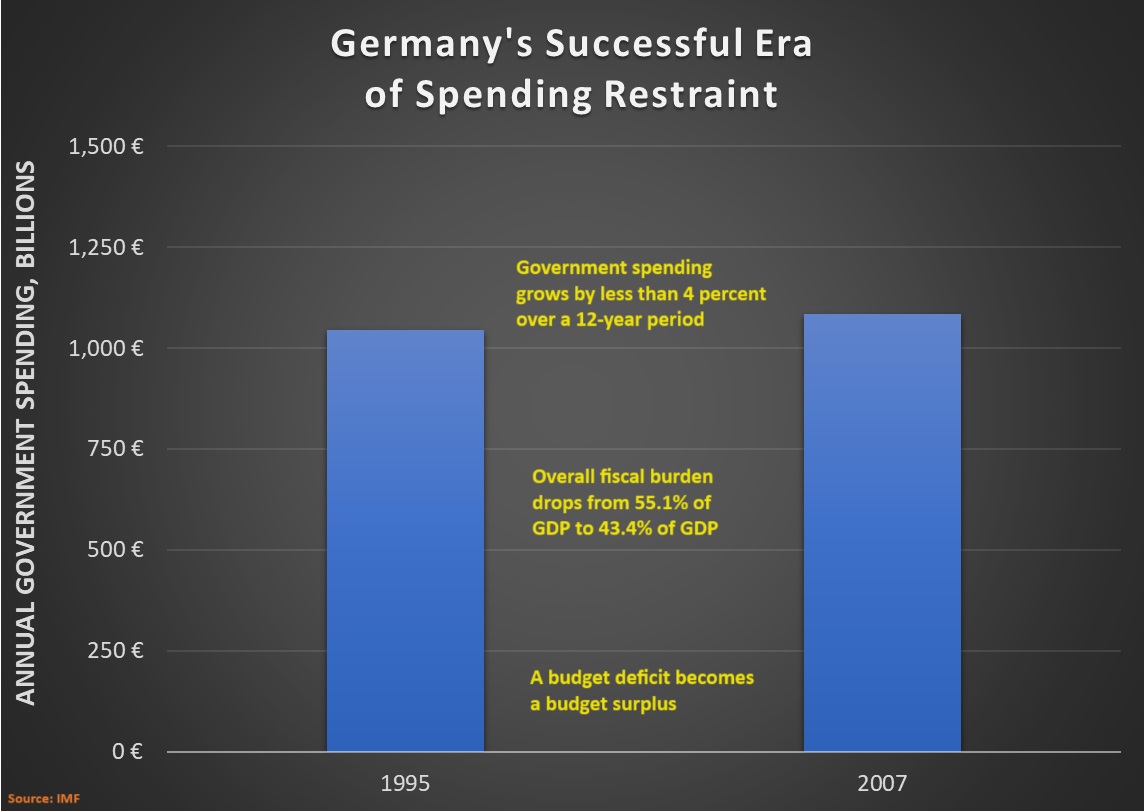
A lot has happened if you look at the past 100 years of German economic policy. Hyperinflation leading to Hitler’s National Socialists taking power. An impressive free-market revival after World War II. A growing welfare state after the imposition of a value-added tax in the 1960s. Some semi-impressive spending restraint starting in the mid-1990s. Very […]
Germany’s Accelerating Fiscal and Economic Decline
Political pressure on the Fed
05 Dec 2025 Leave a comment
in business cycles, econometerics, economic history, economics of bureaucracy, macroeconomics, monetary economics, politics - USA, Public Choice Tags: monetary policy
From a forthcoming paper by Thomas Drechsel: This paper combines new data and a narrative approach to identify variation in political pressure on the Federal Reserve. From archival records, I build a data set of personal interactions between U.S. Presidents and Fed officials between 1933 and 2016. Since personal interactions do not necessarily reflect political…
Political pressure on the Fed


Recent Comments