Lyric Waiwiri-Smith at The Spinoff asked me what I thought the options might be for dealing with rising superannuation costs. Her story’s here, along with comment from Max Rashbrooke and Shamubeel Eaqub. My most-preferred option is ongoing increases in immigration rates, coupled with shifting to CPI-indexation of super benefits and indexing the age of eligibility to healthy…
Superannuation affordability options
Superannuation affordability options
09 Jun 2026 Leave a comment
in economic growth, fiscal policy, income redistribution, labour economics, labour supply, macroeconomics, politics - New Zealand, Public Choice, public economics Tags: ageing society, economics of immigration, population bust
Europe’s War on Wealth
29 May 2026 Leave a comment
in applied price theory, economic growth, economic history, fiscal policy, income redistribution, industrial organisation, labour economics, labour supply, macroeconomics, occupational choice, P.T. Bauer, poverty and inequality, Public Choice, public economics Tags: European Union

Given the relative economic weakness that plagues most European nations (documented here, here, here, here, and here), a top priority for policy makers should be to improve incentives for wealth creation. But that assumes politicians care about the prosperity of citizens. Based on a new report from the European Commission, the answer is no. Instead of […]
Europe’s War on Wealth
Liberal Economists Score an Own Goal Against Bezos
25 May 2026 Leave a comment
in applied price theory, fiscal policy, James Buchanan, labour economics, labour supply, macroeconomics, Public Choice, public economics
Jeff Bezos tweeted: Yes, the United States has the most progressive tax system in the world. The top 1% pay 40% of taxes, the bottom 50% pay 3% of taxes. We can make it even more progressive by zeroing out taxes on the bottom half. It’s a small amount of the total tax revenue but…
Liberal Economists Score an Own Goal Against Bezos
The (Amusingly) Destructive Economics of Wealth Taxation
24 May 2026 Leave a comment
in applied price theory, economic growth, entrepreneurship, fiscal policy, human capital, income redistribution, labour economics, labour supply, macroeconomics, poverty and inequality, Public Choice, public economics Tags: taxation and entrepreneurship, taxation and investment, taxation and labour supply
I’ve shared several columns (here, here, here, here, and here) reviewing scholarly research on the harmful economic impact of wealth taxation. From now on, however, I think I’ll simply share this clever video from the folks at Reason. The video uses humor to make very important points about how a wealth tax would diminish incentives […]
The (Amusingly) Destructive Economics of Wealth Taxation
The Rise and Fall (and Rise) of Sweden, Part IV
23 May 2026 Leave a comment
in applied price theory, comparative institutional analysis, economic growth, economic history, economics of regulation, industrial organisation, international economics, macroeconomics, public economics Tags: Sweden

I don’t often claim to be ahead of the curve, but I’m going to pat myself on the back in today’s column about Swedish economic policy. More than 16 years ago, I started writing about Sweden’s shift from statism to markets. More than 14 years ago, I praised Swedish policy makers for significantly reducing the […]
The Rise and Fall (and Rise) of Sweden, Part IV
Iceland’s Superb Private Retirement System
17 May 2026 Leave a comment
in fiscal policy, labour economics, macroeconomics, Public Choice, public economics Tags: Iceland

Over the years, I’ve written about the successful private retirement systems in jurisdictions such as Australia, Chile, Switzerland, Hong Kong, Netherlands, the Faroe Islands, Denmark, Israel, and Sweden. Today’s column will add to the collection because we’re going to look at Iceland’s remarkable system of personal retirement accounts. We’ll start with two charts. Here’s a […]
Iceland’s Superb Private Retirement System
The Washington Post vs Elizabeth Warren
25 Apr 2026 Leave a comment
in applied price theory, economics of media and culture, fiscal policy, human capital, income redistribution, labour economics, labour supply, macroeconomics, politics - USA, Public Choice, public economics Tags: taxation and entrepreneurship, taxation and investment, taxation and labour supply
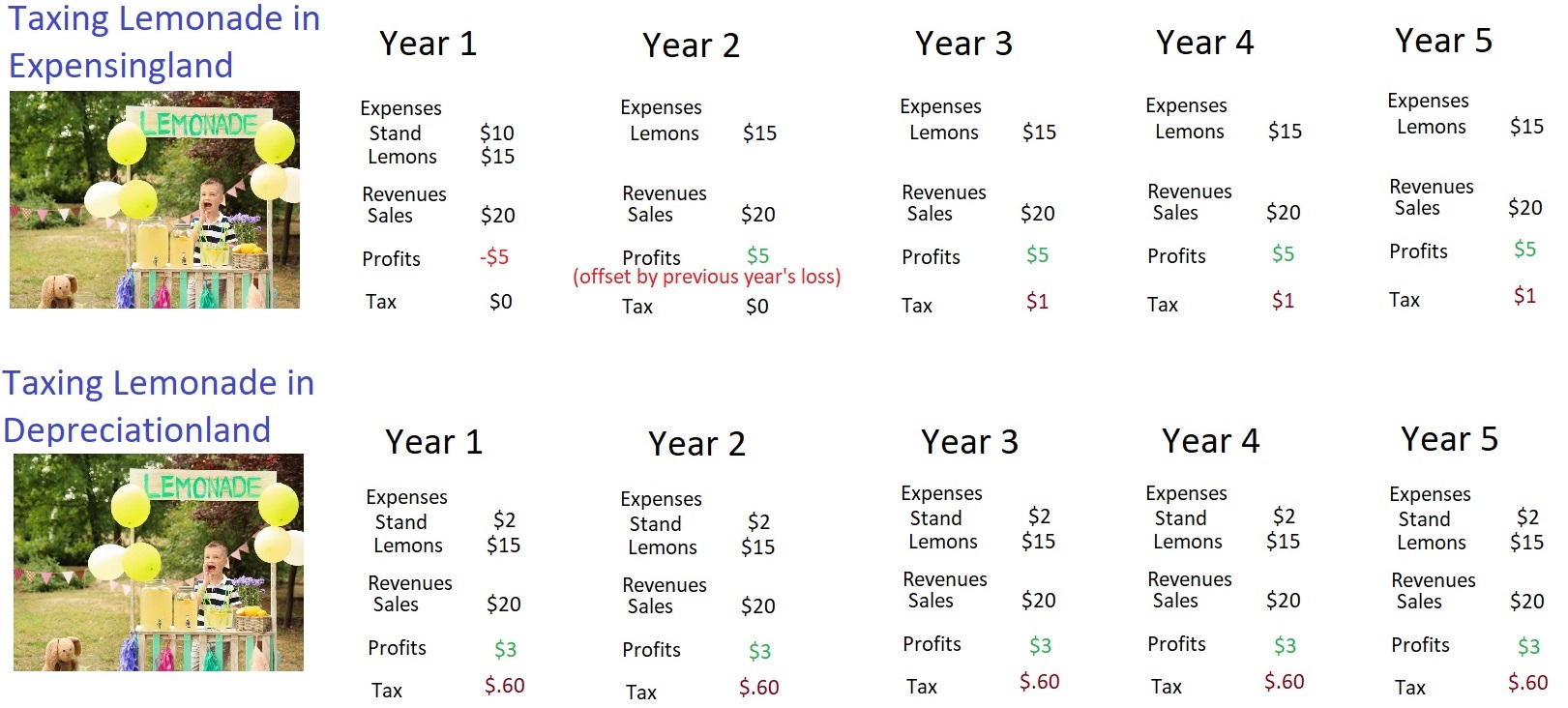
People sometimes will get excited about big-picture tax fights – whether politicians should raise taxes, whether they should add a VAT, or whether they should scrap the IRS for a flat tax. On the other had, there are a handful of tax issues that induce drowsiness but are nonetheless very important for purposes of tax […]
The Washington Post vs Elizabeth Warren
The Laffer Curve and Limits to Class Warfare Tax Policy, Part II
19 Apr 2026 Leave a comment
in applied price theory, econometerics, entrepreneurship, fiscal policy, human capital, income redistribution, labour economics, labour supply, macroeconomics, poverty and inequality, Public Choice, public economics Tags: taxation and entrepreneurship, taxation and investment, taxation and labour supply
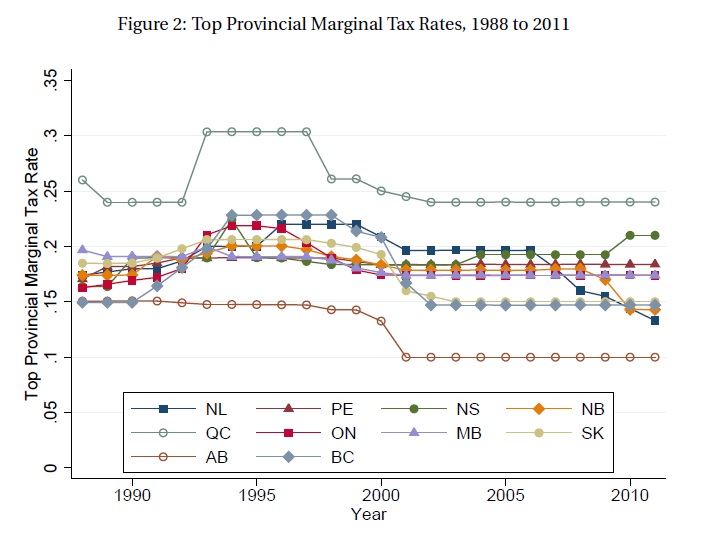
In Part I of this series back in 2014, we looked at some academic research from Canada showing that the revenue-maximizing tax rate on the richest taxpayers was 27.5 percent. A key insight from that research is that high-income taxpayers have considerable control over the timing, level, and composition of their income (just like in […]
The Laffer Curve and Limits to Class Warfare Tax Policy, Part II
Chi-Town Meltdown: Chicago Ramps Up Taxes and Debt in Familiar Death Spiral
23 Mar 2026 Leave a comment
in politics - USA, public economics, urban economics

As a Chicago native, I have watched my home city unravel under the policies of Mayor Brandon Johnson and the…
Chi-Town Meltdown: Chicago Ramps Up Taxes and Debt in Familiar Death Spiral
103 ways for local government to save money
17 Mar 2026 Leave a comment
in economics of bureaucracy, politics - New Zealand, Public Choice, public economics
The Taxpayer’s Union has done a report listing 103 ways local government can save money. Some of the more significant ones which I support are: The post 103 ways for local government to save money first appeared on Kiwiblog.
103 ways for local government to save money
Fleecing Rich Taxpayers: Europe vs. the United States
13 Mar 2026 Leave a comment
in applied price theory, entrepreneurship, human capital, income redistribution, labour economics, labour supply, politics - USA, Public Choice, public economics Tags: taxation and entrepreneurship, taxation and investment, taxation and labour supply

I frequently make the point that America’s tax system is more progressive than European tax systems. But not because the United States imposes higher tax rates on upper-income households. Instead, the big difference is that lower-income and middle-class households in the United States face much lower tax burdens than their European counterparts. In those columns, […]
Fleecing Rich Taxpayers: Europe vs. the United States
The Nightmare Scenario Leading to a Wealth Tax
07 Mar 2026 Leave a comment
in applied price theory, economic growth, economic history, entrepreneurship, fiscal policy, income redistribution, liberalism, macroeconomics, Marxist economics, politics - USA, Public Choice, public economics Tags: taxation and entrepreneurship, taxation and investment, taxation and labour supply

Is it time to pack our belongings and head to Argentina, where Javier Milei is dramatically improving economic policy and cultural attitudes? I’m joking, but also not joking. The reason I’m not joking is that there’s a very depressing scenario for America’s near-term economic outlook. It involves these six potential developments. Thanks in part to […]
The Nightmare Scenario Leading to a Wealth Tax
Will Denmark and/or the Netherlands Copy Norway’s Failed Wealth Tax?
02 Mar 2026 1 Comment
in fiscal policy, human capital, income redistribution, labour economics, labour supply, macroeconomics, poverty and inequality, Public Choice, public economics Tags: Denmark, taxation and entrepreneurship

Class-warfare tax policy is always a bad idea. Economists generally don’t like class-warfare policies because it is foolish to impose high marginal tax rates on productive behaviors such as investment and entrepreneurship. Politicians should not like class-warfare policies because of the negative impact on jobs and wages for ordinary people as well as the potential negative […]
Will Denmark and/or the Netherlands Copy Norway’s Failed Wealth Tax?
Is There a Political Downside to Tax Migration?
24 Feb 2026 Leave a comment
in applied price theory, economic growth, economic history, fiscal policy, labour economics, labour supply, macroeconomics, politics - USA, Public Choice, public economics Tags: taxation and entrepreneurship, taxation and investment, taxation and labour supply

I’m a big fan of tax migration. I cheer when productive people escape high-tax states or high-tax nations. And when the geese with the golden eggs fly away, it thwarts the plans of greedy politicians. The latest example of this is the exodus of billionaires – worried about a wealth tax – from California (the […]
Is There a Political Downside to Tax Migration?
Eat the Rich: California Democrats Trigger a Reverse Gold Rush with a Wealth Tax
16 Feb 2026 Leave a comment
in entrepreneurship, fiscal policy, human capital, income redistribution, labour economics, labour supply, macroeconomics, Marxist economics, politics - USA, Public Choice, public economics Tags: California, regressive left, rule of law, taxation and entrepreneurship, taxation and investment, wealth tax

Below is my column in the California Post and New York Post on the exodus of wealthy taxpayers from the state as Democrats seek to trap them with a retroactive wealth tax. They are engineering a type of reverse Gold Rush as up to a trillion dollars leave the state with a line of U-Hauls […]
Eat the Rich: California Democrats Trigger a Reverse Gold Rush with a Wealth Tax


Recent Comments