Based on a video from the Center for Freedom and Prosperity back in 2010, as well a video from Johan Norberg I shared in 2016, there’s a lot to learn by looking at Swedish economic history. Here’s a more recent video that also looks at that nation’s economic track record. You’ll notice a similar message […]
The death tax presumably is the most destructive tax on a per-dollar-collected basis, but I suspect the capital gains tax is in second place. Like the death tax, the capital gains tax is pure double taxation, thus exacerbating the tax code’s bias against saving and investment. And the capital gains tax is particularly foolish since […]
If you want to know why I’m pessimistic about Europe (particularly compared to the U.S.), this chart is a good example. It shows that many European nations have enormous long-run liabilities for their Social Security systems. It’s an understatement to observe that Spain, Austria, and Italy have very grim fiscal futures. Keep in mind that […]
Oliver Hartwich writes – Let me state this clearly at the outset: I have never placed a bet on a greyhound. I have never owned a greyhound. If I were a dog, I would likely prefer a soft sofa to a hard track. I am not writing this because I have a passion for racing, […]
Eric Crampton writes – StatsNZ has put up its year-end accounts for the government, split out across functional areas. Their data goes back to 2009 in the main table; I’m sure earlier data’s available somewhere in Infoshare. But sticking with the Excel sheet they’ve provided, we can lob in June-year population statistics and June quarter […]
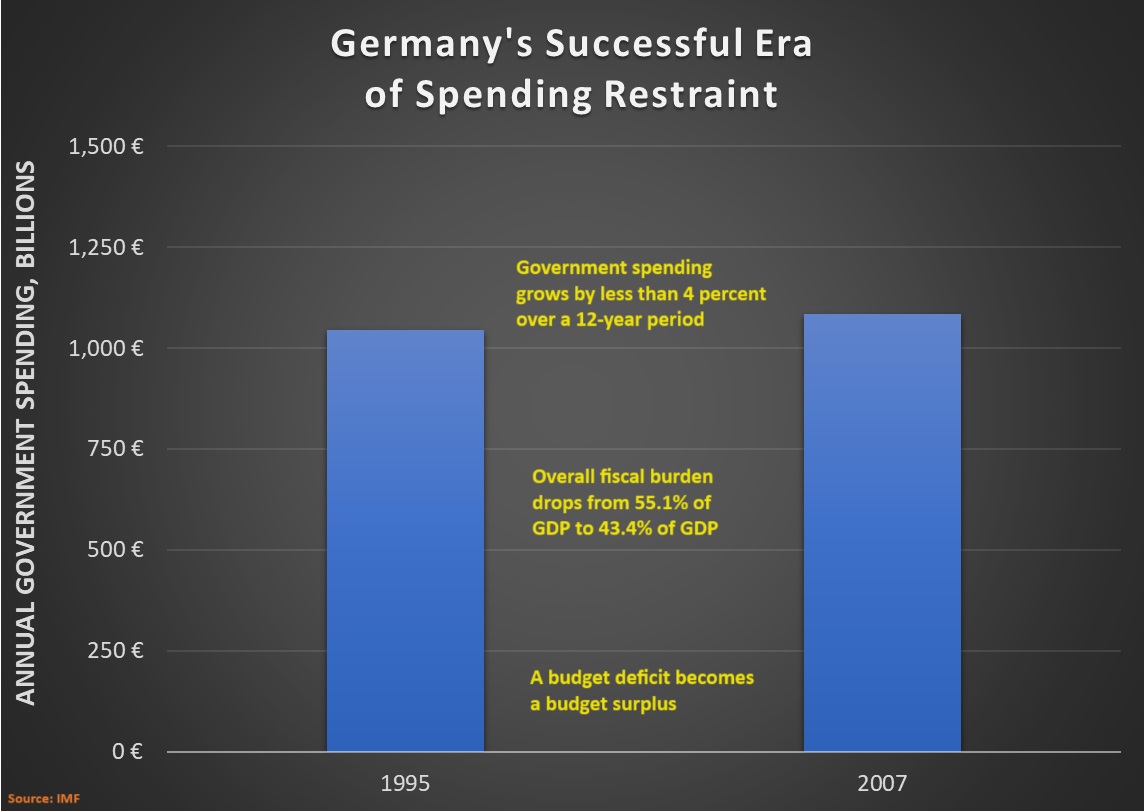
A lot has happened if you look at the past 100 years of German economic policy. Hyperinflation leading to Hitler’s National Socialists taking power. An impressive free-market revival after World War II. A growing welfare state after the imposition of a value-added tax in the 1960s. Some semi-impressive spending restraint starting in the mid-1990s. Very […]
Very pleased to see the Government commit to a law that will tie rates increases to a mixture of inflation and GDP. The era of local government being able to fund every pet project Councillors like is coming to an end. In future they will need to prioritise spending on core infrastructure and facilities. But…
Eric Crampton writes – Damien Grant isn’t normally the one making the case that the government needs to take more in tax. The liquidator and libertarian-minded columnist at the Sunday Star Times more typically wants what libertarians generally want – a government that spends less and that can let each of us keep more of […]
Congratulations to Switzerland, the “improbable success” that is home to the world’s most sensible voters. The left put a referendum on the ballot to impose a national death tax and the people of Switzerland overwhelmingly voted against the class warfare initiative. Every single canton in every single region voted no. More than 90 percent of […]
I often get asked when the United States will suffer a Greek-style fiscal crisis. My answer is always “I don’t know,” though I freely admit we are heading in that direction. My lack of specificity isn’t merely because economists are lousy forecasters. I tell people it’s all about investor sentiment, and it’s hard to know […]
I’ve never really been persuaded that it is a good idea for public servants to be giving speeches, unless perhaps they are simply and explicitly explaining or articulating government policy. If they are, instead, purporting to run their own views or those of their agency it is almost inevitable that we will be getting less […]
One of Argentine President Milei’s radical reforms was to “take a chainsaw” to rent control laws. Argentina had had some of the most restrictive rent control regimes ever. All of that was abandoned almost over night. Many media outlets noted with glee that rents fell dramatically. Even most economists were surprised by how much supply…
Economists and [insert basically every other group of people] often don’t agree. Take, for instance, the recent discussion of price controls. The headline of this opinion piece on the subject in The New York Times literally begins with “Economists Hate This Idea.” Yet voters aren’t so skeptical. (I’m not ready to say the idea has…
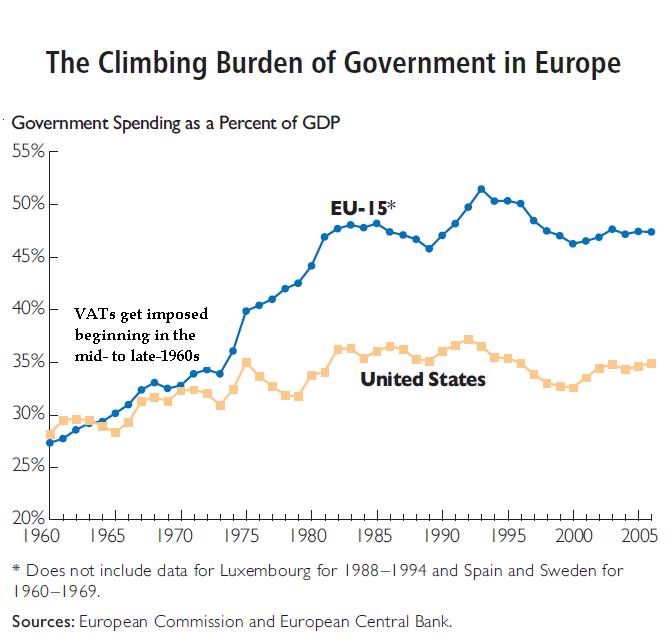
The case against the value-added tax (VAT) is not complicated. Simply stated, this hidden type of national sales tax was a key precursor for the expansion of the European welfare state. As you can see in the chart, the burden of government spending in Europe after World War II was similar to the size of […]
A good report from the NZ Initiative that looks at whether ownership of state houses is the best way to help low income NZ families with housing. Some key extracts: That $29,000 per unit estimated cost is not the cost of income related rents – they are the same regardless of whether the state or […]
Why Evolution is True is a blog written by Jerry Coyne, centered on evolution and biology but also dealing with diverse topics like politics, culture, and cats.
In Hume’s spirit, I will attempt to serve as an ambassador from my world of economics, and help in “finding topics of conversation fit for the entertainment of rational creatures.”






Recent Comments