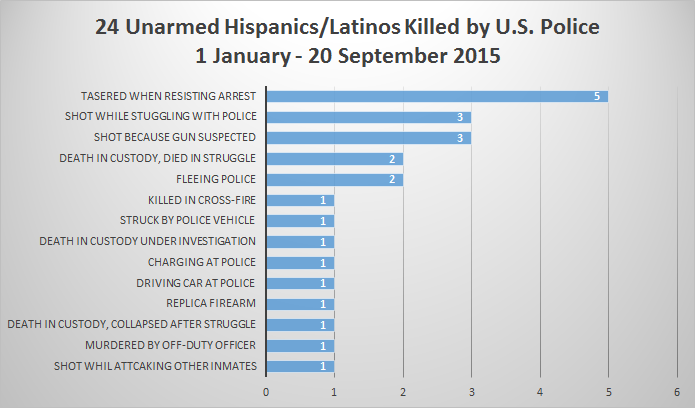
Source: The Counted: people killed by police in the United States in 2015 – interactive | US news | The Guardian accessed 1 p.m. 20 September 2015 New Zealand standard Time.
.
Celebrating humanity's flourishing through the spread of capitalism and the rule of law
20 Sep 2015 Leave a comment
in economics of crime, law and economics, politics - USA Tags: crime and punishment, criminal deterrence, law and order, police, police shootings
Source: The Counted: people killed by police in the United States in 2015 – interactive | US news | The Guardian accessed 1 p.m. 20 September 2015 New Zealand standard Time.
.
18 Sep 2015 1 Comment
in applied welfare economics, development economics, environmental economics, global warming, growth disasters, growth miracles, politics - Australia, politics - New Zealand, politics - USA Tags: climate alarmism, global warming, Richard Tol
A nice summary of the latest research showing that once again the welfare cost of climate change is small except under the most extreme scenarios.

2% of national income is not something to declare a national emergency over unless you are in a very poor country.
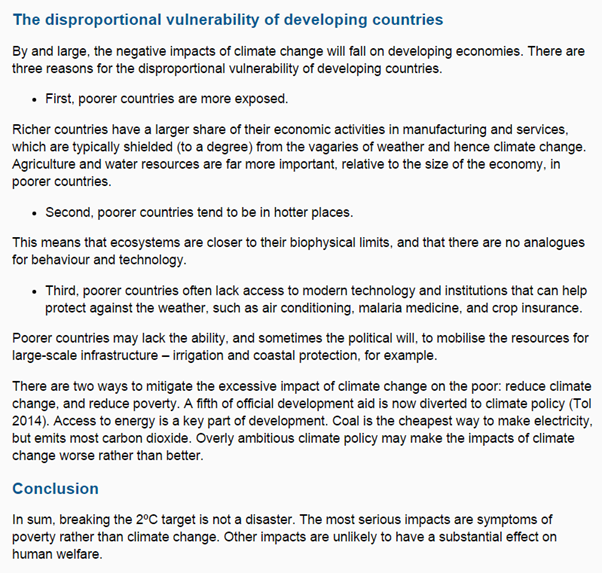
Richard Tol also mentions that there has only been 27 studies of the economic costs of climate change:
Twenty-seven estimates is a thin basis for any conclusion. Researchers disagree on the sign of the net impact; climate change may lead to a welfare gain or loss. At the same time, researchers agree on the order of magnitude. The welfare change caused by climate change is equivalent to the welfare change caused by an income change of a few percent.
- That is, a century of climate change is about as good/bad for welfare as a year of economic growth.
As Tol wrote elsewhere, the reason why there are so few studies of the welfare cost of global warming is governments and bureaucracies do not like the small numbers they yield so they pre-emptively do not fund such research.
Few economists work full-time on the economics of climate change as their research results are too moderate to win repeat business and further research grants. Importantly, there is vicious criticism of what you say. Much better to just work on other topics.
One of the great tactical victories of the climate activists, I resisted the temptation to call them climate alarmists, is they keep going on about the science is settled and whether you are accepting the scientific results.
I have long argued let the science be settled, only the economics matters. The climate change activists do not want to talk about the economics that much except for the estimates by that political hack Lord Stern. Lord Stern has been on the losing side of history ever since he wrote a bad review of PT Bauer’s Dissent on Development where he said:
Dissent on Development is not a valuable contribution to the study of development.
The Stern Review puts the costs of unmitigated climate change at 5–20% of GDP (now and forever). The Fifth Assessment Report of the Intergovernmental Panel on Climate Change (IPCC) finds differently.

HT: Lorenzo M Warby
18 Sep 2015 Leave a comment
in health economics, politics - USA Tags: cancer rates, life expectancies
.@Bagault: Large racial differences on women's health status – especially for black women #StatusOfWomen2015 http://t.co/LcmnTIA1Rv—
IWPR (@IWPResearch) May 20, 2015
18 Sep 2015 1 Comment
in economics of crime, law and economics, politics - USA Tags: crime and punishment, criminal deterrence, law and order, police, police shootings
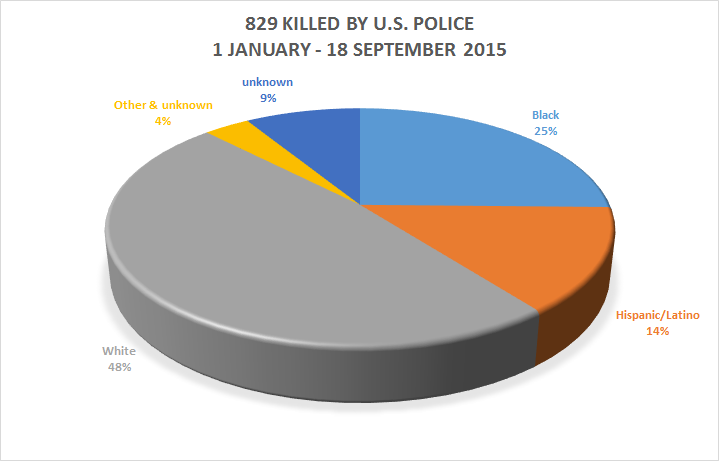
Source: The Counted: people killed by police in the United States in 2015 – interactive | US news | The Guardian Accessed 12.50 a.m. New Zealand standard time, 18th September 2015.
![image_thumb[14]](https://utopiayouarestandinginit.com/wp-content/uploads/2015/09/image_thumb144.png "image_thumb[14]")
17 Sep 2015 Leave a comment
in economics of education, human capital, managerial economics, organisational economics, politics - New Zealand, politics - USA, Public Choice Tags: economics of early childhood education, economics of personality traits, economics of schools, racial discrimination, Roland Fryer
Roland Fryer believes “high-quality education is the new civil rights battleground”. He is an extraordinary man who was carrying a gun and selling drugs at 14 and an assistant professor of economics at Harvard at the age of 27. He is fearless as a researcher.

Source: Roland Fryer On Why Good Schools Matter – Forbes
Roland Fryer is the first Afro-American to win the John Bates Clark Medal econ.st/1FrmzDL http://t.co/QoAZWyRVEX—
Charles Read (@EconCharlesRead) April 27, 2015
17 Sep 2015 Leave a comment
in economic history, politics - USA, Public Choice Tags: 2016 presidential election
17 Sep 2015 2 Comments
in economic history, economics of crime, law and economics, politics - USA Tags: crime and punishment, crime rates, criminal deterrence, law and order, New York City
I went looking for the uptick in murders in U.S. cities. Here’s what I found. wapo.st/1QdNA0m http://t.co/w2dc8rnoFu—
Max Ehrenfreund (@MaxEhrenfreund) September 04, 2015
17 Sep 2015 2 Comments
in economics of crime, law and economics, politics - USA Tags: crime and punishment, law and order, police, police shootings, road accidents, road safety
I followed the coding by the Guardian despite reservations. Including those struck by police cars in routine accidents, none of them police chases, conflates one database with another and does not touch on the issue of the wisdom of police car chases. Including people who drive cars at police or flee with kidnapped children in a car is stretching the definition of unarmed. The wisdom of shooting at a car with children in it is a separate issue. The safety of the hostage taker is not a responsibility of the police, the safety of the children kidnapped in that car was.

Source: The Counted: people killed by police in the United States in 2015 – interactive | US news | The Guardian accessed 1 p.m. 16 September 2015 New Zealand standard Time.
About 10% of police shootings of unarmed people resulted in murder charges and a few of those still under investigation read as suspicious and may result in charges as well as more evidence is gathered.
Our count as of this afternoon is 823. Have a tip? Tweet us at @thecounted or visit theguardian.com/thecounted/tips http://t.co/96AM7pNPGH—
The Counted (@thecounted) September 14, 2015
That 10% figure of police shootings that result in murder charges is much higher if you exclude people who collapsed while in contact with police from underlying poor health either in a struggle or after being tasered – 20 or more out of 62, drove cars at police (3), killed in crossfire (2) or were killed in police car accidents (5). The figure is even higher when you exclude a good number of those who are struggling with police and the police fired in self defence lawfully. That is, if a police officer shoot someone at a safe distance without good cause, they face a high probability of being charged with murder.
The database I used today for the above figure on shooting of unarmed Blacks takes less than an hour to work your way through to code them for yourself, so if you doubt my coding, do your own coding and put up a rival figure. I will even consider a guest blog by you if you lack a forum.
Update: When I shared this post on the dataisbeautiful sub-reddit, the first comment on that post was to denounce me as a racist for sharing.
16 Sep 2015 Leave a comment
in applied price theory, applied welfare economics, health economics, politics - New Zealand, public economics Tags: Anti-Science left, anti-vaccination movement, best shot public goods, cheap riders, common law, free-riders, good shot public goods, herd immunity, measles, New Zealand Greens, public goods, quackery, tort law, vaccinations, vaccines
Some public goods can be not provided much at all if even a few do not contribute – free ride. These are called weakest shot public goods. The link in the chain is only as strong as the weakest link for some public goods. The fighting against communicable diseases is an example of that.

The classic example given by that brilliant applied price theorist Jack Hirschleifer is a dyke or a levee wall around a town. It is only as good as the laziest person contributing to its maintenance on their part of the levee wall. Vicary (1990, p. 376) lists other examples:
Similar examples would be the protection of a military front, taking a convoy across the ocean going at the speed of the slowest ship, or maintaining an attractive village/landscape (one eyesore spoils the view).
Many instances of teamwork involve weak-link elements, for example moving a pile of bricks by hand along a chain or providing a theatrical or orchestral performance (one bad individual effort spoils the whole effect.)
Another example of weakest shot public goods is community cooperation after disasters. The quality of the public good provided is equal to the contribution of the weakest person who may start a criminal rampage despite the good efforts of everyone else.
 People tend to be more cooperative after natural disasters. They realise their contribution is more important than normal to the maintaining of the social fabric which is currently hanging by a thread.

Vaccinations are example of a weakest shot public good. The quality of herd immunity depends fundamentally on just about everybody contributing by getting vaccinated. Not all public goods depend on the some of those contributions made. In some cases just a few people choosing to free ride can greatly undermine the public interest.
The reverse of a weakest shot public good is best shot public goods. Example of this is the development of vaccines themselves. The public good is only as good as the best effort at developing the new vaccine with all the others efforts pointless because the best of the vaccines is chosen.
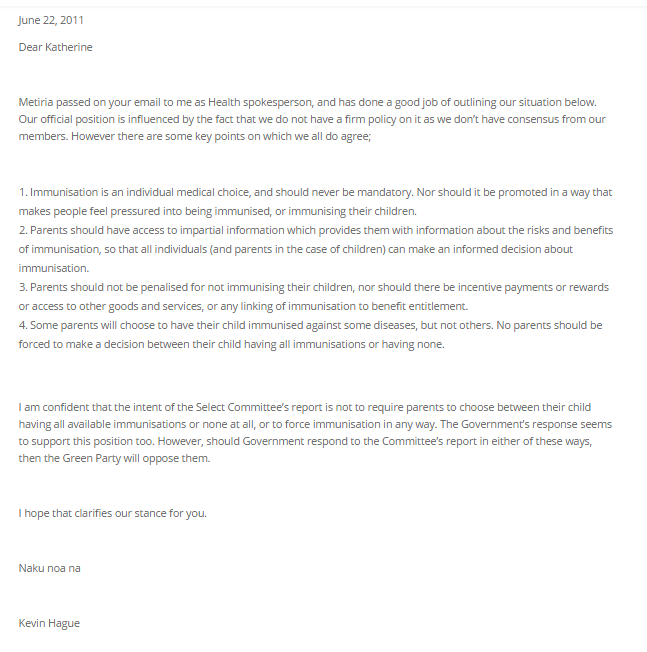
The most curious people in New Zealand to oppose measures to address the under provision of weakest shot public goods are the New Zealand Greens.
https://twitter.com/KevinHague/status/642505850360213505
The Greens are usually the 1st to stress the importance of communities working together for the common good.
https://twitter.com/KevinHague/status/642530277177192448
Herd immunity protects those who cannot be safely vaccinated including new babies, those for whom the vaccine fails, which occasionally happens, and those with compromised immunity such as adults receiving chemotherapy.
Deliriously hot @guardian sim shows why anti-measles jabs help protect your whole community gu.com/p/45f7e/stw http://t.co/H31ZKbXkqg—
Info=Beautiful (@infobeautiful) February 05, 2015
We are all in this together. It is time for the New Zealand Greens to stop pandering to those are only think of themselves and what a free ride on others including the very sick and new babies.

Source: NOVA | What is Herd Immunity?
Herd immunity requires vaccination rates of about 94%. The near universal vaccination rates required for herd immunity are to smaller margin to pander to an awkward squad who do not want to vaccinate despite the harm they do to others.
Harm to others is grounds and has always been grounds for public policy and public health interventions. Instead, the Greens are anti-science, anti-public health.
Measles is the most contagious disease known to man. Seven children died in New Zealand in the last measles outbreak in 1991. The dead are already too many from the anti-vaccination quacks and cranks.
16 Sep 2015 Leave a comment
in economic history, health economics, politics - USA Tags: clean drinking water, health and sanitation, life expectancies, public health, The Great Escape, The Great Fact, vaccines
The Health Transition in the US + public health and medical milestones.
New paper: bit.ly/1F1OxYi http://t.co/8IW8EjCkwQ—
Max Roser (@MaxCRoser) September 12, 2015
16 Sep 2015 Leave a comment
in economics of crime, law and economics, politics - New Zealand Tags: crime and punishment, criminal deterrence, law and order, police, police shootings

Source: The Counted: people killed by police in the United States in 2015 – interactive | US news | The Guardian Accessed 1 a.m. New Zealand standard Time 15th September 2015.

Source: The Counted: people killed by police in the United States in 2015 – interactive | US news | The Guardian Accessed 1 a.m. New Zealand standard Time 15th September 2015.

Source: The Counted: people killed by police in the United States in 2015 – interactive | US news | The Guardian Accessed 1 a.m. New Zealand standard Time 15th September 2015.

15 Sep 2015 Leave a comment
in politics - Australia, politics - New Zealand, urban economics Tags: Australia, housing affordability, housing prices, land supply, land use planning, NIMBYs, zoning

Source: International House Price Database – Dallas Fed
Note: The house price index series is an index constructed with nominal house price data. The real house price index is an index calculated by deflating the nominal house price series with a country’s personal consumption expenditure deflator
15 Sep 2015 Leave a comment
in politics - New Zealand, Public Choice Tags: British greens, British politics, economics of personality traits, expressive voting, New Zealand Greens, rational ignorance, rational rationality, votor demographics
https://twitter.com/LSEpoliticsblog/status/636528821211123712/photo/1
The large differences in personality types between Green voters and Labour voters is one of the first explanations I have seen as to why someone joins and votes for one over the other given both are left-wing parties with fewer and fewer differences in policy.
How does political party affiliation affect return rates for lost wallets? buff.ly/1AaWng8 http://t.co/7lm2pgUD4h—
LSE Politics&Policy (@LSEpoliticsblog) May 18, 2015
"The socio-economic base of Labour support is more spread out than that of the Tories" buff.ly/1IJB8na http://t.co/uDH5nYVIPu—
LSE Politics&Policy (@LSEpoliticsblog) May 05, 2015
15 Sep 2015 1 Comment
in economics of crime, law and economics, politics - USA, transport economics Tags: crime and punishment, law and order, police, police shootings, road accidents, road safety
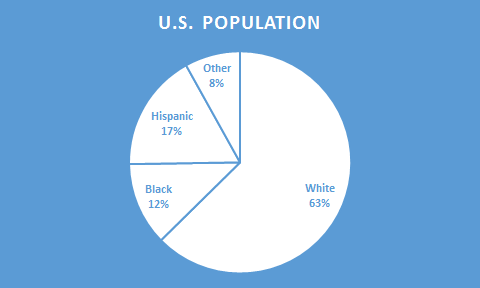
I am surprised that the Guardian did not do this graphical analysis themselves. My analysis below shows the quite a few people were unarmed but many more were carrying guns, knives or other weapons.

Source: The Counted: people killed by police in the United States in 2015 – interactive | US news | The Guardian Accessed 1 a.m. New Zealand standard Time 15th September 2015.
You have to read through every individual data entry to work out how many of those killed had guns, and the many of these were shooting at police when they were shot dead. The same legwork is required to find out how many officers are on murder charges after killing civilians.
14 Sep 2015 Leave a comment
in economics of education, human capital, labour economics, labour supply, occupational choice, politics - New Zealand Tags: College premium, education premium, graduate premium
How much more will you earn by going to university? It depends hugely on which country you're from http://t.co/7RMnUTM8nj—
paulkirby (@paul1kirby) September 11, 2015
Celebrating humanity's flourishing through the spread of capitalism and the rule of law
Celebrating humanity's flourishing through the spread of capitalism and the rule of law
Celebrating humanity's flourishing through the spread of capitalism and the rule of law
Celebrating humanity's flourishing through the spread of capitalism and the rule of law
Celebrating humanity's flourishing through the spread of capitalism and the rule of law
Celebrating humanity's flourishing through the spread of capitalism and the rule of law
A History of the Alt-Right
Econ Prof at George Mason University, Economic Historian, Québécois
Celebrating humanity's flourishing through the spread of capitalism and the rule of law
Scholarly commentary on law, economics, and more
Beatrice Cherrier's blog
Celebrating humanity's flourishing through the spread of capitalism and the rule of law
Celebrating humanity's flourishing through the spread of capitalism and the rule of law
Celebrating humanity's flourishing through the spread of capitalism and the rule of law
Why Evolution is True is a blog written by Jerry Coyne, centered on evolution and biology but also dealing with diverse topics like politics, culture, and cats.
Celebrating humanity's flourishing through the spread of capitalism and the rule of law
A rural perspective with a blue tint by Ele Ludemann
DPF's Kiwiblog - Fomenting Happy Mischief since 2003
Celebrating humanity's flourishing through the spread of capitalism and the rule of law
The world's most viewed site on global warming and climate change
Tim Harding's writings on rationality, informal logic and skepticism
A window into Doc Freiberger's library
Let's examine hard decisions!
Commentary on monetary policy in the spirit of R. G. Hawtrey
Thoughts on public policy and the media
Celebrating humanity's flourishing through the spread of capitalism and the rule of law
Politics and the economy
A blog (primarily) on Canadian and Commonwealth political history and institutions
Reading between the lines, and underneath the hype.
Economics, and such stuff as dreams are made on
"The British constitution has always been puzzling, and always will be." --Queen Elizabeth II
Celebrating humanity's flourishing through the spread of capitalism and the rule of law
Celebrating humanity's flourishing through the spread of capitalism and the rule of law
WORLD WAR II, MUSIC, HISTORY, HOLOCAUST
Undisciplined scholar, recovering academic
Celebrating humanity's flourishing through the spread of capitalism and the rule of law
Res ipsa loquitur - The thing itself speaks
In Hume’s spirit, I will attempt to serve as an ambassador from my world of economics, and help in “finding topics of conversation fit for the entertainment of rational creatures.”
Researching the House of Commons, 1832-1868
Articles and research from the History of Parliament Trust
Reflections on books and art
Posts on the History of Law, Crime, and Justice
Celebrating humanity's flourishing through the spread of capitalism and the rule of law
Exploring the Monarchs of Europe
Cutting edge science you can dice with
Small Steps Toward A Much Better World
/cdn0.vox-cdn.com/uploads/chorus_asset/file/3985712/Trump-poll-lead-graphic.jpg)


Recent Comments