24 Jul 2016
by Jim Rose
in economic history, economics of education, human capital, labour economics
Tags: Australia, Canada, France, Germany, Italy, tertiary educational attainment.
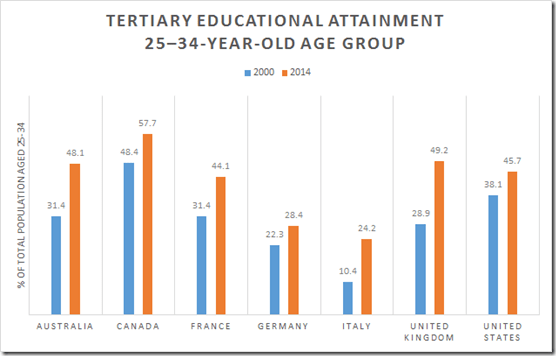
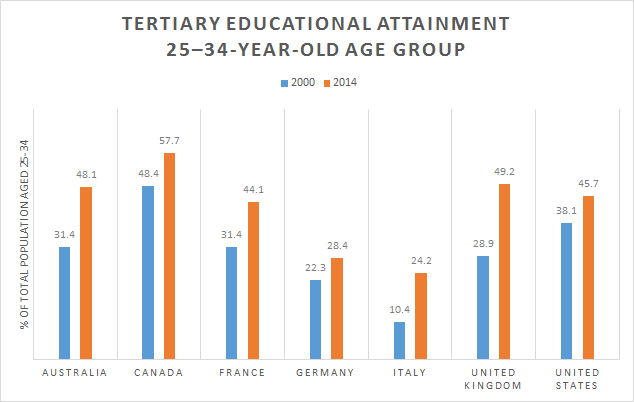
The British, Australians, and Italians experienced strong growth in tertiary attainment since the year 2000. In the case of the Italians, it was from a low base. There is still a big difference in tertiary attainment between English-speaking and other countries.
Source: OECD Factbook 2015-2016.
02 Jun 2016
by Jim Rose
in business cycles, economic growth, economic history, global financial crisis (GFC), great recession, labour economics, labour supply, unemployment
Tags: British economy, Canada, equilibrium unemployment rate, France, Germany, natural unemployment rate
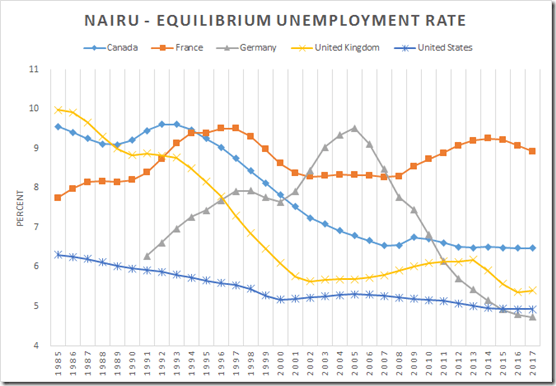
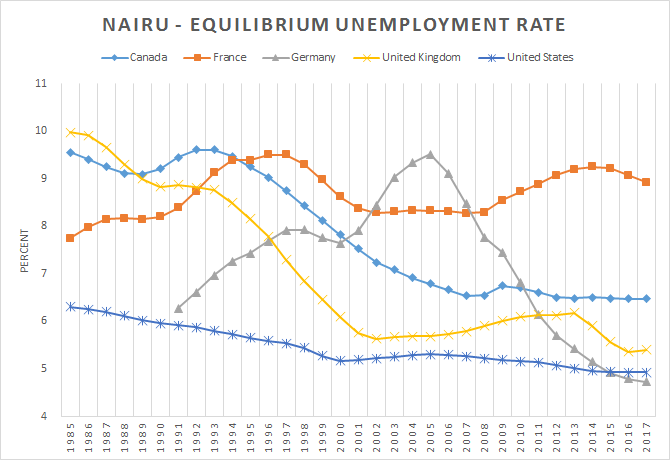
I do admire the way in which the USA has been able to have a steadily falling equilibrium unemployment rate since 1984 through thick and thin. The Great Recession had no impact on the US equilibrium unemployment rate. Not only has the largest member been able to do this, the OECD host country (red squares) has had a pretty steady natural unemployment rate too all things considered.
Source: OECD Economic Outlook June 2016 Data extracted on 01 Jun 2016 12:40 UTC (GMT) from OECD.Stat
28 May 2016
by Jim Rose
in economic growth, economic history, labour economics, labour supply, macroeconomics, politics - Australia, politics - New Zealand, politics - USA, public economics
Tags: Australia, British economy, Canada, Eurosclerosis, France, Germany, Japan, labour productivity, measurement error, taxation and labour supply
This data tells more of a story than I expected. Firstly, New Zealand has not been catching up with the USA. Japan stopped catching up with the USA in 1990. Canada has been drifting away from the USA for a good 30 years now in labour productivity.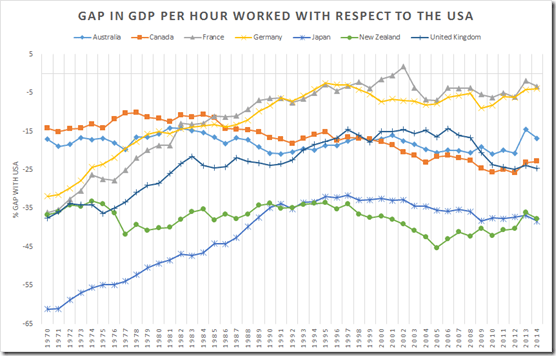
Data extracted on 28 May 2016 05:15 UTC (GMT) from OECD.Stat from OECD Compendium of Productivity Indicators 2016 – en – OECD.
Australia has not been catching up with the USA much at all since 1970. It has maintained a pretty consistent gap with New Zealand despite all the talk of a resource boom in the Australia; you cannot spot it in this date are here.
Germany and France caught up pretty much with the USA by 1990. Oddly, Eurosclerosis applied from then on terms of growth in income per capita.
European labour productivity data is hard to assess because their high taxes lead to a smaller services sector where the services can be do-it-yourself. This pumps up European labour productivity because of smaller sectors with low productivity growth.
09 May 2016
by Jim Rose
in economics of regulation, law and economics
Tags: barriers to entry, Belgium, British economy, Canada, cost of doing business, Denmark, France, Germany, Greece, Italy, Spain
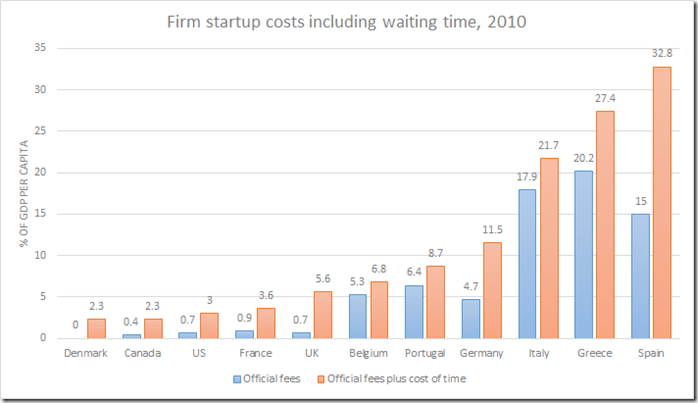
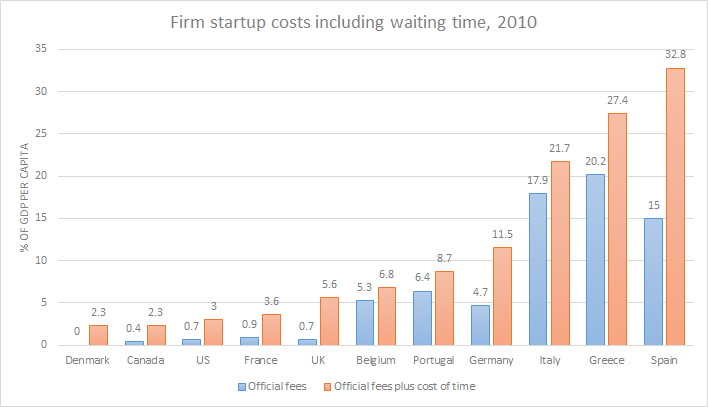
Expediting the processing of permits can actually make quite a difference to firm start-up costs even in countries with few barriers to starting up a business.
Source: Markus Poschke (2011) Entry regulation: Still costly | VOX, CEPR’s Policy Portal.
Note: The value of time is set to a business day’s output per day of waiting time at 22 business days per month.
18 Apr 2016
by Jim Rose
in economics of regulation, industrial organisation, law and economics, politics - USA, property rights
Tags: barriers to entry, Belgium, British economy, Canada, Denmark, doing business, France, Germany, Greece, Italy, Portugal, Spain
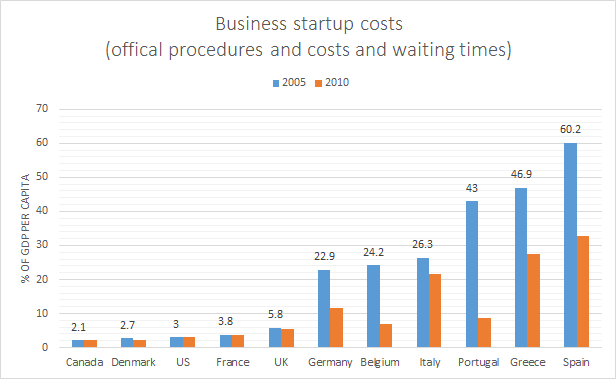
These measures including the full cost of starting a business. Not only are official fees included, the opportunity cost of the waiting times for various permits are issued are added as well.
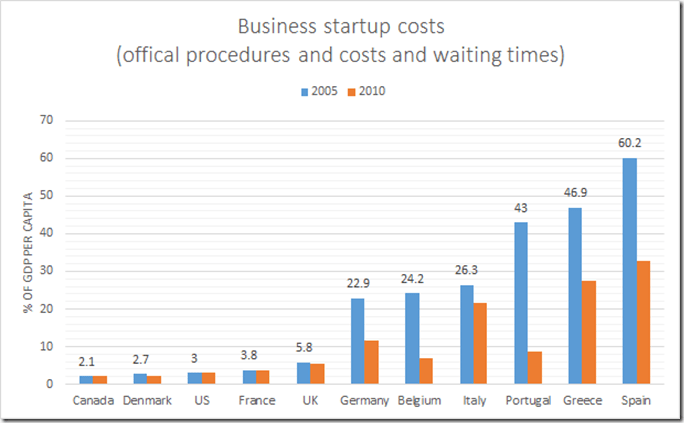
Source: Markus Poschke, Entry regulation: Still costly | VOX, CEPR’s Policy Portal (2011).
Note: The value of time is set to a business day’s output per day of waiting time at 22 business days per month.
10 Mar 2016
by Jim Rose
in labour economics, labour supply
Tags: Australia, British economy, Canada, Denmark, France, Germany, Japan, Sweden, taxation and labour supply, working hours
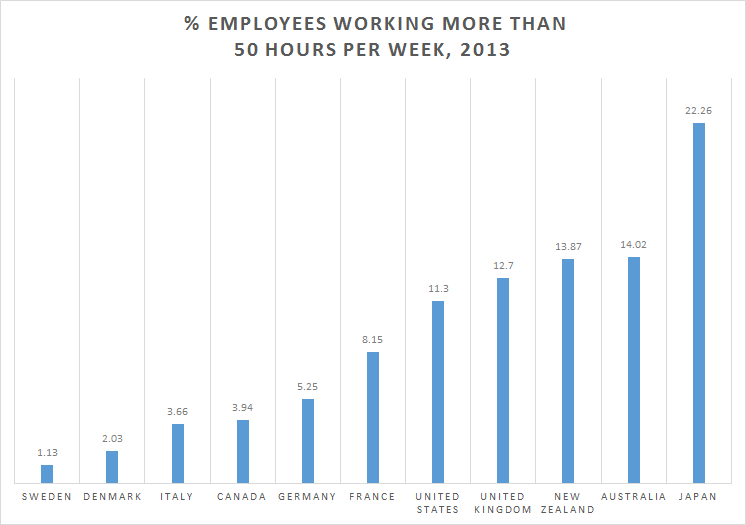
Them Continentals certainly are a bit work-shy especially the Nordics. All of them are pretty much afraid to put in a long week. Then again they do face rather high taxes on labour so what would you expect? The Japanese are still working themselves to death.
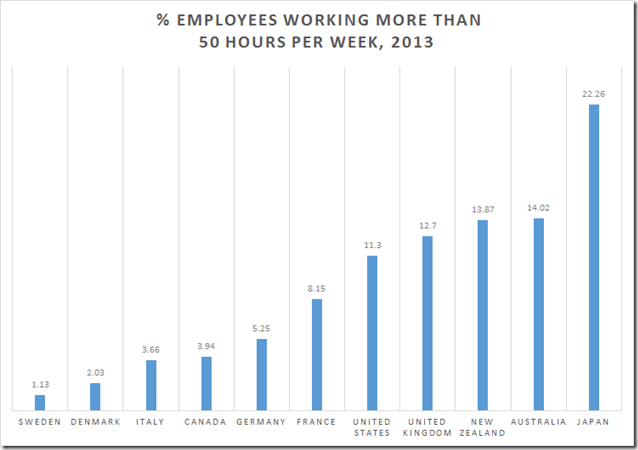
Data extracted on 09 Mar 2016 22:25 UTC (GMT) from OECD.Stat – OECD Better Life Index 2015.
05 Mar 2016
by Jim Rose
in economics of love and marriage, fiscal policy, gender, labour economics, labour supply, law and economics, politics - Australia, politics - New Zealand, politics - USA, public economics
Tags: Australia, British economy, Canada, Denmark, effective marginal tax rates, family tax benefits, family tax credits, France, Germany, in-work tax credits, Italy, poverty traps, rational irrationality, social insurance, Sweden, taxation and labour supply
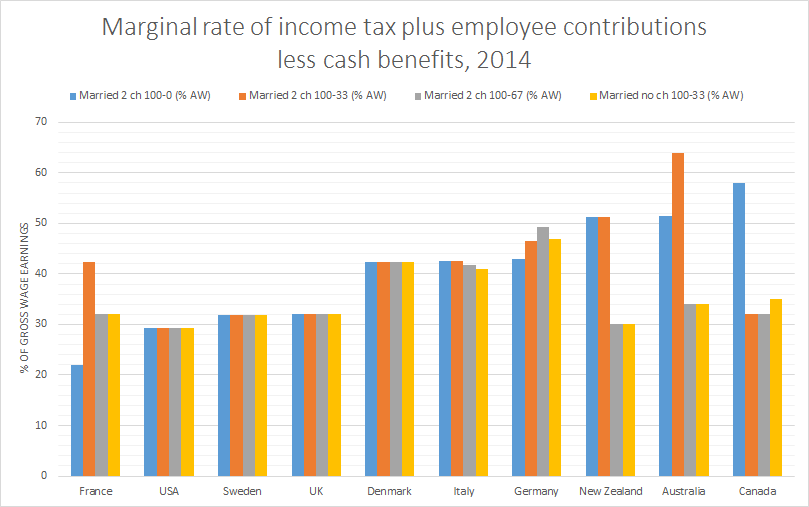
Some countries including New Zealand and Australia do not give ordinary families much of an incentive to earn more. Effective marginal tax rates on low income families is one of the few times that the Left discovers supply-side economics.
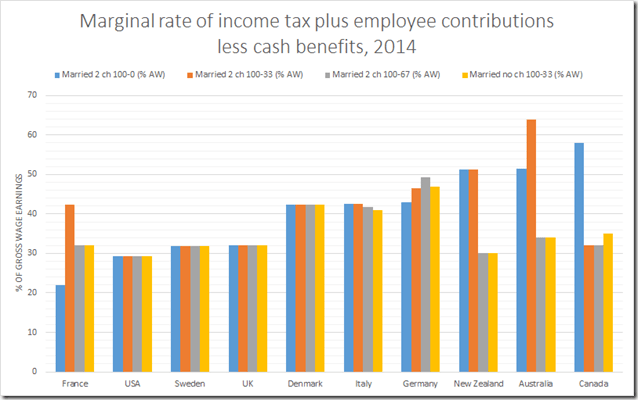
Source: Taxing Wages 2015 – OECD 2015.
05 Mar 2016
by Jim Rose
in fiscal policy, politics - Australia, politics - New Zealand, politics - USA, public economics
Tags: Australia, British economy, Canada, Denmark, family taxation, France, Germany, Italy, social insurance, Sweden, taxation and labour supply
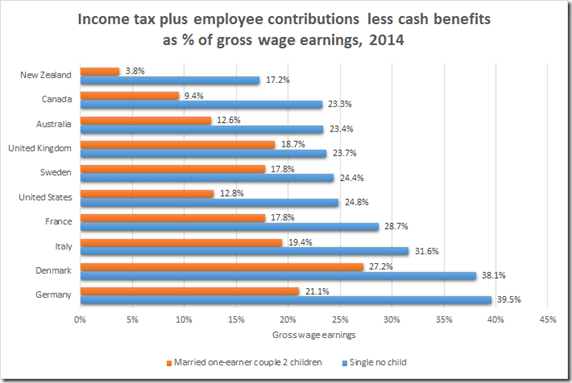
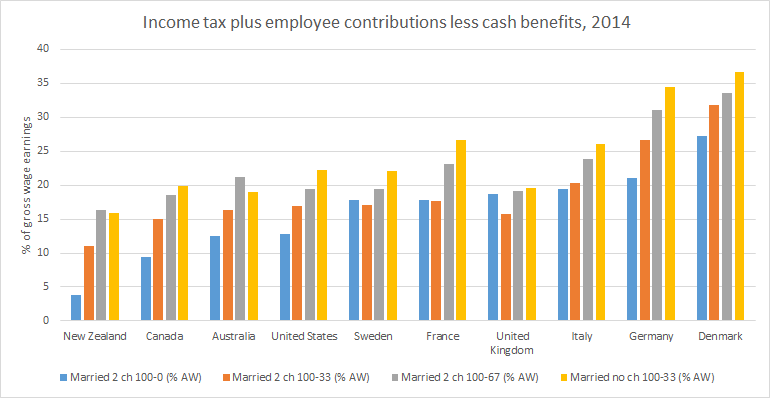
Those sensitive and caring northern European welfare states do tax families rather heavily even after accounting for family cash benefits.
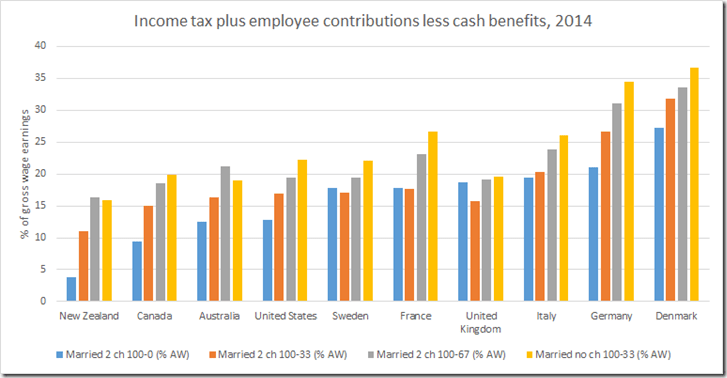
Source: Taxing Wages 2015 – OECD 2015.
04 Mar 2016
by Jim Rose
in fiscal policy, politics - Australia, politics - New Zealand, politics - USA, public economics
Tags: Australia, British economy, Canada, Denmark, France, Germany, Italy, social insurance, Social Security, Sweden, taxation and labour supply
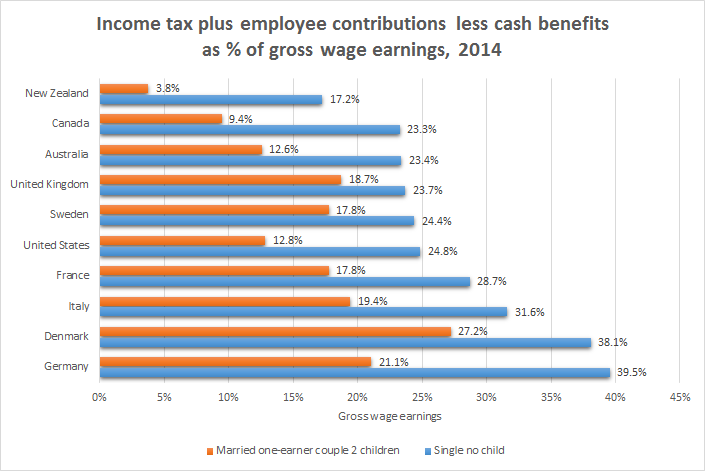
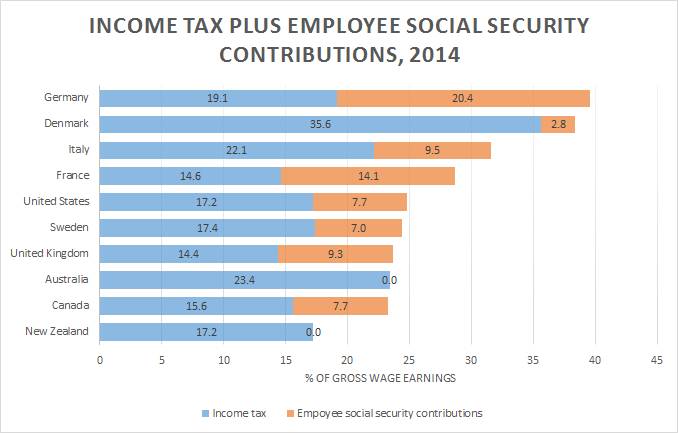
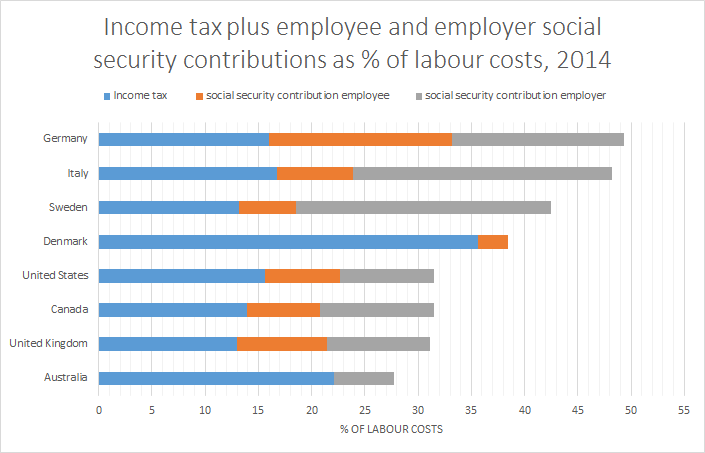
Those much admired northern European welfare states tax families and individuals much more than do the Anglo-Saxon welfare states.
Source: Taxing Wages 2015 – OECD 2015.
04 Mar 2016
by Jim Rose
in fiscal policy, politics - Australia, politics - New Zealand, politics - USA, public economics
Tags: Australia, British economy, Canada, Denmark, Germany, Italy, social insurance, Social Security, Sweden, taxation and labour supply
03 Mar 2016
by Jim Rose
in fiscal policy, public economics
Tags: Australia, British economy, Canada, Denmark, Germany, Italy, social insurance, Social Security, Sweden, taxation and labour supply
Previous Older Entries Next Newer Entries


Recent Comments