That is the theme of a new Substack by Pieter Garicano, here is one excerpt: These answers, according to a recent paper by Olivier Coste and Yann Coatanlem, two French investors, miss the point: the reason more capital doesn’t flow towards high-leverage ideas in Europe is because the price of failure is too high. Coste estimates that, […]
Why are no trillion dollar companies being created in Europe?
Why are no trillion dollar companies being created in Europe?
07 Dec 2024 1 Comment
in applied price theory, comparative institutional analysis, economics of regulation, entrepreneurship, human capital, industrial organisation, labour economics, labour supply, law and economics, occupational choice, poverty and inequality Tags: employment law
The Missing Myths
04 Dec 2024 Leave a comment
in applied price theory, comparative institutional analysis, constitutional political economy, discrimination, economic history, economics of climate change, economics of information, economics of media and culture, economics of regulation, energy economics, entrepreneurship, environmental economics, environmentalism, financial economics, gender, global warming, health economics, human capital, income redistribution, labour economics, labour supply, law and economics, liberalism, libertarianism, Marxist economics, occupational choice, politics - USA, poverty and inequality, property rights, Public Choice, rentseeking Tags: Age of Enlightenment, crime and punishment, criminal deterrence, free speech, gender wage gap, law and order, political correctness, racial discrimination, regressive left, sex discrimination

Michael Huemer’s Progressive Myths is the best book on wokeness. One of its many strengths is its focus on basic facts. As the author explains:I have selected beliefs that can be debunked fairly quickly and forcefully. Many other progressive beliefs require long argumentation and subjective judgment calls to assess. About these more difficult issues, I…
The Missing Myths
The Government didn’t move with the science around Covid
03 Dec 2024 Leave a comment
in economics of regulation, health economics, labour economics, labour supply, politics - New Zealand Tags: economics of pandemics
The Royal Commission concluded: The case for vaccine requirements of all kinds weakened in early 2022 with the arrival of the Omicron variant since vaccination was now much less effective in preventing COVID-19 transmission and immunity waned over time. While beneficial to the individual concerned, vaccination now offered less protection to others and the public […]
The Government didn’t move with the science around Covid
Seatbelts for a 5 km/hr Santa parade
01 Dec 2024 Leave a comment
in economics of bureaucracy, economics of regulation, health and safety, labour economics, labour supply, politics - New Zealand, Public Choice Tags: nanny state, road safety
NewstalkZB report: Santa and his elves must wear seatbelts for Christchurch’s Christmas parade following new health and safety advice – a move labelled by some city councillors as “woke nonsense” and “over the top”. Christchurch’s Christmas Show Parade director Jason Reekers said an audit of the parade’s floats recommended installing seatbelts on some of them. …
Seatbelts for a 5 km/hr Santa parade
So Much for the one child policy
01 Dec 2024 Leave a comment
in development economics, economic history, economics of love and marriage, growth miracles, human capital, labour economics, labour supply, law and economics, population economics Tags: China

Massachusetts has occupational licensing for fortune tellers
30 Nov 2024 Leave a comment
in economics of information, economics of regulation, human capital, industrial organisation, labour economics, labour supply, law and economics, occupational choice, occupational regulation, politics - USA, property rights, Public Choice, rentseeking Tags: cranks
Here is the link, “Prohibits fraudulently taking money by “pretended fortune telling.”” Seen referenced somewhere on Twitter.
Massachusetts has occupational licensing for fortune tellers
Unauthorized Immigration and Local Government Finances
30 Nov 2024 Leave a comment
in applied price theory, econometerics, human capital, income redistribution, labour economics, labour supply, politics - USA, poverty and inequality, Public Choice, public economics Tags: economics of immigration
This paper examines how unauthorized immigration affects the fiscal health of local governments in the United States. Using detailed data on unauthorized immigrants’ countries of origin and arrival dates from the Syracuse TRAC database, we isolate immigration flows driven by social, economic, and political conditions in source countries. We predict local immigration patterns using a […]
Unauthorized Immigration and Local Government Finances
Desired Fertility versus the Mueller Effect
28 Nov 2024 Leave a comment
in applied price theory, economics of love and marriage, labour economics, labour supply, law and economics, population economics Tags: economics of fertility
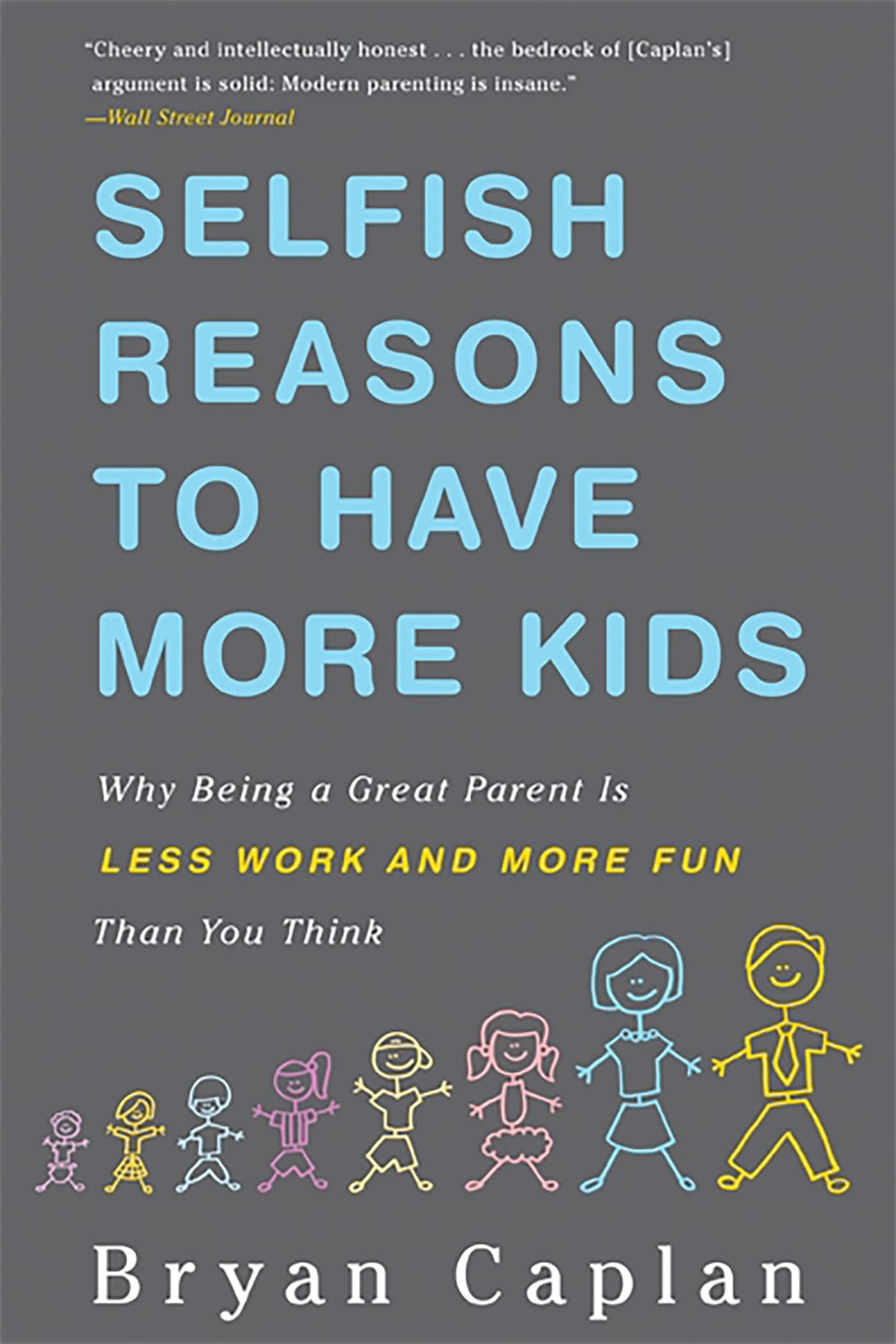
Six months ago, I’m not sure that I’d ever heard of demographer Lyman Stone. Now, people in my circles randomly drop his name on a weekly basis. His favorite topic, in case you haven’t heard, is global fertility decline. As a longtime natalist, I share his concerns. One of Stone’s top takeaways: Instead of talking…
Desired Fertility versus the Mueller Effect
Try as they might, the Australian Green party can’t make university education free
25 Nov 2024 Leave a comment
in applied price theory, economics of education, human capital, income redistribution, labour economics, labour supply, liberalism, Marxist economics, occupational choice, politics - Australia, poverty and inequality, Public Choice, public economics, rentseeking Tags: College premium, regressive left
The Australian Green party has proposed cancelling all student debt in Australia, as part of an aim for government to provide “free education for life”. However, free education is not free. In an article in The Conversation earlier this month, Bruce Chapman (Australian National University) makes a case against the claim that cancelling student debt…
Try as they might, the Australian Green party can’t make university education free
The Borjas-Caplan Immigration Debate
20 Nov 2024 Leave a comment
in applied price theory, development economics, human capital, labour economics, labour supply, population economics Tags: economics of immigration
Before the fictional musical Borjas-Caplan immigration debate of 2024, there was the non-fictional non-musical Borjas-Caplan immigration debate of 2019. It was an unusual format: Both of us had the floor for over hour each. Borjas:Me:If you pay close attention to my opponent’s presentation, you’ll discover that he’s quite unlike every other critic of immigration. In…
The Borjas-Caplan Immigration Debate
Local Labor Market Effects of Amazon
18 Nov 2024 Leave a comment
in applied price theory, econometerics, labour economics, labour supply, urban economics
Does the entry of a large employer to a local labor market increase welfare for residents? To answer this question, I analyze the local effects of the dramatic expansion of Amazon’s fulfillment center (FC) network from 2010 onward. I exploit the staggered roll-out of FCs across large U.S. metros in a difference-in-difference framework. I find […]
Local Labor Market Effects of Amazon
Who Matters More in a Move: You or Your Spouse?
04 Nov 2024 Leave a comment
in applied price theory, discrimination, econometerics, economics of love and marriage, gender, human capital, labour economics, labour supply, law and economics, occupational choice, poverty and inequality Tags: gender wage gap, marriage and divorce, sex discrimination
New research finds couples are more likely to move for a job when it benefits the man, even when the woman’s career stands to benefit more by movingBy Dalvin Brown of The WSJ. Excerpts:”Couples are moving again for better job opportunities. They are more likely to make those moves when the husband’s earnings stand to…
Who Matters More in a Move: You or Your Spouse?
The National Childcare Program During World War II
02 Nov 2024 Leave a comment
in applied price theory, defence economics, discrimination, econometerics, economic history, gender, human capital, labour economics, labour supply, war and peace Tags: World War II
The United States has has a nationwide childcare program at one time in its history: a temporary program during World War II. Tim Sablik of the Federal Reserve Bank of Richmond tells the story and summarizes some economic research on the topic in “When Uncle Sam Watched Rosie’s Kids: To support women working on the…
The National Childcare Program During World War II
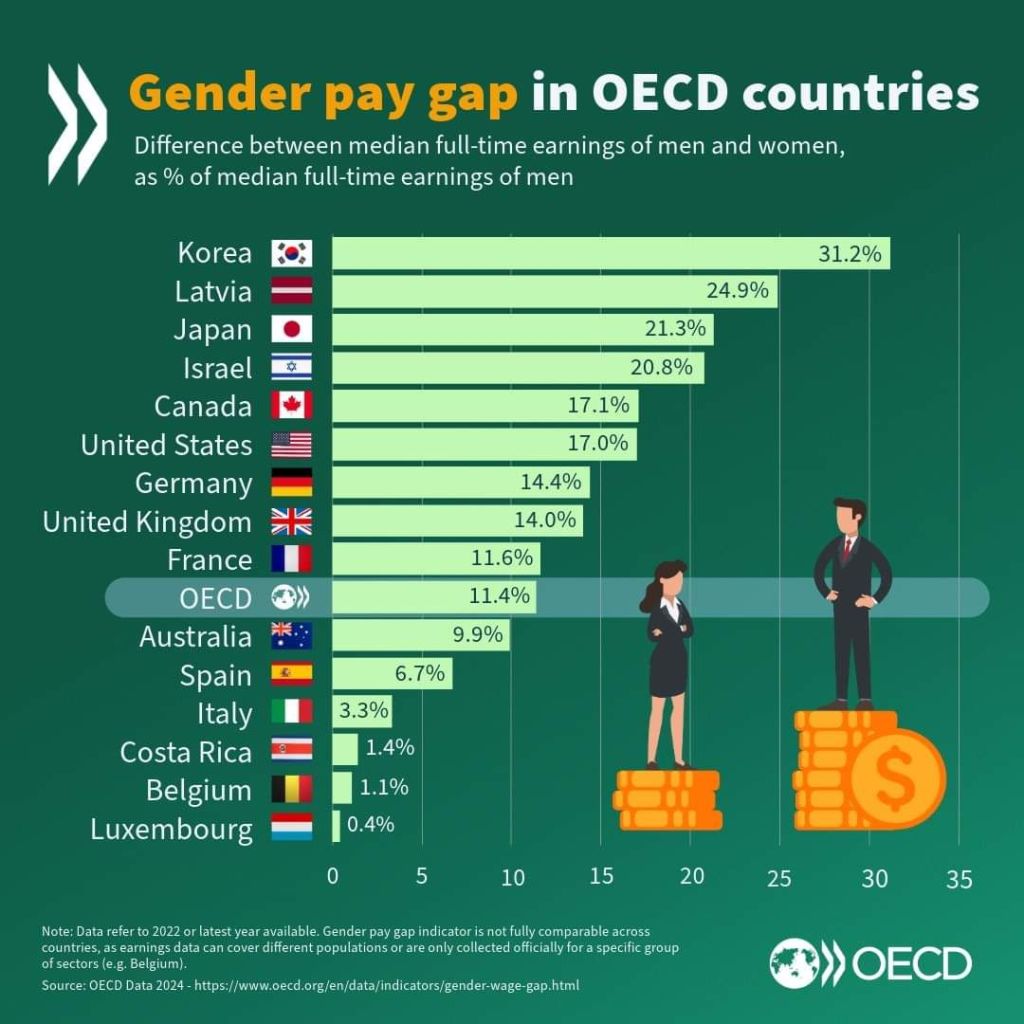
Why are Spain and Italy islands of equality?
31 Oct 2024 Leave a comment
in applied price theory, discrimination, gender, human capital, labour economics, labour supply, poverty and inequality Tags: gender wage gap
The Puzzle of Japan’s Economy: When Productivity Gains Are Outside National Borders
26 Oct 2024 Leave a comment
in development economics, economic growth, economic history, growth miracles, labour economics, labour supply, macroeconomics, population economics Tags: economics of fertility, Japan
In total size, Japan’s economy is fourth-largest in the world, just behind Germany for third-largest. In per capita GDP, Japan is ahead of Spain and South Korea, although well behind Italy and France. With a life expectancy at birth of 84 years, ,Japan has one of the highest levels in the world. Clearly, Japan has…
The Puzzle of Japan’s Economy: When Productivity Gains Are Outside National Borders


Recent Comments