The Miami Herald reports: A stunning 10% of Cuba’s population — more than a million people — left the island between 2022 and 2023, the head of the country’s national statistics office said during a National Assembly session Friday, the largest migration wave in Cuban history. Isn’t it such a weird coincidence that the queue […]
Communism still doing well in Cuba
Communism still doing well in Cuba
05 Aug 2024 Leave a comment
in comparative institutional analysis, constitutional political economy, development economics, economic history, economics of bureaucracy, economics of crime, growth disasters, income redistribution, labour economics, labour supply, law and economics, Marxist economics, property rights, Public Choice, public economics Tags: Cuba
Don’t Mess with Texas: Fifth Circuit Rules Against the Biden Administration in Buoy Dispute on Southern Border
02 Aug 2024 Leave a comment
in comparative institutional analysis, constitutional political economy, defence economics, income redistribution, labour economics, labour supply, law and economics, liberalism, Marxist economics, politics - USA, property rights, Public Choice Tags: 2024 presidential election, economics of immigration

Texas won a big victory in the United States Court of Appeals in the long struggle over floating buoy barriers in the Rio Grande River to help block unlawful migration. In United States v. Abbott, the court ruled 11-7 in an en banc decision against the Biden Administration over the barrier. It is an interesting decision […]
Don’t Mess with Texas: Fifth Circuit Rules Against the Biden Administration in Buoy Dispute on Southern Border
The Minimum Wage, Rent Control, and Vacancies or Who Searches?
31 Jul 2024 Leave a comment
in applied price theory, comparative institutional analysis, econometerics, economic history, economics of regulation, income redistribution, labour economics, labour supply, law and economics, minimum wage, politics - USA, property rights, Public Choice, regulation, rentseeking, unemployment, urban economics Tags: housing affordability, regressive left, rent control

In an interesting new paper Federal Reserve economists Marianna Kudlyak, Murat Tasci and Didem Tüzemen look at what happens to job vacancy postings when the minimum wage increases. The vacancy data in our analysis come from the job openings data from the Conference Board as a part of its Help Wanted OnLine (HWOL) data series. […]
The Minimum Wage, Rent Control, and Vacancies or Who Searches?
The economics of the falling total fertility rate in New Zealand
31 Jul 2024 Leave a comment
in human capital, labour economics, labour supply, politics - New Zealand, population economics Tags: ageing society, economics of fertility

Earlier this week, I was interviewed by Paul Brennan on Reality Check Radio, on New Zealand’s declining birth rate. You can listen to the interview here. We didn’t have time to go through all of the questions I was given beforehand, so I thought I would add some points here, along with some links to…
The economics of the falling total fertility rate in New Zealand
Claudia Goldin with Kiana Scott: The Century-Long Fight to Close the Gen…
28 Jul 2024 Leave a comment
in applied price theory, discrimination, economic history, economics of education, gender, human capital, labour economics, labour supply, occupational choice, poverty and inequality Tags: gender wage gap, sex discrimination
The employment effects of a guaranteed income
23 Jul 2024 Leave a comment
in applied price theory, econometerics, human capital, labour economics, labour supply, occupational choice, poverty and inequality Tags: basic income
By Eva Vivalt, Elizabeth Rhodes, Alexander W. Bartik, David E. Broockman, Sarah Miller, Here is the link, but I am still sleeping. Here is the abstract: We study the causal impacts of income on a rich array of employment outcomes, leveraging an experiment in which 1,000 low-income individuals were randomized into receiving $1,000 per month […]
The employment effects of a guaranteed income
Interview with Edmund Phelps: Macro and Capitalism
21 Jul 2024 Leave a comment
in business cycles, fiscal policy, great depression, great recession, history of economic thought, job search and matching, labour economics, labour supply, macroeconomics, monetary economics, unemployment
Edmund Phelps won the Nobel prize in economics in 2006 for “for his analysis of intertemporal tradeoffs in macroeconomic policy.” However, he has spent a considerable chunk of this time in the last few decades musing over strengths and weaknesses of capitalism and, more generally, a dynamic economy. Jon Hartley interviews Phelps on both topics,…
Interview with Edmund Phelps: Macro and Capitalism
Chinese Economic Policy, Part I: The Demographic Challenge
17 Jul 2024 Leave a comment
in development economics, economic history, growth disasters, growth miracles, labour economics, labour supply, population economics Tags: China, economics of fertility
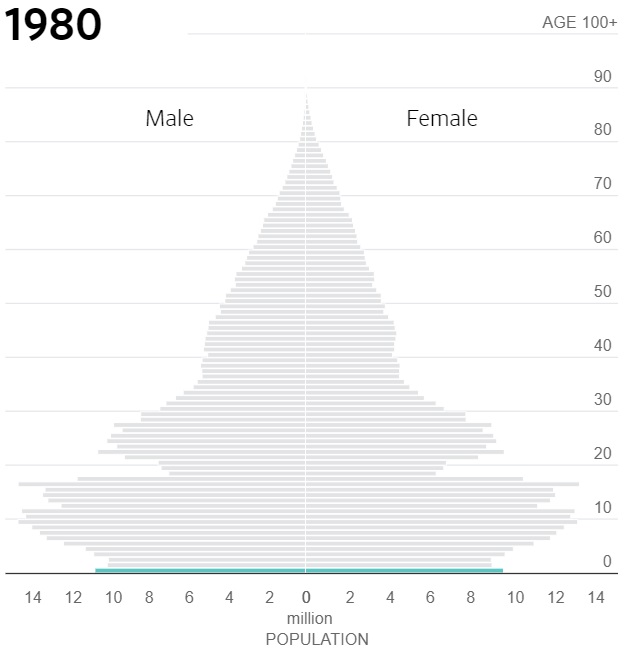
I’m in China this week, teaching about fiscal policy, convergence theory, and inequality at Northeastern University in Shenyang. So it’s a good opportunity to write about some pluses and minuses of Chinese economic policy. We’ll start this series by looking at demographics, which almost surely is the biggest long-run challenge for Chinese policymakers. How big […]
Chinese Economic Policy, Part I: The Demographic Challenge
The Failure of Primary Care
12 Jul 2024 Leave a comment
in health economics, labour economics, labour supply, politics - New Zealand
In an ageing and growing population, the failure of primary health care in New Zealand is a dire problem. Many general practices are shadows of their former selves. There are too few doctors and too many patients. Many people can’t even get enrolled. Those who are enrolled report wait times to see a GP of…
The Failure of Primary Care
Trump’s Backdoor to Open Borders
30 Jun 2024 Leave a comment
in economics of education, human capital, labour economics, labour supply, politics - USA Tags: 2024 presidential election, economics of immigration

Donald Trump recently endorsed a glorious-on-net immigration proposal: giving a green card to every foreigner who graduates from a U.S. university. I was stunned when I read the fine print: Let me just tell you that it’s so sad when we lose people from Harvard, MIT, from the greater schools and lesser schools that are…
Trump’s Backdoor to Open Borders
The Evolving Economic Role of Women: Goldin’s Nobel Lecture
29 Jun 2024 Leave a comment
in discrimination, economic history, economics of education, gender, history of economic thought, human capital, labour economics, labour supply, occupational choice, politics - USA, poverty and inequality Tags: gender wage gap, sex discrimination

Claudia Goldin’s Nobel prize lecture, “An Evolving Economic Force,” has now been published in the June 2024 issue of the American Economic Review. Or if you prefer, you can watch the watch the lecture (with more numerous slides!) from the link at the Nobel website. She writes: Women are now at the center of the…
The Evolving Economic Role of Women: Goldin’s Nobel Lecture
Health and Safety laws
23 Jun 2024 Leave a comment
in applied price theory, applied welfare economics, economics of regulation, health and safety, labour economics, labour supply, law and economics, occupational choice, politics - New Zealand
Peter Dunne writes – In 2016 New Zealand instituted comprehensive new health and safety laws for workplaces and other areas of activity. The expectation was that the new regime the legislation introduced would dramatically improve the culture and practice around safety in the workplace, reduce the numbers of accidents and save lives. However, the most […]
Health and Safety laws
22 Jun 2024 Leave a comment
in labour economics, labour supply, population economics Tags: ageing society, Japan
Another gender gap
19 Jun 2024 Leave a comment
in discrimination, economics of education, gender, human capital, labour economics, labour supply Tags: gender gap, gender wage gap, sex discrimination
Extraordinary Labor Market Developments and the 2022-23 Disinflation
19 Jun 2024 Leave a comment
in applied price theory, labour economics, labour supply, market efficiency, occupational choice, personnel economics Tags: working from home
From a new NBER working paper by Steven J. Davis: Two extraordinary U.S. labor market developments facilitated the sharp disinflation in 2022-23 without raising the unemployment rate. First, pandemic-driven infection worries and social distancing intentions caused a sizable drag on labor force participation that began to reverse in the first quarter of 2022, and perhaps […]
Extraordinary Labor Market Developments and the 2022-23 Disinflation


Recent Comments