

Is our economic ignorance about the sources of growth increasing?
30 Sep 2014 Leave a comment
in development economics, economic growth, growth disasters, growth miracles, macroeconomics Tags: Solow residual



Film review – Elysium
03 Sep 2014 Leave a comment
in constitutional political economy, development economics, economic growth, entrepreneurship, history of economic thought, law and economics, liberalism, P.T. Bauer, politics - USA, property rights, Public Choice, Rawls and Nozick, technological progress Tags: democracies, movies, rule of law, The Great Enrichment
Elysium was on TV. When I saw it on the big screen, no one told me it was a depiction of contemporary capitalism and the class war.

I read it as a contrast between third world countries lacking the rule of law and capitalist democracies.
The ships shooting up to the space station reminded me of Cubans trying to cross into the USA by boat to Florida.
Sorry, but I am just a simple country boy from the back blocks of Tasmania.
Time I want back on my deathbed: listening to social credit and other monetary cranks
02 Sep 2014 1 Comment
in Austrian economics, business cycles, economic growth, inflation targeting, monetarism, monetary economics, Murray Rothbard Tags: Austrian school of economics, business cycle, fractional reserve banking, hyperinflation, inflation, monetary business cycle, monetary cranks, quantity theory of money
I lost a good 15 minutes of my life that I will not get back on my deathbed listening to some monetary cranks at a Meet the Candidates forum last night for the New Zealand general election.

Monetary cranks advocate boundless inflation and credit expansion as the patent medicine for all our economic ills:
those who have Found the Light about Money take up their pens and write, with a conviction, a persistence and a devotion otherwise only found among the disciples of a new religion.
It is easy to scoff at these productions: it is not so easy always to see exactly where they go wrong. It is natural that practical bankers, vaguely conscious that the projects of monetary cranks are dangerous to society, should cling in self-defence to the solid rock, or what they believe to be so, of tradition and accepted practice. But it is not open to the detached student of economics to take refuge from dangerous innovation in blind conservatism.
D.H. Robertson (1928)
Listening to these monetary cranks in the audience last night rates with the worst movies I have ever ever seen for time I want back my deathbed. I think the worst movie I have ever seen was Absolute Beginners starring David Bowie. After that it, might be Last Tango in Paris.

These particular monetary cranks with their obsessions about factional reserve banking are from the social credit party in New Zealand. They are followers of Major C.H. Douglas, whom Keynes referred to as a:
private, perhaps, but not a major in the brave army of heretics
Social credit and other monetary cranks believe that all the world’s problems will be sold if the reserve bank prints money and they seem to think that was really easy because there is a fractional reserve banking system.
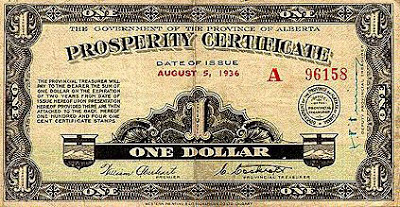
No one in the room who knew better wanted to lose more time that they wanted back on their deathbed explaining why printing money doesn’t make you richer. The “money is wealth” error is the defining affliction of the monetary crank.

The good economist will know that money creation is no short-cut to wealth. Only the production of valued goods and services in a market which reflects the consumer’s willingness to pay can relieve poverty and promote prosperity. A people are prosperous to the extent they possess goods and services, not money. All the money in the world—paper or metallic—will still leave one starving if goods and services are not available.
Obviously, none of them were persuaded by the quantity theory of money: if you increase the supply of money without a matching increase in the rate of real growth in the production of goods and services, you’ll have more money chasing the same amount of goods so prices will go up. It’s called inflation. Printing money creates inflation.

There is a school of thought in economic school, the Austrian school of economics, does get excited about fractional reserve banking. The reason it does is to explain how fractional reserve banking creates inflation and promotes the business cycle.

A cycle of booms and busts is not looked upon as a good thing by the Austrian school of economics.

The Austrian school wants to get rid of fractional reserve banking as a way of reducing inflation and reducing the possibility of a loose monetary policy causing booms and busts in the economy.

These monetary cranks from social credit party honestly believed that printing more money will make you wealthier. Thankfully no one asked them to explain their position.

A few supporters of the monetary cranks in the audience asked other members of their views on the ideas of these monetary cranks. Sensibly, they all gave short answers that did not provoke them further and waste more of their precious life listening to them talk nonsense.

If printing money was a winner, as with any populist policy that has a half a chance of working, the parties of the centre-left and centre right would be all over it like flies to s…
Can New Zealand blame distance for its economic woes alert: the global economic hub has been moving closer to us for at least 20 years
29 Aug 2014 Leave a comment
in applied price theory, economic growth, international economics Tags: burden of geography, New Zealand, New Zealand productivity performance, scapegoating

Ending child labour can only be through expanding family opportunities
11 Aug 2014 Leave a comment
in development economics, economic growth, human capital, labour economics, technological progress Tags: Ben Powell, child labour

Groundhog Day for economic forecasters – The Grumpy Economist
13 Jul 2014 Leave a comment
in economic growth, great recession Tags: forecasting errors, John Cochrane


Euroland is presented by progressives as the type of mixed economies they prefer and larger governments they want
03 Jul 2014 Leave a comment
in applied welfare economics, economic growth, macroeconomics Tags: Eurosclerosis, progressive politics

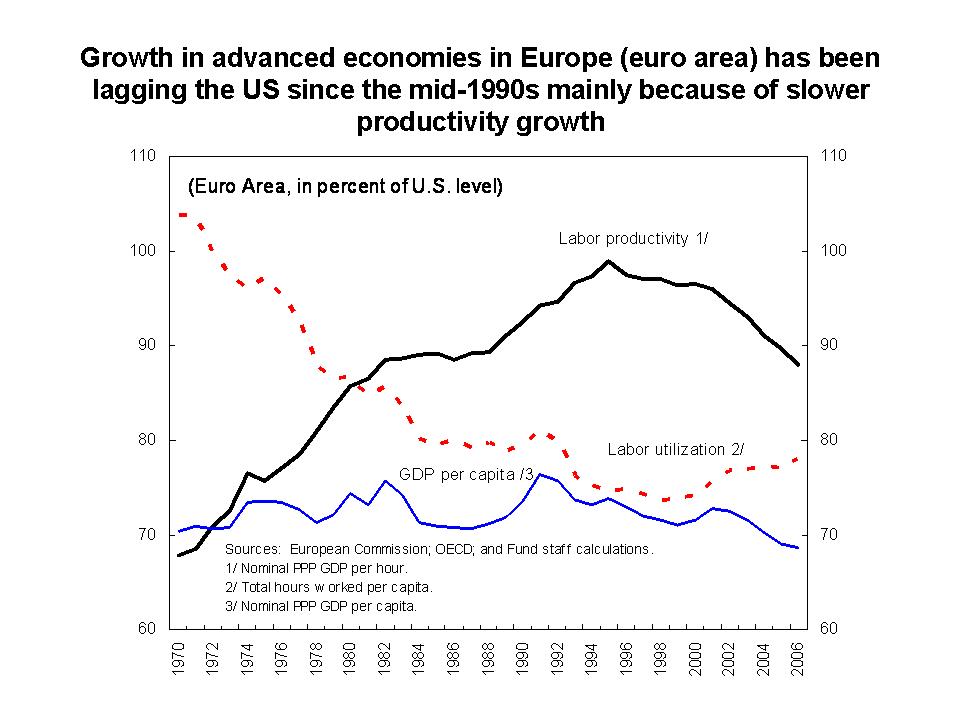
The OECD countries with persistently high unemployment rate are the European welfare states – about double figures for 2 decades or more now. The reality is progressive politics pits workers against worker, and the middle-class against the poor and rich with the progressives cheering for the middle-class.
Euroland has a labour aristocracy – a two-tier system with ultra-secure workers with the permanent jobs and vulnerable temporary workers. The prime-age workers with the permanent jobs are pitted against the young, the unemployed and the older workers – these three groups are either locked-out or pushed-out. It took the equally worse recession in U.S. post-war history for their unemployment rates to reach the levels in Euroland in most any year out of the last 20.

Progressive solutions have been tried and they failed: a new word had to be invented to capture the resulting high unemployment rates and stagnant productivity growth from adopting progressive policies: Eurosclerosis!
Milton Friedman on what presidents can do to increase the economic growth rate
28 Jun 2014 1 Comment
in economic growth, macroeconomics, Milton Friedman Tags: Milton Friedmand, The fatel conceit, The pretense to knowledge
First of all, I don’t think the president has a great deal to do with keeping the economy going…
I think presidents have a great deal to do with keeping the economy from growing…
I think the economy is largely independent of the government, and what keeps it going is its own internal development.
However, you can short-circuit that internal development. If you impose very high taxes, and eliminate the incentive to innovate, to improve, to take risks, and do things, you’ll kill the economy. And that’s what’s happened over and over again in other countries around the world.


Recent Comments