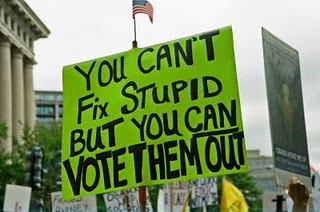
Expressive voting – three case studies

Obama won nearly 80% of the Jewish vote. He and the Democratic Party are rather divided on support for Israel. The Republicans are more in favour of Israel.

Now see Expressive voting and identity: evidence from a case study of a group of U.S. voters, A review of Norman Podhoretz, Why are Jews Liberals? by Arye L. Hillman, Public Choice (2011).

Podhoretz describes behaviour that backs up the hypothesis that people vote expressively to affirm their identity. Podhoretz was concerned that liberal Jews vote against their self-interest.

Most of the Jews who voted for Obama did care about Israel but downplayed his anti-Israel associations; they voted for him anyway. The expressive behaviour hypothesis explains why many Jews do this. As a single vote is not decisive in most elections, the main benefit from voting is its expressive value:

  • Liberal Jews, manifesting a rational behaviour, choose the expressive utility from voting against the “Right”, which is identified with past prejudice against Jews and contemporary privilege.
  • The identity of a person who opposes privilege and cares about social justice is confirmed through the act of voting for the “Left”.

Liberal Jews support liberal principles through the low-cost actions of voting and rhetoric, so as to place themselves at the centre of society despite their higher-than-average incomes.

People also vote for parties that will never win elections for expressive reasons. Since maybe 1945, up to a quarter of UK voters knowingly vote for the Liberals and now the LDP knowing that it is usually a wasted vote. But is it?

  • Voting for a third party that will not win is a way of being a middle-of-the-road voter without voting for the socialists or the Tory party.
  • Third party votes change the identity of the median voter. The swinging voter in the UK is often an LDP voter.

To win this LDP vote, the major parties must change their policies or these voters will park their vote somewhere else while still signalling their vote is up for grabs to both sides. These voters affirm themselves as sensible middle-of-the-road voters without voting for either Labour or the Tory party.

The same happens for third-party candidates in America. They are protest votes. The major parties spend a lot of time wooing back these voters at the next election. A protest vote is very affirming to an expressive voter.

Expressive voting also offers much insight into why some democratically elected governments continued to pursue terrible wars of attrition. The unwillingness to discuss peace terms in World War I is an example. A voter might prefer peace to war but showing patriotism might outweigh this. One candidate offers a policy of appeasement, recognising the enormous cost in lives that further fighting might involve. The other candidate stands for national pride, not surrendering to bullies, and avenging past losses. A careful reflection on the costs and benefits of war or peace is what the voter does not do. What is relevant is showing patriotism and strength of purpose.

The main point is that expressive voters are not disciplined by outcomes, and that democratic choice is suspect for this reason even on the biggest of issues.

Privatisation screw-ups are the best case for privatisation

Governments are so bad as business owners and so incapable of running a commercial process free of politics that governments cannot even sell a state-owned enterprise for a good price under the full glare of the media and public.

Anyone can sell an asset. It is the simplest task of ownership. Hire some consultants and go for the best price. Governments lack this ability.

Privatisations are often politicised, with discounts for small buyers from the middle class, for employees and other special interests. These messy privatisations are the best case out there against state ownership of businesses.


“No asset sales” was the Labour Party’s most coherent slogan in the 2011 general election in New Zealand. It cannot be claimed that the more recent privatisations in New Zealand were not subject to the maximum amount of public and parliamentary scrutiny possible in a democracy. The 2011 election was said to be a referendum on asset sales.

This inability to sell state-owned enterprises for a profit and free of politics calls into question the ability of governments to make complicated day-to-day business management and entrepreneurial judgements as owners of business enterprises. Imagine the quality of the day-to-day state-owned enterprise decision making that is further away from the glare of an election?

Private asset owners have a strong incentive to sell assets at a profit as it will otherwise hurt their share price and their personal wealth. Inferior entrepreneurs and owners are punished by losses. Any assets that inferior entrepreneurs either mismanaged or sell at a bargain price will, through further buying and selling, end up in the hands of more alert entrepreneurs and owners.

There are no similar feedback and error correction measures disciplining governments as asset owners and in their day-to-day monitoring of their business portfolios. Governments who own business assets have an inherently softer budget constraint.

Beware of Greeks bearing debts

The Greeks initially did a fine job in squeezing huge subsidies and debt write-offs! The Irish played by the rules, guaranteeing bank bond holders to which they had no obligation, but got screwed.

Arellano, Conesa, and Kehoe explain in Chronic Sovereign Debt Crises in the Eurozone, 2010–2012 that the post-GFC recession in many Eurozone countries created an incentive to gamble for redemption.

This gamble for redemption is betting that the post-2008 recession will soon end.

  • If Greece sold more bonds to smooth government spending in the interim, and if the Greek and EU economies recover, the stronger revenue growth will pay off the enlarged Greek government debt.
  • Under some circumstances, this policy is the best that a government can do for its country, but it carries a risk!
  • If the recession goes on for too long (and it did in southern Eurozone), a government will either have to stop increasing its debt or default on its bonds.

The global bond markets will anticipate this prospect of default as a country’s government debt accumulates and will seek higher and higher interest for new bonds, and importantly, to roll over existing Greek Government bonds.

EU policies that result in higher interest rates on government bonds and high costs of default provide incentives for a national government to reduce its debts and avoid sovereign default.

EU policies that result in lower interest rates and lower the cost of a sovereign default provide incentives for a government to gamble for redemption.

The interventions taken to date by the EU and the IMF – lowering the cost of borrowing and reducing default penalties, the bailouts and the 50% write-off of the existing Greek government debts – encourage southern Eurozone governments to gamble for redemption.

Greece and a few others are gambling for redemption by betting that the recession will end soon, selling more bonds to smooth government spending in the interim, and reducing the enlarged debt if their economies recover.

If the recession continues for too long, the government will have to stop increasing debt or default on its bonds. Greece has been in default in more than 50% of the time since it became independent in 1822.

A 2014 paper by Kehoe argued that if Germany and France start to get tough with Greece and charge it penal interest rates on further loans and debt rollovers, it will make it optimal for Greece to just default on its government debts and leave the Eurozone.

A resumption in economic growth is one of the few solutions that avoid these calamities.

Greece’s problem is that it is 119th in the 2014 index of economic freedom, just ahead of India. The World Bank ranks Greece 161st in the world for ease of registering property and 91st for enforcing contracts; it takes an average of 1,300 days to enforce a contract through the Greek courts. This low base says something about how Greek politics works and will work for some time to come.

The lengthy shortcomings of the Eurozone were well-known before it was formed. As Michael Bordo pointed out in 1999:

the absence of a central lender of last resort function for EMU, the lack of a central authority supervising the financial systems of EMU, unclear and inconsistent policy guidelines for the ECB, the absence of central co-ordination of fiscal policies within EMU, unduly strict criteria for domestic debt and deficits, as set out in the Maastricht rules, in the face of asymmetric shocks, and Euroland is not an optimal currency area.

Milton Friedman predicted that the Euro would not survive its first major recession.

I told you so is never a solution.

Europe has extensive experience with currency union break-ups:

  • The Latin Monetary Union joined Belgium, Italy, and Switzerland with France in 1867. The arrangement held together until the generalized breakdown of global monetary relations during World War I.
  • The Scandinavian Monetary Union was formed in 1873 by Sweden and Denmark and Norway joined two years later. This was disrupted by the suspension of convertibility and floating of the three currencies at the start of World War I. The agreement was abandoned during the global financial crisis of 1931.
  • Following the start of the Zollverein (the German customs union) in 1834, members established a German Monetary Union. A full merger of all the currencies did not arrive until after consolidation of modern Germany in 1871.
  • The only truly successful monetary union in Europe came in 1922 with the birth of the Belgium-Luxembourg Economic Union (BLEU), which remained in force until 1999.
  • After the Austro-Hungarian Empire was dismembered by the Treaty of Versailles, in an abrupt and quite chaotic manner, new five currencies were introduced.

Rather than saying the Euro cannot fail, the discussion should be about how the dissolution of currency unions is common, especially where Greece is a member. What happened? What can we learn from the past to prepare for a possible Greek departure from the Eurozone?

Why only Nixon could go to China and Clinton finish the Reagan Revolution

The secret of winning the swing vote is having policies slightly different from your opponent. Recall Tyler Cowen and Daniel Sutter’s Why Only Nixon Could Go to China in Public Choice.


File:Nixon Mao 1972-02-29.png

Cowen and Sutter say that a policy could depend on information – on which policies or values everyone could potentially agree, or on which agreement is impossible.

Politicians, who value both re-election and policy outcomes, realise the nature of the issue better through inside and secret information and superior analytical skills (or access to those skills), whereas voters do not have access to such information base or skills.

Only a right-wing president can credibly signal the desirability of a left-wing course of action. A left-wing president’s rapprochement with China would be dismissed as a dovish sell-out. The Nixon paradox held because citizens could vote retrospectively on the issue.

Left-wing parties adopt right-wing policies because they are good ideas that will get them re-elected. Bob Hawke, Tony Blair, and Bill Clinton were firmly camped over the middle-ground.

Only centre-left economic reformers can credibly signal the desirability of their economic reforms because of the brand name capital they invested in distributional concerns and protecting the poor.

Because of their proven record and brand name, they do not jeopardise their support or credibility by seemingly departing from their core values. They must have done so because it was the right thing to do given events and the long-term interests of the lower-income groups they represent.

Bill Clinton balanced the budget and introduced sweeping welfare reforms in 1996 after vetoing two earlier bills because this finally fulfilled his 1992 campaign promise to “end welfare as we have come to know it”. As he signed the bill on August 22, 1996, Clinton stated that the act:

gives us a chance we haven’t had before to break the cycle of dependency that has existed for millions and millions of our fellow citizens, exiling them from the world of work. It gives structure, meaning and dignity to most of our lives.

Jimmy Carter was a bigger deregulator than Reagan. Obama uses drones far more often than Bush did.

Major labour law reforms were passed in Germany under a left-wing government after decades of 10% unemployment rates and average German unemployment spells for about a year. The key part of these reforms came into play just before the global financial crisis hit and was a major reason for the unemployment rate in Germany falling despite the onset of GFC.

Why Only Nixon Could Go to China also explains why hawks such as Reagan and Begin and other right wing party leaders were able to negotiate peace treaties that eluded more dovish politicians who ran on ‘peace now’ slogans.

Reagan signed the Intermediate-Range Nuclear Forces treaty, walked with Gorbachev in Red Square and seriously offered complete mutual nuclear disarmament in Reykjavik in 1986. Any other American President who offered complete mutual nuclear disarmament would have been impeached.

https://i0.wp.com/www.reagan.utexas.edu/archives/photographs/large/c47345-10.jpg

Hawks also have the right negotiating stance. Robert Aumann argues that:

If you are ready for war, you will not need to fight. If you cry ‘peace, peace,’ you will end up fighting… What brings war is that you signal weakness and concessions.

Only then will both sides negotiate because they know that the other side is willing to walk away and perhaps not come back for a long time. Unless it gets reasonable offers that will be binding on both sides for a long time because both win more for honouring their promises rather than threatening war again soon.

Left-wing politicians can deliver economic reforms because they can deliver new voting blocs to the realignment of political coalitions. This new bloc of centre-left voters and some members of existing political and special interest groupings benefit from regrouping and joining new political coalitions that push through the reforms. An ageing society, budget deficits, technological innovations and shifts in production cost structures and in consumer demand can all make the existing political coalitions less rewarding than in the past.

Vote buying in Thailand and the Philippines

Paying for votes is common in the Philippines and Thailand. The Thai Prime Minister, on the eve of the East Asian crisis, was the rural politician Banharn Silpa-archa. His nickname was Mr. Mobile ATM because of all the bribes he handed out.

Politicians are corrupt partly because developing country politics is ‘retail politics’: helping people with small loans, mediating disputes and getting children into better schools or universities.

A vicious circle develops. Politicians take bribes to build a war chest to bribe their voters to re-elect them. More honest politicians do not win office unless they stoop to paying cash for votes.

Japan is similar. LDP politicians have personal support networks that are 50,000 or more strong which are based on giving and receiving personal favours over their entire term of office.

Robert Tollison wrote a paper on the price of votes and the history of open vote trading in Great Britain and the United States prior to the 20th century.

Tollison found that the winners from the introduction of secret ballots were the middle class because the working class could no longer sell their votes to the rich.

Because the poor tend to face extremely high costs of organization, it may have been technically possible, although economically inefficient, to organize as a bloc of voters in order to secure net wealth transfers to themselves as a group.

From the standpoint of the individual poor voter, a more attractive alternative than tilting at the windmills of redistribution would have been to sell his vote to the highest bidder…

After the passage of the secret ballot in 1872 in Great Britain, the percentage of Commons seats held by landed interests dropped like a rock.

The Thai and Filipino middle classes hate the way the votes of the rural poor can be bought with bribes (and public services paid by taxing the middle class in the cities).

The Japanese, Thai and Philippine parliaments all have multi-member constituencies where the 3, 4 or 12 candidates with the most votes are elected.

This election system forces candidates from the same party to run against each other and build personal support networks to win elections off their own mantle.

This splitting of voter support works well for incumbents who have personal name recognition and a war chest based on bribes extorted during their previous term to fund cash for votes to win re-election.

The Arab Spring – will there ever be a successful popular revolution?

The Arab Spring is a good example of Gordon Tullock’s consideration of revolutions as palace coups that sometimes occur against the background of street protests. For Tullock, the puzzle is not that popular revolutions are so rare, but that they happen at all.

The role of street protests in the Arab Spring was to throw in the possibility of mutinies and desertions in the army and police. Previous alliances are thrown into doubt especially as the autocrat is old and sick, but had been for many years grooming his young son to inherit his power.

Ordinary citizens obey dictators because if they don’t, they are highly unlikely to make any difference in any revolt and could get killed during the uprising even if it succeeds. Worse awaits them if the revolt fails.

To stay in power, Tullock considers that an autocrat needs a moderately competent secret police willing to torture and kill, and a policy of rewarding generously those who betray coup plotters. Of course, the plotters must be shot.

Autocrats are fundamentally insecure. Wintrobe wrote of the “Dictator’s Dilemma” – the problem facing any ruler of knowing how much support he has among the general population, as well as among smaller groups with the power to depose him. Most dictators are overthrown by the higher officials of their own regime.

Most dictators do not anoint a formal successor while they are in office. Tullock argued that as soon as a likely successor emerges, loyal retainers start to form alliances with that person and may see private advantage in bringing his anointed day forward. Can’t have that.

More than a few autocrats were murdered in their sleep. To his very last day, Stalin locked his bedroom door because he did not trust the bodyguards who had been with him since the 1920s.

As for the populace, the autocrat must use both the carrot and the stick to buy loyalty. It is tricky to get the right mix of repression and co-optation due to lack of information. So dictators pay very high wages to select groups to secure their loyalty, especially the military and police. The communist party of the USSR started with 100,000 members in 1920. By the early 1980s, co-optation left it with 26 million members with the ensuing privileges.

Perfectly ordinary regular armed forces, with no counterinsurgency doctrine or training whatsoever, have in the past regularly defeated insurgents by using well-proven methods.

The simple starting point is that insurgents are not the only ones who can intimidate or terrorise civilians.

For instance, whenever insurgents are believed to be present in a village, small town, or city district, the local notables can be compelled to surrender them to the authorities, under the threat of escalating punishments, all the way to mass executions. That is how the Ottoman Empire controlled entire provinces with a few feared janissaries and a squadron or two of cavalry.

Terrible reprisals to deter any form of resistance were standard operating procedure for the German armed forces in the Second World War. Compare occupied France with the U.S. in Iraq:

  • German officers walked around occupied France with no more than side-arms because any mischief would be dealt with by savage reprisals.
  • American forces in Iraq bunker down and move in convoys because they do not launch reprisals.

On the side-lines, even better, watching it all on TV is the safest place for most to be in a popular revolution, uprising or insurgency.

Unless you control key military resources in the capital, what you do personally does not matter to the success of the revolution. Sticking your neck out can get you shot at or perhaps tortured. A classic ‘free rider’ dilemma.

If you must get involved, the best place to be in a mounting revolution is to be a ‘late switcher’. Switch sides when you are sure of joining the winning side. Back the winner just as he is about to win.

One reason for those post-revolution and post-coup purges is the small number of people actually involved in overthrowing the old autocrat and who actually stuck their necks out while plotting the coup do not trust their Johnny-come-lately new allies. They turn on these late-switchers before they change sides again to support a further coup of their own or a counter-coup.

People power in Manila in 1986 had a lot to do with late switching in a coup plot.

Originally, a military coup was planned by General Ramos and Defence Minister Enrile against the dying Marcos.

The coup plotters feared for their lives under Imelda. The plot was uncovered. Assassins were dispatched.

Ramos and Enrile gave up on forming a military junta and threw their lot with Cory Aquino and her popular movement in the hope that the army would split or hold off until the lay of the land was clearer, which the army did. That 1986 military coup and the coup attempts in succeeding years were staffed by different cabals of these late switchers.

Yeltsin on that tank in Moscow with a loud hailer was great TV, but remember he was calling for the army and security forces to switch sides or at least stay neutral. They did.

The mid-1980s Russian leaders were old and sick, so many ambitious younger army officers and nomenklatura saw their main chance if they boxed real clever and switched sides just at the right moment.

After every change of leadership in the USSR, there is a redistribution of patronage. Perestroika and Glasnost were, on closer inspection, another round of these reallocations of patronage. Patronage to their own entourages are routine for new autocrats throughout history.

Every Russian leader had his own reform initiatives after entering office and had periodic anti-corruption purges to redistribute the rents of high government offices and state-owned enterprise management positions to the up-and-comers he could trust more. Like Khrushchev, Gorbachev also wanted to transfer resources away from the military. Gorbachev went further and wanted to stop bleeding money and resources to the communist satellite states of Eastern Europe.

It also should be always remembered that Qadaffi got his main chance to take over when he was a mere Colonel Qadaffi leading a small group of junior officers. Colonels control strategic components of the military but are not as well paid as those in the autocrat’s inner circle.

Generals are often close to the leadership; their appointments are usually somewhat political and benefit from generous patronage from the autocrat. They have little to gain but their life to lose in a coup plot.

Enough military coups are led by more junior officers seizing their main chance. This make their generals nervous enough about their own survival in a colonels’ coup to strike first and displace the current autocrat before they are the next to be arrested and share his fate. There is then a post-coup realignment of patronage to buy off the junior officers.

Nasser did not believe that he, as a lieutenant-colonel, would be accepted by the Egyptian people and so he and the Free Officers Movement selected a general to be their nominal boss and lead the coup in 1952. Nasser did not become Prime Minister until 1954 after a spell as a minister and then as Deputy Prime Minister.

What appears to be a popular uprising is normally a split within the government. The Arab Spring, not by coincidence, occurred during a succession crisis in Egypt. President Mubarak has been very old and sick for a long time. Gamal Mubarak was old enough to covet the presidency but would have a large entourage of his own that would take many of the lucrative posts from his father’s retainers and courtiers.

A few autocrats call elections and retire abroad. The gratitude of the populace and the uncertain identity of his successors creates a big enough break in the traffic to allow the dictator to get to the airport alive.

Obama, Iran, Tom Schelling and the Bomb

If Obama was interested in peace, he should pay more attention to the writings of Thomas Schelling.

Schelling said that he did not know of any way to stop the Iranians from acquiring nuclear weapons and it is therefore important to have sophisticated enemies.

  • It took the U.S. 15 years after World War II to think seriously about the security of its nuclear weapons.
  • Before that, U.S. nuclear weapons did not even have combination locks, let alone complex electronic security codes!
  • Now, most nuclear weapons will not detonate even if given the right codes unless they are at their designated targets.

The Soviet Union always had civilian officials in charge of nuclear weapons, and never let an aircraft carrying these weapons out of Soviet airspace. China has a separate army unit for this purpose too.

What are the safeguards against theft, sabotage or unauthorised use, and how will the Iranian weapons be protected? Iran must learn from this. Schelling’s and Herman Kahn’s writings in the early 1960s on nuclear wars starting through accidents and misunderstandings led them to work with Kubrick on the script of Dr. Stangelove.

The ayatollahs do not want their own nation wiped off the map. They know that Israel has enough nuclear weapons and delivery systems to destroy Iran in retaliation for any attack. This would deter them.

The government of Iran is repulsive, but it has never given evidence that it is suicidal. In all likelihood, rhetoric about wiping Israel off the map is ideological blather.

Any government in Tehran would have to realise that an attack on America would be a regime-extinguishing event. Such an attack would be suicide, both politically and literally. 

The United States managed to deter some unpleasant and unpredictable people, including Stalin and Mao Zedong, from using nuclear weapons during the Cold War despite the USA’s own best efforts to provoke them from time to time. Israel and Iran may have noticed the success of that strategy too.

The USSR and China also played the ‘I am a crazy ideological zealot’ card too. Remember Mao and Khrushchev.

  • China became a nuclear power under Mao Zedong, a leader who exceeded even Stalin’s record of genocide. Mao’s publicly enunciated views on nuclear warfare were also alarming in the extreme.
  • China also emerged as a nuclear power on the eve of the Cultural Revolution. China, during that orgy of fanaticism, makes today’s Iran look like a normal, even sedate, country.

The Iranian mullahs take full political advantage of appearing to be mad and unpredictable. Iran’s leaders have nonetheless exhibited remarkably well timed moments of prudence and pragmatism. They have even fully reversed course when confronted with defeat such as when they started to really lose their war with Iraq.

Iran could always go for nuclear latency: the condition of a country possessing the technology to quickly build nuclear weapons without having actually yet done so. This avoids the costs and risks by refraining from exercising the overt nuclear capability option.

Because such latent capability is not proscribed by the Nuclear Non-Proliferation Treaty, a work-around of the treaty is sometimes called the “Japan Option”. Japan is a clear case of a big advanced country with the complete technical prowess and nuclear materials to develop a nuclear weapon quickly.

A country does not test weapons nor declare its latent nuclear potential. Yet just keep the resources for a latent nuclear potential on hand for a crash programme.

Schelling defined diplomacy as being based on having some control over something that the other country wants. There must be something each has to bargain over.

No communications should be sent to Iran; there should be no informal dialogues. Wait for Iran to come to you because you have something they want. Only then will it become serious in striking a bargain.

Tax reforms lead to higher taxes

After the 1970s tax revolts and California’s Proposition 13, Buchanan and Brennan wrote The Power to Tax. Their message was that if you don’t always trust governments, beware of efficient taxes.

More efficient taxes make it easier for government to extract more tax revenue from the population with less resistance. Taxes can be made more efficient by broadening tax bases and removing loopholes while lowering marginal rates. A GST that replaces a web of sales taxes is a common example. The GST always goes up over time, never down over time. Most tax reforms are revenue neutral.

When Brennan said at a tax reform conference in Australia 20 years or so ago that efficient taxes and tax reforms are both bad because they lead to higher taxes and a larger government, no one understood him.

Idealists all, the audience including me assumed they were advising a benevolent government, not a revenue-maximising leviathan government – a beast that needed to be staved with constitutional constraints on the number and size of tax bases and tax instruments.

Fiscal arrangements were analysed by Buchanan and Brennan in The Power to Tax in terms of the preferences of citizen-taxpayers who are permitted at some constitutional level of choice to select the fiscal institutions they are to be subject to over an uncertain future.

Those in elected office are assumed to exploit the power assigned to them to the maximum possible extent: government is a revenue-maximising leviathan.

Buchanan and Brennan were all for inefficient tax systems because they do not raise as much revenue. A government that cannot raise much revenue cannot grow very large.

Gary Becker and Casey Mulligan attributed the growth in the size of governments in the 20th century to demographic shifts, more efficient taxes, more efficient spending, a shift in the political power from the taxed to the subsidised, shifts in political power among taxed groups, and shifts in political power among the subsidised groups:

An improvement in the efficiency of either taxes or spending would reduce political pressure for suppressing the growth of government and thereby increase total tax revenue and spending.

Tax reform saved the late 20th century welfare state by raising the same or more revenue with less taxpayer resistance. Taxes are very efficient in the Nordic countries – high tax rates on labour income and consumption but lower on capital income. And light regulation too.

The intriguing public choice history of the Kyoto protocol

The US Senate voted 95-0 in July 1997 that the Kyoto Protocol would not be ratified because it excluded certain developing countries, including India and China, from having to comply with new emissions standards.

Disregarding the Senate Resolution, Vice President Al Gore symbolically signed the Protocol on November 12, 1998.

ji-agreement-1024x718

Knowing that the Kyoto Protocol would not be passed without the inclusion of developing countries in some way, Clinton did not even send the Protocol to the U.S. Senate for ratification. Clinton had 801 days in office to submit it, but did not. As it was going to be rejected, it cost him nothing to sign it and he won the support of expressive voters. Bush was criticised for not doing what Clinton also failed to do.

The EU made demands that the USA would not accept so that the treaty would not include the USA. This allowed EU ministers to look good to expressive voters back home by standing staunch and not compromising.

US non-participation made participation cheaper for the EU because the USA would not be competing for carbon credits, so the price of carbon would be much less.

There was an emergency night time meeting to save the Copenhagen Summit called by Gordon Brown. He was joined by Obama, Sarkozy, Merkel and PM Hatoyama of Japan. To make a point, China sent a rather out-spoken vice foreign minister of foreign affairs. He was the smartest guy in the room.

Due deference to experts in public policy making

I caught Sir Paul Nurse’s Attack on Science on cable recently. He was exploring why people were unwilling to accept the word of science.

Sir Paul believes that people should defer to experts. He named two expert consensuses: global warming and GMOs.

In his 2012 Dimbleby Lecture Sir Paul called for a re-opening of the debate about GM crops based on scientific facts and analysis:

“We need to consider what the science has to say about risks and benefits, uncoloured by commercial interests and ideological opinion.

It is not acceptable if we deny the world’s poorest access to ways that could help their food security, if that denial is based on fashion and ill-informed opinion rather than good science.”

Many activists, without blinking an eye, will reject the science of GMOs but will hound from the temple anyone who defies another consensus they agree with.

Sir Paul interviewed James Delingpole. After they agreed that science does not proceed on the basis of consensus, Sir Paul asked Delingpole why he rejected the scientific consensus on global warming but accepted the scientific consensus on cancer.

Delingpole said he did not accept the analogy, but he was otherwise flat-footed. I suggest the following answer:

  1. Medicine proceeds on the basis of double blind trials and other small field experiments. Control and treatment groups are used before any treatment is applied widely. Medicine is not perfect as was the case with the misdiagnosis of the causes of stomach ulcers.
  1. The lag between cause and effect are short as would be the case if you rejected emergency treatment after a car accident or cancer treatment.
  1. Medicine tests the efficacy of invasive treatments, weighs side-effects and encourages adaptation and prevention.
  1. The staying power of self-interest in medicine is well-known: much higher rates of surgery when there is fee for service and much lower rates of surgery if the patient is a doctor’s wife. The efforts of the medical profession to suppress new entry to inflate their own incomes are well-known.

Ken Arrow in the early 1960s famously concluded that virtually all the special features of the medical care industry could “be explained as social adaptations to the existence of uncertainty in the incidence of disease and in the efficacy of treatment”.

  1. Physicians may not agree on the medical condition causing the symptoms the patient presents.
  2. Even if physicians agree on their diagnoses, they often do not agree on the efficacy of alternative responses — for example, surgery or medical management for lower-back pain.
  3. Third, information on diagnosis and likely consequences of treatment are asymmetrically allocated between providers and patients.
  4. The reason patients seek advice and treatment in the first place is that they expect physicians to have vastly superior knowledge about the proper diagnosis and efficacy of treatment.

Like all experts, doctors can advise you of the options open to you.

You must weigh those options in light of the costs and benefits to you and those costs and benefits are known only to you.

An old mate, who was in his thirties, had to consider back surgery that had a 10% chance of leaving him in a wheelchair for life. Experts cannot tell you what to do with those odds. After months of terrible pain and incapacity, his back slowly recovered without the surgery.

Most of the debate over global warming is explained by uncertainty about both the extent and incidence of global warming and the efficacy of prevention versus adaptation.

Trade is a powerful force for peace in the Ukraine

Russian TV is starting to spin a Putin back-down in the Ukraine. Channel surfing, I came cross a Russian TV story alluding to Russians that the revenues from the Russian gas pipelines across the Ukraine to the EU are a major lifeline of the Russian economy.

The mere threat of repeated sabotage of these gas pipelines to Western Europe are an easy way to hurt Russia if it overplays its hand. That was the round-about topic of the TV story.

Trade was a powerful force for peace and is a defence against war, as the great Manchester liberal Richard Cobden championed in mid-19th century.

Both Russia and China have much more to lose and much less to gain from war because of their extensive trade links with their neighbours and their former Cold War rivals, including with each other. China’s extensive trade and investment links with Taiwan are the best guarantee of peace between them.

As Joseph Schumpeter observed, when free trade prevails, “no class” gains from forcible expansion: “foreign raw materials and food stuffs are as accessible to each nation as though they were in its own territory”. Patrick McDonald recently called free trade the invisible hand of peace.

What global warming will cost us if we do nothing

David Friedman at Ideas delved into the best estimate of the global cost of global warming – by William Nordhaus – $4.1 trillion this century. This is $48 billion a year – 1/20th of one per cent of world income! Friedman then asked this:

Friedman’s even better argument on the social costs of global warming is that the costs of unlikely but catastrophic risks are included in the social cost arithmetic to make the problem serious. Without including them, global warming up to about a 2-degree warming provides a net benefit.

My Photo

Friedman shows great insight when he goes on to say that there is “no similar attempt to take account of low probability, high cost consequences of preventing global warming”.

That low probability, high cost consequence, which will occur sooner or later, is the next ice age. The next ice age could include a drop in sea levels of three hundred feet and half a mile of ice over the top of London and Chicago. That would bring a new meaning to climate change refugees. We are in a relatively warm period – an interglacial – in an ice age that started two million years ago.

Friedman asked whether “It is at least possible that global warming is all that is preventing the interglacial from ending”.

The great tactical victory of environmentalists is keeping the debate on the science going because even if the science is right, the economic costs are small.

How much will global warming cost is the correct question for policy debate. Let the science be settled!

Economists have no more expertise to judge the science of global warming than they do in judging the science behind the inevitability of super volcanoes going off again such as the one just north of me. The Yellow stone national park super volcano is 50,000 years overdue, by the way.

Economists can comment on the likely consequences, intended and unintended, of different choices and the constraints that different national and international institutional frameworks place on what policy choices might be made.

The chances of India, China and the rest of the Third World agreeing to forego or even slow their economic development to fight global warming is zero even before you consider the international collective action, verification and free rider problems. Adaptation and ‘richer is safer’ are the only game in town whichever way the climate goes!

On throwing the rascals out

“American democracy,” writes Richard Posner, “enables the adult population, at very little cost in time, money or distraction from private pursuits commercial or otherwise, to punish at least the flagrant mistakes and misfeasances of officialdom, to assure an orderly succession of at least minimally competent officials, to generate feedback to the officials concerning the consequences of their policies, to prevent officials from (or punish them for) entirely ignoring the interests of the governed, and to prevent serious misalignments between government action and public opinion.”

Too many, in Richard Posner’s view, want to remake democracy with the faculty workshop as their model. Such deliberation has demanding requirements for popular participation in the democratic process, including a high level of knowledge and analytical sophistication and an absence, or at least severe curtailment, of self-interested motives.

Much empirical research demonstrates that citizens have astonishingly low levels of political knowledge. Most lack very basic knowledge of political parties, candidates and issues, much less the sophisticated knowledge necessary to meet the demands of a deliberative democracy.

Posner champions Joseph Schumpeter’s view of democracy as a superior alternative to the unrealistic visions of deliberative democracy.

Schumpeter disputed the widely held view that democracy was a process by which the electorate identified the common good, and that politicians carried this out:

  • The people’s ignorance and superficiality meant that they were manipulated by politicians who set the agenda.
  • Although periodic votes legitimise governments and keep them accountable, their policy programmes are very much seen as their own and not that of the people, and the participatory role for individuals is limited.

Schumpeter’s theory of democratic participation is that voters have the ability to replace political leaders through periodic elections. Citizens do have sufficient knowledge and sophistication to vote out leaders who are performing poorly or contrary to their wishes. The power of the electorate to turn elected officials out of office at the next election gives elected officials an incentive to adopt policies that do not outrage public opinion and administer the policies with some minimum honesty and competence.

The outcome of Schumpeterian democracy in the 20th century, where governments are voted out rather than voted in, is that most of modern public spending is income transfers that grew to the levels they are because of support from the average voter.

Political parties on the Left and Right that delivered efficient increments and streamlinings in the size and shape of government were elected, and then thrown out from time to time, in turn, because they became tired and flabby or just plain out of touch.

No more witty politicians

Did the crowd boo when Gough Whitlam was so ill-mannered as to refer to Kerr’s cur? Did the crowd at the steps of Parliament chant ‘manners, Gough, manners’ rather than ‘shame, Fraser, shame’?

When Gough was challenged by a voter for his view on the contentious issue of abortion, hoping to catch him out, Whitlam replied that he was for abortion and in the heckler’s case, he wished that abortion would be retrospective. Everyone laughed and Gough got off the hook.

30 years ago when public meetings in elections were raucous affairs rather than photo opportunities, being able to give as good as you get was a key political skill.

Public meetings were tests of a politician’s mantle and those that did not fight back were judged to be weak. Stand-up comics had easier initiations.

Wit has lost its place in public discourse.

Robert Muldoon pinged the famous insult “New Zealanders who emigrate to Australia raise the IQs of both countries”.

Consider David Lange:

  • Micheal Bassett was a member of parliament and a cousin on my father’s side of the family. My father delivered him and it became plain in later days that he must have dropped him.
  • To US Ambassador H. Monroe Browne, who owned a racehorse called Lacka Reason: “You are the only ambassador in the world to race a horse named after your country’s foreign policy”.
  • And I’m going to give it to you if you hold your breath just for a moment…I can smell the uranium on it as you lean towards me.
  • …a man whose life is so boring that if it flashed past he wouldn’t be in it.

Paul Keating’s contributions to Australian culture would be lost:

  •  He described his opponents as “mangy maggots”, “intellectual rust buskets”, “gutless spivs”, “foul-mouthed grubs” and “painted, perfumed gigolos”.
  • Keating said of Howard: “From this day onwards, Howard will wear his leadership like a crown of thorns, and in the parliament I’ll do everything to crucify him”.
  • On Andrew Peacock: “A soufflé doesn’t rise twice”.
  • On Wilson Tuckey: “He’d be flat out counting past ten”.

The Chinese capitalist miracle – guest post by Alan Moran

The Chinese economic miracle is the latest and most comprehensive success story since the end of World War II.

Front Cover

Veteran economists Ronald Coase and Ning Wang explain how in the space of three decades one of the world’s poorest countries became the world’s leading manufacturer and investor. They attempt to disentangle the twists and turns of Chinese politics and economics in its voyage to success within a framework which rightly judges that no system other than capitalism (which the book calls the market economy), could ever produce such an outcome.
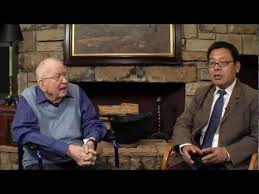
In retrospect the internal contradictions within Communism (absence of appropriate incentives, attenuated property rights, politicisation of business decisions and prices and so on) made its collapse inevitable. But that was not clear in 1970 or even 1980. Yes, communist economies in both the Soviet bloc and China were stagnating. But there were many believing and hoping that the future was about to emerge to demonstrate that socialism actually does work. Intellectuals in particular thought that socialism, which accorded them the status and perks they considered they richly deserved, with a little more reform would demonstrate that the bourgeoisie were unnecessary.

Though the collapse of Communism took place almost simultaneously across the world, a remarkable contrast is evident between Chinese Communism’s self-control of its demise and the relatively bloodless overthrow of the system in Europe.

The Europeans delegitimised their Communist Parties and ostensibly opted for a western capitalist system that incorporated democracy and liberty-more so in the former satellites than in the USSR successor states. On the other hand, China’s Communist Party continued to maintain its monopoly of political control, vigorously and sometimes brutally suppressing any challenges. Chinese communists adopted capitalism shorn of the democracy and liberty that many considered to be an essential part of its make-up. And in supervising a gradual dismantling of socialism, its raison d’etre, China’s Communist Party watched over the longest and highest rate of economic growth the world has ever seen. One indicator of this is steel production, traditionally a key indicator of industrialisation. Having increased twentyfold in the past 30 years, China’s steel output now accounts for half the world’s supply, up from 7 per cent in 1980.

How did this happen? How did a ruling political party numbering millions of apparently dedicated Marxists-Leninists retain its power in the decades following 1978 while permitting and facilitating an economic development approach totally alien to its proclaimed ideology? And how did that same Party evolve from a proselytising socialist force to one that welcomed diversity? Coase and Wang offer important insights but leave plenty for others to explain. By the late 1950s, Communist China, like underperforming organised societies of yesteryear, was seeking out ways to catch up with the west. Calls for modernisation started to become increasingly insistent on the part of China’s leadership. The first ‘four modernisations’ program was initiated by Premier Zhou Enlai in 1964 and was aborted by the Cultural Revolution of 1971; other modernisations were subsequently endorsed, including in 1978 (Mao died in 1976) by Deng Xiaoping, shortly before one of his downfalls. The catch-up program sought to emulate the successes without adopting the institutions of capitalism-free enterprise, personal ownership, and the rule of law. Progress was therefore transient.

As well as promising a fairer society, socialism had been the supposed key to a more efficient and richer society. But Coase and Wang note early questionings of socialism. By 1984 when Hu Yaobang, as General Secretary of the Communist Party, had taken this further in asking, ‘Since the October revolution (of 1917) more than 60 years have passed. How is it that many socialist countries have not been able to overtake capitalist ones in terms of development? What is it (in socialism) that does not work?’

Hu Yaobang would not have been the first to voice such concerns even though they questioned the party’s core beliefs. Even so, not many people would have had sufficient information to raise such doubts partly because censorship severely limited information-even to senior party members-about the extent of China’s backwardness and how western economies operate. Overseas trips provided rude awakenings as when in 1978, Vice Premier Wang Zhen visited England and found his salary was only one sixth that of a London garbage collector.

While the European Communist systems pursued catch-up by having state enterprises adopt new western technologies and practices, China from the mid-1980s was looking at grafting capitalism itself onto Communism. The proximity of China to the Asian Tigers of Hong Kong, Taiwan, Singapore and South Korea provided an object lesson for success, especially since the entrepreneurial leaders of the first three were the children of uneducated emigrants from China itself. Not only therefore did the Chinese have the failures of socialism as an example but they also could see the astonishing successes of these newly enriched capitalist countries.

Deng Xiaoping was a key player throughout the Chinese transformation process, even eventually managing to persuade the Communist Party that Marxism was a pragmatic ideology willing to try new systems of ownership and trade. Notwithstanding this breathtaking apostasy, the conversion of China to a fully-fledged capitalist economy involved several paths which were only loosely connected.

In the late 1970s, foreign trade and foreign direct investment became the first areas where liberalisation was introduced. Vastly important in this was the Shenzhen (Guangdong) free trade zone adjacent to Hong Kong. As a catalyst for the introduction of free enterprise Shenzhen had its genesis, not as a means of introducing free enterprise, but as a means to halting the flow of economic refugees to Hong Kong. The Communist authorities were involved in considerable expenditures in trying to stop this illegal exodus of the tens of thousands of people each year, an exodus which also involved many hundreds drowning. To their utter astonishment, in examining the cases of refugees who made it to Hong Kong, they learned that they earned one hundred fold as much as those who remained behind.

The establishment of Special Economic Zones (SEZ) operated on capitalist lines in Shenzhen and elsewhere to attract foreign investment which blossomed. Eventually Shenzhen’s SEZ transformed a village of 30,000 people into a vast metropolis which now has 14 million residents.

Agriculture led the way to domestic private enterprise. In 1978, private farming was a criminal activity, but 1976 saw its first secret reintroduction by peasants at a Sichuan village called Nine Dragon Hill. The success of that village and a few others in increasing production was compelling. From 1980 the party instituted a progressive lifting of the ban on private farming. Fairly soon virtually all land had been divided into individual plots, though remaining under state ownership. Productivity soared.

The de-collectivisation also extended to previously moribund village industries. The output of these industries was growing at 20 per cent a year by the end of the 1980s and accounted for 26 per cent of GDP 15 years later. Four-fifths of these enterprises were privately owned, and all of them were subject to the dictates of the market and not any level of government. In 1980, a rural producer and hawker of confectionary, based on watermelon seeds, became one of the first millionaires.

This liberalisation in rural villages took place at the same time as changes in major cities, where unemployment was previously solved by sending youth to rural areas. But the youths started returning in vast numbers from the late 1970s. With little for them to do, the party allowed small businesses to be formed. Elements of the rule of law and contracts were introduced from 1978 initiating the path to the full panoply of property rights law, a process which was not, however, completed until 1988.

An essential attribute of a market-based economy is decontrolled prices for goods and services. Tentative steps were taken towards this in the early 1980s, were reversed in 1983, but soon recommenced and in 1984 most manufactured goods were no longer subject to controls. Nonetheless, even by 1995, 78 per cent of producer goods were transacted at controlled prices (though by then many of these had become much better aligned to market prices).

Share markets are important to facilitate capital accumulation and to allow investments to be traded, but the first stock exchange was opened only in 1986. It was not until 1990 that major stock markets could operate in Shanghai and Shenzhen. Soon after, there commenced a gradual sale to employees of state enterprises, especially those (over half of the total) which were technically insolvent. This was accompanied by reforms that allowed surplus workers to be sacked (an unemployment insurance scheme was introduced at the same time).

Coase and Wang claim that socialism was endorsed by Mao only in the mid-1950s but, if so, this would seem to contradict the basis of the Communist Party. Nor are they systematic in describing the astonishing growth of internal savings (which were 53 per cent of national income in 2010) that propelled industrialisation, and how this was underpinned by property rights laws.

Other intriguing questions with incomplete answers are: how were lumbering and inefficient government-owned firms transformed into the privately owned nimble and highly productive businesses that have led China to dominate world manufacturing? And how was it that the State Owned Enterprises (SOEs) that are still the backbone of heavy industry and infrastructure have, once corporatised, been run at a tolerable level of efficiency without which the private sector propelled growth could not have created the success observed?

Indeed, of the 31 Chinese firms in the Fortune Top 300 in 2011, only one (which is Hong Kong based) did not have majority government ownership. Two of the three biggest were fully government owned.

Though all these firms operate under western type corporate law, according to Coase and Wang, the state firms in monopoly sectors employ 8 per cent of the non-farm workforce but account for 55 per cent of total wages. The inferred high wages in monopoly firms suggests they are less cost-conscious than those facing competition, which, if true, makes the performance of the rest of the economy that much more impressive.

Coase and Wang examine but ultimately dismiss fears of some prominent Chinese about a dearth of entrepreneurs which could stifle growth in the future. They are surely right in this. Similar concerns were voiced by South Koreans when that country’s growth was founded on firms doing the more menial tasks that mature businesses outsourced to them-40 years ago the Samsungs, LGs and Hyundais barely existed. Coase and Wang also note that China is now the largest producer of PhDs in the world, having risen from one of the poorest nations to the second biggest economy.

Chinese Communists, while retaining the name have emasculated and even forgotten the theory on which it rode to power. From Marxist works being virtually the only political books being available in the 1960s, Coase and Wang cite evidence that by 2008 students, even those applying to join the Communist Party, were barely aware of Karl Marx’s Communist Manifesto. The party had become one of many different career paths and was completely shorn of ideology.

In this respect Coase and Wang refer to an interview that China’s Premier Wen Jiabao had with western media where he quoted not only Adam Smith’s Wealth of Nations but the lesser known Theory of Moral Sentiments. Even though the quotation was recruiting Adam Smith in support of measures to combat income inequality in China (a dubious interpretation of Smith’s own view) it is unlikely that any other world statesman would have been adequately versed in Adam Smith in these two guises.

The roots and durability of China’s success remain contentious. Many see the prominence of the SOEs as indicative of strong state guidance or manipulation of the economy.

This is difficult to square with the evidence of economic failures and successes around the world. Government ownership ipso facto has meant poor outcomes for the businesses themselves and eventually, in the case of Eastern Europe, for the economies in which they were housed. Even strong guidance by governments has been associated with failures as was previously the case in the ‘mixed’ pre-1990s Indian economy when government economic manipulation was considerable. Similar guidance and ‘winner picking’ in the West also failed. Where claims have been made of successes from government guidance, as in the case of Japan and Singapore, they have-under closer scrutiny-been found wanting.

Efficiency in China was unleashed by the opening up of the economy to entrepreneurship, the better incentives for productive work and the high rate of savings that followed from a recognition that these are secure from government seizure or wasteful usage. State industry manipulation and even, beyond a point, favouritism by state agencies, would undermine the phenomenal growth that continues to be witnessed.

Since Mao, China has risen from one of the world’s poorest nations to become the second largest economy. It is difficult to see what will stop a continued rise in incomes to levels that may reach or exceed-as some have forecast-as much as 40 per cent of world GDP twenty years from now

Previous Older Entries Next Newer Entries

David Andolfatto

Celebrating humanity's flourishing through the spread of capitalism and the rule of law

Monetary Non-Neutrality

Celebrating humanity's flourishing through the spread of capitalism and the rule of law

Reason Magazine

Celebrating humanity's flourishing through the spread of capitalism and the rule of law

Coyote Blog

Celebrating humanity's flourishing through the spread of capitalism and the rule of law

Thoughts from the North

Celebrating humanity's flourishing through the spread of capitalism and the rule of law

Fardels Bear

A History of the Alt-Right

Vincent Geloso

Econ Prof at George Mason University, Economic Historian, Québécois

Bassett, Brash & Hide

Celebrating humanity's flourishing through the spread of capitalism and the rule of law

Truth on the Market

Scholarly commentary on law, economics, and more

The Undercover Historian

Beatrice Cherrier's blog

Matua Kahurangi

Celebrating humanity's flourishing through the spread of capitalism and the rule of law

Temple of Sociology

Celebrating humanity's flourishing through the spread of capitalism and the rule of law

Velvet Glove, Iron Fist

Celebrating humanity's flourishing through the spread of capitalism and the rule of law

Why Evolution Is True

Why Evolution is True is a blog written by Jerry Coyne, centered on evolution and biology but also dealing with diverse topics like politics, culture, and cats.

NoTricksZone

Celebrating humanity's flourishing through the spread of capitalism and the rule of law

Homepaddock

A rural perspective with a blue tint by Ele Ludemann

Kiwiblog

DPF's Kiwiblog - Fomenting Happy Mischief since 2003

The Dangerous Economist

Celebrating humanity's flourishing through the spread of capitalism and the rule of law

Watts Up With That?

The world's most viewed site on global warming and climate change

The Logical Place

Tim Harding's writings on rationality, informal logic and skepticism

Doc's Books

A window into Doc Freiberger's library

The Risk-Monger

Let's examine hard decisions!

Uneasy Money

Commentary on monetary policy in the spirit of R. G. Hawtrey

Barrie Saunders

Thoughts on public policy and the media

Liberty Scott

Celebrating humanity's flourishing through the spread of capitalism and the rule of law

Point of Order

Politics and the economy

James Bowden's Blog

A blog (primarily) on Canadian and Commonwealth political history and institutions

Science Matters

Reading between the lines, and underneath the hype.

Peter Winsley

Economics, and such stuff as dreams are made on

A Venerable Puzzle

"The British constitution has always been puzzling, and always will be." --Queen Elizabeth II

The Antiplanner

Celebrating humanity's flourishing through the spread of capitalism and the rule of law

Bet On It

Celebrating humanity's flourishing through the spread of capitalism and the rule of law

History of Sorts

WORLD WAR II, MUSIC, HISTORY, HOLOCAUST

Roger Pielke Jr.

Undisciplined scholar, recovering academic

Offsetting Behaviour

Celebrating humanity's flourishing through the spread of capitalism and the rule of law

JONATHAN TURLEY

Res ipsa loquitur - The thing itself speaks

Conversable Economist

In Hume’s spirit, I will attempt to serve as an ambassador from my world of economics, and help in “finding topics of conversation fit for the entertainment of rational creatures.”

The Victorian Commons

Researching the House of Commons, 1832-1868

The History of Parliament

Articles and research from the History of Parliament Trust

Books & Boots

Reflections on books and art

Legal History Miscellany

Posts on the History of Law, Crime, and Justice

Sex, Drugs and Economics

Celebrating humanity's flourishing through the spread of capitalism and the rule of law

European Royal History

Exploring the Monarchs of Europe

Tallbloke's Talkshop

Cutting edge science you can dice with

Marginal REVOLUTION

Small Steps Toward A Much Better World

NOT A LOT OF PEOPLE KNOW THAT

“We do not believe any group of men adequate enough or wise enough to operate without scrutiny or without criticism. We know that the only way to avoid error is to detect it, that the only way to detect it is to be free to inquire. We know that in secrecy error undetected will flourish and subvert”. - J Robert Oppenheimer.