Blaming droughts on Rogernomics? Droughts and the New Zealand real business cycle

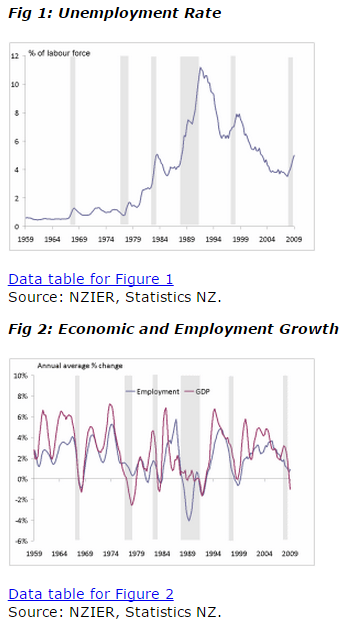
While feuding on another blog about the ups and downs of the New Zealand economy since the 1970s, I pointed out that a long economic boom followed the Ruth Richardson “Mother of all Budgets” in 1991:

My interlocutor quickly replied to blame Rogernomics, in particular, inflation targeting and its administration by Don Brash for a severe recession in New Zealand in 1998:

The mild recession in New Zealand in 1998 was a result of the combination of two severe droughts and the effects of the Asian financial crisis.
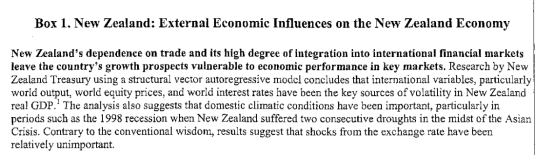
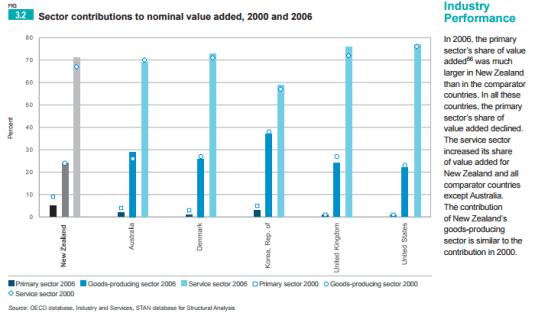
Drought is a major factor in the New Zealand business cycle because of the large size of the farming sector. Indeed, the ups and downs of a monopoly dairy exporter that accounts for 7% of GDP, Fonterra, are so central that a single dirty pipe at a milk factory that put the quality of its milk exports in question lead the Treasury to revise its economic forecasts for that year.
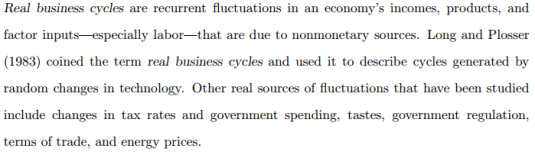
There is growing evidence that a substantial part of business cycle volatility can be explained by real business cycle theory (RBC). RBC claims that a good majority of economic volatility is caused by changes on the supply side: tax and regulatory changes, bad weather in farm economies, spikes in oil prices and technology shocks. Real business cycle models have enjoyed success in replicating most of the observed characteristics of, for example, U.S. aggregate economic activity.
Over the last 15 years, a number of papers at the Treasury and Reserve Bank of New Zealand have explored the role of droughts in the New Zealand business cycle, such as the drought in 1997.
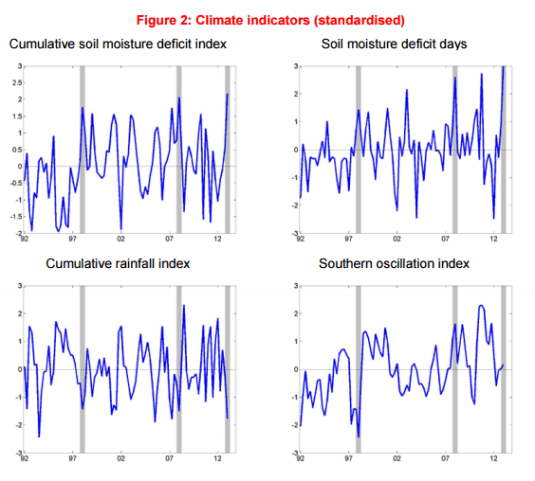
The 1998 recession was preceded by a severe drought that may have knocked a half percentage point off GDP or more. As the Treasury explained in 2008:

Given the importance of the primary sector in New Zealand, climatic conditions have always been a significant driver of GDP volatility in New Zealand. There is strong evidence that the 1998 drought triggered or precipitated the onset of the last recession in the late-90s.

In 2008, the dry conditions in New Zealand led the Treasury to revise its forecasts as follows:

current dry conditions are likely to trim GDP growth by around 0.5% for the 2008 calendar year.  

In 2013, the Reserve Bank made similar pessimistic forecasts about the implications of drought for economic prospects. New Zealand was suffering its worst drought in decades:

It was simply mistaken to blame the 1998 recession in New Zealand as the spawn of Rogernomics. There was a drought, a big one, big enough drought to shake the New Zealand business cycle in a country with a large farming sector.

Police Officer Runs into Burning House to Rescue Child

ht: http://video.lauraingraham.com/Officer-Runs-into-Burning-House-to-Rescue-Child-28770377?utm_content=bufferfde2f&utm_medium=social&utm_source=facebook.com&utm_campaign=buffer

Poverty and family structure in America

ednext_XV_2_mclanahan_fig04-small

via Was Moynihan Right? What happens to the children of unmarried mothers : Education Next.

The impact of gerrymanders on US congressional elections

When Americans voted for the House of Representatives in 2012, Democratic candidates won 1.4 million more votes than Republicans. Yet after the dust settled, the GOP ended up with a 234-201 majority in the chamber.

Gerrymandering Chart Updated Final


Last year, in contrast, the GOP won a national landslide. But despite winning big victories in these four states, they only picked up one new House seat overall among them (in North Carolina). That’s because Republicans already won nearly all of the competitive seats in 2012 — partly because of gerrymandering…

Several analyses find that simple geography matters more — many Democratic voters are packed closer together in urban areas.

HT: vox.com

Australia takes eight times as many refugees as New Zealand, per capita

The Campaign To Make You Care About Climate Change Is Failing Miserably

Americans' Worry About the Environment Over Time

Since 1989, there’s been no significant change in the public’s concern level over global warming. To put this in perspective, note that the most expensive public-relations campaign in history—one that includes most governmental agencies, a long list of welfare-sucking corporations, the public school system, the universities, an infinite parade of celebrities, think tanks, well-funded environmental groups and an entire major political party—has, over the past 25 years or so, increased the number of Democrats who “worry greatly” about global warming by a mere four percentage points.

Worry About Environmental Problems by Political Party, 2000 vs. 2015

via The Campaign To Make You Care About Climate Change Is Failing Miserably, Climate Change Not a Top Worry in U.S., In U.S., Concern About Environmental Threats Eases and The number of people worried about climate change hasn’t changed since 1989 – The Washington Post.

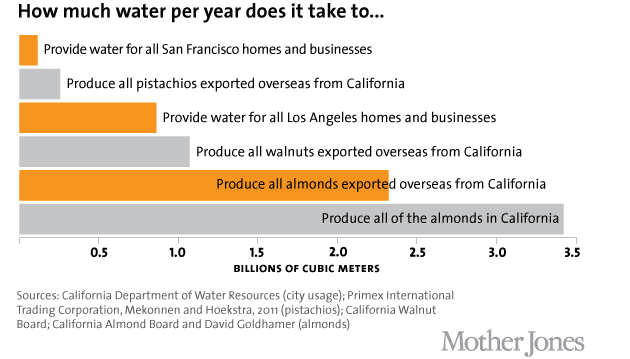
California’s Almonds Suck as Much Water Annually as Los Angeles Uses in Three Years | Mother Jones

image

HT: http://m.motherjones.com/environment/2015/01/almonds-nuts-crazy-stats-charts

Ukip’s two tribes: Bluekip and Redkip

Image

EU corporate tax “around 20%”? Nah!

Image

Who has the highest income tax rate of them all?

Image

More than a few watermelons fall into this category

Image

Obama’s Plans For Pulling Out Of Afghanistan vs. What Really Happened

flowers-datalab-troop-withdrawal

via Obama’s Plans For Pulling Out Of Afghanistan vs. What Really Happened | FiveThirtyEight.

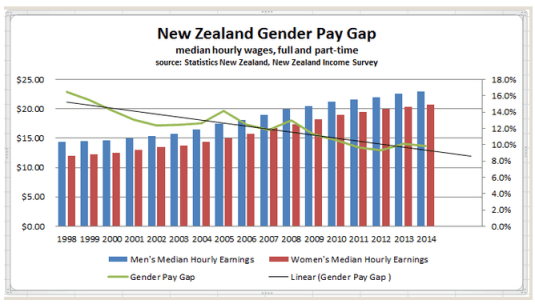
Is the gender wage gap in New Zealand 6% or 9.9%?

The OECD puts the gender wage gap in New Zealand at about 6% for full-time employees on an hourly basis when measured using median earnings.


The Ministry of Women’s Affairs puts that gender wage gap estimate at 9.9% by measuring median hourly earnings, but the Ministry includes both full-time and part-time employees.

Conflating full-time and part-time earnings when measuring wage gaps is unwise. The level of compensating differentials in full-time and part-time jobs differ. More of the net pay package of a part-time job would be convenience and flexibility. A full-time job tends to indicate greater commitment to the labour force day in day out and less interest in flexibility and time off during the week.

Reduction of Cases and Deaths of Vaccine-Preventable Diseases in the US

Via Reduction of Cases and Deaths of Vaccine-Preventable Diseases in the US — Our World in Data.

Why, to many critics, Mother Teresa is still no saint – The Washington Post

HT: http://www.washingtonpost.com/blogs/worldviews/wp/2015/02/25/why-to-many-critics-mother-teresa-is-still-no-saint/

Video

Previous Older Entries Next Newer Entries

Libertarian Land

Celebrating humanity's flourishing through the spread of capitalism and the rule of law

Arin’s Substack

Celebrating humanity's flourishing through the spread of capitalism and the rule of law

David Andolfatto

Celebrating humanity's flourishing through the spread of capitalism and the rule of law

Monetary Non-Neutrality

Celebrating humanity's flourishing through the spread of capitalism and the rule of law

Reason Magazine

Celebrating humanity's flourishing through the spread of capitalism and the rule of law

Coyote Blog

Celebrating humanity's flourishing through the spread of capitalism and the rule of law

Thoughts from the North

Celebrating humanity's flourishing through the spread of capitalism and the rule of law

Fardels Bear

A History of the Alt-Right

Vincent Geloso

Econ Prof at George Mason University, Economic Historian, Québécois

Bassett, Brash & Hide

Celebrating humanity's flourishing through the spread of capitalism and the rule of law

Truth on the Market

Scholarly commentary on law, economics, and more

The Undercover Historian

Beatrice Cherrier's blog

Matua Kahurangi

Celebrating humanity's flourishing through the spread of capitalism and the rule of law

Temple of Sociology

Celebrating humanity's flourishing through the spread of capitalism and the rule of law

Velvet Glove, Iron Fist

Celebrating humanity's flourishing through the spread of capitalism and the rule of law

Why Evolution Is True

Why Evolution is True is a blog written by Jerry Coyne, centered on evolution and biology but also dealing with diverse topics like politics, culture, and cats.

NoTricksZone

Celebrating humanity's flourishing through the spread of capitalism and the rule of law

Homepaddock

A rural perspective with a blue tint by Ele Ludemann

Kiwiblog

DPF's Kiwiblog - Fomenting Happy Mischief since 2003

The Dangerous Economist

Celebrating humanity's flourishing through the spread of capitalism and the rule of law

Watts Up With That?

The world's most viewed site on global warming and climate change

The Logical Place

Tim Harding's writings on rationality, informal logic and skepticism

Doc's Books

A window into Doc Freiberger's library

The Risk-Monger

Let's examine hard decisions!

Uneasy Money

Commentary on monetary policy in the spirit of R. G. Hawtrey

Barrie Saunders

Thoughts on public policy and the media

Liberty Scott

Celebrating humanity's flourishing through the spread of capitalism and the rule of law

Point of Order

Politics and the economy

James Bowden's Blog

A blog (primarily) on Canadian and Commonwealth political history and institutions

Science Matters

Reading between the lines, and underneath the hype.

Peter Winsley

Economics, and such stuff as dreams are made on

A Venerable Puzzle

"The British constitution has always been puzzling, and always will be." --Queen Elizabeth II

The Antiplanner

Celebrating humanity's flourishing through the spread of capitalism and the rule of law

Bet On It

Celebrating humanity's flourishing through the spread of capitalism and the rule of law

History of Sorts

WORLD WAR II, MUSIC, HISTORY, HOLOCAUST

Roger Pielke Jr.

Undisciplined scholar, recovering academic

Offsetting Behaviour

Celebrating humanity's flourishing through the spread of capitalism and the rule of law

JONATHAN TURLEY

Res ipsa loquitur - The thing itself speaks

Conversable Economist

In Hume’s spirit, I will attempt to serve as an ambassador from my world of economics, and help in “finding topics of conversation fit for the entertainment of rational creatures.”

The Victorian Commons

Researching the House of Commons, 1832-1868

The History of Parliament

Articles and research from the History of Parliament Trust

Books & Boots

Reflections on books and art

Legal History Miscellany

Posts on the History of Law, Crime, and Justice

Sex, Drugs and Economics

Celebrating humanity's flourishing through the spread of capitalism and the rule of law

European Royal History

Exploring the Monarchs of Europe

Tallbloke's Talkshop

Cutting edge science you can dice with