
The housing affordability crisis is the key driver of child poverty rates in New Zealand since the late 1980s
02 Oct 2014 Leave a comment
George Stigler (1982) on why the working class did not vote for the Green Party in the 2014 NZ election–part 2
02 Oct 2014 Leave a comment

George Stigler (1982) on why the working class did not vote for the Green Party in the 2014 NZ election–part 1
01 Oct 2014 Leave a comment

The Reserve Bank of New Zealand is hinting at exchange rate intervention!!
27 Sep 2014 Leave a comment
in inflation targeting, macroeconomics, monetary economics, politics - New Zealand Tags: exchange rate interventions, rules versus discretion, sterilised interventions


Uncomplicated Loyalties: Why Cunliffe and the Labour Left Cannot Win – Chris Trotter
26 Sep 2014 Leave a comment

The Key to victory: Run against Piketty-nomics, Scott Sumner | EconLog | Library of Economics and Liberty
23 Sep 2014 Leave a comment
in income redistribution, politics - New Zealand, Public Choice, rentseeking Tags: 2014 New Zealand election, Piketty
This is good news:
New Zealand’s NZX 50 Index increased 1.1 percent, driven higher by power-company stocks, after John Key won a third term as prime minister. Key, a former head of foreign exchange at Merrill Lynch & Co., led his National party to a 48 percent victory in New Zealand’s weekend election, securing the first single-party majority in the South Pacific nation’s parliament since at least 1996. The main opposition Labour Party, which wanted to introduce a tax on capital gains and raise the minimum wage, suffered its worst defeat since 1922.
Perhaps Labour got their ideas from Paul Krugman.
When right-of-center parties are elected, they generally disappoint. Although right-of-center economists favor free markets, most conservative politicians do not. Abe (Japan) and Modi (India) are two recent examples of conservatives who promised reforms and failed to come through (thus far). Fortunately New Zealand is different.
Via http://econlog.econlib.org/archives/2014/09/the_key_to_vict.html
The personnel economics of putting up election billboards
04 Sep 2014 Leave a comment
in applied price theory, labour economics, managerial economics, organisational economics, personnel economics, politics - New Zealand, theory of the firm Tags: 2014 New Zealand election, agent principal problems, labour economics, moral hazard, New Zealand politics, paid versus unpaid labour, personnel economics
I’ve been out of late, helping put up election billboards. Maybe I should get a life, but I noticed that the quality of effort by volunteers was much better than that by the contractors hired by the Internet – Mana party. Everybody in that party appears to be paid including the leader for $140K year. She is not yet in Parliament.

The Internet-Mana party election billboards are very heavy, solid wooden signs and obviously pre-manufactured and must be driven around in a truck. They are certainly too heavy to be put on the back of a trailer behind a private car.
Our signs are constructed on site from a dozen pieces of wood of various sizes. The only pre-prepared part is the billboard itself with fits on the back of a trailer.
What first took my interest is the contractors hired by the Internet – Mana party signs seem to pay not all that much regard to the traffic flow. Some of their signs are parallel with the traffic so hardly anybody can see them. They are all one sided signs.
When we are putting up a election billboard, we squabble like a bunch of old women over the exact angle each sign should face the traffic to capture the most number of passing cars and buses. Everybody has an opinion including those doing it for the first time.

We then squabble about whether the sign should be one-sided or two sided depending upon how well it can be viewed from the other side by traffic coming the other way.
We also squabble about its positioning and height to maximise the number of views by the passing traffic relative to the positioning all the other signs.
There is also a lot of vandalism of these signs by rather naive people who don’t understand that the passing motorist looks at the vandalised signs first.

It takes a whole lot of hatred to vandalised a sign in this way. Photos of the above sign immediately went viral. For some reason, the National party has repaired that sign. I don’t know why.


Anti-science Left alert: NZ Green Party condones the antifluoridation movement and can’t make up its mind on vaccinations
29 Aug 2014 Leave a comment
in health economics, politics - New Zealand Tags: anti-fluoridation movement, Anti-Science left, anti-vaccination movement, cranks, fluoridation, Green Party of New Zealand, Quacks, The Age of Enlightenment, The Age of Reason, The Great Escape, vaccinations

It’s one thing to condone parents not vaccinating their children on religious grounds or who are just plain nutters who should be allowed to flourish in all their dottiness in a free society.
The presumption that parents know the best interests of their children requires very strong evidence before it is overturned. Of course, you do not have too tolerate their unvaccinated children coming to school.
It is another thing for the Green Party of New Zealand to see both sides of the fluoridation argument:
C. Fluoridation of Community Water Supplies
The issue of fluoridating community water supplies requires a difficult balance between the public health effects and the rights of individuals to opt out altogether or avoid excessive intake. The Party membership has indicated that when considering fluoridation proposals, the Green Party caucus shall:
- Have particular regard to the public health benefits of fluoridated community water supplies.
- Have particular regard to the potential public health risks of excessive fluoride consumption via community water supplies.
- Have regard for the ability of individuals to opt out.
The Green Party will:
- Support the use of ‘opt-out’ options by local authorities for residents living in areas with fluoridated public water supplies, where shown to be feasible.
- Commission an independent study on the impacts of fluoridation to public health.
- Support education initiatives to advise caregivers of the potential for babies to develop dental fluorosis when mixing formula with fluoridated water
This is the same party is more than happy to accuse sceptics of being a denier on global warming and a lackey of the multinational corporations on GMOs. You cannot, on the one hand, accuse others of denying a scientific consensus and then indulge cranks and quacks.
This is the same nanny state party that wants to tax and regulate drinking fatty foods and sugary drinks in its diabetes action plan:
- Ensure evidence-based healthy eating and activity programmes are available and promoted to all New Zealanders.
- Introduce mandatory ‘traffic light’ style labelling of fat and sugar content on all food and drinks, including a version for restaurant, café and takeaway foods.
- Instatement of a ‘living wage’ to ensure that healthy foods and drinks are within the reach of all New Zealanders.
- Severe restriction on the advertising of unhealthy foods and drinks, and on sponsorship by the companies that produce them.
- Tax sugary drinks to make them more expensive and drive down consumption. Revenue generated from this tax to be made available to fund other programmes.
- Investigation of taxes and other disincentive measures for other foods and drinks with high sugar or fat content.
I am diabetic, but I am not so arrogant as to expect all of society to be reorganised to my advantage because I occasionally lapse from my diet. When I was diagnosed as diabetic, I lost 15 kilos.
Note carefully that on the issue of healthy eating in their diabetes action plan, the Greens are very strong on education as well as taxation and regulation. The Greens are not keen on correcting misconceptions about the evidence base behind fluoridation. No nanny state here.

For a Party that is all for the nanny state and fatty foods and sugary drinks and is happy to have a nanny state discussion on that, fluoridation is a bridge too far. Obviously the word fluoridation denier is not in the Green vocabulary.

Now let’s turn to the issue of vaccination and the Green Party of New Zealand. One thing to have rotten teeth; it’s another thing to have dead children because of your inability to face the facts of the vaccinations and preventable diseases.
Green Party policy is to sit on the fence on settled science because everyone in their party is yet to accept the settled science:
Our official position is influenced by the fact that we do not have a firm policy on it as we don’t have consensus from our members.
No steps to ensure evidence-based vaccination programs are made available and promoted to new all New Zealanders, such as with fatty foods and sugary drinks. No traffic like system to warn that unvaccinated children coming to school will stop no investigation of taxes and other disincentives measures regarding unvaccinated children. The safety Nazis in the Greens have become high school libertarians at their worst on fluoridation and vaccinations.
Tolerating eccentrics doesn’t mean you have to step back from telling these eccentrics and nutters that they are eccentrics and nutters, and attempting to persuade them that they are wrong.

A party that says it speaks truth to power is not too keen on speaking the truth to nutters and eccentrics. Even worse, the Green Party indulges their dangerous ignorance. The case is different for their action plan on diabetes:
Substantially increase funding for health promotion approaches in those communities most at risk to prevent or minimise obesity-related diseases, including diabetes.
One Green MP in a public speech in 2004 said she was absolutely convinced that her child became ill because of his triple MMR vaccine at 15 months, and refused all further vaccinations:
My own interest in vaccination began when I gave birth to my son 14 years ago. Whether or not to vaccinate our children was a hot topic at our regular mother’s group meetings, but eventually I had my son vaccinated.
Shortly after receiving his triple MMR vaccine at 15 months, he developed a horrendous incident of croup — to the point where he was taken to the emergency department. He subsequently developed a weakness in the chest which led to childhood asthma, which fortunately, through my various remedies, he has managed to shake off.
At the time I said to my doctor, I am certain the croup was triggered by the vaccination, but the doctor dismissed my suggestion as ludicrous, and certainly never forwarded it as an adverse reaction to the Centre for Adverse Reactions, which records significant adverse reactions to vaccination. I was convinced it was, however, and my son has never received another vaccination since.
Her speech also spoke of the link between vaccinations and autism. Even if that was true about the adverse reactions for that particular child of the Green party MP, the relatively rare adverse reactions to vaccinations are part of the risks and rewards trade-off.
That small risk is no reason to bring back measles, mumps and rubella for every child in New Zealand. The Green party is not only anti-science, it is pro-disease.
It is bizarre that vaccination programs that are eliminated terrible diseases are not supported by the Green Party of New Zealand – a party very ready to accuse its opponents have been anti-science and deniers.
There is a difference between the classical liberal argument that people have the right to be wrong and make mistaken choices for themselves and the merits of those choices.
The classical liberal will happily defend your right to be wrong and foolish while at the same time calling you out as a crank and a quack and telling that to your face until he is blue in the face telling you that you were a crank.
There are also third external effects or externality issues: most vaccinations are against contagious diseases where the previous response was quarantining the sick until they stopped being contagious.
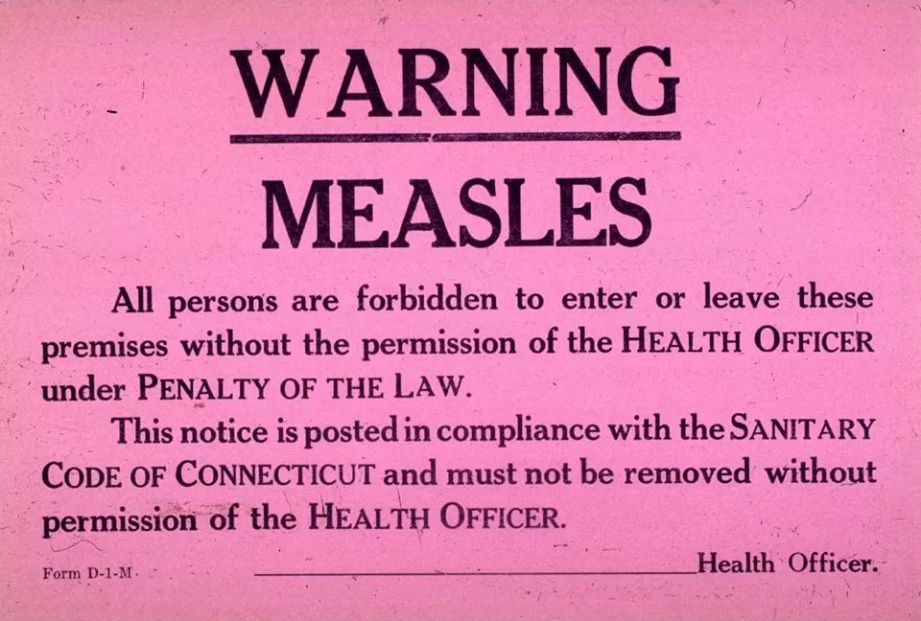
The Age of Enlightenment is also the Age of Reason. It is time for the Green Party of New Zealand to join both.
West Wing on the fight for privacy
17 Aug 2014 Leave a comment
in politics - New Zealand, politics - USA Tags: blogosphere, privacy, The information age
https://www.youtube.com/watch?v=pj4PwyfDNuI
HT: Whale Oil
The criminally large difference between leaks to the media and hacking
14 Aug 2014 Leave a comment
in liberalism, politics - New Zealand, politics - USA Tags: espionage, media leaks, phone hacking

There is a difference between hacking and leaks.
For example, Julian Assange is unlikely to face charges under American espionage laws because the FBI would have too pop down and arrest everybody at the New York Times and Washington Post and the U.S. offices of the Guardian and more than a few famous book authors.
U.S. media organizations could be prosecuted for printing leaked classified information under US espionage legislation, but that prospect is unlikely because of official aversion to running afoul of the First Amendment.
If the government were to prosecute the recipient of classified information – as opposed to the individual who leaked it from within the government such as Bradley Manning – mainstream media would fear that they could face prosecution for reporting information they routinely receive from government sources. There is no way to prosecute Assange for publishing information without the same theory being applied to journalists.
Assigned is in criminal law trouble only if he assisted Bradley Manning to leak the information as distinct from simply receive it from him. An example might be advising Manning on how to get around computer security at his Defence Department workplace.

Hacking involves breaking into someone else’s place in the full knowledge that this is prohibited under computer crimes laws. Heavy penalties apply in the same way as physically braking in and stealing the documents. There is no moral or legal distinction.
The outrage against the phone hacking scandal in the UK was based upon breaches of computer crime law and corruption of public officials through bribes. The moral outrage in that scandal was topped up by the glee which some papers had at the fall from grace of their commercial and ideological rivals.
Christchurch Earthquake | Libertarianz TV
04 Aug 2014 Leave a comment
in economics of natural disasters, economics of regulation, liberalism, libertarianism, politics - New Zealand, urban economics Tags: Christchurch earthquake, economics of natural disasters
Devastating effect of government bureaucracy following the earthquakes of 2010 and 2011. As told by two business owners, an economist and an engineer. Concludes with the Libertarianz policy to make Christchurch a free enterprise zone.
Stephen Williamson on Marginal Taxation
03 Aug 2014 Leave a comment
in applied welfare economics, fiscal policy, income redistribution, politics - New Zealand, politics - USA, Public Choice Tags: envy, Stephen Williamson, taxation and entrepreneurship, taxation and human capital, taxation and investment, taxation and labour supply, top 1%

He says a lot. I’ll try to address piece by piece.
Next, some people have shown interest in this paper by Diamond and Saez. A key result that seemed to get these people excited is the calculation of a top optimal marginal tax rate (including all taxes) of 73%, relative to the current rate of 42.5%. There are two key assumptions that Diamond and Saez make to come up with the 73% optimal rate. First, we should not care about the welfare (at the margin) of the rich people. This argument is based solely on the notion that marginal utility of income is low for the top income-earners. Second, Diamond and Saez use a “behavioral elasticity” of tax revenue with respect to the tax rate of 0.25. To see how this matters, if you use their formula and an elasticity of one, you get an optimal top tax rate…
View original post 1,215 more words
Teen employment and the minimum wage: sixty years of U.S. experience
02 Aug 2014 Leave a comment
in labour economics, minimum wage, politics - New Zealand, politics - USA Tags: minimum wage

In every episode, except 1996 (which is the smallest hike relative to average wages), there was a distinct decline in the trend of teen employment in the few months before the initial hike until a few months after the follow-up hike. This led Kevin Erdmann to ask:
Is there any other issue where the data conforms so strongly to basic economic intuition, and yet is widely written off as a coincidence?


Recent Comments