24 Jul 2016
by Jim Rose
in economic history, economics of education, human capital, labour economics
Tags: Australia, Canada, France, Germany, Italy, tertiary educational attainment.
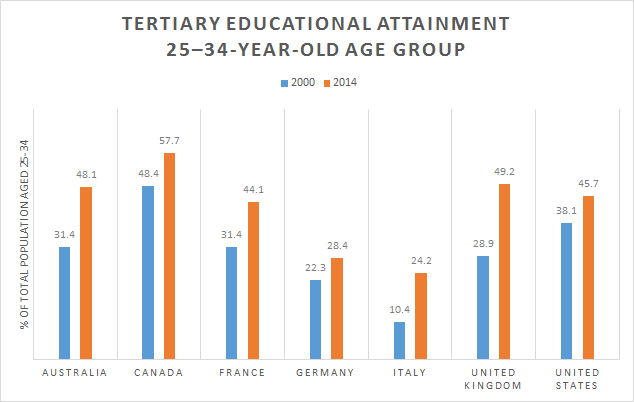
The British, Australians, and Italians experienced strong growth in tertiary attainment since the year 2000. In the case of the Italians, it was from a low base. There is still a big difference in tertiary attainment between English-speaking and other countries.
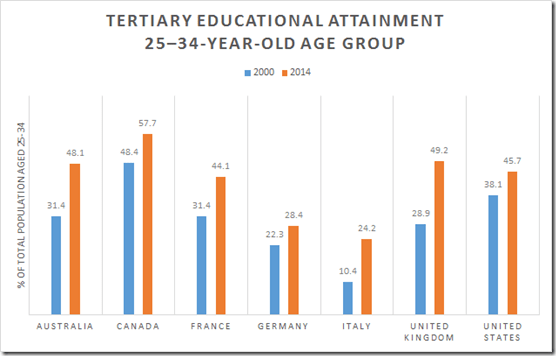
Source: OECD Factbook 2015-2016.
03 Jun 2016
by Jim Rose
in budget deficits, business cycles, economic growth, economic history, Euro crisis, financial economics, fiscal policy, global financial crisis (GFC), macroeconomics
Tags: Greece, Ireland, Italy, Portugal, public debt management, sovereign debt crises, sovereign defaults, Spain
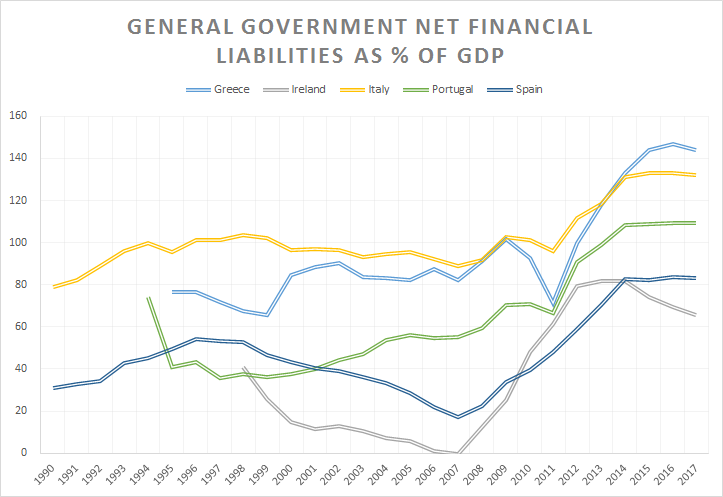
I had borrowed a lot of money from scratch after 2007. Greece borrowed a lot of money of its own accord from 2010. Italy always owed a lot of money. Spanish do not know all that much money considering their dire financial circumstances.
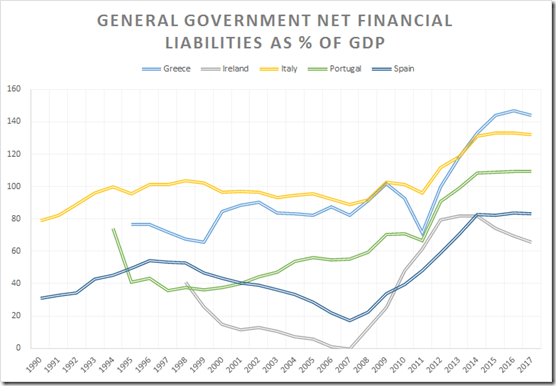
Source: OECD Economic Outlook June 2016 Data extracted on 01 Jun 2016 12:57 UTC (GMT) from OECD.Stat
09 May 2016
by Jim Rose
in economics of regulation, law and economics
Tags: barriers to entry, Belgium, British economy, Canada, cost of doing business, Denmark, France, Germany, Greece, Italy, Spain
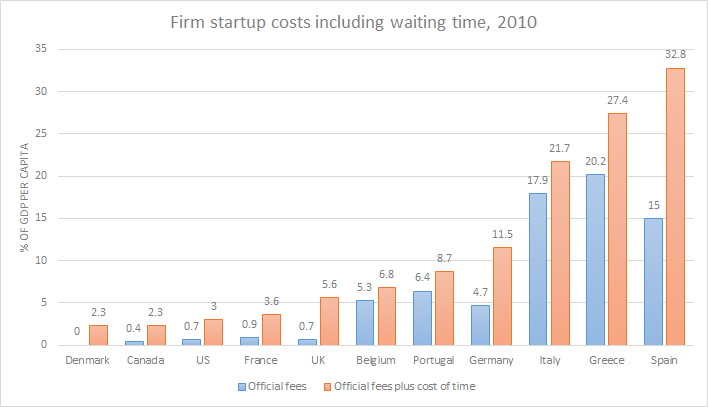
Expediting the processing of permits can actually make quite a difference to firm start-up costs even in countries with few barriers to starting up a business.
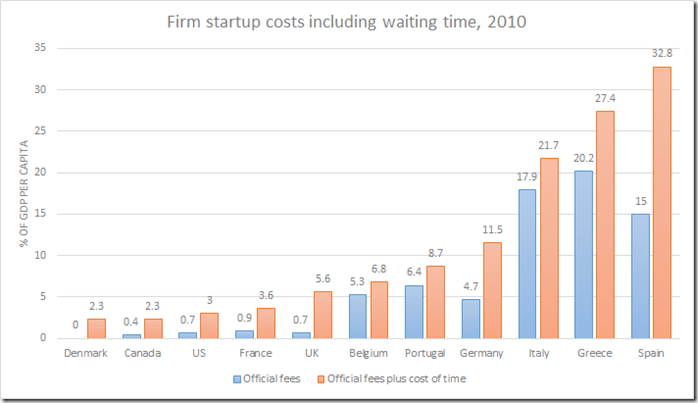
Source: Markus Poschke (2011) Entry regulation: Still costly | VOX, CEPR’s Policy Portal.
Note: The value of time is set to a business day’s output per day of waiting time at 22 business days per month.
30 Apr 2016
by Jim Rose
in comparative institutional analysis, constitutional political economy, energy economics, environmental economics, global warming, Public Choice, rentseeking
Tags: European Union, expressive voting, green rent seeking, Italy, renewable energy, solar power, wind power
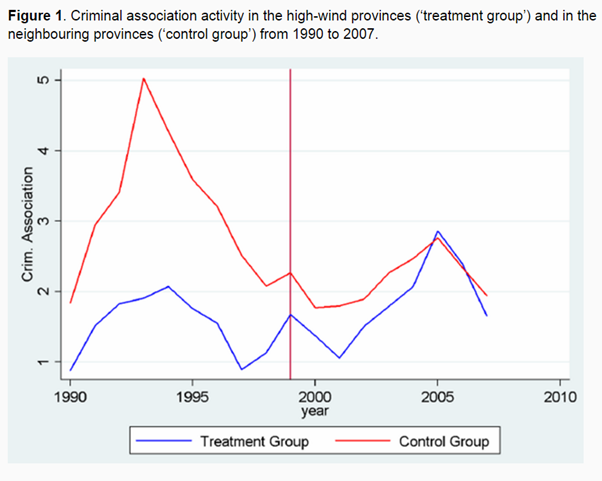
Massimo Tavoni and Caterina Gennaioli published a nice paper showing that corruption and violence was higher in the high wind provinces of Italy after the installation of wind generators. They built on earlier work about countries with abundant renewable resources and weak institutions. The main question in their paper
… is whether an increase in the expected returns of investments in wind energy, following the introduction of the new policy regime based on a green certificate system, has driven economic agents, namely bureaucrats and entrepreneurs, to engage more in rent seeking activities.
As they studied Italy, there is no surprise about the answer which was yes. High winds ensure high returns of the wind farm investment, but whether this translates into more bribery depends on institutional quality. There was more corruption, and so especially in high-wind provinces of Italy.
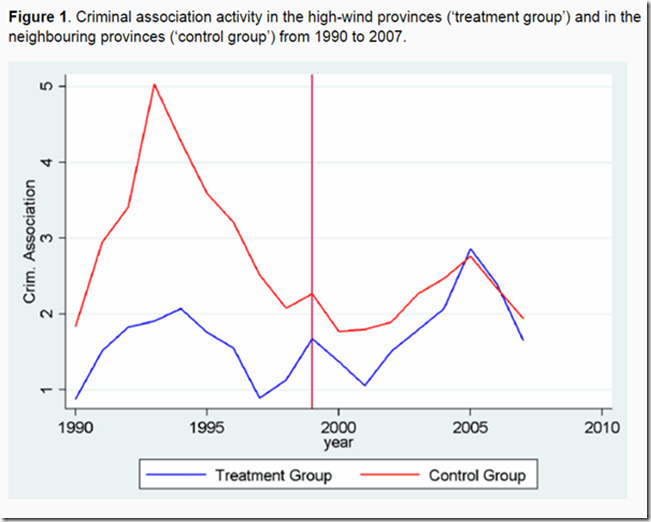
Source: Green policy and corruption | VOX, CEPR’s Policy Portal.
The construction of an average wind park is associated with an increase of criminal association activity of 6%. Italy will have more corruption than elsewhere in the old European Union.
The wider problem is renewable energy is a celebrity technology. In the context of expressive politics, so many cheer for solar and wind power that standards drop in terms of who qualifies for subsidies and who should lose support when their investments do not turn out as promised.
https://twitter.com/CountCarbon/status/715136022414299138
Wind power is not new, it is intermittent, is unsuitable for modern work, and is land constrained but it is still subsidised. Green rent seeking is a real risk even in countries with the best political institutions.
18 Apr 2016
by Jim Rose
in economics of regulation, industrial organisation, law and economics, politics - USA, property rights
Tags: barriers to entry, Belgium, British economy, Canada, Denmark, doing business, France, Germany, Greece, Italy, Portugal, Spain
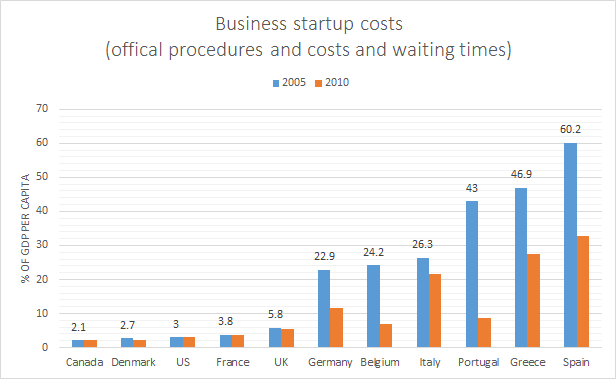
These measures including the full cost of starting a business. Not only are official fees included, the opportunity cost of the waiting times for various permits are issued are added as well.
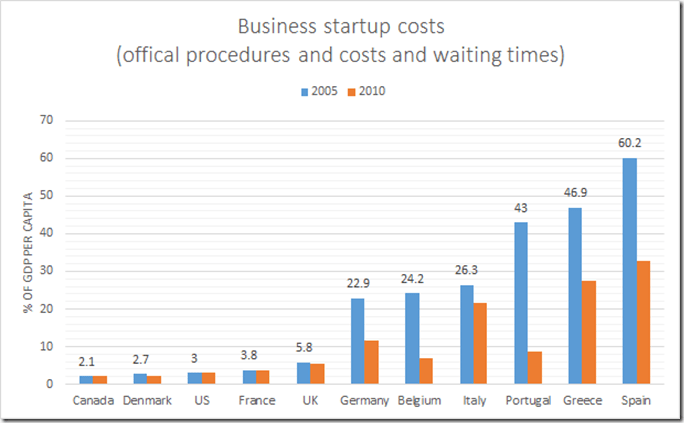
Source: Markus Poschke, Entry regulation: Still costly | VOX, CEPR’s Policy Portal (2011).
Note: The value of time is set to a business day’s output per day of waiting time at 22 business days per month.
05 Mar 2016
by Jim Rose
in economics of love and marriage, fiscal policy, gender, labour economics, labour supply, law and economics, politics - Australia, politics - New Zealand, politics - USA, public economics
Tags: Australia, British economy, Canada, Denmark, effective marginal tax rates, family tax benefits, family tax credits, France, Germany, in-work tax credits, Italy, poverty traps, rational irrationality, social insurance, Sweden, taxation and labour supply
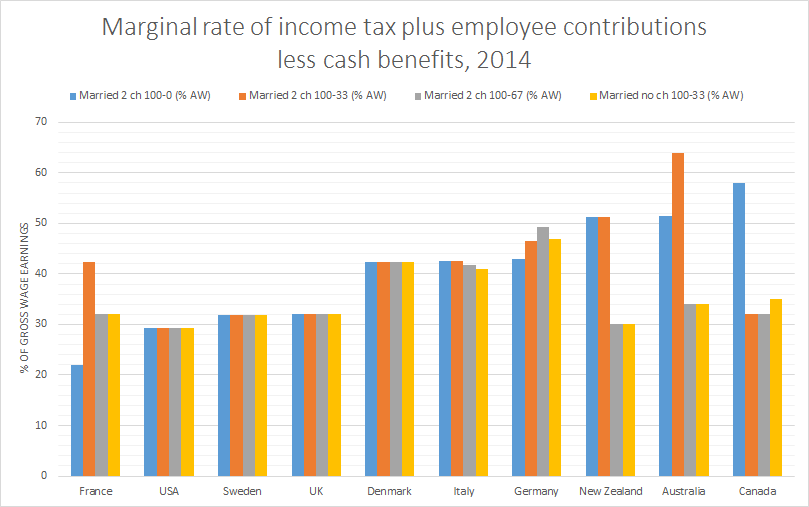
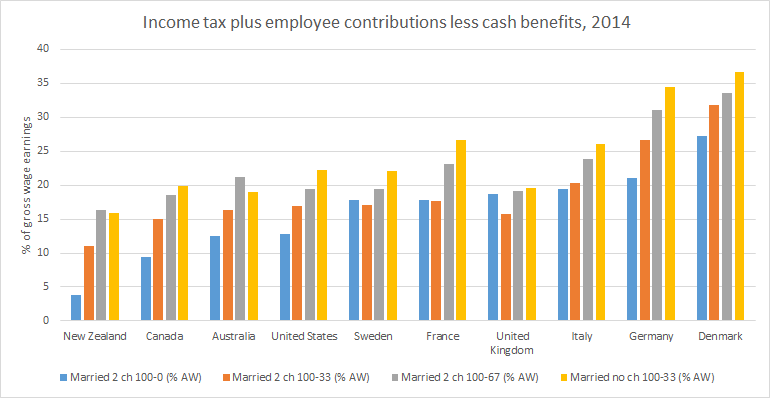
Some countries including New Zealand and Australia do not give ordinary families much of an incentive to earn more. Effective marginal tax rates on low income families is one of the few times that the Left discovers supply-side economics.
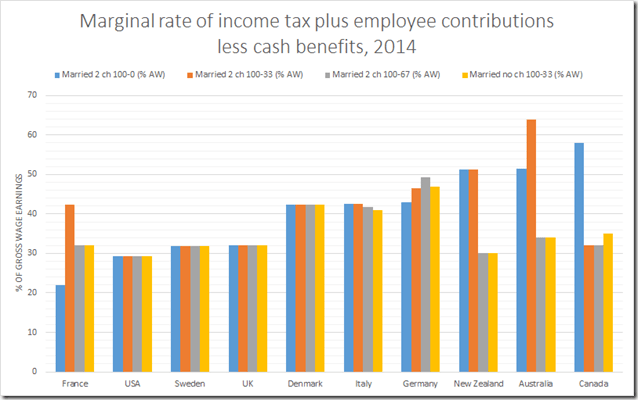
Source: Taxing Wages 2015 – OECD 2015.
05 Mar 2016
by Jim Rose
in fiscal policy, politics - Australia, politics - New Zealand, politics - USA, public economics
Tags: Australia, British economy, Canada, Denmark, family taxation, France, Germany, Italy, social insurance, Sweden, taxation and labour supply
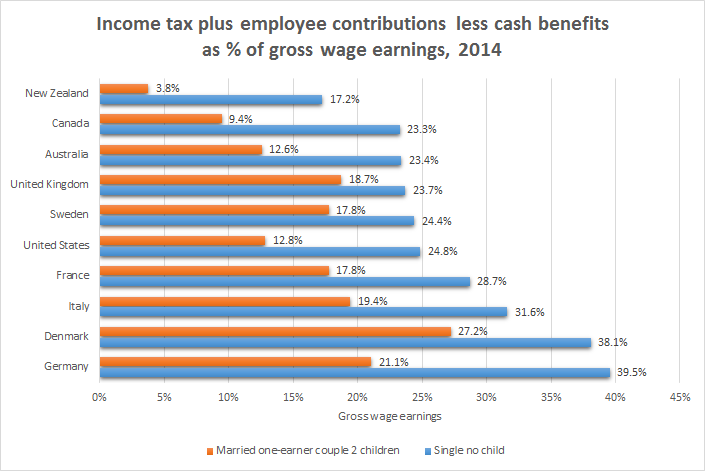
Those sensitive and caring northern European welfare states do tax families rather heavily even after accounting for family cash benefits.
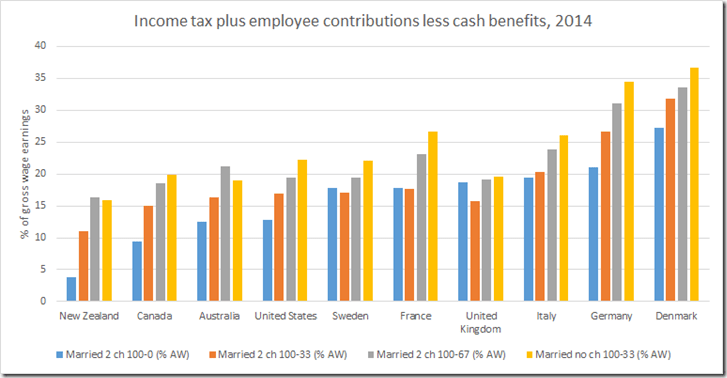
Source: Taxing Wages 2015 – OECD 2015.
04 Mar 2016
by Jim Rose
in fiscal policy, politics - Australia, politics - New Zealand, politics - USA, public economics
Tags: Australia, British economy, Canada, Denmark, France, Germany, Italy, social insurance, Social Security, Sweden, taxation and labour supply
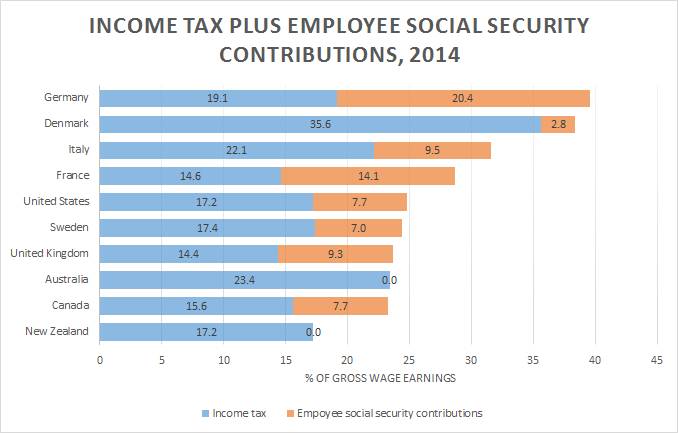
Those much admired northern European welfare states tax families and individuals much more than do the Anglo-Saxon welfare states.
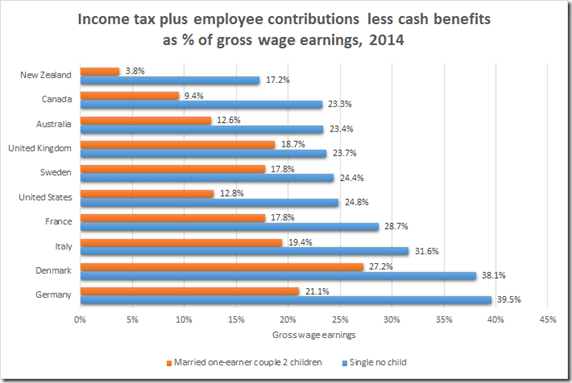
Source: Taxing Wages 2015 – OECD 2015.
04 Mar 2016
by Jim Rose
in fiscal policy, politics - Australia, politics - New Zealand, politics - USA, public economics
Tags: Australia, British economy, Canada, Denmark, Germany, Italy, social insurance, Social Security, Sweden, taxation and labour supply
03 Mar 2016
by Jim Rose
in fiscal policy, public economics
Tags: Australia, British economy, Canada, Denmark, Germany, Italy, social insurance, Social Security, Sweden, taxation and labour supply
26 Feb 2016
by Jim Rose
in economic history, economics of regulation, entrepreneurship, industrial organisation, survivor principle
Tags: billionaires, British economy, entrepreneurial alertness, France, Germany, Italy, superstar wages, superstars
24 Feb 2016
by Jim Rose
in economic growth, economic history, Euro crisis, fiscal policy, macroeconomics, public economics
Tags: Greece, growth of government, Italy, Portugal, size of government, Spain
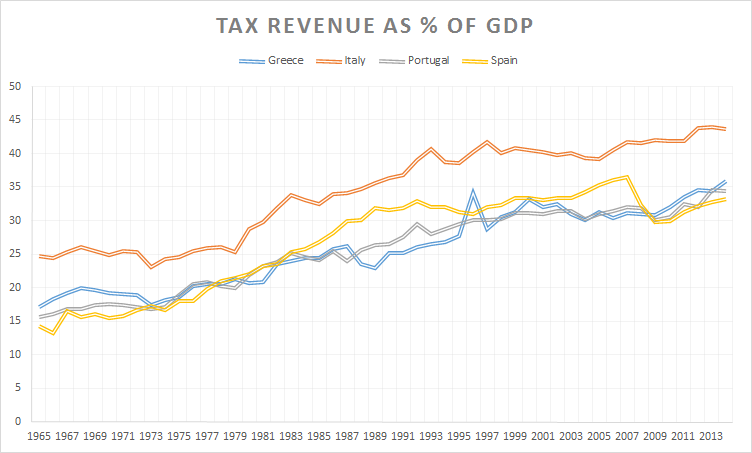
I do not think any of these countries have governments who can really handle managing half of national income on a regular basis. The Italian, and I assume Greek GDPs at least are topped up quite considerably to take account of their underground economies. The top up for Italy is 20%.
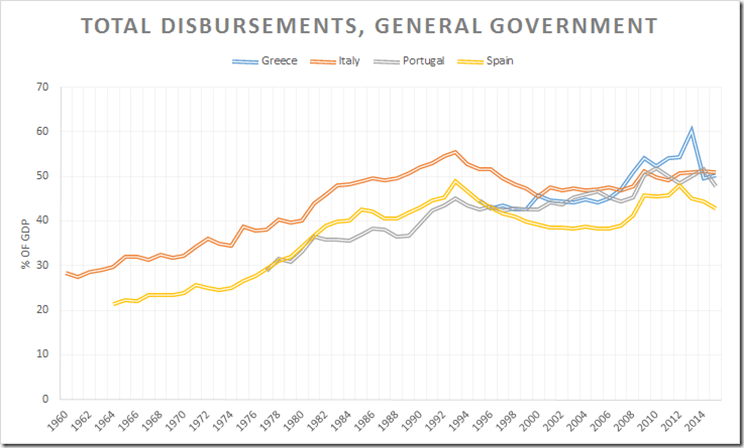
Data extracted on 23 Feb 2016 07:45 UTC (GMT) from OECD.Stat.
Previous Older Entries Next Newer Entries
 Utopia, you are standing in it!
Recent Comments