Besides the usual, that is. Max Thilo of the UK has a new and excellent study on this, here is one excerpt from the foreword by Lord Warner: Second, and critical, the Singaporeans are not fixated on delivering services from acute hospitals – the most expensive part of any healthcare system because of its fixed […]
What can be learned from Singaporean health care institutions?
What can be learned from Singaporean health care institutions?
06 Mar 2024 Leave a comment
in applied price theory, comparative institutional analysis, development economics, growth miracles, health economics, industrial organisation Tags: health insurance, Singapore
Gaelic Price Control
05 Mar 2024 Leave a comment
in applied price theory, economics of regulation, Public Choice, urban economics Tags: rent control
Here is a nice video on the experience with price control in Ireland and Scotland. Hat tip: Marginal Revolution
Gaelic Price Control
DON BRASH: PERHAPS THE MOST IMPORTANT SPEECH FROM THE NEW GOVERNMENT SO FAR
03 Mar 2024 Leave a comment
in applied price theory, economics of bureaucracy, income redistribution, law and economics, liberalism, Marxist economics, politics - New Zealand, property rights, Public Choice, regulation, rentseeking, transport economics, urban economics Tags: land supply, zoning
Last week, Housing Minister Chris Bishop gave perhaps the most important speech by the new Government since the election. In a speech to the Wellington Chamber of Commerce, he said he wanted the ratio of house prices to median household income to more than halve to between 3 and 5 over the next 10…
DON BRASH: PERHAPS THE MOST IMPORTANT SPEECH FROM THE NEW GOVERNMENT SO FAR
The Uncompetitive Urban Land Markets Theory of Everything
03 Mar 2024 Leave a comment
in applied price theory, comparative institutional analysis, economics of bureaucracy, environmental economics, income redistribution, industrial organisation, law and economics, politics - New Zealand, property rights, Public Choice, regulation, rentseeking, urban economics Tags: housing affordability, land supply, zoning
The Housing Theory of Everything has one of those wonderful self-explanatory titles. A good title matters. The recent and thorough essay explains how the anglosphere’s unnecessarily expensive housing affects, well, everything. Or at least almost everything.Zoning makes it too hard to build houses where people want to build. Urban containment policies block new subdivisions, so…
The Uncompetitive Urban Land Markets Theory of Everything
This kind of macro theory is underrated
01 Mar 2024 Leave a comment
in applied price theory, business cycles, fiscal policy, history of economic thought, job search and matching, macroeconomics, monetary economics Tags: real business cycle theory
Demand shocks as technology shocks: We provide a macroeconomic theory where demand for goods has a productive role. A search friction prevents perfect matching between producers and potential customers. Larger demand induces more search, which in turn increases GDP and measured TFP. We embed the product-market friction in a standard neoclassical model and estimate it […]
This kind of macro theory is underrated
The Economics of Creative Destruction, Part II
29 Feb 2024 Leave a comment
in applied price theory, comparative institutional analysis, economic history, industrial organisation, survivor principle Tags: creative destruction
I’ve referred to “creative destruction” as the “best and worst part of capitalism.” This short video from the Fraser Institute is a good tutorial on the topic. The core message is that entrepreneurs improve our lives by coming up with new ideas, new technologies, and new products. That’s the good news. The bad news is […]
The Economics of Creative Destruction, Part II
Genetic Insurance
28 Feb 2024 Leave a comment
in applied price theory, economics of information, entrepreneurship, health economics Tags: adverse selection, health insurance, moral hazard, screening, self-selection, signaling
Genetic testing identifies disease risk, enabling individuals to dodge environmental triggers, optimize treatments, and improve planning. Yet, the fear of increased insurance premiums deters many from undergoing tests. Genetic testing offers societal benefits but also presents significant distributional challenges. To address this, my 1994 paper proposed the idea of genetic insurance. For a small fee […]
Genetic Insurance
The US Housing Market Is Very Quickly Becoming Unaffordable
27 Feb 2024 Leave a comment
in applied price theory, economic history, economics of regulation, politics - USA, urban economics Tags: land supply, zoning

In a post from July 2021, I discussed housing affordability and “zoning taxes” — in other words, how land use restrictions such as zoning were driving up the cost of housing in some US cities. San Francisco, Los Angeles, Seattle, and New York stood out as the clear outliers, with “zoning taxes” adding several multiples […]
The US Housing Market Is Very Quickly Becoming Unaffordable
Statewide Rent Control Being Considered in Washington
27 Feb 2024 Leave a comment
in applied price theory, applied welfare economics, economics of regulation, politics - USA, urban economics Tags: rent control
Five things to know about WA proposal to limit rent hikes | The Seattle Times Isn’t rent control one of the most studied economic experiments? And hasn’t it been shown to be, over the long term, a disaster for everyone involved? What does economic evidence tell us about the effects of rent control? | Brookings […]
Statewide Rent Control Being Considered in Washington
Child poverty – complex or simple?
26 Feb 2024 Leave a comment
in applied price theory, applied welfare economics, labour economics, labour supply, politics - New Zealand, poverty and inequality, unemployment, welfare reform Tags: child poverty, family poverty
Question: Do you understand how the child poverty statistics are derived? Clearly some people do not. Last week the latest child poverty statistics were all over the media. But there are a number of misunderstandings that need addressing. Like this one from NewstalkZB’s John MacDonald who wrote: “Living in households that get-by on less than…
Child poverty – complex or simple?
Four Myths about Price Discrimination
26 Feb 2024 Leave a comment
in applied price theory, history of economic thought, industrial organisation Tags: competition and monopoly

In an earlier post, Soda Prices are Too Low for the FTC, the Biden Administration seems to be trying to turn back the clock to a time when price discrimination was viewed as bad. Lest we repeat the mistakes of the past, it is worthwhile to remember its lessons. See this 2003 talk by some middling FTC…
Four Myths about Price Discrimination
On price control
25 Feb 2024 Leave a comment
in applied price theory, comparative institutional analysis, economic history, economics of bureaucracy, energy economics, environmental economics, global warming, income redistribution, industrial organisation, Public Choice, rentseeking Tags: price controls, The fatal conceit, unintended consequences, utility regulation

Bari Weiss interviews Roland Fryer
22 Feb 2024 Leave a comment
in applied price theory, discrimination, econometerics, economic history, economics of crime, economics of education, human capital, labour economics, labour supply, law and economics, occupational choice, politics - USA, poverty and inequality Tags: academic bias, crime and punishment, free speech, law and order, political correctness, racial discrimination, regressive left
A lot of readers and heterodox colleagues have sent me this link to Bari Weiss’s interview with Harvard economics professor Roland G. Fryer, Jr., often accompanied by big encomiums. Despite my unwillingness to watch long videos, I did watch all 77 minutes of it. Unfortunately, I wasn’t mesmerized, or even much interested. There are interesting […]
Bari Weiss interviews Roland Fryer
Tino Rangatiratanga and localism
20 Feb 2024 1 Comment
in applied price theory, comparative institutional analysis, constitutional political economy, development economics, economics of regulation, law and economics, property rights Tags: Canada
My piece for the Saturday papers weekend before last, and now ungated here, went back to a theme that Richard Harman had noticed in the Waitangi speeches. Minister Shane Jones argued fuller debate on the meaning of Tino Rangatiratanga is inevitable, saying, “There is a deep, committed view from Pita Tipene and others that article two…
Tino Rangatiratanga and localism
Florida’s One-Man Laffer Curve
16 Feb 2024 Leave a comment
in applied price theory, entrepreneurship, fiscal policy, income redistribution, labour economics, labour supply, macroeconomics, Public Choice, public economics Tags: taxation and entrepreneurship, taxation and investment, taxation and labour supply
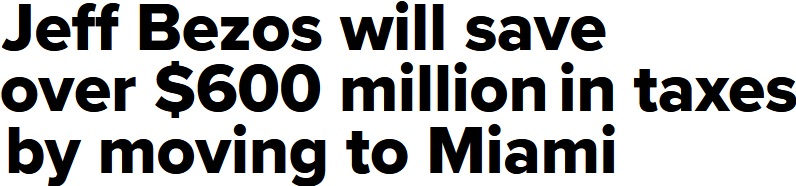
Inflation is having an effect on everything, even policy analysis. Back in 2013, I wrote that Phil Mickelson was “California’s One-Man Laffer Curve” because he wanted to escape the Golden State to save about $1.2 million per year in taxes. But now, when a goose that lays golden eggs wants to escape, the numbers are […]
Florida’s One-Man Laffer Curve


Recent Comments