03 Aug 2015
by Jim Rose
in budget deficits, business cycles, currency unions, economic growth, Euro crisis, fiscal policy, global financial crisis (GFC), great depression, great recession, history of economic thought, law and economics, macroeconomics, monetary economics
Tags: bank panics, bank runs, banking crises, currency crises, Thomas Sargent
02 Aug 2015
by Jim Rose
in budget deficits, business cycles, economic growth, fiscal policy, global financial crisis (GFC), great recession, history of economic thought, macroeconomics, monetarism, monetary economics
Tags: Brad Delong, fiscal multiplier, fiscal stimulus, Larry Summers, New Keynesian macroeconomics, Thomas Sargent
27 Jul 2015
by Jim Rose
in currency unions, economic history, Euro crisis, fiscal policy, labour economics, labour supply
Tags: ageing society, demographics crisis, economics of retirement, female labour force participation, Greece, Italy, male labour force participation, old age pensions, older workers, Portugal, social insurance, Social Security, Spain, taxation and labour supply
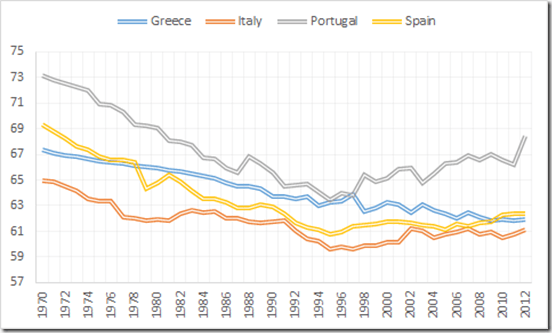
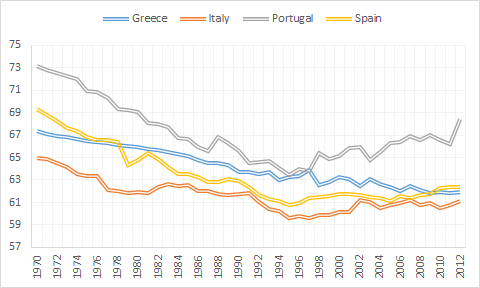
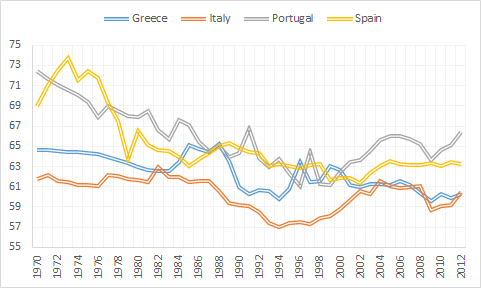
Figure 1 shows a relatively distinct pattern for men in the PIGs. Portugal aside, there has been a long decline retirement ages. This is different to the Anglo-Saxon countries where effective retirement ages have been increasing in recent years for men.
Figure 1: average effective retirement age (5-year averages), men, Portugal, Italy, Greece and Spain, 1970 – 2012
Source: OECD Pensions at a Glance.
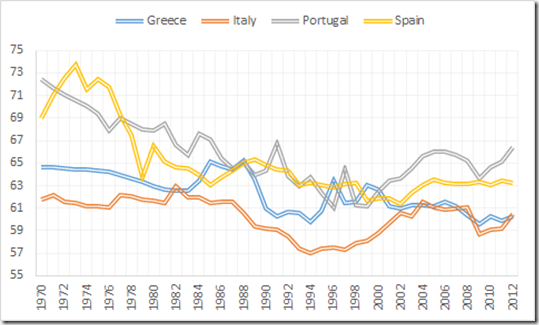
Figure 2 shows that apart from Greece, that after a long decline in female effective retirement ages, there was something the rebound, especially in Italy and Portugal. In Greece, the rebound was in the 80s, followed by a resumption of decline from the mid 90s.
Figure 2: average effective retirement age (5-year averages), women, Portugal, Italy, Greece and Spain, 1970 – 2012
Source: OECD Pensions at a Glance.
25 Jul 2015
by Jim Rose
in budget deficits, business cycles, currency unions, economic growth, Euro crisis, fiscal policy, global financial crisis (GFC), international economics, law and economics, macroeconomics, monetary economics, property rights
Tags: capital controls, capital flight, Greece, labour exodus, sovereign defaults
19 Jul 2015
by Jim Rose
in business cycles, economic growth, economic history, fiscal policy, job search and matching, labour economics, macroeconomics, unemployment
Tags: Celtic Tiger, equilibrium unemployment rate, Eurosclerosis, Germany, Ireland, Italy, natural unemployment rate, Rance, Spain
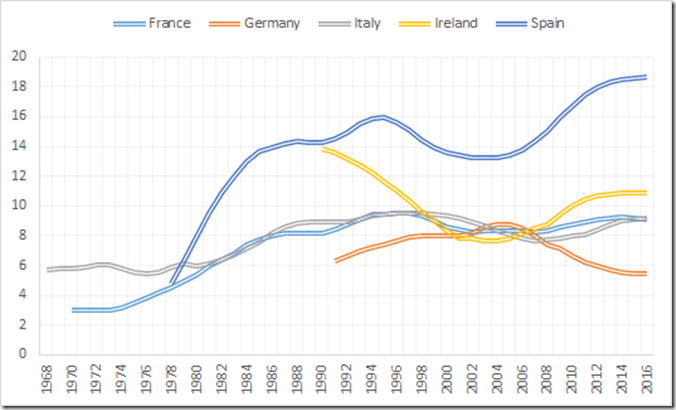
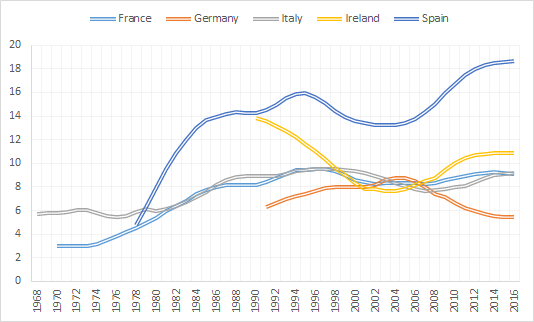
Figure 1 shows large contrasts in time path of equilibrium unemployment rates. For example, French and Italian equilibrium unemployment rates haven’t changed much since about 1986.
Figure 1: equilibrium unemployment rates, France, Germany, Italy, Ireland and Spain, 1968 – 2016
Source: OECD Economic Outlook June 2015 via OECD StatExtract..
Figure 1 also shows some fortuitous ups and downs in the German equilibrium unemployment rate. This estimate was available only from after German unification.
The equilibrium German unemployment rate rose from 6% to above 8% on the eve of the global financial crisis. Fortunately for Germany, major labour market reforms brought the equilibrium unemployment rate down as Germany moved into the global financial crisis.
The Spanish equilibrium unemployment rate had been terrible since about 1980, started to fall in the 1990s, then skyrocketed even before the onset of the global financial crisis – see figure 1.
There have been ups and downs in the Irish equilibrium unemployment rate – see figure 1. It was as high as 14% at the end of the Irish great depression of the 1970s and 1980s. The equilibrium Irish unemployment rate was 8% at the heyday of the Celtic tiger then slowly rose in the lead up to the global financial crisis.
17 Jul 2015
by Jim Rose
in applied welfare economics, budget deficits, comparative institutional analysis, constitutional political economy, currency unions, economic growth, economic history, economics of regulation, Euro crisis, fiscal policy, income redistribution, macroeconomics, Marxist economics, Public Choice, rentseeking
Tags: Greece, growth of government, Margaret Thatcher, size of government
15 Jul 2015
by Jim Rose
in business cycles, currency unions, economic growth, Euro crisis, fiscal policy, job search and matching, labour economics, macroeconomics, unemployment
Tags: ageing society, demographic crisis, economic reform, employment law, employment regulation, Greece, labour market deregulation, Margaret Thatcher, pension reform, privatisation, Roger Douglas, social insurance, sovereign bailouts, sovereign defaults, welfare state
10 Jul 2015
by Jim Rose
in applied price theory, applied welfare economics, comparative institutional analysis, constitutional political economy, currency unions, fiscal policy, global financial crisis (GFC), income redistribution, liberalism, macroeconomics, Marxist economics, Public Choice, public economics, rentseeking
Tags: Eurosclerosis, expressive voting, Greece, rational ignorance, rational irrationality, sovereign default
09 Jul 2015
by Jim Rose
in economic history, financial economics, fiscal policy, international economics, macroeconomics, monetarism, monetary economics
Tags: Anna Schwartz, bank runs, banking panics, China, contagion, evidence-based policy, financial crises, financial stability, inflation targeting, international systemic risk, Michael Bordo, monetary history, pseudo financial crises, pseudo international systemic risk
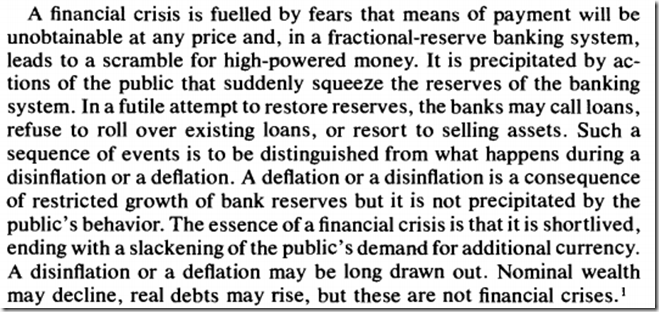
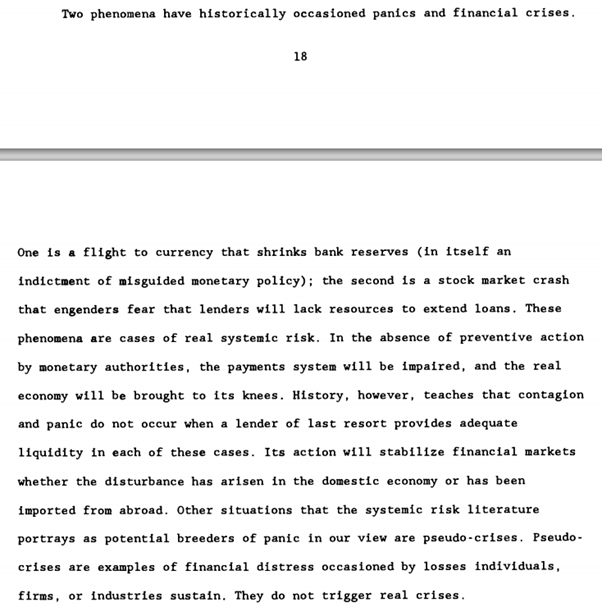
If we could take time out from the breathless journalism about the Chinese stock market, which some people may have heard of before this week, it’s crash should be seen through the lens that Anna Schwartz developed in 1987 of a pseudo financial crisis and a financial crisis.
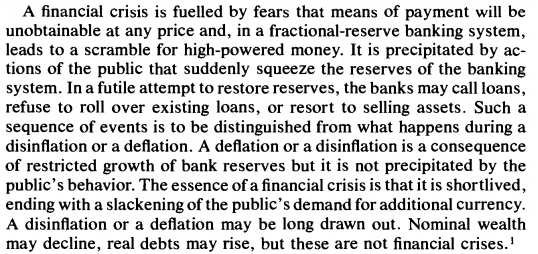
Her paper is written at the same time as the 1987 stock market crash. On financial crises, Anna Schwartz said:
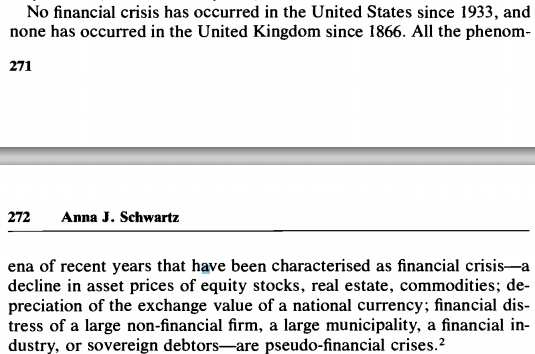
As for those pseudo financial crises, she said:
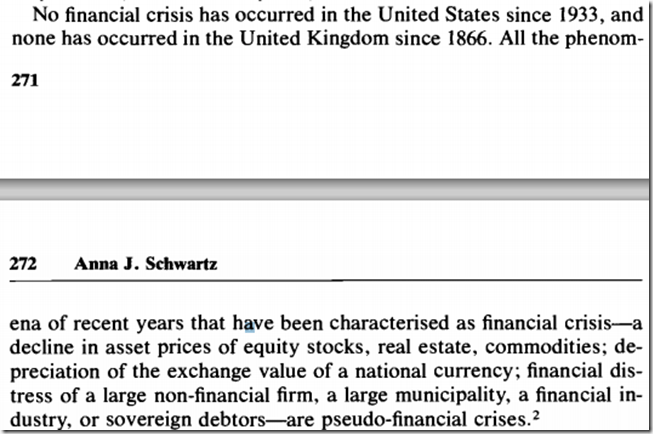
Schwartz’s principal concern with regard to pseudo financial crisis was:
proposals to deal with pseudo-financial crises is the perpetuation of policies that promote inflation and waste of economic resources
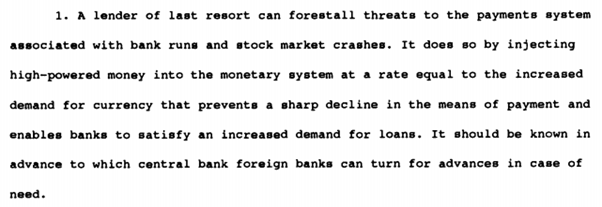
As we are talking about the Chinese stock market, Anna Schwartz also wrote about the concepts of real systemic international risk and and pseudo international systemic risk.
Once again, and as with pseudo financial crises and real financial crises, what distinguishes real systemic international risk and pseudo international systemic risk is a threat to the payment system. The threat of bank runs, which can easily be eliminated through lender of last resort facilities:
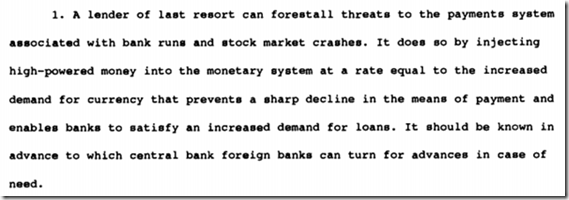
As always it is about the security of the payments system – of avoiding bank runs, not private losses:
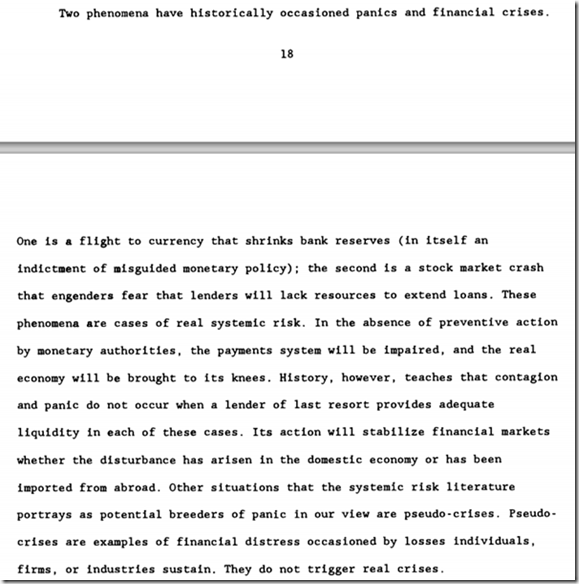
The lesson for the day is that when people start panicking about the economy or the stock market or international markets, don’t go to a macroeconomist for advice, go to a monetary historian. They have seen it all before.

09 Jul 2015
by Jim Rose
in applied welfare economics, fiscal policy, income redistribution, labour economics, politics - Australia, politics - USA, poverty and inequality, Public Choice, welfare reform
Tags: distributive justice, social insurance, social justice, top 1%, welfare state
Previous Older Entries Next Newer Entries


 Utopia, you are standing in it!
Recent Comments