The @MarcoRubio theory of elections is spreading to #UBI! Losing badly is winning
19 Jun 2016 Leave a comment
Does @nztreasury @moturesearch understand its own 90-day trials research?
17 Jun 2016 Leave a comment
in applied price theory, econometerics, economics of regulation, labour economics, minimum wage, politics - New Zealand Tags: employment law, employment protection law, employment regulation, offsetting behaviour, probationary periods, trial periods
https://twitter.com/moturesearch/status/743595301345333248
Media reporting and Motu’s own tweet on its research contradict its own conclusions about what it found about the introduction of 90-day trial periods for new jobs in New Zealand.
https://twitter.com/moturesearch/status/743563189451841537
Motu’s executive summary is both as bold as the Motu tweet and directly contradicts it
We find no evidence that the ability to use trial periods significantly increases firms’ overall hiring; we estimate the policy effect to be a statistically and economically insignificant 0.8 percent increase in hiring on average across all industries.
However, within the construction and wholesale trade industries, which report high use of trial periods, we estimate a weakly significant 10.3 percent increase in hiring as a result of the policy.
No evidence means no evidence. Not no evidence but we did find some evidence in two large industries – evidence of a 10.3% increase in hiring. That is a large effect.
Both economic and statistical significance matter. Not only is the effect of 90-day trial periods in the construction and wholesale trades other than zero, 10% is large – a hiring boom. No evidence of any effects on employment of 90 day trial periods means no evidence.
Neither Treasury nor Motu understand their own research and the evidence of large effects in two industries. Can you conclude you have no evidence when you have some evidence, which they did in construction and wholesale trades? There is evidence, there is not no evidence.
The paper was weak in hypothesis development and in its literature review. It was not clear whether the paper was testing the political hypothesis or the economic hypotheses. Neither were well explained or situated within modern labour economics or labour macroeconomics. If a political hypothesis does not stand up as a question of applied price theory, you cannot test it.
The Motu paper does not remind that graduate textbooks in labour economics show that a wide range of studies have found the predicted negative effects of employment law protections on employment and wages and on investment and the establishment and growth of businesses:
1. Employment law protections make it more costly to both hire and fire workers.
2. The rigour of employment law has no great effect on the rate of unemployment. That being the case, stronger employment laws do not affect unemployment by much.
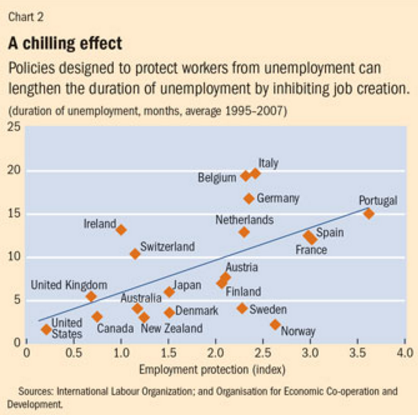
3. What is very clear is that is more rigourous employment law protections increase the duration of unemployment spells. With fewer people being hired, it takes longer to find a new job.
4. Stronger employment law protections also reduce the number of young people and older workers working age who hold a job.
5. The people who suffer the most from strong employment laws are young people, women and older adults. They are outside looking in on a privileged subsection of insiders in the workforce who have stable, long-term jobs and who change jobs infrequently.
Trial periods are common in OECD countries. There is plenty of evidence that increased job security leads to less employee effort and more absenteeism. Some examples are:
- Sick leave spiking straight after probation periods ended;
- Teacher absenteeism increasing after getting tenure after 5-years; and
- Academic productivity declining after winning tenure.
Jacob (2013) found that the ability to dismiss teachers on probation – those with less than five years’ experience – reduced teacher absences by 10% and reduced frequent absences by 25%.
Studies also show that where workers are recruited on a trial, employers have to pay higher wages. For example, teachers that are employed with less job security, or with longer trial periods are paid more than teachers that quickly secure tenure.
Workers who start on a trial tend to be more productive and quit less often. The reason is that there was a better job match. Workers do not apply for jobs to which they think they will be less suited. By applying for jobs that the worker thinks they will be a better fit, everyone gains in terms of wages, job security and productivity. For more information see
- Pierre Cahuc and André Zylberberg, The Natural Survival of Work, MIT Press, 2009;
- Tito Boeri and Jan van Ours, The Economics of Imperfect Labor Markets, MIT Press, 2nd edition (2013);
- Dale T. Mortensen, “Markets with Search Friction and the DMP Model”, American Economic Review 101, no. 4 (June 2011): 1073-91;
- Christopher Pissarides. “Equilibrium in the Labor Market with Search Frictions”, American Economic Review 101 (June 2011) 1092-1105;
- Christopher Pissarides, “Employment Protection”, Labour Economics 8 (2001) 131-159.
- Eric Brunner and Jennifer Imazeki, “Probation Length and Teachers Salaries: Does Waiting Payoff?” Industrial and Labor Relations Review 64, no. 1 (October 2010): 164-179.
- Andrea Ichino and Regina T. Riphahn, “The Effect of Employment Protection on Worker Effort – A Comparison of Absenteeism During and After Probation”, Journal of the European Economic Association 3 no. 1 (March 2005), 120-143;
- Christian Pfeifer “Work Effort During and After Employment Probation: Evidence from German Personnel Data”, Journal of Economics and Statistics (February 2010); and
- Olsson, Martin “Employment protection and sickness absence”, Labour Economics 16 (April 2009): 208-214.
In the labour market, screening and signalling take the form of probationary periods, promotion ladders, promotion tournaments, incentive pay and the back loading of pay in the form of pension vesting and other prizes and bonds for good performance over a long period.
There is good reasons to have strong priors about how employment regulation will work. Employment law protects a limited segment of the workforce against the risk of losing their job. These are those who have a job and in particular those that have a steady job, a long-term job.
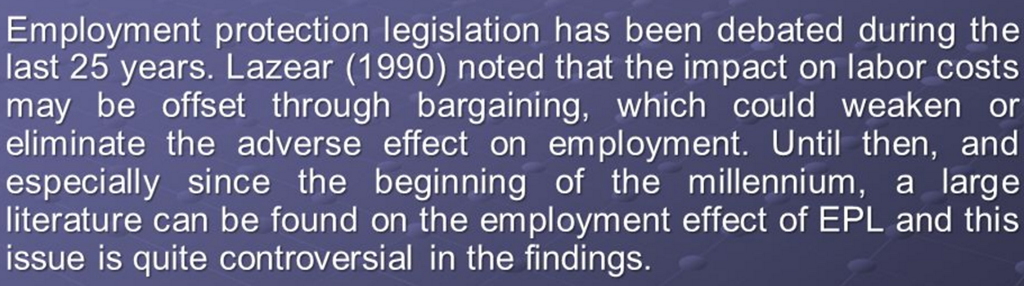
The impact of the introduction of trial periods on employment will be ambiguous because the lack of a trial period can be undone by wage bargaining.
- If you have to hire a worker with full legal protections against dismissal, you pay them less because the employer is taking on more of the risk if the job match goes wrong. If they work out, you promote them and pay them more.
- If you hire a worker on a trial period, they may seek a higher wage to compensate for taking on more of the risks if the job match goes wrong and there is no requirement to work it out rather than just sack them.
The twist in the tail is whether there is a binding minimum wage. If there is a binding minimum wage, either the legal minimum or in a collective bargaining agreement, the employer cannot reduce the wage offer to offset the hiring risk so fewer are hired.
The introduction of trial periods will affect both wages and employment and employment more in industries that are low pay or often pay the minimum wage. Motu found large effects on hiring in two industries that used trial periods frequently. That vindicates the supporters of the law.
Motu said that 36% of employers have used trial periods at least once. The average is 36% of employers have used them with up to 50% using them in construction and wholesale trade. That the practice survives in competition for recruits suggested that it has some efficiency value.
The large size of the employment effect in construction and wholesale trades is indeed a little bit surprising. Given that a well-grounded in economic theory hypothesis about the effect of trial period is ambiguous in regard to what will happen to wages and unemployment, a large employment effect is a surprise. If Motu had spent more time explaining employment protection laws and what hypotheses they imply, that surprise would have come to light sooner.
Motu’s research for the remaining New Zealand industries was a bit of an outlier. It should have spent more time explaining how to manage that anomalous status in light of the strong priors impartial spectators are entitled to have on the economics of employment protection laws.
A conflicting study about the effects of any regulation should be no surprise. If there are not conflicting empirical studies, the academics are not working hard enough to win tenure and promotion. Extraordinary claims nonetheless require extraordinary evidence.
Does @JulieAnneGenter know how much an electric car costs? @GreenpeaceNZ
17 Jun 2016 Leave a comment
in energy economics, environmental economics, environmentalism, politics - New Zealand Tags: electric cars, expressive voting, fuel poverty, New Zealand Greens, Norway, tokenism
The New Zealand Greens welcomed the possibility that Norway may ban the sale of petrol driven cars in 2025. From then on Norwegians may be only able to buy an electric car.

Source: NZ electric vehicle buyers guide.
If this Norwegian policy of banning petrol cars by 2025 was repeated in New Zealand, most New Zealanders could not afford a new car or indeed any car at all. The cheapest electric car is $55,000 new and often much more. They also still have serious, indeed crippling range anxiety as the adjacent screen snapshot shows from the New Zealand electric cars buyers guide.
Tesla destroys the competition when it comes to how far its cars go on one charge buff.ly/1LphuLg http://t.co/UhIAECZIFp—
Business Insider (@businessinsider) October 17, 2015
These type of policies from the Greens show how impractical they are and how contemptuous they are of ordinary families having a decent lifestyle, affordable cars and cheap energy. The Greens prefer ordinary people to have to scrimp and save for expensive cars that lose value quickly and do not go very far.

Desperately seeking to agree with @JulieAnneGenter on transport investment quality
11 Jun 2016 Leave a comment
in applied price theory, applied welfare economics, economics of bureaucracy, environmental economics, politics - New Zealand, Public Choice, transport economics, urban economics Tags: cost benefit analysis, KiwiRail, New Zealand Green Party, road pricing
I just wrote an op-ed for National Business Review online (pay-walled) agreeing with an op-ed last week by Green MP Julie Anne Genter on transport investment. My op-ed started
The Taxpayers’ Union welcomes the commitment of the Green Party yesterday to evaluating transport investments without any bias or favouritism to one transport mode over another.
The Taxpayers’ Union could not agree more with Julie Anne Genter when she said that the question ministers should always ask is “what is the best investment we can make?”
This op-ed was my rejoinder to her reply to my op-ed criticising a recent Green Party on national freight policy. That policy called for 25% of all freight by kilometres travelled to each go by rail and road. That would near double their freight market share from 30% currently to 50% when measured by kilometre.
For my troubles I got nothing but criticism and accusations in the comments section in National Business Review Online. A tweet by Genter was far more gracious.
There was no praise in the comment section at the National Business Review online for agreeing with the Green policy. In the first comment I was told I did not understand economics and that
When the policy default is “cut taxes and spending and let me selfishly keep my money” they miss out on the much larger benefit to everyone, including themselves, by nudging or economy to spend more on intrinsically more efficient transport – like rail – and less on alternatives.
No thanks at all for agreeing that transport investments should be the best we can make. After saying that in their recent freight policy, the Greens set targets were specific transport technologies they favour, which are rail and sea freight.

You cannot argue that transport investments should be the best we can make then declare a preference for a particular technology or mode of transport. But let us not quibble over that glaring contradiction.

The broader principle was agreed which is transport investments should be driven by cost benefit analysis and value for money. It should be technology neutral and transport mode neutral. That, of course, means the Greens cannot declare targets for the market shares of particular modes of freight shipment if they want to follow their own policy about value for money.
Child poverty, @jacindaardern and what higher wages cannot buy
10 Jun 2016 Leave a comment
in labour economics, labour supply, minimum wage, politics - New Zealand, poverty and inequality, public economics Tags: child poverty, family poverty, female labour force participation, living wage, New Zealand Labour Party, single mothers, single parents, social insurance
The Left thinks the solution to poverty is giving the poor more money because poverty is caused by the poor not having enough money.
Labour MP Jacinda Ardern introduced the exception in an op-ed in the Sunday Star Times. People are poor because they do not have enough money unless that is because of a lack of money because you are not married or not living with the father of the child.
Ardern was raging against a report by Lindsey Mitchell arguing that a major driver of child poverty is the breakdown of the family and the rise of single parent households. Ardern said that
I’ve spent the better part of six years reading and researching the issue of child poverty, and what we need to do to resolve this complex problem in New Zealand.
And yet here it was, the silver bullet we have all been looking for. Marriage. Getting hitched. Tying the knot. It turns out that we didn’t need an Expert Advisory Group on child poverty, or any OECD analysis for that matter – apparently all we really need is a pastor and a party
Ardern preferred to attribute the increase in child poverty to welfare benefit cuts in the early 1990s.
There is an exception within this exception for the living wage as Ardern says
But the other factors Family First was so quick to dismiss – low wages and staggering housing costs – mean we have 305,000 children in poverty. And this is the stuff that needs to change. It’s time we faced reality.
A living wage increase can solved family poverty. Actually getting a job and earning a wage does not reduce poverty among single-parent households but living wage increases do for families.

Source: Jacinda Ardern: Govt must improve the lot of our children – National – NZ Herald News.
You cannot have it both ways. That low wages cause family poverty but no wages does not.
The best solution to child poverty is to move their parents into a job. Simon Chapple is quite clear in his book last year with Jonathan Boston that.
Sustained full-time employment of sole parents and the fulltime and part-time employment of two parents, even at low wages, are sufficient to pull the majority of children above most poverty lines, given the various existing tax credits and family supports.
NZ House price index for selected territorial authority areas, 1989–2014
09 Jun 2016 Leave a comment
in economic history, economics of regulation, politics - New Zealand, urban economics

@eigoodwin forgot @cjsbishop’s private members’ bill on organ donation
09 Jun 2016 Leave a comment
in applied price theory, applied welfare economics, health economics, politics - New Zealand
The Otago Daily Times health reporter wrote today that
…individualist new-right” attitude that holds sway in New Zealand is holding back organ donation rates, a University of Otago biomedical ethics authority says
Eileen Goodwin contacted Eric Crampton at the New Zealand Initiative for comment. She did not mention, much less contact a National Party backbencher who has a private members’ bill before the house to promote organ donation.
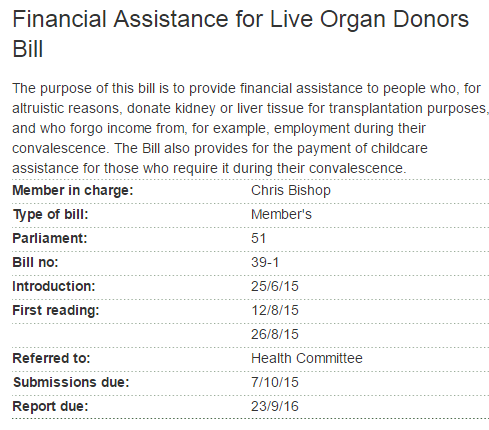
Source: New Zealand Parliament – Financial Assistance for Live Organ Donors Bill.
Chris Bishop’s bill passed its first reading and is now before a select committee for public hearings. Michael Woodhouse, MP first put the bill in the ballot.
This private members bill ensures that live organ donors are not out of pocket. The financial cost of time out the workforce to recover from a live organ donation is sufficient to prevent some from doing so. As Chris Bishop said in his first reading speech
I think it is wrong that at the moment live organ donors are essentially penalised for their altruism, facing a large loss of income even though their actions save lives and contribute to a healthier New Zealand.
Moreover, the current system in many ways actually favours the wealthy. If you have a relative who can afford to take time off work and make the financial sacrifice is entailed in donating an organ to you, and they are a match, then you have a good shot of getting that organ.
But if you have someone who is a match but cannot afford to take time off work to donate an organ to you, then you are obviously in a less advantageous position.
It is bizarre that people cannot donate organs because they cannot afford the time off work to recover and still pay the mortgage or rent. They currently receive a sickness benefit of $206 per week. The private members bill will ensure they receive 80% of their previous income for 12 weeks.
Organ donation is a repugnant market. Live organ markets are illegal because most people are just repelled by the very idea of such trading as The Economist explains
In most countries it is illegal to buy or sell a kidney. If you need a transplant you join a waiting list until a matching organ becomes available.
This drives economists nuts. Why not allow willing donors to sell spare kidneys and let patients (or the government, acting on their behalf) bid for them? The waiting list would disappear overnight.
The reason is that most societies find the concept of mixing kidneys and cash repugnant. People often exclude financial considerations from their most important decisions, from the person they marry to the foster child they adopt.
Al Roth has written an excellent survey article on repugnant markets in the Journal of Economic Perspectives where he said.
Because healthy people have two kidneys and can remain healthy with only one, kidneys from living donors are now widely used for kidney transplantation, the preferred treatment for end-stage renal disease.
The laws against buying or selling kidneys reflect a reasonably widespread repugnance, and this repugnance may make it difficult for arguments that focus only on the gains from trade to make headway in changing these laws.
Requiring people to opt-out rather than opt-in, as suggested by the medical ethics professor that the Otago Daily Times interviewed, is an antagonistic move that many will oppose.
Prof Gillett supports a shift to an opt-off organ donation system that would involve families in the decision-making process.
He said the political ideology of the Ministry of Health and the Government hindered efforts to foster a different view of organ donation.
“The ministry’s got quite an individualist new-right sort of agenda.
“I think it’s shared by the Government at large; I think that’s the reason why we are encouraged to tolerate the inequalities [in society].”
“It’s fundamental to neoliberalism that every individual should be able to be accountable for their own stuff, wrapped up in their own life, and not have dues to others.”
Organ donation should be seen as a normal way to contribute to society, Prof Gillett believed.
“An opt-off system is consistent with the solidarity view of human beings.”
Requiring people to opt out rather than opt in wastes political energy on a losing proposal when far simpler reforms are yet to be done. Piecemeal social reform in the tradition of Karl Popper is better. We should first do simpler things like making sure that people do not donate organs to a relative because they cannot afford to do so.
When I heard of Chris Bishop’s private members bill, it is one of those social reforms you wonder why it was not done years ago. The notion of someone not been able to donate an organ to a relative to save their life because of financial constraints is far more repugnant than an organ market. Their financial constraint is the need to pay the rent and buy the groceries while off work recovering from the live organ donation. As Roth says
One often-noted regularity is that some transactions that are not repugnant as gifts and in-kind exchanges become repugnant when money is added…
Many people clearly regard monetary compensation for organ donation as something that transforms a good deed into a bad one.
While a repugnance against an organ market is a common preference, I cannot see anyone opposing making sure that live organ donors are not out of pocket because of their tremendous generosity. There is no slippery slope you despite some people’s concerns as Roth explains
Concern that monetizing some transactions might lead to other changes seems to lurk beneath the more explicit concerns. Some critics fear a commercial dystopia in which kidney sales would enter into contracts: for example, as collateral, or as payment for other medical services, or to repay debts, or as means tests for eligibility for social services and financial aid. Such scenarios have found their way into fiction and movies
Repugnance is a real constraint on the emergence of markets. The issue of making sure the people are not out of pocket for live organ donations is separate from the repugnance against commercial transactions over human organs.
I have made a complaint to the editor of the Otago Daily Times about sloppy journalism and sloppy editing. If I am not satisfied with their response, I will take the matter to the Press Council. Yes, I have a bee in my bonnet.
why no protests against #UBI bureaucratic job losses but #TPPANoWay protests aplenty about jobs?
08 Jun 2016 Leave a comment
in fiscal policy, labour economics, politics - Australia, politics - New Zealand, politics - USA, poverty and inequality, public economics Tags: expressive voting, growth of government, rational rationality, size of government, social insurance, universal basic income

The universal basic income is a rare bird for the left. It is the only time the usual suspects on the left are happy to cut government bureaucracy.

Furthermore, the left makes no inquiries as to how these redundant bureaucrats who administered the welfare state will find jobs. The market is left to work its magic for once. How convenient.

When a tariff cut is proposed, a trade deal signed, or job reduction in a bureaucracy suggested perhaps as the result of a privatisation, left-wing activists chain themselves to factory gates or government offices in solidarity. The social upheaval from the job losses among existing workers and their dim prospects of reemployment are paramount in their minds.

Why in the case of a universal basic income is the left so relaxed about job losses. Indeed, it celebrates as an advantage of a universal basic income that “Most of the bureaucracy of the welfare system [is] swept away” .

The universal basic income is the only time the left welcomes a reduction in bureaucracy and the role in the state. This switch from welfare payments to a universal basic income does not make those on the benefit any better off. Normally they are worse off under a universal basic income.
None of the the less well groups which of the concern of the left gain from a universal basic income. Despite this, they sell the jobs of their comrades in the public sector down the river.

I cannot believe the explanation is job losses are OK as long as they are the result of left-wing policies. Unless the labour market is liberalised, its ability to find new jobs for workers, for example, made redundant in the public sector after the introduction of a universal basic income is not any under greater than under a right-wing policy that costs jobs.
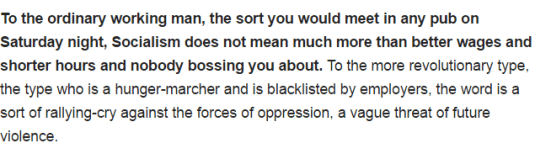
#GeorgeOrwell summarises the traditional @uklabour @nzlabour voter – sounds Blairite
07 Jun 2016 Leave a comment
in economic growth, labour economics, Marxist economics, politics - New Zealand
Source: The Road to Wigan Pier – Wikiquote.
Déjà vu all over again for @NZLabour @NZGreens
07 Jun 2016 Leave a comment
in economics, economics of media and culture, politics - New Zealand Tags: 2014 New Zealand election, 2017 New Zealand election, Attack Ads, New Zealand Greens, New Zealand Labour Party
Homeless means living rough or in a car @DavidReiMiller @greencatherine @secondzeit
06 Jun 2016 Leave a comment
in politics - New Zealand, poverty and inequality, public economics, urban economics Tags: economics of housing, homelessness, social insurance, welfare state
Statistics New Zealand spent 21 pages trying to define the term homeless. How Orwellian.
When I first moved to Canberra and when I moved back, I stayed with friends. Some regard that as being homeless under the Statistics New Zealand definition, much to my own surprise.
I qualify because I shared accommodation . Having shared or short-term accommodation is not homeless. The descriptions shared and short-term accommodation quite adequate to the task.
People living in temporary accommodation including with friends are not homeless. Their situation is unsatisfactory but describing it does not justify butchering the English language by conflating their inconveniences with the few hundred people who live rough each night.
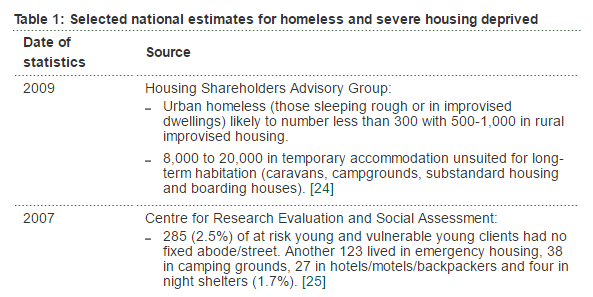
Source: New Zealand Parliament – Homelessness in New Zealand.
Those that conflate having a roof over your head tonight with living rough take advantage of the great sympathy people have for those living rough for people in far less dire situations.
NZ #UBI can be only $4,700 @JordNZ @GrantRobertson1 @GeoffSimmonz
04 Jun 2016 Leave a comment
in labour economics, labour supply, politics - New Zealand, poverty and inequality Tags: expressive voting, growth of government, New Zealand Labor Party, rational irrationality, size of government, social insurance, universal basic income, welfare state
A universal basic income in New Zealand will have to be financed by a great big new tax because the existing ones are not enough according to the Economist calculations below.
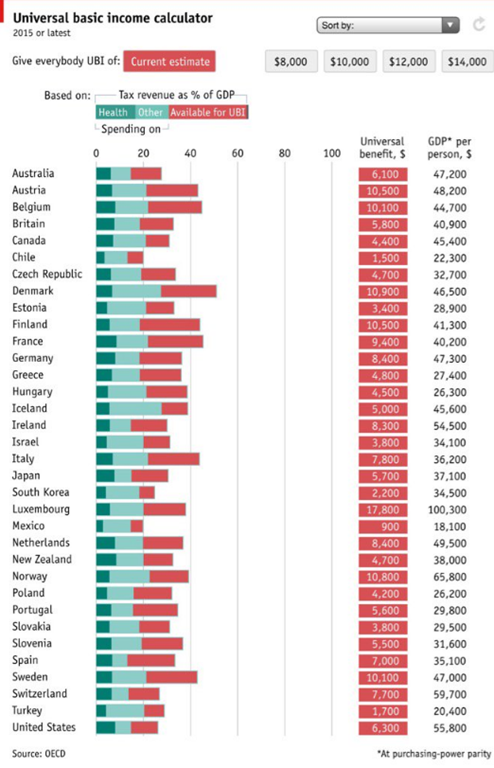
HT: Paul Kerby.
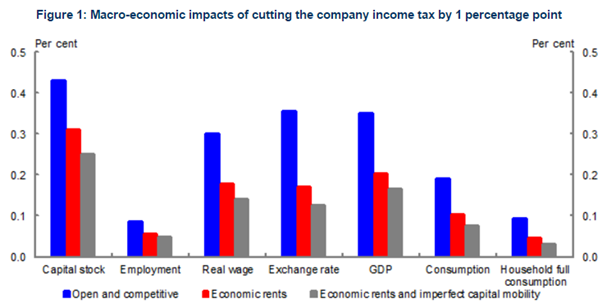
The effects of cutting the Australian company tax by one percentage point
02 Jun 2016 Leave a comment
in applied price theory, politics - Australia, politics - New Zealand, public economics Tags: Australia, company tax, international tax competition, tax incidents, taxation and entrepreneurship, taxation and investment
Will @NZLabour have any list MPs in 2017 after deal with @NZGreens?
02 Jun 2016 Leave a comment
in constitutional political economy, politics - New Zealand, Public Choice Tags: 2017 New Zealand election, MMP, New Zealand Greens, New Zealand Labour Party, tactical voting
There is a memorandum of understanding agreed yesterday between the New Zealand Labour Party and the New Zealand Greens. There is some speculation that there will be more coordination over electorate votes so that the Labour Party wins more electorate seats.
Labour has five list MPs at the moment. Winning a few more electorate seats will mean that the leader of the party and a future leader may be out of parliament if there is more tactical voting.
Unless this tactical voting leads to an overhang in parliament with Labour holding more electoral seats than it is entitled to on the basis of its party vote, it seems to be shooting itself in the foot.
$5.2 billion in rail spending since 2003 budget @JulieAnneGenter @JordNZ
02 Jun 2016 Leave a comment
in politics - New Zealand, transport economics Tags: celebrity technologies, expressive voting, KiwiRail, network economics, picking losers, picking winners, rational irrationality, urban transport
$5.2 billion in rail spending since the 2003 budget! This $5.2 billion does not include any spending on urban rail, commuter train networks or their electrification. The $5.2 billion since the 2003 budget is for the passenger and freight network, not the urban metro contracts
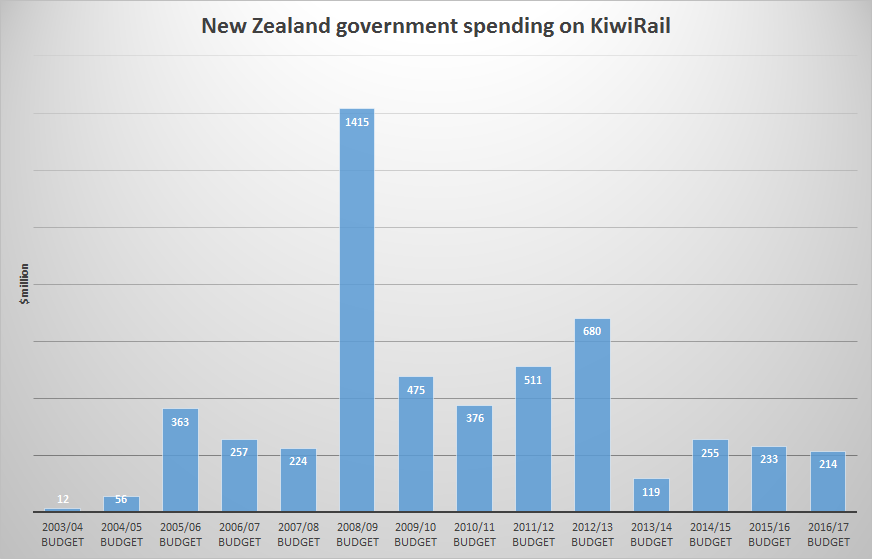
Source: New Zealand Budget Papers, various years.
Desperately waiting for that dividend the taxpayers lose if any of these assets are privatised. The spending listed below in the two charts includes loans, capital injections and the purchase of the track and of the train operator itself. The latter was purchased for $690 million which was soon written down to zero.
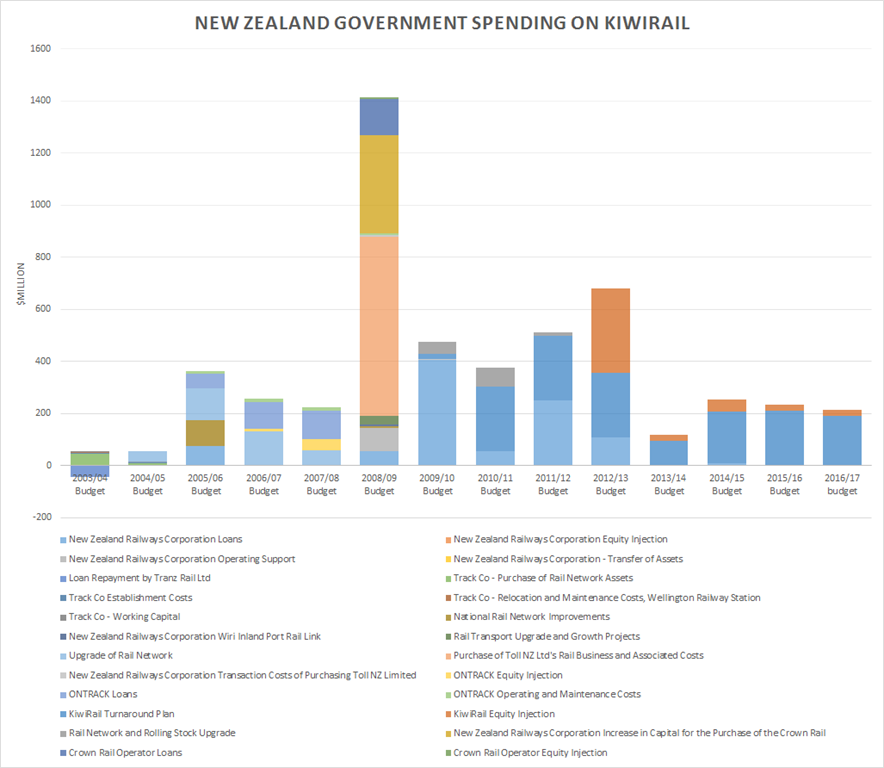
Source: New Zealand Budget Papers, various years.
There is no table because the table format breaks down when blogged.
At various times, OnTrack and KiwiRail was subsidiaries of the New Zealand Railways Corporation, which was the holding company. Now OnTrack is a division of KiwiRail.


Recent Comments