The living wage

Why not just increase the family tax credit? That would increase the incomes of poor families without putting their jobs at particular greater risk.

The local calculation of the living wage includes cable TV and an overseas holiday.

Milton Friedman provides some critical truths on the living wage:

Do-Gooders believe passing a law saying nobody shall get less than [a minimum wage] is helping poor people (who need the money).

You’re doing nothing of the kind.

What you’re doing is to ensure that people whose skills do not justify that wage will be unemployed.

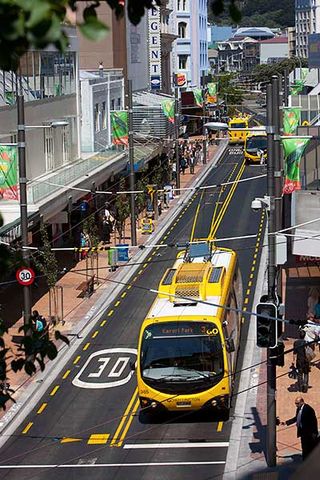
@NZGreens @GreenpeaceNZ The scrapping of the trolley buses is great news – killer green technology alert

The extra costs associated with the wire network and the difficulty of changing the buses’ routes were the main factors in this great decision.

Goldenmile-busroute-lg

Trolley buses cause backlogs when they brake down because they cannot overtake a broken-down bus. The trolley buses just stake-up behind the broken-down bus because they cannot overtake.

I have been trapped on a diesel express bus this way commuting to work many times. Central Wellington grinds to halt when one trolley bus breaks-down.

The 50-year-old power system would need upgrading soon costing “tens of millions of dollars,” and maintaining the 160 kilometres of wires and 15 substations costs $6m a year. The one-off cost of dismantling this network is cheaper than this!

Trolley bases are a killer green technology: drivers have been killed while standing on the road behind the bus reconnected the arms on the top of the bus to the overhead wires. These arms disconnect frequently, and have even hit people on the side of the road.

Wellington is earthquake prone. Having public transport run off a single electric power source connected to overhead wires is fool hardy.

I grew up in a small country town. I have none of the obsessions that big-city folk and the inner-city green voters, in particular, have with buses.

Rod Croome’s unanticipated revolution

Back in 1986, an old University mate of mine, Rod Croome was very physically brave in his protesting for reforms to the Tasmanian state criminal law.

  • Rod even walked into a Tasmanian police station and confessed to abominations against the order of nature, as the Tasmanian criminal code called it.
  • The Police said they could not prosecute without the other party coming forward as the witness. The abominee did.
  • The Tasmanian Director of Public Prosecutions then declined to prosecute on public interest grounds. His discretion to not prosecute is absolute.

These days, Rod is campaigning for the equal right to marry. All inside one generation!

When Rod walked out of that police station rather disappointed at being a free man, I wonder if he anticipated how much change would happen regarding gay rights in his lifetime, much less in the next 5, 10, and 20-years.

A good explanation of this rapid social change is in Timur Kuran’s “Sparks and Prairie Fires: A Theory of Unanticipated Political Revolutions” and “Now Out of Never: The Element of Surprise in the East European Revolution of 1989“.

Kuran suggests that political revolutions and large shifts in political opinion will catch us by surprise again and again because of people’s readiness to conceal their true political preferences under perceived social pressure:

People who come to dislike their government are apt to hide their desire for change as long as the opposition seems weak.

Because of the preference falsification, a government that appears unshakeable might see its support crumble following a slight surge in the opposition’s apparent size, caused by events insignificant in and of themselves.

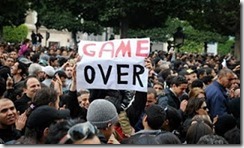
Kuran illustrated his bandwagon effect first with the fall of the Russian Czar in 1918. On the morning of the day that the Czar abdicated, he thought it was just another day at the office. But the regiment stationed in St. Petersburg to put down riots had been recently sent to the front. The raw recruits that replaced them melted away in the front of the rioters. The rest is history.

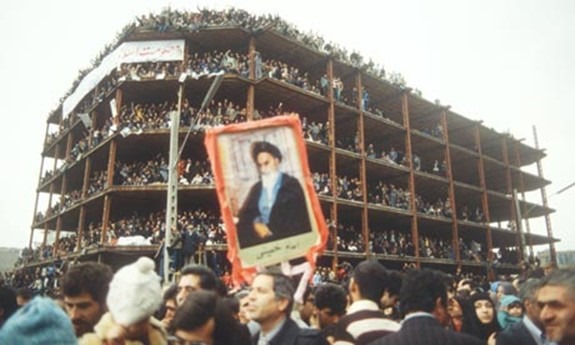
Then there is the Ayatollah Khomeini: two months before the Iranian Revolution, the main concern of his aides was his French visa was expiring; He needed a new country to seek refuge. Just before the Iranian Revolution of 1979, a CIA report characterised the Shah of Iran as an “island of stability.”
clip_image001

Yeltsin came to power after the coup attempt by hard-liners against Gorbachev because a KBG regiment sent to arrest Yeltsin mutinied against the orders of the hard-line coup leaders. Then everyone at the top of the military and security forces saw their main chance and switched sides. All popular revolutions against autocrats are ultimately palace revolutions, as I have argued before.

The loyalties of security forces are crucial in any political revolution. Within the security forces, a key concern is ending-up on the winning side in any show-down. Moving too early, too late or not at all have risks of their own when the time comes after a military coup to reward supporters and punish those that chose the wrong side, or even worse, sat on the side-lines waiting to see who would win.

Kuran argues that everyone has a different revolutionary threshold where they reveal their true beliefs, but even one individual shift to opposition leads to many others to come forward and defy the existing order. Small concessions only emboldens the ground-swell of revolution.

Those ready to oppose social intolerance or who are lukewarm in their intolerance keep their views private until a coincidence of factors gives them the courage to bring their views into the open. They find others share their views and there is a revolutionary bandwagon effect.

Plenty of people have had personal experiences of this in the 1980s and the 1990s when there were rapid changes in social and political attitudes about racism, sexism and gay rights.

A few political entrepreneurs such as Rod Croome had to stand up for what was right, and a surprisingly large number of others will quickly join the side pushing for social change.
clip_image002

In switching sides, these early movers and initial protestors encourage other hidden opponents of the established social and political order to switch. As knowledge of the opposition spreads and grows, the external cost of joining becomes lower.

clip_image003

In Crime Waves, Riots, and Revolutions, Alex Tabarrok makes the important related point that when the courts and police are over-crowded and over-whelmed, proportionately fewer criminals or protestors will be apprehended, convicted, and imprisoned or otherwise socially pressured to conform. This feedback effect from one decision to participate in crime or protest to the decisions of others to break the law or rebel can be highly significant.

Kuran argued that fear changes sides once the revolutionary bandwagon takes hold: genuine supporters of the old political or social older or the traditional social values falsify their publicly professed preferences, pretending that they support the new order.

These are late-switchers. Do not trust them.

These late switchers are opportunists who will as easily switch back or move on to support another coup or a counter-coup or a return to traditional values.

Kuran argued that the reason for the bloody purges among revolution movements after many takeovers is to find and route-out these late-switchers. Many are purged, rightly or wrongly, before they have a chance to betray the current leaders of the revolution or military coup.

There are plenty of Christian and family parties winning upper house seats in Australia and soon in the New Zealand House of Representatives. There are plenty of morally manoeuvrable politicians willing to switch to their side if they have enough votes.

Ministers of course have a whole range of dazzling qualities, including … um … well, including an enviable intellectual suppleness and moral manoeuvrability.

Sir Humphrey, The Death List

Addendum: don’t pretend it was just the old fogeys who were the social reactionaries back then in the 80s.

When a gay men’s club sought affiliation with the Tasmanian University Union’s Societies Council in 1983, a number of clubs spoke against it because they simply didn’t like gays. I was there representing a catholic college students club so I seconded the motion.

When the motion was put to the vote, it was carried on the voices with a lot of people not saying anything or mumbling against it.

The chairman of the meeting, who was a member of the Liberal club, wisely didn’t put the motion to a vote. He declared it carried and moved as quickly as possible to the next item of business in case there was a call for show of hands.

Anti-gay rhetoric was common among young people in the 1980s.

The case against industry policy in one photo

Industry policy is back in vogue in New Zealand:

  • The National Party-led Government is keen on smart specialisation.
  • The Labour Party wants a Manufacturing Upgrade targeting R&D and innovation.

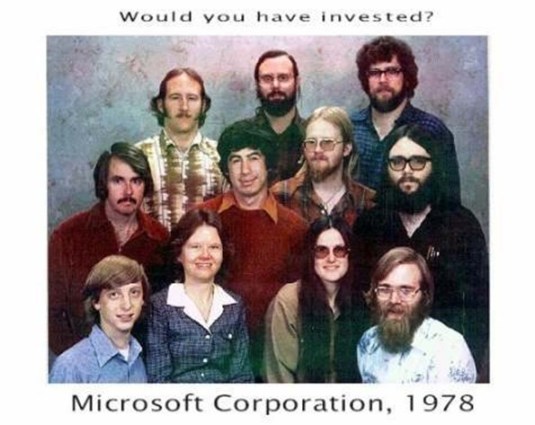
The case against picking winners is the answer to the question in the picture of the weirdoes below.

One of the people in the photo won a competition on the radio that offered free company photos. That is how Microsoft could afford the photo. That photo became one of the most iconic photos in American business history.

I first saw this photo 12-14 years ago at a presentation, so who first designed the caption is lost in time.

Stephen Franks: Time to call out the earthquake sooks-updated

An over-the-top blog post title spoiled a great round-up by Stephen Franks of the costs and benefits of higher building standards regarding earthquakes:

  • Employees are pressing employers to avoid premises seen as risky even if the earthquake risk is a fraction of the risks faced by employees in their homes, or getting to and from work;
  • Retroactive earthquake strengthening may cost more than the cost of a completely new building (the Canterbury Earthquake Royal Commission mentions up to 120%);
  • Retroactively strengthening buildings outside our highest seismic risk regions is rarely likely to pass any rational cost/benefit test because few if any of them will ever cause an injury.
  • The Martin Jenkins & Associates cost benefit study mentioned by the Canterbury Earthquake Royal Commission showed no  retrospective upgrading policy that could deliver net economic benefit.
  • Rationally, almost all existing weaker buildings should be allowed to end their useful life naturally and be replaced.
  • In high risk Wellington the $60m the Council is looking at spending on the Town Hall would save more lives if spent on dedicated cycle-ways.

via StephenFranks.co.nz » Blog Archive » Time to call out the earthquake sooks.

I remember reading a justifiably bitter op-ed by a woman who survived the bus on which a wall fell on and flattened in the second Canterbury Earthquake in February 2011. Eleven died.

That historic wall was known to be in risk is collapse both before and after the first Canterbury Earthquake in 2010.

The wall could not be demolished because of restrictions under the Historic Places Act.

A relative sat on a council committee in a small country town that was among other things trying to demolish a derelict building. The building was protected by heritage legislation.

Permission was refused to demolish the derelict building even after it caught fire and nearly burnt down the pub next door.

Lessons from how Australia came out of the Great Depression-updated

How Australia got out of the Great Depression in the 1930s could have lessons for today, for the global financial crisis and the Great Recession. In Australia, the massive fiscal contraction from late 1930 onwards was called the Premiers’ Plan. In 1931, unemployment rates was 25% or more.

The Premiers’ Plan required the federal and state governments to cut spending by 20%, including cuts to wages and pensions and was to be accompanied by tax increases, reductions in interest on bank deposits and a 22.5% reduction in the interest the government paid on internal loans.

The Premiers’ Plan was complementary to the Arbitration Court’s 10 per cent nominal wage cut in January 1931 and the devaluation of the Australian pound. Most countries had abandoned the gold standard by 1931 and 1932 and devalued by about 10% including the UK. These competitive devaluations were called currency wars. Most countries below started to recovery before they left the gold standard, a year or two before they left the cross of gold.

Real GDP and dates of exit from gold standard

clip_image002

Sources: GGDC‑Maddison International Historical Database (http://www.ggdc.net/Maddison/), Bernanke et al. 1990; Gruen and Clark 2009.

The New Zealand Government also cut everything that could be cut by 20% in 1931.

Maclaren (1936) dated the Australian economic recovery from the last months of 1932. It was to take another three years before unemployment rates fell below 10 per cent — the rate it had been during most of the 1920s.

The June 1931 Premiers’ Plan of fiscal consolidation had time by late 1932 to become credible and take hold given the usual leads and lag on fiscal policy.

Unemployment data in the 2001 Australian yearbook of the Australian Bureau of Statistics graphed below shows a rapid fall in the high twenties unemployment rate in 1932 to be below 10 per cent by 1937. This fall started just after the 1931 Premiers’ Plan of fiscal consolidation.

Australian unemployment was 7.5 per cent in 1938, which is the long-term average for the period 1906 to 1929. The USA had an unemployment rate twice that in 1938 and was coming out of a double dip great depression.

Australia and New Zealand came out of the Depression earlier than most other countries because of the fiscal austerity under the Premiers’ Plan. The New Deal prolonged the great depression in the USA.

For those that doubt, how much lower would have been the Australian unemployment rate between 1932 and 1937 but for the fiscal contraction? What is your counter-factual? The role of fiscal policy in Australia in the 1930s is rather under-studied in Keynesian macroeconomics. Why?

The fiscal consolidation in the Premiers’ Plan removed fears of even harsher future taxes, stabilised expectations, increased consumers’ expected disposable incomes, and increased investor confidence and therefore stimulated private investment. See Keynes’ 1932 letter where he says

I am sure the Premiers’ Plan last year saved the economic structure of Australia.

Privatisation screw-ups are the best case for privatisation

Governments are so bad as business owners and so incapable of running a commercial process free of politics that governments cannot even sell a state-owned enterprise for a good price under the full glare of the media and public.

Anyone can sell an asset. It is the simplest task of ownership. Hire some consultants and go for the best price. Governments lack this ability.

Privatisations are often politicised, with discounts for small buyers from the middle class, for employees and other special interests. These messy privatisations are the best case out there against state ownership of businesses.


“No asset sales” was the Labour Party’s most coherent slogan in the 2011 general election in New Zealand. It cannot be claimed that the more recent privatisations in New Zealand were not subject to the maximum amount of public and parliamentary scrutiny possible in a democracy. The 2011 election was said to be a referendum on asset sales.

This inability to sell state-owned enterprises for a profit and free of politics calls into question the ability of governments to make complicated day-to-day business management and entrepreneurial judgements as owners of business enterprises. Imagine the quality of the day-to-day state-owned enterprise decision making that is further away from the glare of an election?

Private asset owners have a strong incentive to sell assets at a profit as it will otherwise hurt their share price and their personal wealth. Inferior entrepreneurs and owners are punished by losses. Any assets that inferior entrepreneurs either mismanaged or sell at a bargain price will, through further buying and selling, end up in the hands of more alert entrepreneurs and owners.

There are no similar feedback and error correction measures disciplining governments as asset owners and in their day-to-day monitoring of their business portfolios. Governments who own business assets have an inherently softer budget constraint.

No more witty politicians

Did the crowd boo when Gough Whitlam was so ill-mannered as to refer to Kerr’s cur? Did the crowd at the steps of Parliament chant ‘manners, Gough, manners’ rather than ‘shame, Fraser, shame’?

When Gough was challenged by a voter for his view on the contentious issue of abortion, hoping to catch him out, Whitlam replied that he was for abortion and in the heckler’s case, he wished that abortion would be retrospective. Everyone laughed and Gough got off the hook.

30 years ago when public meetings in elections were raucous affairs rather than photo opportunities, being able to give as good as you get was a key political skill.

Public meetings were tests of a politician’s mantle and those that did not fight back were judged to be weak. Stand-up comics had easier initiations.

Wit has lost its place in public discourse.

Robert Muldoon pinged the famous insult “New Zealanders who emigrate to Australia raise the IQs of both countries”.

Consider David Lange:

  • Micheal Bassett was a member of parliament and a cousin on my father’s side of the family. My father delivered him and it became plain in later days that he must have dropped him.
  • To US Ambassador H. Monroe Browne, who owned a racehorse called Lacka Reason: “You are the only ambassador in the world to race a horse named after your country’s foreign policy”.
  • And I’m going to give it to you if you hold your breath just for a moment…I can smell the uranium on it as you lean towards me.
  • …a man whose life is so boring that if it flashed past he wouldn’t be in it.

Paul Keating’s contributions to Australian culture would be lost:

  •  He described his opponents as “mangy maggots”, “intellectual rust buskets”, “gutless spivs”, “foul-mouthed grubs” and “painted, perfumed gigolos”.
  • Keating said of Howard: “From this day onwards, Howard will wear his leadership like a crown of thorns, and in the parliament I’ll do everything to crucify him”.
  • On Andrew Peacock: “A soufflé doesn’t rise twice”.
  • On Wilson Tuckey: “He’d be flat out counting past ten”.

Next Newer Entries

Arin’s Substack

Celebrating humanity's flourishing through the spread of capitalism and the rule of law

David Andolfatto

Celebrating humanity's flourishing through the spread of capitalism and the rule of law

Monetary Non-Neutrality

Celebrating humanity's flourishing through the spread of capitalism and the rule of law

Reason Magazine

Celebrating humanity's flourishing through the spread of capitalism and the rule of law

Coyote Blog

Celebrating humanity's flourishing through the spread of capitalism and the rule of law

Thoughts from the North

Celebrating humanity's flourishing through the spread of capitalism and the rule of law

Fardels Bear

A History of the Alt-Right

Vincent Geloso

Econ Prof at George Mason University, Economic Historian, Québécois

Bassett, Brash & Hide

Celebrating humanity's flourishing through the spread of capitalism and the rule of law

Truth on the Market

Scholarly commentary on law, economics, and more

The Undercover Historian

Beatrice Cherrier's blog

Matua Kahurangi

Celebrating humanity's flourishing through the spread of capitalism and the rule of law

Temple of Sociology

Celebrating humanity's flourishing through the spread of capitalism and the rule of law

Velvet Glove, Iron Fist

Celebrating humanity's flourishing through the spread of capitalism and the rule of law

Why Evolution Is True

Why Evolution is True is a blog written by Jerry Coyne, centered on evolution and biology but also dealing with diverse topics like politics, culture, and cats.

NoTricksZone

Celebrating humanity's flourishing through the spread of capitalism and the rule of law

Homepaddock

A rural perspective with a blue tint by Ele Ludemann

Kiwiblog

DPF's Kiwiblog - Fomenting Happy Mischief since 2003

The Dangerous Economist

Celebrating humanity's flourishing through the spread of capitalism and the rule of law

Watts Up With That?

The world's most viewed site on global warming and climate change

The Logical Place

Tim Harding's writings on rationality, informal logic and skepticism

Doc's Books

A window into Doc Freiberger's library

The Risk-Monger

Let's examine hard decisions!

Uneasy Money

Commentary on monetary policy in the spirit of R. G. Hawtrey

Barrie Saunders

Thoughts on public policy and the media

Liberty Scott

Celebrating humanity's flourishing through the spread of capitalism and the rule of law

Point of Order

Politics and the economy

James Bowden's Blog

A blog (primarily) on Canadian and Commonwealth political history and institutions

Science Matters

Reading between the lines, and underneath the hype.

Peter Winsley

Economics, and such stuff as dreams are made on

A Venerable Puzzle

"The British constitution has always been puzzling, and always will be." --Queen Elizabeth II

The Antiplanner

Celebrating humanity's flourishing through the spread of capitalism and the rule of law

Bet On It

Celebrating humanity's flourishing through the spread of capitalism and the rule of law

History of Sorts

WORLD WAR II, MUSIC, HISTORY, HOLOCAUST

Roger Pielke Jr.

Undisciplined scholar, recovering academic

Offsetting Behaviour

Celebrating humanity's flourishing through the spread of capitalism and the rule of law

JONATHAN TURLEY

Res ipsa loquitur - The thing itself speaks

Conversable Economist

In Hume’s spirit, I will attempt to serve as an ambassador from my world of economics, and help in “finding topics of conversation fit for the entertainment of rational creatures.”

The Victorian Commons

Researching the House of Commons, 1832-1868

The History of Parliament

Articles and research from the History of Parliament Trust

Books & Boots

Reflections on books and art

Legal History Miscellany

Posts on the History of Law, Crime, and Justice

Sex, Drugs and Economics

Celebrating humanity's flourishing through the spread of capitalism and the rule of law

European Royal History

Exploring the Monarchs of Europe

Tallbloke's Talkshop

Cutting edge science you can dice with

Marginal REVOLUTION

Small Steps Toward A Much Better World