What a $15 Minimum Wage Would Do
20 Apr 2016 Leave a comment
in applied price theory, economics of media and culture, entrepreneurship, job search and matching, labour economics, managerial economics, minimum wage, organisational economics, personnel economics, theory of the firm Tags: living wage, offsetting behavior, The fatal conceit
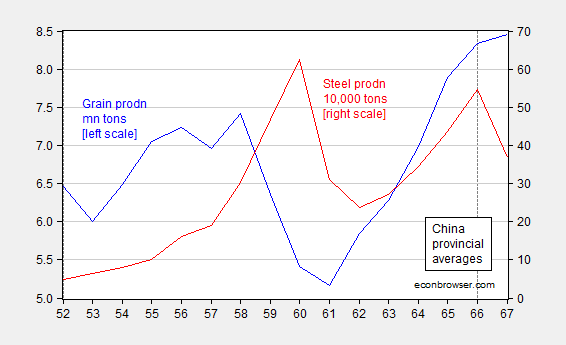
Thinking about The Great Leap Forward | Econbrowser
19 Apr 2016 Leave a comment
in applied price theory, applied welfare economics, comparative institutional analysis, development economics, economic growth, economic history, growth disasters, industrial organisation, law and economics, Marxist economics, Public Choice, rentseeking Tags: China, economics of planning, extreme poverty, famine, Great Leap Forward
The Economics of #Brexit – Richard Baldwin
18 Apr 2016 Leave a comment
in applied price theory, applied welfare economics, economics of regulation, international economics Tags: Brexit
@garethmorgannz gives optimal tax theory a pass once again @JordNZ
17 Apr 2016 Leave a comment
in applied price theory, entrepreneurship, fiscal policy, macroeconomics, politics - New Zealand, public economics Tags: company tax, Gareth Morgan, rational irrationality, taxation and entrepreneurship, taxation and investment, taxation and labour supply, taxation of capital income
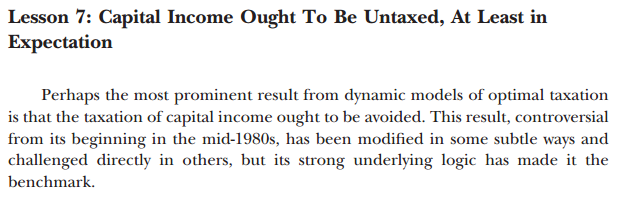
The Morgan Foundation gave optimal tax theory a pass in yesterday’s publication about taxes on land and capital. Gareth Morgan is keen on a comprehensive capital tax.
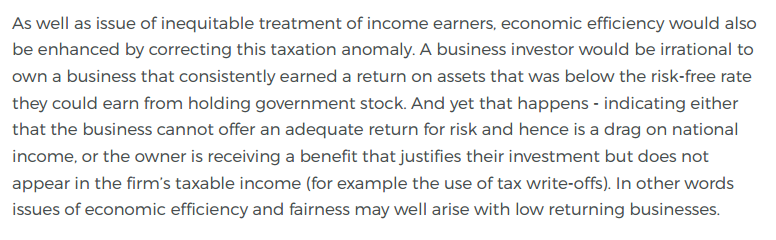
Source: Taxing Wealth & Property – What Works? A Morgan Foundation Report.
This failure to refer to optimal tax theory is despite the Foundation’s strong commitment to evidence-based policy. Any discussion of tax policy that is evidence-based must refer optimal tax theory.
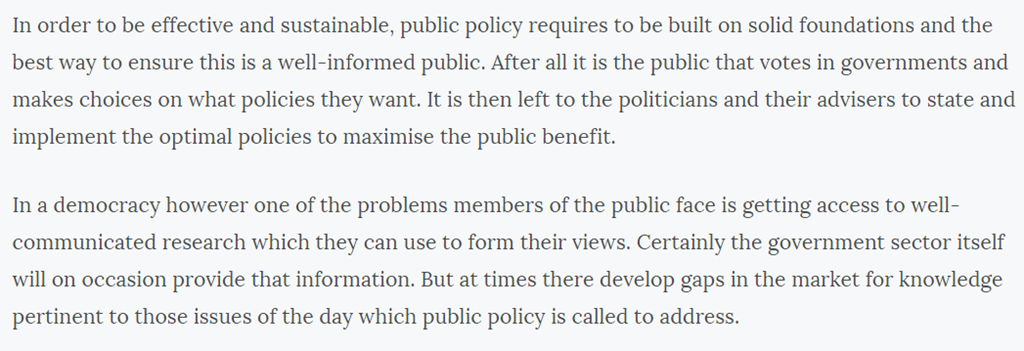
Source: Morgan Foundation, Public Policy Education.
<p>
Will the population bomb prevent the great stagnation?
16 Apr 2016 Leave a comment
in applied price theory, development economics, economic growth, industrial organisation, P.T. Bauer, population economics Tags: doomsday prophecies, endogenous growth theory, pessimism bias, population bomb

If only Paul Ehrlich had been right! Population explosion would have meant an explosion in people who could invent new technologies and populate in much larger markets to provide an incentive to invent new products.

Among Paul Ehrlich’s many analytical errors, he did not take into account that more people meant more inventors and more untapped markets.
Jones argued that in the very long run the only way to have further innovation is to have more people. If there are more people undertaking R&D and more people to populate the markets for those inventions, there will be further growth because the decreasing returns to knowledge creation will be overcome by having more R&D workers.
Jones attributes much of the growth in the 20th century to one-off effects that cannot be repeated such as putting more people into higher education:
… growth in educational attainment, developed-economy R&D intensity, and population are all likely to be slower in the future than in the past. These factors point to slower growth in US living standards.
Second, a counterbalancing factor is the rise of China, India, and other emerging economies, which likely implies rapid growth in world researchers for at least the next several decades.
Third, and more speculatively, the shape of the idea production function introduces a fundamental uncertainty into the future of growth. For example, the possibility that artificial intelligence will allow machines to replace workers to some extent could lead to higher growth in the future.
A larger population increases the rate of technological progress by increasing the number of geniuses and other creative people.The doomsday prophecies about the population bomb never took that into account. That is why they are wrong.
Why Thieves Steal Soap
15 Apr 2016 Leave a comment
in applied price theory, economics of crime, labour economics, law and economics, occupational choice Tags: crime and punishment, law and order
Stealing soap is almost as good as stealing cash.
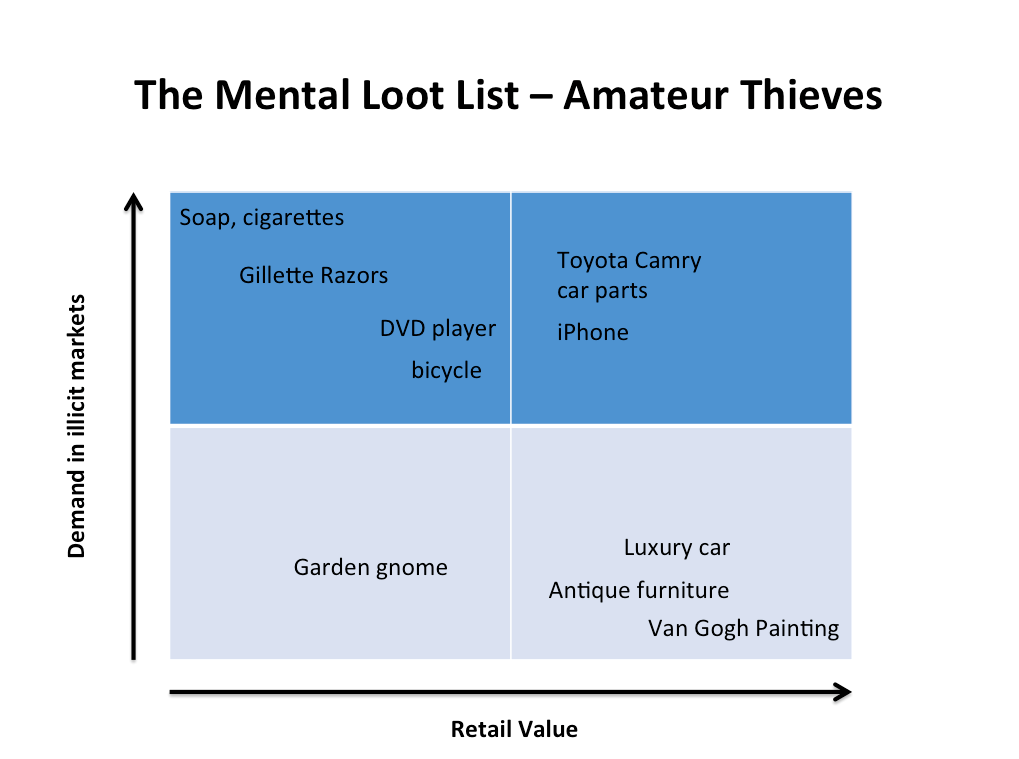
Soap and razor blades are surprisingly valuable to petty thieves because they are easy to offload at the pub or the local market stalls

Source: Why Thieves Steal Soap
More on the Minimum Wage
15 Apr 2016 Leave a comment
in applied price theory, applied welfare economics, Austrian economics, labour economics, minimum wage Tags: living wage
Interesting critique of the Big Short (moral hazard)
15 Apr 2016 Leave a comment
in applied price theory, business cycles, economics of media and culture, global financial crisis (GFC), law and economics, macroeconomics Tags: moral hazard, The Big Short
What Do Prices “Know” That You Don’t?
15 Apr 2016 Leave a comment
in applied price theory, applied welfare economics, Austrian economics
Picking winners and @stevenljoyce’s repayable grants to 11 more tech start-ups @JordNZ
13 Apr 2016 Leave a comment
in applied price theory, entrepreneurship, industrial organisation, politics - New Zealand, Public Choice, rentseeking, survivor principle Tags: corporate welfare, creative destruction, entrepreneurial alertness, Hollywood economics, industry policy, picking losers, picking winners
 Minister for Science and Innovation Steven Joyce picked a few more winners today. Eleven more start-up technology companies are to be funded $450,000 each in repayable loans to commercialise their technology. The loans are from Callaghan Innovation’s incubator network.
To cut a long diatribe short, I find these sums of money rather piddling. I have encountered this corporate welfare program before at a presentation.
My reaction then as is now: by handing out such small grants, some will succeed, some will fail. Importantly, there will never be one big disaster to bring the whole show down. There is political safety in diversification.

This is not the case with, for example, film subsidies. If Sir Peter Jackson and others finally produce a box office bomb, it will be all too glaring that the taxpayers backed a Hollywood loser with hundreds of millions of dollars. $500 million in subsidies in the case of Avatar.

By peppering small sums of money across the economy, there is no similar risk from this repayable grant scheme for the commercialisation of products.

Equal Pay Day
13 Apr 2016 Leave a comment
in applied price theory, applied welfare economics, discrimination, gender, labour economics Tags: gender wage gap
Source: Farmer Hayek: Equal Pay Day
What undergrads and @stevenljoyce need to know about trade @GreenCatherine
12 Apr 2016 Leave a comment
in applied price theory, applied welfare economics, development economics, international economics, job search and matching, labour economics, labour supply, macroeconomics, politics - New Zealand Tags: antiforeign bias, free trade, makework bias, Paul Krugman, protectionism, tariffs, trade policy
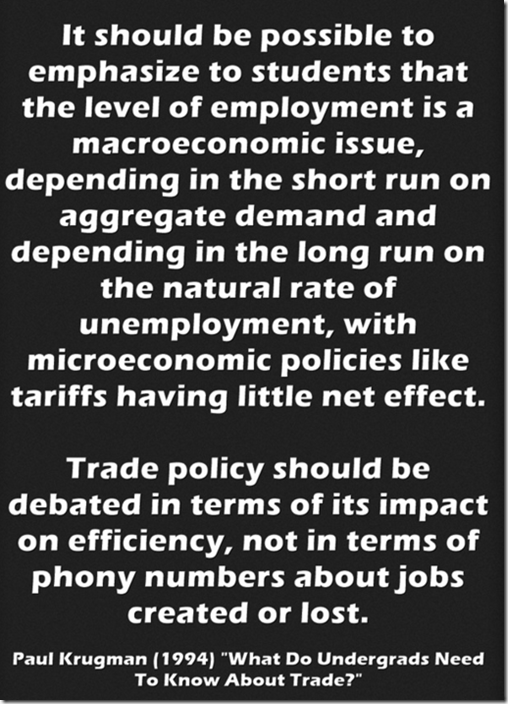
Minister for everything Stephen Joyce wrote some nonsense in the paper today about how trade agreements and more exports will mean more jobs:
I would like to make the point that trade access is hugely important for a small country like New Zealand.
Without fair and equal trade access we can’t sell as much of our goods and we get less for them. And that means fewer jobs.
This make-work bias is as bad as those who oppose trade agreements on the grounds of an anti-foreign bias. Trade affects the composition of employment, not the number of jobs. Paul Krugman spent a good part of the 1990s trying to explain that to the general public and public intellectuals.
Taxpayers Alliance mistaken about tax revenues as a stable % of GDP @the_tpa
12 Apr 2016 Leave a comment
in applied price theory, economic history, public economics Tags: British economy, British taxes, growth of government, Margaret Thatcher, size of government, taxation and entrepreneurship, taxation and investment, taxation and labour supply, Taxpayers Alliance
The British Taxpayers Alliance got carried away a bit when it said taxes as a share of British GDP have not varied much over the last 50 years or so. Margaret Thatcher would be turning in her grave.
A stable tax take is more the case in the USA. Federal tax receipts stay within the range of 18-20% of U.S. GDP as shown in the charts below and above.
There were large cuts in the top tax rates in the USA without any fall in tax revenues as a percentage of GDP because of base broadening.
Margaret Thatcher really did make a dent in taxes as a share of GDP in the 1980s. They fell by 5% of GDP but then went back up again in the 1990s as is shown in the Centre for Policy Studies chart below.
That 5% drop was a big variation as a share of GDP which is also shown in the Taxpayers Alliance chart if you look closely at the 1980s. That sharp drop in taxes as a share of British GDP is clearer in the Centre for Policy Studies chart because it magnifies the data.
There are also big changes in the British tax mix in the 1970s and 1980s. The large rise in tax in personal income in the 1970s as a percentage of GDP, also shown in both British charts above as well is the one below, coincided with the rise of the British disease and British economy becoming widely known as the sick man of Europe.
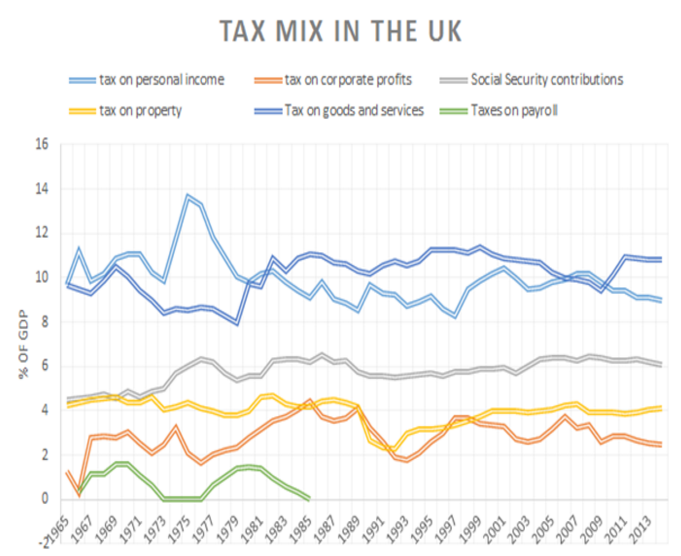
Source: OECD Stat.
The large decline in taxation in personal income under Thatchernomics was followed by an economic boom. The UK grew at above the trend annual real GDP growth to 1.9% for most of the period from the early 1980s to 2007 as shown in the detrended data in the chart below.
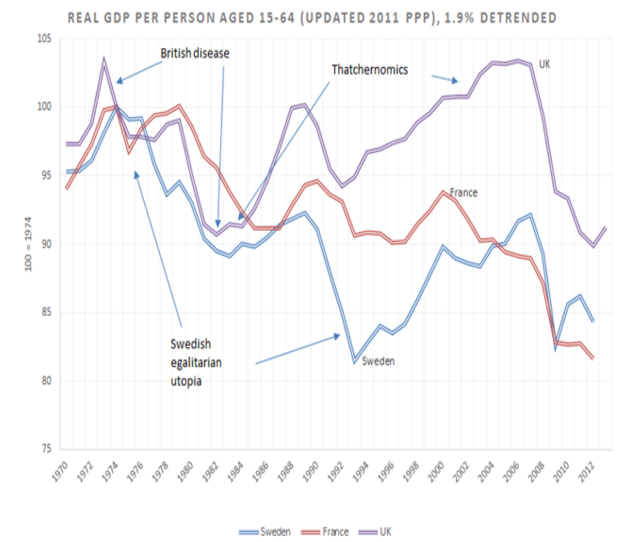
Source: Computed from OECD Stat Extract and The Conference Board. 2015. The Conference Board Total Economy Database™, May 2015,http://www.conference-board.org/data/economydatabase/.
In the above chart, a flat line is growth at the same rate as the USA for the 20th century, which was 1.9% for GDP per working age person on a purchasing power parity basis. The USA’s trend growth rate in the 20th century is taken as the trend rate of growth of the global technological frontier.
A falling line in the above chart is growth in real GDP per working age person, PPP at less than the trend rate of 1.9% per annum while a rising line is real growth in GDP per working age person in excess of the trend rate.
Deposit insurance
11 Apr 2016 Leave a comment
in applied price theory, business cycles, economic history, economics, economics of regulation, global financial crisis (GFC), macroeconomics, monetary economics, Public Choice, rentseeking Tags: bank runs, banking crises, banking panics, deposit insurance, Thomas Sargent
Many of the key issues about what modern macroeconomics has to say on global financial crises and deposit insurance are discussed in a 2010 interview with Thomas Sargent
Sargent said that two polar models of bank crises and what government lender-of-last-resort and deposit insurance do to arrest or promote them were used to understand the GFC. They are polar models because:
- in the Diamond-Dybvig and Bryant model of banking runs, deposit insurance and other bailouts are purely a good thing stopping panic-induced bank runs from ever starting; and
- in the Kareken and Wallace model, deposit insurance by governments and the lender-of-last-resort function of a central bank are purely a bad thing because moral hazard encourages risk taking unless there is regulation or there is proper surveillance and accurate risk-based pricing of the deposit insurance.
In the Diamond-Dybvig and Bryant model, if there is government-supplied deposit insurance, people do not initiate bank runs because they trust their deposits to be safe. There is no cost to the government for offering the deposit insurance because there are no bank runs! A major free lunch.
Tom Sargent considers that the Bryant-Diamond-Dybvig model has been very influential, in general, and among policy makers in 2008, in particular.
Governments saw Bryant-Diamond-Dybvig bank runs everywhere. The logic of this model persuaded many governments that if they could arrest the actual or potential runs by convincing creditors that their loans were insured, that could be done at little or no eventual cost to taxpayers.
In 2008, the Australian and New Zealand governments announced emergency bank deposit insurance guarantees. In Bryant-Diamond-Dybvig style bank panics, these guarantees ward off the bank run and thus should cost nothing fiscally because the deposit insurance is not called upon. These guarantees and lender of last resort function were seen as key stabilising measures. These guarantees were called upon in NZ to the tune of $2 billion.
- 1. The Diamond-Dybvig and Bryant model makes you sensitive to runs and optimistic about the ability of deposit insurance to cure them.
- The Kareken and Wallace model’s prediction is that if a government sets up deposit insurance and doesn’t regulate bank portfolios to prevent them from taking too much risk, the government is setting the stage for a financial crisis.
- The Kareken-Wallace model makes you very cautious about lender-of-last-resort facilities and very sensitive to the risk-taking activities of banks.
Kareken and Wallace called for much higher capital reserves for banks and more regulation to avoid future crises. This is not a new idea.
Sam Peltzman in the mid-1960s found that U.S. banks in the 1930s halved their capital ratios after the introduction of federal deposit insurance. FDR was initially opposed to deposit insurance because it would encourage greater risk taking by banks.

Late on Friday afternoon, Stuff posted an op-ed piece calling for the introduction of a (funded) deposit insurance scheme in New Zealand. It was written by Geof Mortlock, a former colleague of mine at the Reserve Bank, who has spent most of his career on banking risk issues, including having been heavily involved in the handling of the failure, and resulting statutory management, of DFC.
As the IMF recently reported, all European countries (advanced or emerging) and all advanced economies have deposit insurance, with the exception of San Marino, Israel and New Zealand. An increasing number of people have been calling for our politicians to rethink New Zealand’s stance in opposition to deposit insurance. I wrote about the issue myself just a couple of months ago, in response to some new material from the Reserve Bank which continues to oppose deposit insurance.
Different people emphasise different arguments in making the case for New Zealand to…
View original post 1,963 more words
Is Kiwibank profitable enough to take on the big banks?
09 Apr 2016 Leave a comment
in applied price theory, economic history, entrepreneurship, financial economics, George Stigler, industrial organisation, law and economics, politics - New Zealand, survivor principle Tags: anti-trust economics, antimarket bias, competition law, economics of banking, New Zealand Greens
if Kiwibank is part of the competitive fringe of an oligopoly made up of the 4 Australian banks, it is not very profitable for a competitive fringe of a cartel as the chart below shows. The other New Zealand owned small banks in that competitive fringe are not that profitable at all. Undercutting an oligopoly and its high prices and above-average cost and above marginal cost pricing is not what it used to be for the competitive fringe in New Zealand banking, if there ever was a cartel.

Source: G1 Summary information for locally incorporated banks – Reserve Bank of New Zealand.
Bank customers can choose between four major banks and a competitive fringe. If those major banks are indeed overcharging because of price-fixing by a cartel or an oligopoly, that competitive fringe which includes Kiwibank has a real opportunity to expand profitably and with little risk.
The prospect of expansion by the competitive fringe that includes Kiwibank only increases the incentives on each of the four big banks to cheat on the cartel price. The first bank to cheat on the cartel will profit the most; the other banks who are colluding know this. As George Stigler concluded in his 1964 paper “The Theory of Oligopoly” as Peltzman and Carlton explain:
…once a price is somehow agreed upon, there will be incentives for individual rivals to cheat on the [collusive] agreement. Whether cheating occurs depends on weighing the profits from not cheating against the profits from cheating and then being detected and having competition break out…
any agreement among sellers cannot ignore the incentives to cheat provided by lags in detection. So understanding when a price elevated above the competitive level can be an equilibrium requires an analysis of the dynamic consequences of cheating versus not cheating…
Collusion over retail banking services and prices faces major hurdles that will lead to most attempts at price-fixing having a short life. These barriers to successful collusion include:
- numerous competitors,
- expansion by the smaller banks were not part of the cartel or cheat on the cartel
- the entry and expansion of new banks,
- the lack of a standard product, and
- a rapidly changing business environment.
Implicit understandings among the colluding banks may break down owing to conflicts over the most suitable price, the complexities of co-ordinating pricing across a diverse range of banking products, or the simple presence of a maverick bank.
As time passes, destabilising pressures within a banking cartel or oligopoly will build due to long-run substitution and the threat or actuality of entry by new banks and expansion by banks In the competitive fringe, which includes Kiwibank.
The first firm in any market may charge a high price relative to costs, but the entry of one or two more firms usually results in effective competition. Once there are three to five suppliers in a market, an additional entrant has little impact on prices because pricing is already as competitive as it can be.
When ANZ sought to acquire the National Bank of New Zealand in 2003, the Commerce Commission did not oppose this merger. The Commission did not consider that a substantial lessening of competition would follow this merger. The Commission said:
…the merger is unlikely to increase the likelihood of co-ordinated market power in the supply of transaction accounts because the fringe players are likely to provide some competition, the banks have different strengths and weaknesses and in particular ASB is unlikely to have the incentive to participate in co-ordinated power at the expense of its recent growth and customer satisfaction levels.
This analysis of co-ordinated market power applies to each of the relevant markets. Therefore the Commission concludes that the merger is unlikely to result in a substantial lessening of competition in the supply of transaction accounts.
In the supply of mortgages, savings accounts and credit cards the merger is unlikely to lead to a substantial lessening of competition, as in each of these markets, ASB, Westpac and BNZ are likely to provide sufficient competition to the combined entity.
An important driver of a competition in the mortgage market in 2003 was a high incidence of fixed-rate mortgages and the tendency of these fixed rate mortgagees to reconsider all their options at the end of each fixed rate term.
The Commission Commission noted that there was a large re-mortgaging market in New Zealand. Banks offer to do all the work for customers wishing to switch over bank accounts and direct debit arrangements.
In a very atypical move for a purported cartel, in 2010 the bank owned Payments New Zealand agreed to change over direct debits over automatically when a customer switched banks, which made switching banks even more easier.
At the time of the ANZ and National Bank merger, the Commerce Commission noted that Kiwibank was offering lower rates on its mortgages as a way of gaining a foothold in the market.
The Commerce Commission could not have been more right about the vigour in competition in retail banking with regard to re-mortgaging and switching between fixed and floating mortgages in New Zealand.
As the chart below of fixed and floating mortgage shares a New Zealand bank balance sheets shows, there is a rapid exodus from fixed rate mortgages at the time of the Global Financial Crisis.

Source: S8 Banks: Mortgage lending ($m) – Reserve Bank of New Zealand.
I cannot see how any cartel or oligopoly could sustain price-fixing against such dynamic changes in market shares and product switching.
Cartels are is much more difficult to agree when there are many products about which to fix prices and market shares. At a minimum, this rapid movement of customers between mortgage products will sow suspicions that one or more rival banks is stealing customers thereby cheating on the cartel agreement. Not surprisingly, the history of cartels is a history of double-crossing. Banking is no exception.


Recent Comments